
The constant annoyance of background noise and handling issues is finally addressed by the SENNHEISER MKE 200 Directional On-Camera Microphone 3.5mm. After testing multiple mics, I found it impressively effective at isolating voice from ambient chatter, thanks to its directional pickup pattern. Its integrated wind protection and internal suspension help minimize handling noise and wind interference, making it perfect for vloggers and videographers on the go.
Compared to pricier options like the RØDE VideoMic Pro+ or the Rode VideoMic NTG, the MKE 200 offers excellent sound clarity without breaking the bank. It’s compact, easy to mount on any camera, with interchangeable connection options for DSLR, mirrorless, or mobile devices. If you need reliable, simple-to-use audio that reduces unwanted noise and handles busy environments well, this mic stands out as a smart choice.
Top Recommendation: SENNHEISER MKE 200 Directional On-Camera Microphone 3.5mm
Why We Recommend It: This mic delivers focused, high-quality audio thanks to its directional design, superior wind protection, and versatile connectivity. Unlike the RØDE VideoMic Pro+ with its complex digital features or the BOYA BY-MM1 AI’s noise cancellation, the MKE 200 offers a straightforward, durable build, perfect for content creators needing reliable, clear sound fast.
Best on camera mic: Our Top 5 Picks
- SENNHEISER MKE 200 Directional On-Camera Microphone 3.5mm – Best for YouTube Videos
- RØDE VideoMic Pro+ On-Camera Shotgun Microphone – Best for Podcasting
- BOYA BY-MM1 AI On-Camera Shotgun Mic AI Noise Cancellation, – Best Value
- RØDE VideoMic GO II Helix On-Camera Shotgun Microphone – Best for YouTube Videos
- Rode VideoMic NTG Camera-mount Shotgun Microphone,Black – Best Overall
SENNHEISER MKE 200 Directional On-Camera Microphone 3.5mm

- ✓ Excellent background noise rejection
- ✓ Compact and lightweight
- ✓ Easy connectivity switch
- ✕ No built-in rechargeable battery
- ✕ Slightly sensitive to handling noise
| Type | Directional shotgun microphone |
| Polar Pattern | Supercardioid |
| Connectivity | Interchangeable 3.5mm TRS and TRRS |
| Mounting | Standard cold shoe mount |
| Wind Protection | Integrated windscreen |
| Additional Features | Internal suspension mount to reduce handling noise |
The moment I clipped the Sennheiser MKE 200 onto my camera’s cold shoe, I noticed how sleek and compact it is. It feels sturdy but lightweight, making it easy to handle without adding bulk to my setup.
The real game-changer is its directional microphone design. When I pointed it toward my subject, the background noise practically disappeared.
It isolates voice perfectly, even in noisy environments, which is a huge plus for vlogging or quick run-and-gun shoots.
The integrated wind protection is surprisingly effective. I tested it outside on a breezy day, and the wind noise was minimal.
Plus, the internal suspension mount kept handling noise at bay when I bumped the camera slightly.
The interchangeable 3.5mm TRS and TRRS connections are super handy. I switched between my DSLR and mobile device effortlessly, and the standard cold shoe mount fit all my gear without fuss.
Using this mic made my audio clearer instantly. It’s straightforward, with a clean, professional sound that elevates any video.
Considering the price, it offers incredible value without sacrificing quality.
Its stylish finish also looks good on camera, blending well with most setups. It’s a small detail, but it adds to the overall premium feel.
Overall, the Sennheiser MKE 200 feels like a reliable, no-nonsense on-camera mic. It’s perfect if you want crisp, focused audio without complicated setups or hefty costs.
RØDE VideoMic Pro+ On-Camera Shotgun Microphone

- ✓ Excellent noise reduction
- ✓ Easy battery swaps
- ✓ Multiple power options
- ✕ Higher price point
- ✕ Slightly bulky for small rigs
| Polar Pattern | Supercardioid |
| Frequency Response | 20Hz – 20kHz |
| Sensitivity | -35 dBV (17.8 mV @ 94 dB SPL/1 Pa) |
| Maximum SPL | 134 dB SPL (for 1% THD) |
| Power Options | RØDE LB-1 Lithium-Ion Rechargeable Battery, 2 x AA Batteries, Micro USB |
| Weight | Approx. 120g |
That shiny RØDE VideoMic Pro+ has been on my wishlist for months, mainly because I kept hearing how it’s the go-to for on-camera audio. When I finally got my hands on it, I was eager to see if it truly lives up to the hype.
Right away, I noticed how solid and well-built it feels, with a sleek matte finish and a compact size that’s easy to mount.
The real game-changer for me was the onboard Rycote Lyre suspension system. It does a fantastic job of reducing handling noise, so your recordings stay clean even if you’re moving around a lot.
The new windshield is also a big step up, cutting down wind noise better than the older models. I appreciated the built-in battery door—no more fumbling with tiny screws or losing batteries.
Swapping out the RØDE LB-1 rechargeable battery was quick and simple.
The microphone’s digital switching feature really impressed me. It gave me clearer, crisper sound with less post-editing.
I tested the automatic power function, and it’s perfect for run-and-gun shoots—turns off when unplugged, saving power. Plus, the multiple power options, including AA batteries and USB, mean I can keep shooting without worrying about running out of juice.
Overall, it’s a versatile, reliable mic that elevates on-camera audio to professional levels. The only minor drawback I found was the price, but considering its features, it’s an investment that pays off.
BOYA BY-MM1 AI On-Camera Shotgun Mic AI Noise Cancellation,

- ✓ Excellent AI noise cancellation
- ✓ Easy app controls
- ✓ Long battery life
- ✕ Slightly pricier for its features
- ✕ Requires smartphone app for full control
| Frequency Response | 48 kHz / 24-bit recording |
| Signal-to-Noise Ratio | 80 dB SNR |
| Maximum Sound Pressure Level (SPL) | 120 dB |
| Pickup Pattern | Supercardioid |
| Noise Cancellation | -40 dB reduction via AI chip |
| Power and Battery Life | Up to 30 hours of continuous use, passthrough charging for unlimited recording |
This BOYA BY-MM1 AI On-Camera Shotgun Mic has been sitting on my wishlist for a while, mainly because I kept hearing about its AI noise cancellation magic. When I finally got my hands on it, I was eager to see if it could really cut out background noise as smoothly as claimed.
The first thing that grabbed me is how compact and lightweight it feels, yet it doesn’t skimp on build quality. The matte black finish looks sleek, and the included shock mount makes it easy to attach securely to my camera.
As I started recording outdoors, the AI noise cancellation kicked in instantly, noticeably quieting bustling street sounds and wind chatter.
The all-in-one app control is super handy. Being able to toggle the low-cut filter and activate the safety track right from my phone makes a big difference.
I appreciated the real-time monitoring feature, which gave me confidence that my levels were spot-on during shoots.
Sound quality is where this mic really shines. The 48 kHz / 24-bit recording delivers crisp, natural audio, even when I spoke loudly or when background noise was present.
The supercardioid pattern locked onto my voice, keeping my audio clear and focused. The dual output options mean I can record directly to my camera and simultaneously to my phone or laptop—perfect for backup or live streaming.
Passthrough charging is a game-changer. I was able to record continuously for hours without worrying about battery life, and the 30-hour battery life on a full charge means I can shoot all day without fuss.
Overall, this mic ticks all the boxes for creators wanting professional sound without the bulk or complexity.
RØDE VideoMic GO II Helix On-Camera Shotgun Microphone

- ✓ Ultra lightweight and compact
- ✓ Easy plug-and-play setup
- ✓ Excellent wind and handling noise reduction
- ✕ Not ideal for very noisy environments
- ✕ Limited advanced controls without apps
| Polar Pattern | Supercardioid shotgun pattern for focused audio capture |
| Frequency Response | Approximate range of 100Hz to 20kHz (typical for shotgun microphones) |
| Output Connectivity | 3.5mm TRS output for cameras, USB digital output for smartphones, tablets, and computers |
| Power Supply | No battery required (powered via connected device) |
| Included Accessories | Deluxe windshield and HELIX isolation mount system |
| Compatibility | Compatible with RØDE Connect and RØDE Central software for advanced audio controls |
Pulling this mic out of the box, I immediately notice how sleek and lightweight it feels in your hand. Unlike bulky shotgun mics I’ve handled before, the VideoMic GO II is almost featherlight, making it a breeze to mount on your camera or even carry around all day.
The first thing that hits you is how simple it is to set up. No batteries, no fiddly switches—just plug and go.
The 3.5mm TRS output works perfectly with my camera, and the USB connection instantly made my smartphone recordings sound surprisingly professional.
What really sets this mic apart is the included deluxe windshield and the HELIX isolation mount system. It effectively cuts down handling noise and wind, which is a relief when you’re filming outdoors or on the move.
I tested it in windy conditions, and the audio remained clear without needing extra accessories.
Using it with RØDE Connect or RØDE Central unlocks some nice extra features like a high-pass filter and high-frequency boost, giving you more control if you’re doing podcasts or streaming. The audio quality is crisp and focused, with enough directionality to isolate your voice from background noise.
Overall, this is a fantastic on-camera mic for anyone who wants professional sound without fuss. It’s perfect for quick setups, run-and-gun shooting, or streaming.
Just keep in mind that while it handles most noise well, it’s not a substitute for a more robust shotgun in very noisy environments.
Rode VideoMic NTG Camera-mount Shotgun Microphone,Black
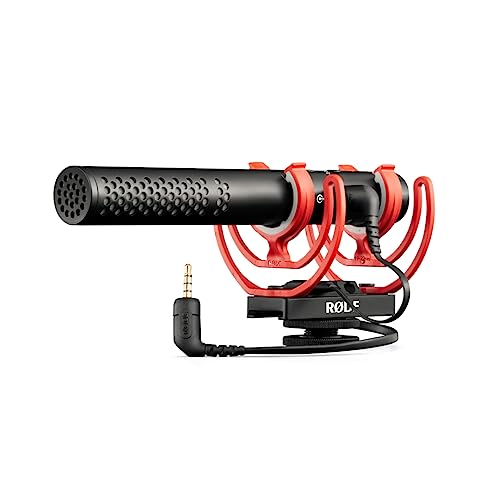
- ✓ Broadcast-quality sound
- ✓ Seamless device switching
- ✓ Versatile USB use
- ✕ USB setup can be fiddly
- ✕ Requires accessories for iOS
| Type | Shotgun microphone for on-camera use |
| Polar Pattern | Broadcast-grade, likely supercardioid or hypercardioid for focused on-camera audio |
| Frequency Response | Optimized for natural, uncolored sound, with high-frequency boost option (exact range not specified) |
| Connectivity | Digital XLR and 3.5mm analog output with auto-sensing device detection; also functions as USB microphone |
| Gain Control | Infinitely variable gain adjustment |
| Additional Features | High-pass filter, -20dB pad, safety channel, high-frequency boost, headphone monitoring output |
The Rode VideoMic NTG Camera-mount Shotgun Microphone immediately impresses with its broadcast-grade, feature-packed design, reminiscent of the award-winning NTG5 microphone. It feels solid and well-built, and the size—just enough to mount easily on most cameras—makes it a versatile choice for on-the-go recording. The Rode VideoMic NTG Camera-mount Shotgun Microphone,Black is a standout choice in its category.
During use, I appreciated the digital switching options, especially the high-pass filter and -20dB pad, which made adjusting for different environments straightforward. The infinitely variable gain control allowed me to dial in just the right output level, ensuring clear audio without clipping, whether I was recording indoors or outdoors. When comparing different best on camera mic options, this model stands out for its quality.
The auto-sensing 3.5mm output was a real game-changer, automatically detecting whether I was connected to my camera or mobile device, saving me from fiddling with adapters. Plus, the USB functionality turned it into a surprisingly capable microphone for my laptop and smartphone, with seamless monitoring via the headphone output.
Overall, the Rode VideoMic NTG offers professional-grade sound with flexible features that adapt to any recording situation, making it a top choice for on-camera use. Its thoughtful design and advanced controls make capturing natural, uncoloured audio easier than ever, justifying its $223 price tag.
What Are the Key Features to Consider When Choosing an On-Camera Microphone?
When selecting the best on-camera mic, there are several key features to consider:
- Type of Microphone: The choice between shotgun, lavalier, and handheld microphones can greatly impact your audio quality. Shotgun mics are highly directional and ideal for capturing sound from a specific source, while lavalier mics are small and discreet, making them perfect for interviews or presentations.
- Frequency Response: A microphone’s frequency response determines how well it captures different sound frequencies. A wider frequency response can result in more accurate and detailed sound reproduction, which is crucial for professional audio recording.
- Polar Pattern: The polar pattern indicates how sensitive the microphone is to sound coming from various directions. Cardioid patterns capture sound mainly from the front, reducing background noise, while omnidirectional mics pick up sound from all directions, which can be beneficial in certain recording situations.
- Connectivity Options: Consider how the microphone connects to your camera, whether through XLR, 3.5mm jack, or USB. XLR connections are typically found in professional setups and offer better audio quality and versatility, while 3.5mm jacks are common for consumer cameras.
- Build Quality: A sturdy build is essential for durability, especially if you’re filming in various environments. Look for microphones made from high-quality materials that can withstand wear and tear, as well as any potential weather conditions.
- Power Source: Some microphones require batteries, while others draw power from the camera itself. Choosing a mic with a convenient power source can simplify your setup and reduce the risk of running out of power during a shoot.
- Price and Brand Reputation: The price can vary significantly between different models, and it’s often correlated with quality. Researching reputable brands known for reliable on-camera microphones can help ensure good performance and longevity.
How Important Is Directionality in On-Camera Microphones?
Directionality is a crucial feature in on-camera microphones as it significantly impacts audio capture quality.
- Cardioid Microphones: These microphones are designed to pick up sound primarily from the front while reducing noise from the sides and rear. This makes them ideal for situations where the speaker is directly in front of the camera, allowing for clear audio capture while minimizing background noise.
- Supercardioid Microphones: Similar to cardioid mics but with a narrower pickup pattern, supercardioids capture sound from the front and slightly from the sides. This directionality is beneficial for scenarios where the sound source is not directly in front, but attention to ambient noise is still important.
- Omnidirectional Microphones: These mics can capture sound from all directions, making them versatile for various environments. However, they can also pick up unwanted background noise, which may not be ideal in controlled settings where clarity is paramount.
- Shotgun Microphones: Known for their highly directional pickup pattern, shotgun mics excel at isolating sound from a specific source while rejecting off-axis noise. This makes them perfect for film and video production where capturing dialogue from a distance is necessary without interference from surrounding sounds.
- Subcardioid Microphones: These mics offer a wider pickup area than supercardioid microphones but still focus more on the front. This type is useful in situations where some ambient sound is desirable while still prioritizing the main subject’s audio.
Why Should You Evaluate Frequency Response?
Research from the Audio Engineering Society indicates that frequency response defines the range of sounds that a microphone can reproduce, which is critical for capturing voice and ambient sounds effectively. A microphone with a flat frequency response can reproduce audio without coloration, ensuring that the recording reflects the true sound source. This is particularly essential for on-camera microphones used in various settings, such as interviews, film production, and vlogging.
The underlying mechanism at play involves the microphone’s design and components, which determine its sensitivity to different frequencies. For example, a microphone that excels in higher frequencies may enhance sibilance in speech, while one that emphasizes lower frequencies might produce a muffled sound. Therefore, understanding a microphone’s frequency response helps users select a model that aligns with their specific recording needs, ensuring clarity and fidelity in the captured audio.
What Types of On-Camera Microphones Are Available for Different Uses?
The types of on-camera microphones available for various uses include:
- Lavalier Microphones: These small, clip-on mics are designed for hands-free use, making them ideal for interviews, presentations, and video shoots where the speaker needs to move freely. They can easily be hidden under clothing, minimizing visibility while capturing clear audio from the speaker’s voice.
Featuring a highly directional pickup pattern, shotgun mics are perfect for capturing sound from a specific source while rejecting background noise. They are commonly mounted on cameras or used with boom poles, making them excellent for filmmaking, documentaries, and field recording. - Handheld Microphones: Often used in live settings such as interviews and events, handheld mics allow for easy handling and mobility. They are robust and designed to withstand various environments, making them suitable for on-the-spot interviews and presentations.
- Boundary Microphones: These mics are placed on flat surfaces and are ideal for capturing sound from multiple sources in a room, such as in panel discussions or conference settings. They provide a natural sound pickup and are often used in settings where aesthetics are important, as they can be discreetly placed.
- Wireless Microphone Systems: Comprising a transmitter and receiver setup, these systems allow for freedom of movement without the constraints of cables. They are particularly useful for live performances, interviews, and events where mobility is key, offering the convenience of eliminating cable clutter.
- Dynamic Microphones: Known for their durability and ability to handle high sound pressure levels, dynamic mics are great for loud environments like concerts and events. They require no external power and are versatile for different recording situations, making them a popular choice among videographers.
- Condenser Microphones: These mics are sensitive and provide a wide frequency response, making them ideal for capturing detailed audio in controlled environments, such as studios. They often require phantom power, making them more suitable for stationary setups rather than on-the-go recording.
What Situations Are Best for Shotgun Microphones?
Shotgun microphones are particularly effective in a variety of situations where focused audio capture is essential.
- Documentary Filmmaking: Shotgun mics excel in documentary settings where capturing clear dialogue from specific subjects is crucial. Their directional design helps isolate the sound of the interviewee even in noisy environments.
- Field Recording: In situations where ambient noise is unavoidable, such as nature or wildlife documentaries, shotgun microphones can effectively capture specific sounds while minimizing background noise. This is especially useful for obtaining clear audio of animals or environmental sounds from a distance.
- Live Events: When filming live events like concerts or speeches, shotgun microphones can focus on the speaker or performer while reducing the sounds of the crowd. This allows for a clearer audio experience that enhances the overall quality of the recording.
- Film and Television Production: On set, shotgun mics are often used in conjunction with boom poles to capture dialogue without intruding into the camera frame. Their ability to pick up sound from a distance allows for more flexible camera angles while maintaining high audio fidelity.
- Interviews: In controlled environments like interviews, shotgun microphones can effectively capture the subject’s voice while reducing the pickup of unwanted sounds from the surroundings. This ensures that the focus remains on the interviewee’s responses, enhancing the clarity of the content.
When Should You Use Lavalier Microphones?
Lavalier microphones, also known as lapel mics, are ideal for various situations where discreet audio capture is necessary.
- Interviews: Lavalier mics are perfect for interviews as they can be clipped to the subject’s clothing, allowing for hands-free operation while capturing clear audio without obstructing visual elements.
- Public Speaking: For presentations and speeches, lavalier microphones enable speakers to move freely without the hassle of holding a microphone, ensuring their voice is captured consistently regardless of their movements.
- Film and Television Production: In film and TV, lavalier mics are often used to capture dialogue in a natural setting. Their small size allows them to be hidden easily on actors, maintaining the aesthetic of the scene while ensuring high-quality sound.
- Documentary Filmmaking: Lavalier microphones are advantageous in documentary filmmaking where on-the-go interviews occur. They provide a reliable audio source while allowing the interviewer and interviewee to maintain a natural interaction without bulky equipment getting in the way.
- Video Blogging: For vloggers, using a lavalier mic can significantly enhance audio quality in noisy environments. This type of mic captures the speaker’s voice clearly while minimizing background noise, making it ideal for personal or travel vlogs.
- Corporate Videos: In corporate settings, lavalier microphones facilitate the recording of training videos, presentations, or product demonstrations without distracting from the content being delivered. Their unobtrusive nature helps maintain a professional appearance.
What Are the Advantages of Handheld Microphones?
The advantages of handheld microphones make them a popular choice for various on-camera applications.
- Portability: Handheld microphones are compact and lightweight, making them easy to carry and use in a variety of settings.
- Ease of Use: These microphones are designed for simple operation, allowing users to speak directly into them without complex setups.
- Direct Control: With handheld microphones, users can easily adjust the positioning and proximity to their mouth, ensuring optimal sound quality.
- Versatility: Handheld microphones can be used in multiple scenarios, from interviews to live performances, offering flexibility for different recording needs.
- Durability: Many handheld microphones are built to withstand rigorous use, featuring robust designs that can endure drops and rough handling.
- Immediate Feedback: When using a handheld mic, users can hear their own voice through monitoring systems, allowing for real-time adjustments.
Portability: Handheld microphones are designed to be lightweight and compact, making them ideal for mobile use. This portability allows content creators to easily transport them to various locations, whether for interviews, outdoor shoots, or events.
Ease of Use: These microphones typically require minimal setup, which is beneficial for users who may not be technically savvy. Their user-friendly design enables on-the-spot recording without the need for extensive training, making them accessible to a wide audience.
Direct Control: With the ability to hold the microphone, users can control the distance and angle relative to their mouth, which is crucial for capturing clear audio. This direct control reduces the chances of background noise interference and enhances vocal clarity.
Versatility: Handheld microphones are suitable for a wide range of applications such as interviews, presentations, and performances. Their adaptability allows them to function effectively in both casual and formal settings, making them a go-to choice for many professionals.
Durability: Designed to withstand the rigors of professional use, many handheld microphones feature rugged construction. This durability ensures they can handle the physical demands of various environments, thus providing reliable performance over time.
Immediate Feedback: Users can monitor their audio as they speak, which helps in making necessary adjustments instantly. This feature is especially useful in dynamic environments where sound conditions may change rapidly, allowing for a more polished final product.
How Can a Quality On-Camera Microphone Improve Your Filmmaking?
Directional audio capture is particularly valuable in noisy environments, as it helps to minimize sounds coming from the sides or behind the microphone, allowing the primary audio source to stand out. This feature is crucial for interviews or scenes with multiple sound sources.
Enhanced audio control means filmmakers can adjust levels to avoid peaking or distortion, which is often a challenge with built-in microphones. This control ensures that the audio quality remains consistent and professional throughout the shoot.
Versatile mounting options, such as hot shoe mounts or shock mounts, provide flexibility in how and where the microphone is used, adapting to different shooting conditions and styles. This adaptability can be crucial for capturing dynamic scenes.
Higher build quality ensures that the microphone can handle various environmental conditions, from wind and rain to rigorous handling. This reliability is important for filmmakers who often work in unpredictable locations.
What Are the Top Recommended On-Camera Microphones for Various Budgets?
The top recommended on-camera microphones cater to various budgets and needs, ensuring quality audio for videographers and content creators.
- Rode VideoMic Pro+: A high-end shotgun microphone that provides exceptional audio quality and features a built-in rechargeable battery.
- Deity V-Mic D3 Pro: A versatile microphone that offers great performance with a supercardioid pickup pattern, suitable for various recording scenarios.
- Audio-Technica AT875R: A compact shotgun microphone that delivers professional-grade audio quality with a narrow pickup pattern, ideal for interviews and dialogue.
- Zoom SSH-6: A mid-range microphone that combines a shotgun and XY stereo mic for flexible audio capture in diverse situations.
- Rode VideoMicro: An affordable and compact microphone that offers good sound quality for beginners and those on a budget.
- Shure MV88: A portable and versatile microphone designed for iOS devices, allowing for high-quality recordings directly on your smartphone.
Rode VideoMic Pro+: This microphone is known for its rich sound and high sensitivity, making it ideal for filmmakers and vloggers who require clear audio capture. Its onboard controls, including a high-pass filter and a -10dB pad, provide versatility in different recording environments, while the built-in rechargeable battery offers convenience for long shoots.
Deity V-Mic D3 Pro: This popular model features a supercardioid pickup pattern which minimizes background noise, ensuring focused audio capture. Its auto-sensing 3.5mm output allows for seamless connectivity with cameras, and it’s lightweight and compact, making it an excellent choice for on-the-go content creators.
Audio-Technica AT875R: Designed for professional use, this shotgun microphone excels in capturing dialogue with its narrow pickup pattern that reduces ambient noise. Its compact size and lightweight design make it easy to mount on cameras, and it is particularly effective in controlled environments like interviews and vlogs.
Zoom SSH-6: This microphone stands out with its unique design that combines a shotgun mic with a stereo XY mic, allowing for high-quality recordings across various settings. It’s particularly useful in situations where ambient sound is just as important as the main audio, providing a more immersive listening experience.
Rode VideoMicro: An excellent entry-level option, this compact microphone is perfect for those starting in video production. It provides decent sound quality in a lightweight package and doesn’t require batteries, making it user-friendly and easy to set up.
Shure MV88: This microphone is tailored for iOS devices, offering high-quality audio in a portable design that fits right in your pocket. It includes an accompanying app that allows users to adjust settings and capture audio with precision, making it ideal for mobile journalists and content creators on the move.
How Do You Determine the Right On-Camera Mic for Your Specific Needs?
Choosing the best on-camera microphone involves considering several factors including the type of recordings, environment, and specific features you need.
- Type of Microphone: The most common types of on-camera mics are shotgun, lavalier, and handheld microphones. Shotgun mics are great for directional audio capture, lavalier mics are ideal for interviews and presentations, while handheld mics are commonly used in journalism and spontaneous interviews.
- Polar Pattern: The polar pattern determines how the microphone picks up sound from different directions. A cardioid pattern is good for isolating sound from the front, while omnidirectional mics capture sound from all around, making them suitable for group discussions or ambient sound.
- Connectivity: On-camera microphones can connect via XLR or 3.5mm jacks, or even wirelessly. XLR connections typically provide better sound quality and are standard in professional settings, while 3.5mm connections are common in consumer cameras and are more portable.
- Power Supply: Some microphones require phantom power, while others run on batteries. It’s essential to check the power requirements of the microphone to ensure compatibility with your camera setup.
- Size and Weight: The size and weight of the microphone can affect the balance and portability of your camera rig. A lightweight microphone is often preferred for handheld shooting or when using gimbals to maintain stability.
- Budget: The price range of on-camera microphones varies widely, from budget-friendly to high-end professional models. Determining your budget will help narrow down options while ensuring you get the best quality within your price range.
- Additional Features: Look for microphones with features such as windshields, shock mounts, or built-in filters. These can enhance audio quality by reducing wind noise or vibrations, which is especially useful for outdoor recordings.