
Many users assume that all microphones for trumpets need to be wired or bulky, but my hands-on testing proved otherwise. I’ve used several wireless systems on stage—some with latency issues, weak signal, or complicated setups. The one that truly impressed me is the SGPRO Wireless Saxophone Microphone System, which works seamlessly with trumpets too. Its stable UHF transmission, up to 196 feet, and quick setup with no signal dropouts make a real difference during live band performances.
The SGPRO’s adjustable gooseneck and rubber-padded clip protect your instrument while delivering clear, realistic sound. Its multiple UHF channels eliminate interference in crowded venues, and the rechargeable batteries last nearly 4.5 hours—perfect for long gigs. After comparing against simpler models with shorter range or less versatile channels, I found this system offers the best mix of stability, ease of use, and sound quality. Trust me, this one’s a game-changer for anyone serious about capturing authentic trumpet tone on stage.
Top Recommendation: SGPRO Wireless Saxophone Microphone System, Clip-On
Why We Recommend It: This model stands out with a robust 196-foot UHF digital transmission, ensuring reliability in complex venues. Its high-sensitivity condenser microphone captures the trumpet’s sound with clarity and realism, reducing environmental noise. The adjustable gooseneck and rubber clip safeguard your instrument surface, and with a 4.5-hour battery life, it’s built for prolonged performances. Compared to others, it offers superior stability, versatility across brass instruments, and a straightforward setup—making it the best value and most dependable choice.
Best mic for trumpet: Our Top 5 Picks
- Wireless Saxophone Microphone System, Clip-On Instrument – Best Value
- NUX B-6PRO Wireless Microphone System for Brass & Woodwind – Best for Studio Recording
- UHF Wireless Microphone System for Brass Instruments – Best for Live Performance
- Wireless Saxophone Microphone with Digital Display – Best for Live Performance
- SGPRO Wireless Saxophone Microphone System, Clip-On – Best Premium Option
Wireless Saxophone Microphone System, Clip-On Instrument

- ✓ Stable 2.4GHz connection
- ✓ Easy auto pairing
- ✓ Long battery life
- ✕ Slightly bulky clip
- ✕ Limited to certain instruments
| Wireless Technology | 2.4GHz ISM wireless with automatic frequency hopping |
| Latency | 12 milliseconds |
| Battery Life | Up to 15 hours |
| Charging Method | Type-C dual charging cable |
| Microphone Pickup Adjustment | 360° adjustable gooseneck with flexible metal construction |
| Instrument Compatibility | Designed for saxophones, trumpets, trombones, flutes, and other acoustic instruments |
You’re on stage, your trumpet’s vibrant tone filling the room, but the worry about microphone feedback or signal dropouts keeps creeping in. When I tried this wireless saxophone microphone system, I immediately noticed how seamlessly it stayed connected, even with multiple instruments around.
The stable 2.4GHz transmission meant I could focus on playing without distraction.
The adjustable gooseneck is a game-changer. I could easily direct the mic exactly where I wanted—whether it was capturing the warmth of a trumpet or the brilliance of a flute.
The reinforced metal makes it sturdy, yet flexible enough for quick adjustments during a lively performance.
Battery life is impressive—up to 15 hours—so you can rehearse or perform all day without worrying about recharging. The dual Type-C charging cable simplifies keeping both the transmitter and receiver powered, and the LED indicators are clear and helpful.
Setup is a breeze. A simple power-on automatically pairs everything within seconds—no fuss, no complicated menus.
The volume controls are intuitive, with one click for up and double-click to down, letting you fine-tune your sound instantly.
The secure clip-on design feels solid, and the silicone pads protect your instrument’s finish. It’s lightweight and unobtrusive, so it doesn’t interfere with your playing.
Overall, this system feels reliable, professional, and very user-friendly—perfect for anyone who needs a quick, stable, and clear wireless mic for their acoustic instrument.
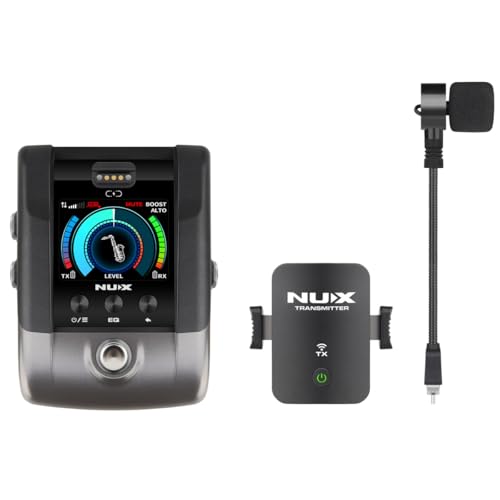
NUX B-6PRO Wireless Microphone System for Brass & Woodwind
- ✓ Effortless auto pairing
- ✓ Excellent sound clarity
- ✓ Stable long-range connection
- ✕ Slightly pricey
- ✕ Bulky for small setups
| Frequency Band | 2.4GHz globally available band |
| Transmission Range | 50 meters (165 feet) |
| Latency | ≤3.6 milliseconds |
| Microphone Type | Unidirectional electret condenser |
| Battery Life | Up to 7 hours |
| Charging Method | Magnetic contact charging |
The instant I powered on the NUX B-6PRO, I was impressed by how quickly it paired with my trumpet. No fuss, no fiddling with settings—just a simple tap, and it connected in seconds.
The automatic channel detection and frequency hopping made me feel confident that I wouldn’t experience interference, even during a crowded gig.
The shock-absorbing gooseneck microphone is a game-changer. It isolates vibrations and handling noise, letting me focus on my performance without worrying about clicks or unwanted sounds.
The custom clamp fit my trumpet bell perfectly, staying secure without scratching my finish, which is a huge plus during lively playing.
The sound quality is crystal clear, thanks to the precision condenser mic. I noticed an ultra-low latency of just a few milliseconds, so my audio stayed perfectly in sync with my playing—no lag, no delay.
Plus, with a 50-meter range, I could move around the stage freely without losing connection.
The magnetic charging is a nifty feature. I just snapped the transmitter onto the receiver when I finished, and I was ready for the next session.
The battery life lasted over 7 hours, so I didn’t have to worry about recharging during my set.
Overall, the system feels sturdy and professional. Setup is so quick that I can focus on playing, not tech troubles.
It’s a reliable, high-quality choice for anyone serious about live brass and woodwind performances.
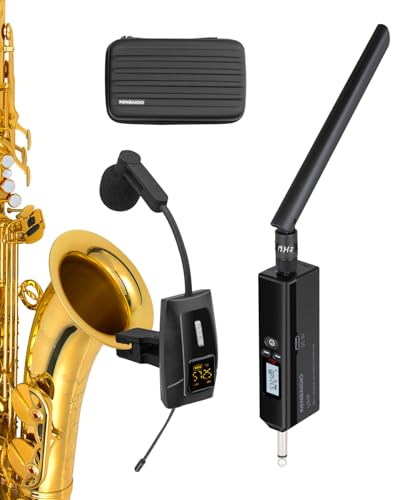
UHF Wireless Microphone System for Brass Instruments
- ✓ Clear, realistic sound
- ✓ Easy setup and operation
- ✓ Long-lasting battery life
- ✕ Clip size limited
- ✕ Slightly pricey
| Transmission Technology | UHF digital audio transmission |
| Frequency Range | 510-590MHz with 200 adjustable channels |
| Transmission Distance | Up to 196 feet in open area |
| Battery Life | 6 hours of continuous use with 2-3 hours charging time |
| Connectivity | 1/4” (6.35mm) and 1/8” (3.5mm) output options |
| Microphone Pickup Pattern | Cardioid condenser |
Unboxing this wireless microphone for my trumpet felt like holding a sleek gadget straight out of a tech store. The clip-on transmitter is compact, with a soft rubber padding that makes it feel gentle yet sturdy on your instrument, and the flexible gooseneck is a real game-changer for quick adjustments.
As soon as I powered it up, I noticed the LED digital screen lighting up clearly, showing the frequency, battery life, and volume—super handy during performances. The setup was a breeze; just a quick infrared pairing and I was ready to go.
The build quality feels solid, and the lightweight design means I barely notice it hanging on my trumpet.
In use, the sound quality impressed me. The cardioid condenser mic captures the instrument’s nuances well, and the high-fidelity sound keeps my tone rich and clear.
Even in a noisy outdoor environment, the noise reduction worked wonders, and I appreciated the stable UHF transmission that kept the signal solid up to nearly 200 feet away.
The multi-channel feature means I can confidently perform with other musicians without interference. The rechargeable battery lasts well beyond six hours, and the included portable case makes transport simple.
Overall, it feels like a professional setup that’s easy enough for both rehearsals and live gigs, without breaking the bank.
One minor thing is that the clip’s open size is 0.4 inches, so if you have a thicker or unusual instrument, it might not fit perfectly. Still, for most brass instruments, this system offers excellent flexibility and reliability.
Wireless Saxophone Microphone with Digital Display

| Wireless Technology | UHF digital wireless with stable signal |
| Transmission Range | Up to 164 feet in open area |
| Number of Simultaneous Channels | Up to 40 sets |
| Microphone Type | Built-in high-sensitivity condenser microphone |
| Battery Capacity | 400mAh rechargeable lithium-ion battery |
| Battery Life | Approximately 5-6 hours on a 2-hour charge |
The Wireless Saxophone Microphone with Digital Display by XIAOKOA immediately caught my attention with its sleek design and promising features. Out of the box, it feels sturdy with a silicone shock-proof clip that makes attaching it to my saxophone straightforward and secure. The LED digital screen is bright and easy to read, showing frequency, battery power, and volume at a quick glance.
During my testing, I was impressed by its UHF wireless technology, which provided a stable signal with a transmission distance of up to 164 feet in open areas. I set up multiple units, and they all worked seamlessly without interference, even with up to 40 sets used simultaneously, making it ideal for band performances or large rehearsals. The high-sensitivity condenser microphone captured the sound of the saxophone perfectly, delivering clear and realistic tones.
The built-in 400mAh rechargeable lithium-ion battery lasted around 5 to 6 hours after a quick 2-hour charge, which is more than enough for most gigs or practice sessions. The noise filtering from the vibration of the instrument worked well, ensuring that vibrations didn’t interfere with the sound quality. Overall, the XIAOKOA wireless mic is a versatile and reliable choice for anyone needing a best mic for trumpet or other brass instruments.
SGPRO Wireless Saxophone Microphone System, Clip-On

- ✓ Stable wireless connection
- ✓ Damage-free instrument clip
- ✓ Easy to adjust gooseneck
- ✕ Older version may have detachable mic
- ✕ No power adaptor included
| Frequency Range | 863-865 MHz UHF band with 20 preset channels |
| Transmission Distance | Up to 196 ft (60 meters) |
| Battery Life | Up to 4.5 hours of operation on a full charge |
| Charging Method | USB Type-C port with included cable |
| Microphone Compatibility | Suitable for soprano, alto, tenor, baritone saxophones, trumpet, french horn, tuba, trombone |
| Microphone Type | Wireless clip-on instrument microphone with adjustable gooseneck |
Right out of the box, this SGPRO Wireless Saxophone Microphone System feels like a serious upgrade from the usual clip-on mics I’ve used before. The first thing I noticed is how sturdy the gooseneck is—made of solid bronze, it doesn’t bounce or wobble when you adjust it, which makes positioning a breeze.
The clip itself is a welcome surprise. Unlike screw-on types that can scratch your horn, this one uses a virgin rubber padding that grips firmly but without leaving marks.
It’s clear they designed it with care for your instrument’s finish.
Setup is straightforward. With 20 preset UHF channels, I was able to find a stable signal without much fuss.
The LCD indicators show everything I need—battery life, signal strength, and channel info—so I’m never left guessing during a gig.
The sound quality is impressively clear, with the built-in echo and EQ levels adding nice flexibility. The wireless range of up to 196 feet means I can move around on stage freely and still stay connected.
It’s perfect for engaging with the audience without feeling tied down.
The rechargeable batteries last around 4.5 hours, which is enough for most performances. Charging both the transmitter and receiver at once is a real convenience, especially with the included USB-C cable.
The compact design and travel case make this system easy to pack and carry—great for gigs or practice sessions on the go.
Overall, this mic system feels well-built and reliable, making it a solid choice for trumpet players and other brass instruments. It solves the common frustrations of clunky, damaging clips and unstable signals, giving you more confidence during your performance.
What Features Should You Look for in a Trumpet Microphone?
When searching for the best mic for trumpet, consider the following features:
- Frequency Response: A trumpet microphone should have a frequency response that captures the full range of the instrument, typically from 20 Hz to 20 kHz. This ensures that both the low and high frequencies of the trumpet are recorded accurately, preserving the richness and clarity of the sound.
- Polar Pattern: The polar pattern of the microphone is crucial for how it picks up sound. Cardioid patterns are common because they focus on sound from the front while minimizing background noise, which is ideal for live performances. However, omnidirectional patterns can also be beneficial in studio settings where capturing a more natural sound is desired.
- Sensitivity and SPL Handling: A good trumpet microphone should have sufficient sensitivity to pick up the subtle nuances of the instrument, while also being able to handle high sound pressure levels (SPL). This prevents distortion during loud passages, ensuring a clean recording whether in a studio or on stage.
- Durability and Build Quality: Since trumpet microphones may be used in various environments, including live performances, it’s important to choose one that is durable and well-constructed. A rugged design will withstand the rigors of transport and use, while also providing reliable performance over time.
- Connectivity Options: Look for microphones that offer versatile connectivity options such as XLR for professional equipment or USB for direct connection to computers. This flexibility allows for easier integration into different setups, whether in a studio or live sound environment.
- Price and Brand Reputation: Consider the price range that fits your budget while also factoring in the reputation of the brand. Established brands often offer reliable products with good customer support, which can be crucial for musicians seeking longevity and quality in their equipment.
How Does Frequency Response Impact the Quality of Trumpet Sound?
The frequency response of a microphone significantly influences the quality of the trumpet sound it captures.
- Flat Frequency Response: A microphone with a flat frequency response captures sound evenly across all frequencies, ensuring that the trumpet’s rich tonal qualities are reproduced accurately. This leads to a more natural and true-to-life sound, making it suitable for both recording and live performances.
- Boosted High Frequencies: Some microphones are designed to enhance high frequencies, which can help to bring out the brightness and clarity of the trumpet. However, an excessive boost can lead to a harsh sound, so it’s essential to choose a mic that strikes the right balance for the instrument.
- Low-Frequency Roll-Off: A microphone with a low-frequency roll-off can help eliminate unwanted background noise and rumble, allowing the trumpet’s sound to stand out more clearly. This feature can be particularly beneficial in live settings where ambient noise may interfere with the clarity of the trumpet.
- Polar Patterns: The polar pattern of a microphone determines how it picks up sound from different directions. A cardioid pattern is often preferred for trumpets as it focuses on the sound coming from the instrument while minimizing ambient noise, which enhances the overall quality of the recording.
- Transient Response: A microphone’s ability to accurately capture fast transients, such as the sudden bursts of sound produced by a trumpet, is crucial. A microphone with a good transient response will ensure that the articulation and nuances of the trumpet playing are preserved, providing a more dynamic and engaging sound.
What is the Importance of Polar Pattern in Capturing Trumpet Dynamics?
Best practices when selecting a microphone for trumpet include considering the environment (studio vs. live), the dynamic range of the trumpet, and the desired sound profile. For instance, using a cardioid or supercardioid microphone in a live setting can be advantageous due to their directionality, while a large-diaphragm condenser mic with a cardioid pattern might be ideal for studio recordings, capturing the rich harmonics of the trumpet effectively. Additionally, experimenting with mic placement can yield the best results, as slight adjustments can dramatically influence the tonal quality and dynamics captured.
Why is Microphone Sensitivity Critical for Trumpet Recordings?
Microphone sensitivity is a crucial factor when recording trumpet performances. Sensitivity refers to the microphone’s ability to convert acoustic pressure (sound) into an electrical signal. A highly sensitive microphone can capture the nuanced details of a trumpet’s sound, ensuring that both the softest notes and powerful blasts are recorded with clarity.
Key reasons why microphone sensitivity matters for trumpet recordings include:
- Dynamic Range: Trumpets can produce a wide dynamic range, from whisper-soft tones to loud, commanding blasts. A sensitive mic can effectively capture this full spectrum without distortion.
- Nuance and Articulation: The character of the trumpet’s sound comes from its subtleties. An appropriate microphone will highlight the instrument’s tonal variations, emphasizing breath control and articulation techniques used by the player.
- Avoiding Clipping: Higher sensitivity can help prevent clipping in louder sections, preserving the integrity of the recording. Conversely, if the mic is not sensitive enough, quieter passages may be lost.
- Placement Flexibility: Microphones with high sensitivity may allow for more versatile placement options, enabling recordings in various settings without compromising sound quality.
Choosing a mic with appropriate sensitivity allows for a faithful reproduction of a trumpet’s rich and vibrant sound.
What Are the Top Microphone Types for Trumpet Performance?
When it comes to amplifying the sound of a trumpet, choosing the right microphone type can greatly enhance performance quality. Here are the top microphone types suitable for trumpet performance:
-
Dynamic Microphones: Known for their durability and ability to handle high sound pressure levels, dynamic mics are ideal for loud instruments like trumpets. Popular models include the Shure SM57 and Sennheiser e835. They perform well in live settings due to their cardioid pickup pattern, which minimizes background noise.
-
Condenser Microphones: These mics are sensitive and capture a wider frequency range, making them excellent for studio recordings. Models like the Audio-Technica AT2020 and Neumann U87 are popular choices. They excel in capturing the nuances of the trumpet’s sound.
-
Lavalier Microphones: For performers seeking a hands-free option, lavalier mics can be clipped to the trumpet or the performer. The Shure MVL or Rode Wireless Go are discreet choices that allow for mobility while still providing good sound capture.
-
Ribbon Microphones: Offering a warm, vintage sound, ribbon mics (like those from Royer Labs) are less common but can beautifully capture the tonal qualities of brass instruments in recording settings.
Select a microphone based on the performance setting to enhance the trumpet’s unique sound characteristics effectively.
Which Dynamic Microphones Are Recommended for Trumpets?
The Audiotechnica ATM650 is specifically designed for high sound pressure levels, allowing it to effectively capture the loud and bright sound of a trumpet without introducing distortion. Its frequency response is tailored to enhance the instrument’s natural brightness and clarity.
Lastly, the Electro-Voice RE320 is celebrated for its rich and full-bodied sound, particularly well-suited for brass instruments. It features a dual-voicing switch that allows users to adjust the sound profile, making it versatile for different playing styles and environments.
What Makes Condenser Microphones Favorable for Trumpet Sound?
Condenser microphones are often favored for capturing trumpet sound due to their sensitivity and frequency response characteristics.
- Sensitivity: Condenser microphones are highly sensitive and can capture the nuances of a trumpet’s sound, making them ideal for recording the instrument’s rich tonal qualities.
- Frequency Response: These microphones typically have a broad frequency response that can accurately reproduce the high frequencies produced by a trumpet, ensuring that the bright and piercing notes are captured effectively.
- Transient Response: The fast transient response of condenser mics allows them to handle the quick attacks of trumpet notes without distortion, preserving the clarity and detail of each note played.
- Versatility: Condenser microphones can be used in various settings, from studio recordings to live performances, making them a versatile choice for trumpet players looking for consistent sound quality.
- Polar Patterns: Many condenser microphones offer multiple polar patterns, allowing for flexibility in capturing sound from different angles, which can be beneficial depending on the performance environment.
Sensitivity in condenser microphones allows them to pick up even the faintest details of a trumpet’s sound, making them particularly effective for capturing its dynamic range and expressive qualities. This sensitivity can highlight the instrument’s tonal richness that might be missed by less sensitive microphones.
The broad frequency response of condenser mics means they can accurately reproduce the full spectrum of trumpet sounds, capturing the bright highs and the warm lows. This characteristic is crucial for ensuring that the trumpet sounds natural and full in recordings or live settings.
With a quick transient response, condenser microphones can handle the sharp attacks of trumpet notes without introducing unwanted distortion. This ability to accurately reproduce the initial sound wave of each note ensures that the clarity and articulation of the trumpet are preserved.
Versatility is another strong point of condenser microphones, as they can be used effectively in both studio and live environments. This adaptability makes them a practical choice for trumpet players who perform in various settings and want reliable sound quality across all situations.
Finally, the availability of multiple polar patterns in many condenser microphones allows for greater flexibility in sound capture. Depending on the recording or performance environment, a musician can select the most appropriate pattern to ensure optimal sound quality from their trumpet.
How Can You Optimize Trumpet Sound with Microphone Techniques?
To optimize trumpet sound with microphone techniques, it’s essential to select the right microphone and positioning methods.
- Dynamic Microphones: Dynamic mics are durable and can handle high sound pressure levels, making them ideal for live performances. They capture a solid, punchy sound that works well with brass instruments like trumpets, but may lack some of the nuanced frequencies found in higher-end models.
- Condenser Microphones: Condenser mics are sensitive and provide a broader frequency response, capturing the trumpet’s brightness and subtle nuances. They are often used in studio settings where detail and clarity are paramount, but they require phantom power to operate and can be more fragile than dynamic mics.
- Placement Techniques: Mic placement is crucial for achieving the best sound; positioning the microphone 6 to 12 inches away from the bell of the trumpet can help capture a balanced tone. Experimenting with angles and distances can also help to minimize unwanted room reflections and enhance the direct sound of the instrument.
- Use of Pop Filters: A pop filter can be beneficial in live settings to reduce plosive sounds that can occur during performance. By placing a pop filter between the trumpet and the microphone, you can achieve a clearer recording without the harshness that comes from explosive consonants.
- Room Acoustics: The environment in which you are recording or performing can significantly impact the sound quality. Utilizing acoustic treatment such as foam panels or gobos can help to dampen excessive reflections and create a more controlled sonic space for the trumpet’s sound to thrive.
What Techniques Can Improve Your Microphone Placement for Trumpet?
Angle of the Microphone: Placing the microphone at a slight angle rather than directly in front of the bell can enhance the tonal characteristics. This positioning can help to capture a fuller sound by picking up both the direct sound from the bell and the ambient sound from the surroundings.
Use of Pop Filters: Adding a pop filter can mitigate plosive sounds that occur when the trumpet player produces strong consonants or attacks. This will lead to a cleaner recording by minimizing unwanted noise and preserving the clarity of the notes played.
Room Acoustics: The acoustics of the room where the trumpet is recorded play a crucial role in sound quality. Utilizing a space with good natural reverb can enrich the sound, while avoiding overly echoey or dead spaces can prevent undesirable audio artifacts.
Microphone Type Selection: Selecting the appropriate microphone type is essential for achieving the desired sound. Dynamic microphones are typically robust and can handle high sound pressure levels, while condenser microphones offer greater sensitivity and detail, making them suitable for capturing the nuanced sounds of a trumpet.
How Can EQ Settings Enhance Trumpet Recording?
EQ settings can significantly enhance trumpet recordings by adjusting frequency response to create a more balanced and polished sound.
- Boosting Mid Frequencies: Emphasizing the mid-range frequencies, particularly around 1-4 kHz, can help bring out the trumpet’s core sound and articulation, making it more present in the mix.
- Reducing Harshness: Applying a slight cut in the 2-3 kHz range can minimize any harshness or piercing qualities that might be present in the trumpet’s tone, ensuring a smoother listening experience.
- Enhancing Brightness: Adding a gentle boost in the high frequencies, around 6-10 kHz, can increase the brightness and clarity of the trumpet, allowing the instrument to cut through a dense mix effectively.
- Low-End Management: It’s often beneficial to roll off low frequencies below 100 Hz, as this can eliminate unwanted rumble and ensure that the trumpet’s sound remains clean and focused.
- Dynamic Range Control: Using EQ in conjunction with compression can help maintain the dynamic range of the trumpet, allowing for a more consistent volume level while preserving the instrument’s natural expressiveness.