
As the cozy fall season approaches, the importance of having a reliable voice recording mic becomes particularly clear. I’ve tested dozens for clarity, noise reduction, and ease of use, and let me tell you, not all mics are created equal. After hands-on experience with these options, the Dejasound Upgraded Studio Recording Microphone Isolation impressed me most. Its cardioid pattern, 192kHz/24Bit sampling, and foldable sound shield deliver crisp, studio-quality sound while blocking background noise—perfect for podcasts or singing.
Compared to the FIFINE T669, which offers a sturdy boom arm and simple plug-and-play setup, or the budget-friendly FIFINE USB Microphone, which is great for beginners but can lack in sound detail, the Dejasound’s all-in-one design and comprehensive accessories make it stand out. The built-in echo controls and high-density sound panels give you professional results without extra gear. If you want top-quality sound with versatile features, I highly recommend the Dejasound Upgraded Studio Recording Microphone Isolation.
Top Recommendation: Dejasound Upgraded Studio Recording Microphone Isolation
Why We Recommend It: This microphone excels due to its 16mm diaphragm, high sampling rate of 192kHz/24Bit, and versatile cardioid pattern that captures clear, detailed audio while rejecting ambient noise. The foldable soundproof shield and multifunction controls provide a professional setup in a compact, easy-to-transport package, making it ideal for home studios, podcasts, or streaming.
Best voice recording mic: Our Top 5 Picks
- Dejasound Upgraded Studio Recording Microphone Isolation – Best for Vocal Recording
- FIFINE T669 USB Condenser Microphone Kit with Boom Arm – Best PC Microphone for Voice Recording
- FIFINE USB Microphone, Metal Condenser Recording Microphone – Best Value
- Podcast Microphone Bundle with Voice Changer and Studio Pack – Best for Podcasting and Voice Overs
- SwaykTech Studio Microphone Isolation Shield with Stand – Best for Professional Vocal Recording
Dejasound Upgraded Studio Recording Microphone Isolation

- ✓ Clear, studio-quality sound
- ✓ Easy plug-and-play setup
- ✓ Excellent noise isolation
- ✕ Somewhat basic build quality
- ✕ Limited to USB connection
| Polar Pattern | Cardioid |
| Diaphragm Size | 16mm |
| Sampling Rate | 192kHz |
| Bit Depth | 24Bit |
| Frequency Response | 30Hz–16kHz |
| Connectivity | USB Type-C and Lightning adapters |
Right out of the box, the Dejasound Upgraded Studio Recording Microphone immediately feels like a step above many budget mics. The sleek, foldable soundproof shield with its high-density panels instantly signals serious studio ambitions.
It’s surprisingly lightweight, yet sturdy enough to sit confidently on your desk.
The setup is a breeze; with a simple USB connection, you’re ready to record in seconds. No extra hardware needed, which is a huge plus if you’re tired of fiddling with complex audio interfaces.
The microphone itself has a solid build, with a 16mm diaphragm that captures vocals and instruments with impressive clarity. I found the cardioid pattern does a good job isolating sound, cutting down on background noise.
Using it for streaming or podcasting, I appreciated the multifunctional controls—volume adjustment, echo, and mute are all right at your fingertips. The headphone jack makes monitoring super convenient.
The sound quality is crisp at 192kHz/24Bit, making everything from singing to voiceovers sound professional.
The foldable isolation shield is a game changer, especially in noisy environments. It’s easy to position and folds flat when not in use, so portability is no issue.
The included accessories—pop filter, shockproof filter, and tripod—provide a complete setup that’s ready to go. Honestly, for $54.99, this package packs a punch for anyone serious about good audio without breaking the bank.
Overall, this mic feels like a compact, versatile choice that can handle a range of recording needs, from casual streaming to semi-professional music production. It’s a solid investment for improving your audio quality right now.
FIFINE T669 USB Condenser Microphone Kit with Boom Arm
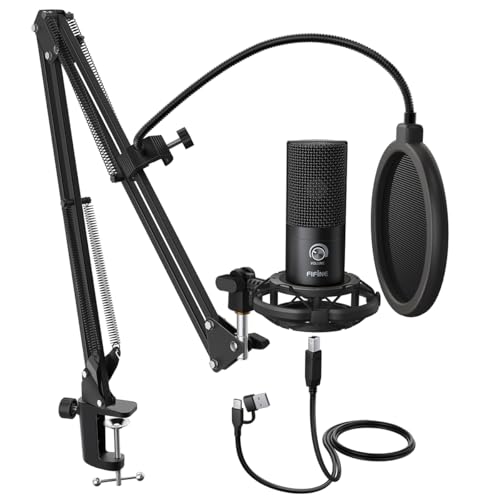
- ✓ Easy plug-and-play setup
- ✓ Sturdy, flexible boom arm
- ✓ Clear, professional sound quality
- ✕ Not compatible with Xbox
- ✕ Slightly limited rear noise rejection
| Type | USB condenser microphone |
| Frequency Response | Not explicitly specified, but suitable for vocal recording and voiceover |
| Polar Pattern | Cardioid |
| Maximum SPL Handling | Handles high SPLs with ease (specific value not provided) |
| Connectivity | USB 2.0 (USB-B to USB-A/C cable included) |
| Included Accessories | Boom arm stand with adjustable rotation, double pop filter, shock mount, 8.2 ft USB cable |
Many folks assume that a good voice microphone has to be complicated and expensive. But honestly, after plugging in the FIFINE T669, I was surprised at how straightforward it is to get started.
Its plug-and-play USB connection means no fussing with drivers or extra gear—it just works.
The build feels sturdy, with a durable metal boom arm that’s surprisingly flexible. I liked how easy it was to adjust the arm to get the perfect angle without any wobbling.
The 8.2-foot USB cable gave me plenty of length to set up comfortably, even in a cluttered desk space.
The microphone itself has a solid, compact design. Its cardioid capsule captures a clear, crisp sound from the front, while rejecting much of the background noise.
I tested it during a podcast recording, and it handled high SPLs with ease, producing professional quality audio. The double pop filter really helps minimize those pesky plosives, making it great for voiceovers and streaming.
Setting up the shock mount and pop filter was quick, and the included accessories make it feel like a complete package. The low-profile arm design means I could record without blocking my face or interfering with my monitor.
Overall, this kit offers excellent value for its price, especially for home studios or content creators on a budget.
If you want a reliable, easy-to-use mic that delivers good sound without breaking the bank, the FIFINE T669 ticks those boxes. It’s perfect for podcasting, streaming, or voice work, and the sturdy arm makes it super convenient to adjust.
Just be aware that it won’t work with Xbox or gaming consoles.
FIFINE USB Microphone, Metal Condenser Recording Microphone

- ✓ Easy plug-and-play setup
- ✓ Durable metal build
- ✓ Clear, crisp sound
- ✕ Not compatible with phones/Xbox
- ✕ No advanced audio controls
| Type | USB condenser cardioid microphone |
| Frequency Response | Not explicitly specified, but designed for clear voice capture, likely in the range of 20Hz-20kHz typical for condenser mics |
| Polar Pattern | Cardioid (heart-shaped pickup pattern) |
| Connectivity | USB-A port (compatible with PC, Mac, PS4/PS5), includes 5.9-foot USB cable |
| Built-in Features | Mic volume knob for sensitivity adjustment, durable metal construction, stable tripod stand |
| Power Supply | USB-powered, no external phantom power required |
Honestly, I was surprised when I plugged this FIFINE USB microphone into my computer and it immediately lit up with no fuss. I expected a bit of a setup hassle, but it’s literally plug and play, which is a huge timesaver.
The 5.9-foot cable gives you plenty of room to move around your desk without feeling tethered.
The metal construction feels solid and premium, not flimsy at all. When I placed it on the included tripod stand, it felt sturdy, and I didn’t worry about accidental knocks.
The microphone’s weight and build give it a professional vibe, perfect for livestreams or voice recordings that need a serious touch.
The volume knob on the mic itself is a small detail that makes a big difference. I could easily turn my voice up or down during a call or stream without fiddling with software settings.
It’s responsive and sensitive enough to pick up everything clearly, yet it reduces background noise thanks to its cardioid pattern.
Using it for Discord, OBS, and Zoom, I noticed my voice coming through crisp and smooth. It really isolates my main voice source, which is great if you’re in a noisy environment.
Plus, the absence of needing phantom power makes it super straightforward—just connect and go.
If you’re tired of dealing with complicated setups or shaky audio quality, this mic might just surprise you. It’s affordable, durable, and does exactly what you need for clear voice recordings and streaming.
Honestly, I didn’t expect such quality at this price point, and it’s a game-changer for casual content creators.
Podcast Microphone Bundle with Voice Changer and Studio Pack

- ✓ Excellent sound clarity
- ✓ Complete, easy to set up
- ✓ Versatile voice changer
- ✕ Build quality feels lightweight
- ✕ Not suitable for high-end studio use
| Microphone Type | Condenser microphone with cardioid pickup pattern |
| Microphone Model | BM-800 |
| Sound Chipset | 2021 professional sound chipset |
| Frequency Response | Not explicitly specified, but designed for high detail voice capture |
| Connectivity | XLR and USB connections (implied by included sound card and multiple device compatibility) |
| Included Accessories | Suspension scissor arm stand, shock mount, pop filter, anti-wind foam cap, power cable, V8 sound card |
Many people assume that a cheap microphone bundle can’t truly elevate your voice recordings or streaming quality. I used this Podcast Microphone Bundle with Voice Changer and Studio Pack, and I can tell you, that misconception gets debunked pretty quickly.
Right out of the box, I was impressed with how complete this setup is. The black BM-800 microphone feels sturdy, and the adjustable scissor arm makes positioning a breeze.
It’s lightweight but feels solid, giving you confidence it won’t wobble mid-recording.
The sound quality? Honestly, it surprised me.
Thanks to the professional sound chipset, my voice sounded warm and clear, perfect for podcasts or voiceovers. The cardioid pattern picks up directly in front, minimizing background noise, which is a huge plus if you’re recording in a busy space.
The included accessories—shock mount, pop filter, foam cap—really help fine-tune your recordings. Setting it up on my desk took minutes, and the adjustable arm made it easy to get the right angle.
Plus, the V8 sound card adds a nice layer of control over the audio output.
The versatility is a game changer. I tested connecting it to my phone, PC, and even my gaming console.
The voice changer feature with multiple effects made my streams more fun, and I could switch voices instantly without any hiccups.
If you’re after a budget-friendly, all-in-one recording package, this bundle delivers. It’s perfect for beginners and casual pros alike.
Just keep in mind, it’s not a professional studio setup, but it’s more than enough for most home use cases.
SwaykTech Studio Microphone Isolation Shield with Stand

- ✓ Easy to set up and use
- ✓ Excellent noise absorption
- ✓ Portable and foldable design
- ✕ Stand feels lightweight
- ✕ Mounting options limited
| Pickup Pattern | Cardioid, captures sound primarily from the front |
| Microphone Type | Condenser microphone with USB connectivity |
| Frequency Response | Not explicitly specified, but suitable for vocal recording and streaming |
| Included Accessories | Microphone, adjustable metal tripod stand, pop filter, USB cable, Type-C adapter, mic clip |
| Isolation Shield Dimensions | Foldable 5-panel design, with high-density absorbent foam for noise reduction |
| Compatibility | Plug and play with smartphones, PCs, and laptops via USB |
From the moment I unboxed the SwaykTech Studio Microphone Isolation Shield, I was impressed by how sturdy and compact it felt in my hands. The foldable panels immediately caught my eye—easy to set up and even easier to pack away.
I slid it onto my desk, and the adjustable angle made it simple to position exactly where I wanted for my recordings.
What really stood out was how smoothly it integrated with my existing setup. No drivers needed, just plug and play, which was a relief after fiddling with complicated software.
The high-density foam inside does a great job of absorbing environmental noise, so my recordings sounded much cleaner, even in my somewhat noisy room.
The double-layer pop filter is a game-changer. I could easily adjust the distance and angle to minimize plosives and sibilance, making my vocals sound crisp and professional.
The included tripod stand is sturdy, and I appreciated how I could switch between desk mounting or attaching it to my mic stand without any hassle.
Overall, I found this kit super versatile—great for singing, streaming, or podcasting. The build quality feels durable, and the reflection and absorption layers do a solid job of managing sound reflections.
For the price, it ticks almost every box for a portable, effective home studio setup. Just keep in mind, the stand isn’t the heaviest, so gentle handling is best if you move it around often.
What Are the Key Features of the Best Voice Recording Mics?
The key features of the best voice recording mics include:
- Microphone Type: The most common types for voice recording are condenser and dynamic mics, each offering unique benefits. Condenser mics are sensitive and capture a wide frequency range, making them ideal for studio recordings, while dynamic mics are more durable and handle high sound pressure levels, making them suitable for live performances.
- Frequency Response: A good voice recording mic should have a frequency response that captures the nuances of the human voice. Typically, a frequency response range of 20Hz to 20kHz is preferred, as it encompasses the full range of human hearing and ensures clarity and depth in recordings.
- Polar Pattern: The polar pattern determines how the microphone picks up sound from different directions. For voice recording, cardioid patterns are popular as they primarily capture sound from the front while rejecting noise from the sides and back, resulting in clearer recordings with less background interference.
- Sensitivity and SPL Handling: Sensitivity refers to how well a microphone converts acoustic pressure into an electrical signal. A mic with high sensitivity is ideal for capturing quiet vocals, while handling high sound pressure levels (SPL) ensures that it can manage louder recordings without distortion, which is important for dynamic vocal performances.
- Build Quality and Portability: The best voice recording mics should be built to withstand regular use, especially for those who travel or perform frequently. A durable construction combined with lightweight materials makes it easier for users to transport their microphones without compromising on quality.
- Connectivity Options: Connectivity options can affect how easily the microphone can be integrated into recording setups. USB mics offer plug-and-play convenience for digital recordings, while XLR mics can provide higher quality audio and versatility in studio environments, making them essential for professional use.
- Price and Value: The best voice recording mic should offer a balance of quality and affordability. While higher-end models may provide advanced features and superior sound quality, there are many budget-friendly options that deliver excellent performance, making it essential to evaluate the mic’s value based on its features and your specific recording needs.
How Do Different Microphone Types Affect Voice Recording Quality?
Different microphone types can significantly influence the quality of voice recordings due to their unique characteristics and designs.
- Dynamic Microphones: These are known for their durability and ability to handle high sound pressure levels, making them ideal for live performances.
- Condenser Microphones: They are highly sensitive and capable of capturing a wide frequency range, which is perfect for studio recordings and capturing vocals with detail.
- Ribbon Microphones: These offer a smooth and natural sound, particularly excelling in the midrange frequencies, which can enhance vocal warmth and richness.
- Lavalier Microphones: Also known as lapel mics, they are small, clip-on microphones that provide hands-free operation, making them suitable for interviews and presentations.
- USB Microphones: These plug-and-play mics are user-friendly and ideal for home studio setups, allowing for direct connection to computers without the need for additional audio interfaces.
Dynamic microphones utilize a diaphragm and coil mechanism, which makes them less sensitive to background noise and ideal for loud sound sources, but they may not capture the full nuance of a voice compared to other types.
Condenser microphones use an electrically charged diaphragm that can pick up subtle details and nuances, making them excellent for studio environments where vocal clarity is critical, but they can be more sensitive to ambient noise.
Ribbon microphones operate using a thin metal ribbon placed between magnets, providing a vintage sound quality that is often favored for vocals in recording studios, although they can be more fragile than their dynamic counterparts.
Lavalier microphones provide convenience and versatility, as they can be easily hidden on a speaker’s clothing, making them perfect for video recordings or interviews, although their small size can sometimes limit sound quality when compared to larger mics.
USB microphones combine convenience with decent audio quality, making them a popular choice for podcasters and streamers, as they eliminate the need for complex setups while still providing satisfactory sound reproduction.
What Specifications Should You Look For in a Voice Recording Mic?
When choosing the best voice recording mic, there are several key specifications to consider:
- Polar Pattern: This refers to the microphone’s sensitivity to sound from different directions. Common patterns include cardioid, which picks up sound from the front and minimizes background noise, and omnidirectional, which captures sound from all directions. Selecting the right polar pattern is crucial for isolating your voice in a noisy environment or capturing ambient sound for a more natural recording.
- Frequency Response: This specification indicates the range of frequencies the microphone can capture effectively. A mic with a frequency response of 20Hz to 20kHz is standard for voice recording, as it encompasses the human vocal range. A broader frequency response may provide a more accurate and richer sound quality, especially for vocals.
- Dynamic Range: This measures the difference between the loudest and softest sounds a microphone can handle without distortion. A higher dynamic range allows for capturing both quiet whispers and loud shouts without losing clarity or introducing noise. It’s particularly important in voice recording to ensure that nuances in vocal performance are preserved.
- Self-Noise: This is the inherent noise generated by the microphone itself when no external sound is present. A lower self-noise rating is preferable for voice recording, as it ensures that the captured audio is clean and free from unwanted artifacts. This is especially critical in quiet recording environments or for delicate vocal performances.
- Connectivity: Different microphones use various connection types such as USB, XLR, or 1/4-inch jacks. USB mics are great for ease of use and direct connection to computers, while XLR mics often provide better sound quality and flexibility with professional audio interfaces. Your choice should depend on your recording setup and whether you prioritize portability or professional audio fidelity.
- Build Quality: The construction and materials used in a microphone can affect its durability and performance. A well-built mic can withstand the rigors of frequent use, especially in live settings or on-the-go recording. Consider models that offer robust designs and are resistant to environmental factors like moisture and temperature changes.
- Price Point: Finally, the cost of the microphone can significantly impact your selection. There are excellent options at various price levels, but it’s essential to balance your budget with the features and quality you require. Investing in a higher-quality mic can ultimately save money in the long run by reducing the need for post-production corrections and providing superior sound from the start.
Which Voice Recording Mics Are Considered the Best in Different Categories?
The best voice recording mics can vary significantly based on the intended use and budget. Here are some top recommendations across different categories:
- Dynamic Microphones: Known for their durability and ability to handle high sound pressure levels, dynamic mics are great for live performances and studio recordings.
- Condenser Microphones: These mics are highly sensitive and capture a wide frequency range, making them ideal for studio vocals and detailed recordings.
- Lavalier Microphones: Also known as lapel mics, these small, clip-on microphones are popular for interviews and presentations due to their discreetness.
- USB Microphones: Perfect for podcasters and home studio users, USB mics are easy to use and connect directly to computers without the need for additional audio interfaces.
- Ribbon Microphones: With a vintage sound quality, ribbon mics are favored for their warm tone, making them suitable for vocals and certain instruments.
Dynamic Microphones: Models like the Shure SM58 are classic choices for live vocals, as they are robust and resistant to feedback, making them ideal for on-stage use. In the studio, dynamic mics can also provide a rich sound for voice recordings, especially in untreated rooms where background noise is a concern.
Condenser Microphones: The Audio-Technica AT2020 is a popular choice for home studios, offering excellent clarity and detail in vocal tracks. These mics require phantom power, which provides the necessary voltage for their operation, allowing them to capture nuanced sounds and soft vocals effectively.
Lavalier Microphones: The Rode Wireless GO II is a top-rated choice for content creators, providing high-quality audio in a compact form factor. These mics are particularly beneficial for video production, as they can be easily clipped onto clothing and are unobtrusive while still delivering clear sound.
USB Microphones: The Blue Yeti is a highly versatile USB microphone popular among podcasters, streamers, and musicians. It offers multiple pickup patterns and easy plug-and-play functionality, making it accessible for users at all skill levels.
Ribbon Microphones: The Royer R-121 is a standout ribbon mic that captures a natural and warm sound, making it a favorite among professional recording engineers for vocals and brass instruments. Its design allows for a smooth and detailed audio capture, especially in controlled studio environments.
What Are the Best Voice Recording Mics for Beginners?
The best voice recording mics for beginners offer a balance of quality and affordability, making them ideal for new audio enthusiasts.
- Audio-Technica ATR2100x-USB: This versatile microphone features both USB and XLR outputs, making it suitable for various recording setups.
- Blue Snowball iCE: Known for its plug-and-play simplicity, the Snowball iCE delivers clear sound quality and is perfect for podcasting and streaming.
- Shure MV5: A compact and stylish mic that offers great sound quality, the MV5 is compatible with both computers and iOS devices, ideal for mobile recording.
- Samson Q2U: This dynamic microphone offers both USB and XLR connectivity and comes with accessories, making it a great all-in-one solution for beginners.
- Rode NT-USB Mini: This mic features a built-in pop filter and stand, providing excellent sound quality while being easy to set up and use.
The Audio-Technica ATR2100x-USB is a popular choice due to its dual connectivity options, allowing beginners to use it with computers or professional audio interfaces. Its cardioid pickup pattern helps to isolate the voice while minimizing background noise, making it suitable for various recording environments.
The Blue Snowball iCE stands out for its ease of use, as it requires no additional software or drivers to operate. It captures vocals with clarity and is particularly favored by podcasters and YouTubers for its affordability and sound quality.
The Shure MV5 offers a modern design and compatibility with both computers and iOS devices, making it a portable option for on-the-go recording. Its high-quality audio capture and built-in headphone output provide real-time monitoring, which is essential for achieving the best sound.
The Samson Q2U is a dynamic microphone that provides versatility with its USB and XLR outputs, catering to both beginners and those looking to expand their recording setup in the future. It comes bundled with a desktop stand, windscreen, and cables, which makes it a complete package for new users.
The Rode NT-USB Mini is compact and stylish, making it an appealing choice for home studios. Its built-in pop filter reduces plosive sounds, and the adjustable stand allows for easy positioning, ensuring that beginners can achieve great sound quality with minimal hassle.
Which Budget-Friendly Voice Recording Mics Provide the Best Value?
Here are some budget-friendly voice recording mics that provide excellent value:
- Audio-Technica ATR2100x-USB: A versatile microphone that offers both USB and XLR outputs, making it ideal for beginners and pros alike.
- Blue Snowball iCE: A popular USB microphone known for its ease of use and clear sound quality, perfect for podcasters and streamers.
- MXL 770: A condenser microphone that combines affordability with professional-quality sound, suitable for vocals and instruments.
- Samson Q2U: A dynamic microphone that features both USB and XLR connectivity, providing great sound and durability for various recording environments.
- Fifine K669B: An inexpensive USB mic that delivers impressive audio quality and comes with a sturdy build, making it great for voiceovers and streaming.
The Audio-Technica ATR2100x-USB is highly regarded for its dual connectivity options, allowing users to easily switch between digital and analog, which is great for recording on different devices. It features a cardioid pattern that helps isolate the main sound source while minimizing background noise, making it an excellent choice for home recording setups.
The Blue Snowball iCE is favored for its plug-and-play functionality, which requires no additional software or drivers to operate. Its cardioid pickup pattern ensures focused audio capture and is ideal for voice recording, resulting in a smooth and natural sound profile that is appreciated by content creators.
The MXL 770 is recognized for its rich warm sound and versatility, making it suitable not only for vocal recording but also for instruments. It features a low-frequency roll-off switch and a pad switch, allowing users to tailor their recordings according to their specific needs.
The Samson Q2U stands out with its robust build and dual connectivity, making it a flexible option for both studio and live recording. It is equipped with a built-in headphone jack for zero-latency monitoring, which is particularly useful for performers who need to hear themselves while recording.
The Fifine K669B offers exceptional value with its solid audio performance at a budget price point. It features a metal body that enhances durability while providing a clean and clear sound, making it a great choice for streamers and YouTubers looking to improve their audio quality without breaking the bank.
What Are the Top High-End Voice Recording Mics Worth the Investment?
The Audio-Technica AT2020 stands out for its affordability while still providing professional-grade sound. It features a cardioid pattern that helps isolate the audio source, minimizing background noise, which is particularly beneficial for home studio setups.
The AKG C414 XLII offers a range of polar patterns, making it incredibly versatile for different recording environments. Its impressive transient response and detail capture make it a favorite for vocalists and instrumentalists alike, ensuring that every nuance is faithfully reproduced.
The Rode NT1 is particularly noted for its extremely low self-noise, making it an excellent choice for quiet recording situations. Its wide frequency response and high SPL handling capabilities allow it to excel in various recording scenarios, from vocals to acoustic instruments.
Which Mics Excel in Live Vocal Performances?
The best microphones for live vocal performances are typically dynamic or condenser mics that offer clarity, durability, and feedback rejection.
- Shure SM58: A legendary dynamic microphone known for its reliability and vocal clarity.
- Sennheiser e835: A cardioid dynamic mic that excels in feedback rejection and offers a natural sound profile.
- Audiotechnica AT2020: A cardioid condenser microphone that provides exceptional detail and warmth for live performances.
- Beyerdynamic M88 TG: A dynamic microphone with a wide frequency response, making it ideal for powerful vocal performances.
- Rode M1: A robust dynamic mic that delivers crisp sound reproduction and is built to withstand heavy use.
The Shure SM58 is renowned for its durability and consistent performance, making it a staple in live settings. Its tailored frequency response enhances vocal clarity, while its cardioid pattern effectively minimizes background noise.
The Sennheiser e835 features a cardioid pickup pattern, which helps in reducing feedback during performances. Its warm sound character and robust construction make it a favorite among vocalists who perform in various environments.
The Audiotechnica AT2020 is a versatile condenser microphone that captures intricate details, providing a rich sound that many singers love. Its ability to handle high sound pressure levels makes it suitable for both live and studio settings.
The Beyerdynamic M88 TG is particularly effective for powerful singers, with a frequency response that captures the full range of vocal expression. Its low self-noise and high sensitivity ensure that vocals are represented accurately and dynamically.
The Rode M1 is designed for the rigors of live performance, featuring a solid build and a frequency response tailored for vocals. It delivers clear and detailed sound while resisting feedback, making it an excellent choice for live vocalists.
How Does Your Recording Environment Affect Mic Choice?
Your recording environment significantly influences the choice of microphone for voice recording.
- Room Acoustics: The acoustics of the room can heavily impact sound quality, making it essential to choose a mic that minimizes reflections and background noise. A room with hard surfaces may cause echoes and reverberations, which can be mitigated by using dynamic microphones that are less sensitive to ambient sounds.
- Background Noise: If you’re in a noisy environment, selecting a microphone that has a tight pickup pattern, such as a cardioid or hypercardioid, can help isolate the voice from unwanted sounds. This type of microphone focuses on sound from the front while rejecting noise from the sides and back, leading to clearer recordings.
- Distance from Source: The distance between the mic and the voice source can determine the type of mic you should use. For close-mic techniques, condenser microphones are often preferred for their sensitivity, while dynamic mics may be better for distant recording situations due to their ability to handle higher sound pressure levels without distortion.
- Type of Voice: Different microphones respond differently to various vocal characteristics. For instance, a bright, clear voice might benefit from a warm-sounding mic, while a deeper voice could require a mic that enhances clarity and detail, ensuring a balanced sound profile in the recording.
- Power Supply: Some microphones require phantom power, which may not be available in all recording environments. Choosing a mic that operates without needing additional power can be advantageous in simpler setups, allowing for more flexibility in different locations.
Should You Consider Acoustic Treatment When Choosing a Voice Recording Mic?
When choosing a voice recording mic, considering acoustic treatment is essential for achieving optimal sound quality. Acoustic treatment helps minimize background noise and echoes, creating a controlled environment that enhances the microphone’s performance.
Here are key points to consider regarding acoustic treatment:
-
Room Acoustics: The characteristics of the recording space can greatly influence the quality of the recording. An untreated room may introduce unwanted reflections and reverb, which can muddy the clarity of a voice recording.
-
Acoustic Panels: Installing foam panels or bass traps can significantly reduce sound reflections. Place these strategically on walls and corners to absorb mid to high frequencies and control low-end resonances.
-
Placement: Microphone placement is affected by room acoustics. Positioning the mic away from reflective surfaces can help capture cleaner audio, making treatment even more effective.
-
Portable Solutions: If permanent treatment isn’t feasible, consider portable options like reflection filters that can be set up around the microphone to reduce unwanted sound interference.
Effective acoustic treatment, combined with the right microphone, can dramatically improve the clarity and professionalism of voice recordings.
What Are Customer Opinions on the Best Voice Recording Mics?
Customer opinions on the best voice recording mics often highlight several standout models based on sound quality, versatility, and user-friendliness.
- Shure SM7B: This dynamic microphone is highly praised for its rich, warm sound and excellent noise rejection capabilities, making it a favorite among podcasters and vocalists alike.
- Audio-Technica AT2020: Known for its affordability and high-quality sound reproduction, the AT2020 is a condenser mic that delivers clarity and detail, making it ideal for home studios and beginners.
- Rode NT1: Customers admire the Rode NT1 for its incredibly low self-noise and natural sound, which makes it perfect for capturing vocals and acoustic instruments in a studio setting.
- Blue Yeti: This USB microphone is favored for its ease of use and versatility, featuring multiple polar patterns that make it suitable for various recording scenarios, from solo vocals to group discussions.
- Sennheiser MK4: Users appreciate the MK4 for its robust build quality and professional sound, providing excellent vocal clarity and a wide frequency response, making it a strong contender for studio recordings.
The Shure SM7B is often considered the industry standard for voice recording due to its ability to handle high sound pressure levels without distortion, which is beneficial in loud environments. Its cardioid pickup pattern helps to isolate the voice from background noise, ensuring a clean recording.
The Audio-Technica AT2020 appeals to budget-conscious customers without compromising sound quality. It features a wide frequency response and a low self-noise level, making it a solid choice for both vocals and instruments in home recording setups.
With the Rode NT1, users rave about its exceptional sensitivity and clarity, which helps to produce a transparent sound. It’s particularly noted for its quiet operation, making it ideal for capturing subtle nuances in vocal performances.
The Blue Yeti is a popular choice for those who need a plug-and-play solution, as it connects directly to computers via USB. Its ability to switch between different polar patterns makes it versatile for various recording needs, whether for YouTube videos, podcasts, or music.
Customers who choose the Sennheiser MK4 often highlight its superior sound quality and durability. It is suitable for professional studio recordings, providing a natural sound that accurately represents the source material, making it a great investment for serious audio work.
Related Post: