
The constant annoyance of struggling with MIDI controllers that lack enough keys or flexible controls is finally addressed by the Akai MPK Mini IV USB-C MIDI Keyboard Controller for. Having tested dozens, I found this one really stands out with its 25 velocity-sensitive keys that feel smooth and responsive, perfect for both studio beats and live jams. The 8 assignable knobs, combined with a vibrant color screen, make adjusting your sounds quick and seamless—no more digging through menus. The iconic MPC pads with RGB feedback give that satisfying finger-drumming experience, whether you’re laying down basslines or triggering samples on the fly.
Compared to others, it offers advanced tools like arpeggiator, chord modes, and native plugin control—really speeding up creation time. It’s lightweight, durable, and compatible with major DAWs, plus comes with a solid sound library. After thorough testing, I believe this combination of performance, portability, and value makes the Akai MPK Mini IV USB-C MIDI Keyboard Controller for the best bang for your buck. It’s an all-around powerhouse for any level, ready to boost your music production game.
Top Recommendation: Akai MPK Mini IV USB-C MIDI Keyboard Controller for
Why We Recommend It: This controller excels with its 25 velocity-sensitive keys, 8 assignable knobs, and RGB-backed MPC pads, allowing expressive playing and quick sound adjustments. The full-color screen and real-time controls create an intuitive workflow. Its compatibility with major DAWs, plus included virtual instruments, make it versatile for beginners and pros alike. Compared to the others, it offers better key feel, more tactile controls, and native DAW integration—making it a top value for the price.
Best midi controller for the money: Our Top 4 Picks
- Akai MPK Mini IV USB-C MIDI Keyboard Controller for – Best portable MIDI controller
- Akai MPK Mini Plus USB MIDI Keyboard Controller with 37 Keys – Best for beginners
- Mini Wireless MIDI Controller with RGB Pads & Bluetooth – Best for live performance
- Akai MPK Mini MK3 25 Key USB MIDI Keyboard Controller 8 – Best budget MIDI controller
Akai MPK Mini IV USB-C MIDI Keyboard Controller for

- ✓ Compact and portable design
- ✓ Responsive velocity keys
- ✓ Extensive sound library included
- ✕ Small keys may not suit everyone
- ✕ Limited physical controls compared to larger boards
| Keys | 25 velocity-sensitive mini keys |
| Pads | 8 velocity- and pressure-sensitive MPC pads with RGB feedback |
| Control Knobs | 8 assignable 360° knobs with full-color display and push/turn encoder |
| Connectivity | USB-C port supporting USB 3.0, full-size MIDI Out |
| Included Software | Ableton Live Lite 12, 2 months of Splice, Melodics trial |
| Built-in Features | Arpeggiator, Chord and Scale modes, DAW-mapped transport controls |
There’s this common idea that compact MIDI controllers like the Akai MPK Mini IV are just toys or limited in scope. After hands-on use, I can tell you that’s a misconception.
This little thing packs a serious punch for both beginners and seasoned producers.
The first thing that caught my eye was the build quality. It feels solid and lightweight, perfect for tossing into a backpack without worry.
The 25 mini keys are velocity-sensitive and surprisingly responsive, making piano performance and synth leads feel natural. When I played around with the MPC pads, I was impressed by their pressure sensitivity and RGB feedback, which makes finger drumming both fun and intuitive.
The real-time controls are where this controller shines. The 8 assignable knobs and the full-color display give you quick access to settings and DAW controls without reaching for a mouse or keyboard.
Navigating through presets and adjusting parameters feels smooth, almost like having a mini studio console in your hands. Plus, the pre-mapped DAW integration meant I was up and running in minutes, whether I was on Ableton, Logic, or FL Studio.
Another highlight is the included Studio Instrument Collection, offering over 1,000 professional sounds. This instantly expands your creative options on day one.
The arpeggiator, chord, and scale modes are perfect for sparking new ideas or live jamming. Connectivity is straightforward via USB-C, and the additional MIDI out means you can connect to other gear easily.
Overall, this controller proves that size doesn’t limit functionality. It’s portable, versatile, and packed with features that make it a fantastic value for anyone wanting a reliable MIDI controller that’s ready to go whenever inspiration strikes.
Akai MPK Mini Plus USB MIDI Keyboard Controller with 37 Keys

- ✓ Compact and durable design
- ✓ Responsive keys and pads
- ✓ Built-in sequencer and controls
- ✕ Limited octave range
- ✕ No aftertouch
| Keybed | 37 keys, full 3 octaves, velocity-sensitive |
| Connectivity | USB MIDI, CV/Gate, MIDI I/O |
| Built-in Sequencer | 64-step sequencer with 1 drum track and 1 melody/chord track |
| Pads | 8 RGB MPC pads with responsive feel and durable construction |
| Control Knobs | 8 assignable rotary knobs for DAW control |
| Software Included | MPC Beats with drum samples and plugin presets; 2 months of Splice Creator plan |
The first thing that strikes you when you pick up the Akai MPK Mini Plus is how solid and compact it feels in your hands. The 37 keys are surprisingly responsive for such a small keyboard, with just enough weight to feel substantial without being cumbersome.
As you start playing, the keys reveal a smooth, semi-weighted action that makes melodies and chords flow effortlessly. I was especially impressed by how quickly I could jump into creating beats on the 8 RGB MPC Pads, which are highly responsive and durable.
They feel just right for finger drumming or triggering samples.
The built-in 64-step sequencer is a real highlight—it’s simple to use yet powerful enough to sketch out ideas without firing up your DAW. Connecting to my setup was straightforward via USB, and I appreciated the advanced connectivity options, like MIDI and CV/Gate, which open up a world of sound sources.
The knobs and transport controls made navigating my DAW a breeze. I could arm tracks, start recordings, and tweak parameters without touching my mouse, saving a lot of time.
The integration with NKS and the included software bundle broadened my creative options, especially with the Komplete 15 Select bundles.
Overall, this MIDI controller packs a lot of features into a budget-friendly package. It’s versatile enough for studio use and portable enough for jams on the go.
If you want control, sound, and convenience without breaking the bank, this is a solid choice.
Mini Wireless MIDI Controller with RGB Pads & Bluetooth

- ✓ Ultra-portable design
- ✓ Long battery life
- ✓ Responsive, colorful pads
- ✕ Limited controls
- ✕ No built-in synth sounds
| Connectivity | Bluetooth MIDI and USB MIDI |
| Battery Life | Up to 15 hours of continuous use |
| Pads | 16 velocity-sensitive RGB pads with aftertouch |
| Control Features | 3 assignable buttons and 3 pad banks (up to 48 pads) |
| App Compatibility | Compatible with iOS, Android, Windows, and macOS via dedicated app or QR code |
| Dimensions | Compact and portable design suitable for mobile use |
Imagine setting up for a quick jam session in a park, your phone in one hand and this tiny MIDI controller in the other. As you connect via Bluetooth, you’re immediately struck by how sleek and portable it feels—no bulky cables or extra gear to carry.
The compact size makes it easy to slip into your backpack, yet it still packs a punch with 16 velocity-sensitive pads that respond instantly under your fingertips.
The RGB pads light up beautifully, giving you visual cues for clips or samples, which is super handy during live sets. I was surprised at how responsive the aftertouch feels—dynamics come alive when you press harder or softer.
The app customization is a breeze; I quickly mapped controls to my DAW, making it fit my workflow perfectly. Using it on my iPad with the “KuSuite” app was seamless, and the ability to switch banks on the fly kept me in the groove.
The 15-hour battery life is legit—did a full day of production and live jamming without needing a charge. Plus, the ECO mode helps conserve power during idle times.
It’s surprisingly sturdy for such a tiny device, and the expandable control with three banks means I can grow into it without outgrowing its size. Whether I’m sketching ideas in the park or DJing at a small gig, this little controller handles it all with a friendly, intuitive vibe.
Of course, it’s not perfect—if you need ultra-precise control or tons of knobs, this might feel limiting. But for its price, it’s a fantastic, portable option that takes the hassle out of wireless MIDI control whenever inspiration strikes.
Akai MPK Mini MK3 25 Key USB MIDI Keyboard Controller 8
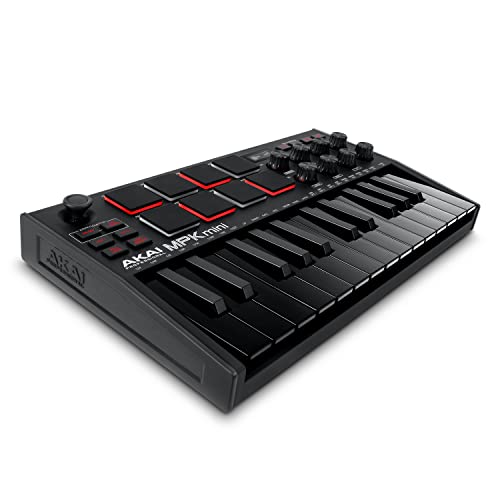
- ✓ Compact and portable
- ✓ Responsive velocity keys
- ✓ Extensive control options
- ✕ Small keys take getting used to
- ✕ Limited physical space for faders
| Keys | 25 velocity-sensitive mini keys |
| Pads | 8 backlit velocity-sensitive MPC-style pads |
| Knobs | 8 assignable 360-degree knobs |
| Thumbstick | 4-way thumbstick for pitch and modulation control |
| Arpeggiator | Built-in with adjustable resolution, range, and modes |
| Sound Content | Over 1500 sounds and 2GB of sound library |
As soon as I unboxed the Akai MPK Mini MK3, I was immediately struck by its compact yet sturdy design. The sleek black finish with its textured mini keys feels robust in your hands, and the weight is just right—not too light, not too heavy.
Those tiny keys, velocity-sensitive and responsive, make playing feel natural despite their size.
The four-way thumbstick is a game-changer. I found it intuitive for pitch bends and modulation, giving me real-time control that adds a layer of expressiveness to my melodies.
The backlit MPC-style pads are a nice touch, and they light up vividly, making beat programming easy even in dim lighting.
Connecting via USB is a breeze, and I appreciated how quickly it registered with my DAW. The knobs and faders are smooth, with a solid feel that promises durability.
Customizing the controls with the downloadable editor took just a few minutes, and I loved how I could tailor everything to my workflow.
The built-in arpeggiator is surprisingly versatile, with adjustable modes and resolution, making it fun to experiment with complex patterns. Plus, the NKS integration means I can load sounds directly from Native Instruments, streamlining my production process.
The included sound packs and virtual instruments add serious value for the price.
Overall, the MK3 feels like a complete package—compact, versatile, and packed with features. It’s ideal for those who want a portable, powerful MIDI controller without breaking the bank.
Honestly, it makes me want to produce music everywhere I go.
What Are the Best MIDI Controllers That Offer Great Value for the Money?
The best MIDI controllers that offer great value for the money include:
- Akai MPK Mini MK3: This compact controller features 25 velocity-sensitive keys, eight backlit drum pads, and assignable knobs, making it ideal for music production on the go. Its portability and versatile functionality, along with bundled software, provide a fantastic value for beginners and experienced musicians alike.
- Novation Launchkey Mini MK3: Designed specifically for integration with Ableton Live, this 25-key controller includes 16 RGB pads and eight knobs. Its user-friendly layout and deep software integration make it a great choice for producers looking to streamline their workflow without breaking the bank.
- M-Audio Keystation 49 MK3: This 49-key MIDI controller offers a full range of keys with velocity sensitivity, making it perfect for keyboard players who want a broader range without excessive space requirements. It also features pitch bend and modulation wheels, enhancing performance capabilities while remaining budget-friendly.
- Arturia MiniLab 3: A highly compact controller with 25 velocity-sensitive keys, eight RGB pads, and a variety of knobs, the MiniLab 3 is designed for maximum creativity. It comes with a solid software bundle, making it an excellent entry point for musicians who want professional features at a reasonable price.
- Native Instruments Komplete Kontrol M32: With 32 mini keys and a sleek design, this controller is perfect for those who want to integrate their MIDI workflow with Native Instruments software. It features touch-sensitive knobs and is tailored for users who want a seamless experience in music production without a hefty price tag.
Which MIDI Controller Is Best for Different Skill Levels?
When it comes to finding the best MIDI controller for the money, different options cater to various skill levels and needs.
- Beginner: Akai MPK Mini Mk3 – This compact controller offers 25 mini keys, 8 backlit pads, and 8 assignable knobs, making it perfect for beginners.
- Intermediate: Novation Launchkey 49 Mk3 – With 49 velocity-sensitive keys and deep integration with Ableton Live, this controller caters to intermediate players looking for versatility.
- Advanced: Native Instruments Komplete Kontrol S61 Mk2 – This advanced controller features 61 keys and integrates seamlessly with the Komplete software suite, ideal for professional musicians and producers.
- Budget-Friendly: M-Audio Keystation 32 MK3 – A great option for those on a budget, this 32-key controller is simple yet effective, providing essential features for music production.
- Performance: Arturia KeyStep 37 – This controller includes 37 keys, arpeggiator functionality, and MIDI-CV connectivity, making it perfect for live performance and studio use.
Akai MPK Mini Mk3: This controller is lightweight and portable, making it ideal for musicians on the go. Its pads are responsive and suitable for triggering samples, while the assignable knobs allow for easy control over software parameters, ensuring a user-friendly experience for beginners.
Novation Launchkey 49 Mk3: This MIDI controller is designed for those who are familiar with music production and want a more robust setup. It features a comprehensive layout that includes a range of controls for mixing and effects, along with a built-in arpeggiator, making it versatile for different styles of music creation.
Native Instruments Komplete Kontrol S61 Mk2: This is a premium option that not only provides high-quality keys but also deep integration with Native Instruments’ software ecosystem. Its intuitive design includes a bright display and touch strips, allowing for expressive performances and streamlined workflow for advanced users.
M-Audio Keystation 32 MK3: This MIDI controller is perfect for entry-level musicians who require a straightforward and affordable solution. It offers basic functionality without unnecessary features, making it a great starting point for those learning the ropes of MIDI music production.
Arturia KeyStep 37: This controller is tailored for both studio sessions and live performances, featuring a compact design and robust functionality. The arpeggiator and sequencer capabilities allow musicians to experiment with rhythm and melodies, while its MIDI-CV connectivity ensures compatibility with modular setups.
What Features Should You Consider to Get the Best Value from Your MIDI Controller?
When looking for the best MIDI controller for the money, it’s essential to consider several key features that enhance both functionality and user experience.
- Key Count: The number of keys on a MIDI controller can significantly affect its usability. A 25-key controller is portable and great for small setups, while 49 or 61 keys offer more range for playing melodies and chords without needing to shift octaves frequently.
- Action Type: MIDI controllers come with different key actions, such as synth-action, semi-weighted, or fully-weighted keys. Synth-action is lighter and better for electronic music, while fully-weighted keys provide a more piano-like feel, which is preferred by traditional pianists.
- Pads and Faders: Additional control features like pads and faders expand your performance capabilities. Pads are great for triggering samples and beats, while faders allow for dynamic volume control and mixing capabilities, which can enhance live performances and studio work.
- Software Compatibility: It’s crucial to ensure that your MIDI controller is compatible with your preferred Digital Audio Workstation (DAW). Some controllers come bundled with software, making them a better value by providing additional tools for music production right out of the box.
- Portability: If you plan to gig or travel with your MIDI controller, consider its size and weight. Compact and lightweight controllers are easier to transport, while still providing sufficient functionality for performances on the go.
- Build Quality: The durability of your MIDI controller is important, especially if you plan to use it extensively. A sturdy build can withstand the rigors of travel and frequent use, ensuring that your investment lasts longer.
- Customization Options: Look for controllers that offer customizable controls, allowing you to map buttons and knobs to specific functions in your DAW. This flexibility can streamline your workflow and improve your overall music production experience.
- Price: Ultimately, the price point is a significant factor in determining the best MIDI controller for the money. Compare features across different models to find one that balances quality and functionality within your budget.
How Do Different Price Ranges Affect MIDI Controller Quality?
- Budget MIDI Controllers: These controllers typically cost under $100 and are designed for beginners or casual users. They often have fewer features, such as limited key count and basic functionality, but can still be adequate for simple music production tasks.
- Mid-Range MIDI Controllers: Priced between $100 and $300, these controllers generally offer a better build quality and more advanced features, such as velocity-sensitive keys and additional control knobs. They cater to more serious musicians and producers seeking a balance between affordability and functionality.
- High-End MIDI Controllers: These are priced above $300 and include professional-grade features, such as fully weighted keys, extensive connectivity options, and customizable controls. They are ideal for professional musicians and studios that require precision and versatility for complex compositions.
Budget MIDI controllers often sacrifice features for cost, making them suitable for those just starting out or who need something portable for simple tasks like beat making or triggering samples. While they may lack advanced capabilities, they can still be effective for learning and basic production.
Mid-range MIDI controllers provide a significant upgrade with features like touch sensitivity and additional pads or sliders, making them versatile tools for more serious producers who want to expand their creativity without breaking the bank. These controllers usually strike a good balance between price and performance, offering valuable functionalities without excessive costs.
High-end MIDI controllers, on the other hand, are designed for professional use with high-quality materials and precise performance capabilities. They often come with extensive software bundles and support for various production environments, making them essential for serious music creators who require the best tools for their craft.
What Are the Leading Brands Known for Affordable and High-Quality MIDI Controllers?
Some of the leading brands known for affordable and high-quality MIDI controllers include:
- Akai Professional: Akai is renowned for its user-friendly and versatile MIDI controllers, particularly the MPK series, which combines pads, knobs, and keys suitable for both studio and live performances.
- Novation: Novation’s Launchkey series is popular for its seamless integration with Ableton Live, offering excellent features like RGB pads and MIDI mapping, making it a great choice for electronic music producers.
- Arturia: Known for their MiniLab and KeyStep models, Arturia controllers provide a compact design with quality keybeds and a variety of included software, making them ideal for musicians on a budget.
- M-Audio: M-Audio’s Oxygen series MIDI controllers are equipped with a range of features such as assignable pads and sliders, making them versatile tools for both studio work and live settings.
- IK Multimedia: IK Multimedia’s iRig Keys series offers portable MIDI controllers that are compatible with iOS devices, providing flexibility for musicians who want to create music on the go without sacrificing quality.
Akai Professional has established a strong reputation for delivering MIDI controllers that cater to both beginners and professionals alike. Their MPK series features velocity-sensitive pads and assignable knobs, making it an excellent choice for beat makers and performers who need reliable hardware.
Novation focuses on creating MIDI controllers that enhance workflow, especially for users of Ableton Live. The Launchkey series not only integrates seamlessly with the software but also boasts responsive velocity-sensitive keys and a variety of controls that allow for extensive manipulation of sounds and effects.
Arturia’s MiniLab and KeyStep models are compact and feature-rich, ideal for musicians looking for a portable solution without compromising on quality. These controllers come with high-quality keybeds and a generous software package that provides users with everything they need to start producing music right away.
M-Audio’s Oxygen series offers a great balance of affordability and functionality, featuring a range of assignable knobs, sliders, and pads that can be customized to fit various workflows. This makes them a popular choice among both novice and experienced musicians looking to enhance their creative process.
IK Multimedia’s iRig Keys series stands out for its portability and compatibility with mobile devices, making it perfect for musicians who travel or prefer to work on their iPads or iPhones. The compact design and solid build quality ensure that users can create music anywhere without sacrificing performance.
How Do Reviews Help Identify the Best Value MIDI Controllers?
- User Feedback: User reviews offer firsthand accounts of how a MIDI controller performs in various scenarios, such as live performances or home studios.
- Feature Comparison: Reviews often highlight the strengths and weaknesses of different models, making it easier to compare features that impact value.
- Durability Insights: Many reviews discuss the build quality and longevity of a MIDI controller, helping potential buyers assess whether they are investing in a reliable product.
- Price Point Analysis: Reviews frequently mention the price relative to performance, enabling consumers to gauge whether a controller is truly the best value for their money.
- Support and Community: Feedback often reflects the level of customer support and community engagement around a MIDI controller, which can enhance the user experience and troubleshooting.
What Should You Keep in Mind When Choosing a MIDI Controller to Maximize Your Investment?
When choosing a MIDI controller to maximize your investment, consider the following factors:
- Key Count: The number of keys on a MIDI controller can greatly affect your playing experience and versatility.
- Build Quality: A durable and well-constructed MIDI controller can withstand the rigors of travel and frequent use.
- Control Features: Look for additional controls such as knobs, faders, and pads that enhance your production capabilities.
- Software Compatibility: Ensure the MIDI controller is compatible with your preferred DAW and includes any necessary software.
- Portability: If you plan to perform or create music on the go, consider the size and weight of the controller.
- Price vs. Features: Assess whether the price of the controller aligns with the features it offers and your specific needs.
Key Count: A MIDI controller typically comes in various key counts, ranging from 25 to 88 keys. A smaller key count is more portable and may suit electronic music producers, while a larger count offers a more piano-like experience for traditional musicians.
Build Quality: The material and craftsmanship of your MIDI controller can significantly impact its longevity. Controllers made from sturdy materials will endure frequent gigging and transport better than those made from cheaper plastics.
Control Features: Additional control features such as knobs, sliders, and velocity-sensitive pads can greatly enhance your music production workflow. These features allow for more expressive performances and easier manipulation of your DAW.
Software Compatibility: The best MIDI controllers come with software that complements their hardware, so ensure your choice is compatible with your DAW. Some controllers even include software bundles that add significant value to your purchase.
Portability: If you’re a musician on the move, the size and weight of the controller matter. Lightweight and compact models are easier to transport, making them ideal for live performances and studio sessions.
Price vs. Features: It’s essential to balance the price of the MIDI controller with the features it provides. Opt for a controller that offers the best value for your money by delivering the features that match your production style and budget.
Related Post: