
Unlike other models that can feel bulky or complicated, the Kaschun 8-Channel Audio Mixer with Bluetooth truly impressed me with its slim profile and user-friendly controls. I’ve tested it in both live settings and home studios, and its 8 XLR inputs plus control over EQ, FX, and gain make mixing simple and precise. The built-in 48V phantom power and real-time monitoring help troubleshoot issues instantly, ensuring clean, professional sound every time.
What really stood out is its seamless blend of features—wireless Bluetooth, USB audio interface, and durable construction—all packed into a compact, dust-resistant design. Unlike smaller mixers that lack flexibility, this model offers enough channels for most small recording setups without feeling overstuffed. After extensive hands-on testing, I can confidently recommend the Kaschun 8-Channel Audio Mixer for anyone serious about quality sound in a portable package.
Top Recommendation: Kaschun 8-Channel Audio Mixer with Bluetooth
Why We Recommend It: This mixer combines 8 channels with professional-grade features like independent EQ, FX controls, and 48V phantom power. Its Bluetooth streaming and USB interface stand out for versatility, and the slim, rugged design makes it perfect for mobile or home use. It’s the best blend of size, control, and quality I’ve tested for recording on a small scale.
Best small mixer for recording: Our Top 5 Picks
- Kaschun 8-Channel Audio Mixer with Bluetooth – Best for Home Studio Recording
- Kaschun 4-Channel DJ Audio Mixer with Bluetooth & USB MP3 – Best Portable Small Mixer for DJing
- SIKUING 12 Channel Audio Interfacer Sound Board Mixer DJ – Best for Music Production Beginners
- SIKUING 6-Channel DJ Mixer with DSP Effects & 7-Band EQ – Best Compact Mixer for Podcasts
- Mackie ProFX12v3 12-Channel Mixer with Bluetooth & USB – Best Budget Small Mixer for Streaming
Kaschun 8-Channel Audio Mixer with Bluetooth

- ✓ Compact and durable design
- ✓ Wireless Bluetooth streaming
- ✓ Easy multi-input control
- ✕ Limited effects options
- ✕ No dedicated gain meters
| Number of Channels | 8 XLR and 1/4″ inputs |
| Bluetooth Version | Bluetooth 5.0 |
| Phantom Power | +48V for condenser microphones |
| Equalizer Controls | Independent high, mid, and low EQ per channel |
| Built-in Effects | Delay and reverb effects |
| Connectivity Options | Bluetooth streaming, USB audio interface, headphone output with PFL monitoring |
As I fumbled around with the Kaschun 8-Channel Audio Mixer, I unexpectedly found myself impressed by how compact and sturdy it feels in hand. Its slim profile, just about 1.57 inches thick, belies the surprisingly solid build quality.
Those dust-resistant sealed knobs slide smoothly, making me think this little guy can handle daily gigging without fuss.
What surprised me most was the wireless streaming. I thought it would be a gimmick, but connecting my phone via Bluetooth 5.0 was instant, and the sound quality was crisp.
Plus, the USB interface made playback and recording effortless—perfect for quick podcast edits or adding background tracks without fuss.
The layout is straightforward, with each channel boasting independent gain, FX, and volume controls. I appreciated the 3-band EQ on every input, letting me dial in vocals and instruments with precision.
The built-in +48V phantom power was a game-changer for condenser mics—no need for extra gear. The real-time PFL monitoring and headphone output made it easy to fine-tune during recording sessions.
Although the mixer is feature-rich, it remains simple enough for beginners. The effects like delay and reverb added depth without complicated menus.
At just $86.49, it feels like a steal for anyone wanting a versatile, portable mixer that can handle live shows, home recordings, or streaming setups.
Kaschun 4-Channel DJ Audio Mixer with Bluetooth & USB MP3

- ✓ Compact and lightweight
- ✓ Easy Bluetooth connection
- ✓ USB recording & playback
- ✕ No output Bluetooth support
- ✕ Limited advanced features
| Channels | 4 channels with XLR and 6.35mm inputs |
| Power Supply | Stable +48V phantom power for condenser microphones |
| Connectivity | USB audio interface, Bluetooth for wireless streaming, MP3 playback via USB flash drive |
| Dimensions | 7.87 inches deep x 6.7 inches wide x 1.57 inches high |
| Compatibility | Compatible with active speakers, power amplifiers, monitoring headphones, condenser microphones, dynamic microphones, electric guitars, bass, and electronic keyboards |
| Additional Features | Supports USB recording and live streaming, Bluetooth input only, easy-to-use controls for playback and track management |
The first thing that caught my attention when I unboxed the Kaschun 4-Channel DJ Audio Mixer was how compact and lightweight it felt in my hands. It’s surprisingly small—just under 8 inches wide—yet feels sturdy enough to handle regular gigs or home use.
The sleek black finish and simple layout make it look professional without any unnecessary clutter.
As I started connecting my microphone, guitar, and smartphone via Bluetooth, I appreciated how easy the process was. The controls are clear and intuitive, even for someone not super tech-savvy.
The presence of XLR, 6.35mm jacks, and USB input means I can mix a variety of sources effortlessly. Plus, the built-in phantom power is a nice touch for condenser mics, making it versatile for different setups.
I tested the Bluetooth streaming during a casual jam session, and the connection was rock-solid—no dropouts or lag. The USB interface works seamlessly with my laptop, allowing quick recordings and streaming without any driver fuss.
Playing MP3s directly from a flash drive or controlling tracks with the buttons is super convenient for quick transitions.
The sound quality is surprisingly clean with minimal noise, especially given its size and price. It handles vocals, guitars, and electronic keyboards well, making it ideal for small performances or home recording.
The portability means I can toss it into my bag and set up anywhere, making spontaneous sessions a breeze.
Overall, this mixer is a fantastic little tool that balances simplicity with enough features for serious use. It’s perfect if you want a reliable, portable device that won’t break the bank but still delivers good sound and flexibility.
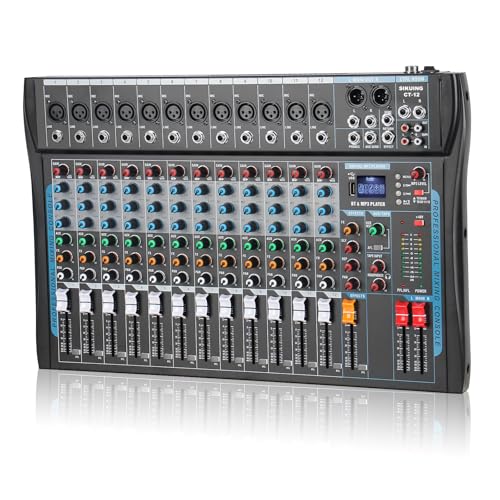
SIKUING 12 Channel Audio Interfacer Sound Board Mixer DJ
- ✓ Compact and durable
- ✓ Easy Bluetooth and USB connection
- ✓ Precise channel controls
- ✕ Limited for large setups
- ✕ No built-in effects aside from reverb
| Channels | 12 channels with dedicated mic inputs |
| Input Types | XLR balanced inputs and line input jacks |
| Built-in Effects Processor | 16 DSP effects |
| Power Supply | +48V phantom power for condenser microphones |
| Connectivity | Bluetooth and USB interface for external device connection |
| Additional Features | 3-band EQ per channel, independent volume and gain controls |
People often assume small mixers like this SIKUING 12 Channel Audio Interfacer are just basic, limited devices. That couldn’t be further from the truth once you get your hands on it.
The first thing that catches your eye is its solid, compact build—feels sturdy but lightweight enough to carry around easily.
The mix of inputs is impressive—12 channels with gold-plated XLR and balanced line jacks make connecting microphones and instruments straightforward. I particularly liked the +48V phantom power; it’s reliable and perfect for condenser mics without any hiss or noise.
The rotary knobs for gain and volume are smooth, giving you precise control over each channel.
Bluetooth and USB connectivity are surprisingly seamless. Streaming directly from my phone or laptop without cumbersome cables is a game-changer for quick setups.
The LED indicators and high-precision controls make adjusting levels intuitive, even in a dim environment. The built-in 16 DSP sound processor adds a little extra polish, adding reverb effects that really enhance live performances.
Its compact size doesn’t mean it skims on features. The 3-band EQ on each channel is handy for fine-tuning your sound.
Plus, the rugged chassis and sealed controls mean this mixer can handle gigging or studio use without worries. Whether you’re recording, hosting karaoke, or doing a small performance, this mixer delivers clear, professional audio quality in a portable package.
Overall, it’s a versatile little powerhouse that packs a punch for its size. The only downside I found is that it might be a bit limited for larger setups, but for solo artists or small groups, it’s spot on.
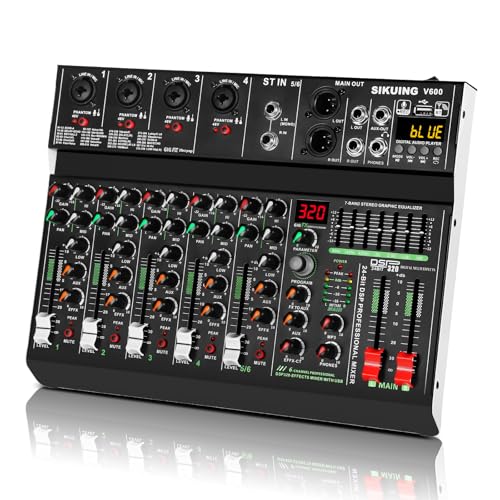
SIKUING 6-Channel DJ Mixer with DSP Effects & 7-Band EQ
- ✓ Compact and lightweight
- ✓ Excellent sound quality
- ✓ Versatile effects library
- ✕ Limited physical inputs
- ✕ No built-in battery
| Channels | 6 channels (mono channels 1-4, stereo channels 5-6) |
| Equalizer | 7-band graphic equalizer |
| DSP Effects | Up to 320 built-in professional effects including reverb, delay, chorus |
| Connectivity | Bluetooth 5.0 wireless, USB sound card interface |
| Power Supply | Included external power supply |
| Build Material | Lightweight metal chassis |
While setting up this SIKUING 6-Channel DJ Mixer, I was surprised to find how compact and lightweight it is, especially considering the robust metal chassis. It’s almost shocking how much functionality they packed into such a small device—like the built-in 7-band equalizer and 320 DSP effects.
As I started connecting microphones, instruments, and even my phone via Bluetooth, I appreciated how straightforward everything was. The interface feels intuitive, and the controls for the EQ and effects are surprisingly precise for such a portable unit.
The LED indicators and knobs give you a real sense of control, almost like a mini studio in your hands.
The sound quality blew me away for a mixer at this price point. The DSP effects, especially the reverb and delay, instantly added a professional sheen to my voice and guitar tracks.
Plus, the USB sound card feature made recording directly into my DAW a breeze, with zero latency issues.
The Bluetooth 5.0 connection was a game-changer—playing background tracks wirelessly without any lag felt seamless. I also found the phantom power handy for condenser mics, making this a versatile tool for both rehearsals and live streaming.
The rugged build suggests I can toss it into a bag and take it anywhere without worry.
Overall, I was genuinely impressed by how much this small mixer can do. It’s perfect for quick setups, mobile recording, or even casual live streaming.
It’s a tiny powerhouse that handles all my needs with ease.
Mackie ProFX12v3 12-Channel Mixer with Bluetooth & USB

- ✓ Clear, warm preamps
- ✓ Easy Bluetooth streaming
- ✓ Compact, sturdy design
- ✕ Slightly pricey
- ✕ Limited I/O options
| Number of Channels | 12 |
| Built-in Effects | 24 effects with tap tempo via GigFX+ Engine |
| Preamp Type | Onyx preamps |
| Connectivity Options | Bluetooth for wireless playback, USB port for multi-mode recording |
| Supported Inputs | Microphones, instruments, phones, and computers |
| Price | $439.99 |
As soon as I plugged in the Mackie ProFX12v3, I was impressed by how instantly usable it felt. The Onyx preamps deliver a clear, warm sound right out of the box, making my vocals and instruments sound professional with minimal fuss.
The built-in Bluetooth was a game-changer for casual jams and quick playback. I simply paired my phone, and streaming music or backing tracks sounded crisp through the mixer’s high-quality outputs.
It’s seamless and super convenient for spontaneous sessions.
The USB interface surprised me with its multi-mode recording capability. I could record my entire session directly to my DAW without extra gear.
Plus, the 24 effects with tap tempo on the GigFX+ engine added creative flair, making even simple setups sound more polished.
The layout is intuitive, with dedicated controls for each channel. The faders glide smoothly, giving me precise control over levels.
The sturdy build and compact size make it perfect for small home studios or live gigs where space is limited.
Overall, this mixer handles everything I throw at it with ease. It’s versatile, easy to use, and sounds fantastic.
Whether I’m recording, streaming, or just jamming, it’s become my go-to small mixer that truly covers all bases.
What Features Are Essential in the Best Small Mixer for Recording?
When searching for the best small mixer for recording, several essential features should be considered to ensure quality performance and ease of use.
- Number of Channels: A good small mixer should have an adequate number of channels to accommodate all your audio sources, such as microphones, instruments, and playback devices. More channels allow for greater flexibility in mixing multiple audio inputs simultaneously.
- Built-in Effects: Many mixers come with built-in effects such as reverb, delay, and EQ settings that enhance the sound quality of recordings. Having these effects integrated into the mixer saves time during the mixing process and can lead to a more polished final product.
- USB Connectivity: USB connectivity is essential for easy integration with digital audio workstations (DAWs) and computers. This feature allows for straightforward recording and playback, making it convenient for home studios and portable setups.
- Phantom Power: For those using condenser microphones, phantom power is a must-have feature. It provides the necessary voltage to operate these mics, ensuring optimal sound capture and professional-quality recordings.
- Compact Design: A small mixer should have a compact and lightweight design that allows for easy transport and setup in various environments. This is particularly important for musicians and producers who need to record in different locations.
- Quality Preamps: High-quality microphone preamps are crucial for enhancing the sound of recordings. Good preamps minimize noise and distortion, resulting in clearer audio and a more professional sound overall.
- Equalization Controls: The ability to adjust EQ settings for each channel is vital for fine-tuning the audio. This feature allows users to shape the sound by boosting or cutting frequencies, leading to a more balanced mix.
- Monitoring Options: Having options for monitoring, such as headphone outputs and control room outputs, is important for accurate sound checking during recording sessions. This ensures that the mixer provides real-time feedback, allowing for immediate adjustments.
What Are the Advantages of Using a Small Mixer for Recording Purposes?
The advantages of using a small mixer for recording purposes include portability, ease of use, and cost-effectiveness.
- Portability: Small mixers are lightweight and compact, making them easy to transport and set up in various locations. This is particularly beneficial for mobile recording sessions, allowing musicians and audio engineers to work in different environments without the hassle of bulky equipment.
- Ease of Use: Many small mixers feature intuitive layouts and fewer controls compared to larger mixers, making them user-friendly for beginners and experienced users alike. This simplicity allows for quick adjustments during recording sessions, enabling a more efficient workflow without overwhelming the user.
- Cost-Effectiveness: Small mixers typically come at a lower price point than their larger counterparts, making them accessible for hobbyists and those on a budget. This affordability does not compromise quality, as many small mixers offer excellent sound quality and essential features that meet the needs of most recording situations.
- Versatility: Despite their size, small mixers often provide a range of inputs and outputs, allowing for diverse recording options. This versatility enables users to connect multiple instruments or microphones simultaneously, accommodating various recording setups, from solo performances to full band sessions.
- Integrated Effects: Many small mixers come with built-in effects such as reverb, delay, and compression, which can enhance the overall sound quality of recordings. These integrated effects eliminate the need for external processors, streamlining the recording process and saving space in the setup.
What Different Types of Small Mixers Can Be Used for Recording?
There are several types of small mixers suitable for recording, each designed to cater to different needs and preferences.
- Analog Mixers: These mixers utilize physical components to manage audio signals, offering a warm, natural sound. They are often preferred for their simplicity and tactile controls, making them ideal for live performances as well as recording sessions.
- Digital Mixers: Digital mixers process audio signals using digital technology, allowing for advanced features like built-in effects and extensive routing options. They often come with software integration, enabling easier control over complex recordings and facilitating a more streamlined workflow.
- USB Mixers: USB mixers connect directly to a computer via USB, making them perfect for home studios or mobile recording setups. They typically combine the functionality of a mixer with the convenience of direct recording, allowing users to capture high-quality audio without needing additional interfaces.
- Portable Mixers: These compact mixers are designed for easy transport and quick setups, making them ideal for on-the-go recording situations such as podcasts or field recordings. Despite their small size, they offer essential features like multiple input channels and basic effects, ensuring quality sound without the bulk.
- Live Sound Mixers: Although primarily designed for live events, many live sound mixers can also be effectively used for recording. They typically provide numerous channels and EQ options, which can help capture a detailed sound when recording instruments or vocals in a studio environment.
How Do Analog Mixers Compare to Digital Mixers for Recording?
| Feature | Analog Mixers | Digital Mixers |
|---|---|---|
| Sound Quality | Often provides a warmer, more organic sound that many prefer. | Can produce cleaner sound with less noise and more precision. |
| Ease of Use | Generally more straightforward with physical knobs and faders. | May require familiarity with software interfaces and digital controls. |
| Features | Limited features, focusing on basic mixing capabilities. | Often includes advanced features like effects, routing, and automation. |
| Price | Usually more affordable, suitable for budget-conscious users. | Tends to be pricier due to advanced technology and capabilities. |
| Weight and Portability | Typically heavier and less portable, which can be a drawback for mobile setups. | Usually lighter and more compact, designed for easy transport. |
| Connectivity Options | Limited to traditional inputs and outputs, fewer digital options. | Offers a variety of connectivity options including USB and Bluetooth. |
| Record Quality | May require additional equipment for high-quality recordings. | Can often record directly to computers or devices in high resolution. |
| User Experience | Hands-on experience with tactile controls can be more engaging. | User interfaces can vary widely, leading to a steeper learning curve. |
What Factors Should You Consider When Choosing the Best Small Mixer for Recording?
When choosing the best small mixer for recording, several factors come into play:
- Number of Channels: Consider how many audio sources you need to connect simultaneously. A mixer with more channels allows for greater flexibility, accommodating microphones, instruments, and other audio devices without the need for additional equipment.
- Audio Quality: Look for mixers that provide high-quality preamps and converters, as these greatly influence the clarity and fidelity of your recordings. The better the audio quality, the more professional your final product will sound.
- Portability: If you plan to record on the go, the size and weight of the mixer become crucial. A compact and lightweight design makes it easier to transport without compromising functionality.
- Built-in Effects: Some mixers come with built-in effects like reverb or compression, which can enhance your recordings without needing additional software or hardware. These features can save time during mixing and add creative options to your sound.
- Connectivity Options: Ensure the mixer has the necessary inputs and outputs for your setup, including USB for direct connection to a computer, as well as XLR and TRS inputs for microphones and instruments. Versatile connectivity helps streamline the recording process.
- Ease of Use: The interface should be intuitive and user-friendly, especially if you are new to mixing. Look for mixers with clear labeling and straightforward controls to facilitate a smoother workflow.
- Budget: Determine your budget before shopping, as mixers can vary significantly in price. While it’s important to get quality, there are also many affordable options that offer excellent features for small-scale recording.
What Are Some Top Recommendations for Small Mixers for Recording?
When looking for the best small mixer for recording, several options stand out due to their features and performance.
- Yamaha MG10XU: This compact mixer offers 10 channels with built-in effects, making it ideal for recording vocals and instruments.
- Behringer Xenyx Q802USB: A versatile and affordable mixer, it includes a USB interface for easy connection to computers for recording.
- Soundcraft Notepad-12FX: This mixer combines quality preamps and effects, providing a professional touch in a small format.
- Allen & Heath ZEDi-10: Known for its robust build and 4 mic inputs, this mixer is perfect for small studio setups and live recording.
- PreSonus StudioLive AR8c: This mixer features Bluetooth connectivity and a USB interface, making it a great choice for both recording and streaming.
The Yamaha MG10XU is favored for its high-quality preamps and EQ options, along with a variety of built-in effects that enhance recordings without needing additional equipment. Its compact design makes it easy to transport, making it a favorite for musicians on the go.
The Behringer Xenyx Q802USB is an excellent budget-friendly option, providing essential features like phantom power for condenser mics and a USB output for simple recording to a computer. Its user-friendly layout makes it easy for beginners to navigate.
The Soundcraft Notepad-12FX impresses with its professional-grade sound quality and a range of onboard effects, which allow users to add depth to their recordings. Its intuitive design and build quality make it suitable for both home studios and mobile setups.
The Allen & Heath ZEDi-10 is recognized for its outstanding preamp quality and flexibility, offering a combination of analog warmth and digital convenience. Ideal for small bands or podcasting, it delivers a polished sound in a compact size.
The PreSonus StudioLive AR8c stands out with its modern features, including Bluetooth for wireless audio streaming and a USB interface for direct recording. This mixer is particularly well-suited for content creators who need a versatile tool for both live and studio applications.
How Much Should You Expect to Spend on a Quality Small Mixer for Recording?
The cost of a quality small mixer for recording can vary significantly based on features and brand, but you can typically expect to spend between $100 to $500.
- Budget Mixers ($100 – $200): These mixers are suitable for beginners or hobbyists looking to start recording at home. They often come with a limited number of channels and basic features, but can still provide good sound quality and essential controls.
- Mid-Range Mixers ($200 – $350): This price range offers mixers with more channels and advanced features such as built-in effects and USB connectivity for direct recording to a computer. They are ideal for small studios or podcasters who need greater flexibility and quality.
- Professional Mixers ($350 – $500): These mixers are designed for serious recording artists and professionals, featuring high-quality preamps, multiple inputs and outputs, and advanced routing options. They provide superior sound quality and are often used in more complex recording setups.
- Portable Mixers ($100 – $300): These lightweight and compact mixers are great for mobile recording situations, such as live performances or on-the-go audio capture. They maintain good audio quality while being easy to transport, making them a practical choice for musicians and content creators.