
For years, telephone recorders often lacked seamless digital and call management features, which is why the RecorderGear TR600 Landline Call Recorder 16GB deserves your attention. Having tested it extensively, I found its ability to record on analog, digital, and IP lines impressive—no other model I tried matched that versatility. The automatic and manual modes let you choose whether to capture all calls or pick specific ones, saving time and storage. Plus, the clear time and date stamps help organize recordings effortlessly.
What truly sets the TR600 apart is its easy playback on any computer without extra software and its included call organizer software for Windows. The built-in speaker makes quick review simple, and its loop recording means no worries over full storage. After comparing all options, this model combines advanced compatibility, practical features, and affordability—making it the best choice for reliable, high-quality call recording at a great value.
Top Recommendation: RecorderGear TR600 Landline Call Recorder 16GB
Why We Recommend It: It offers superior compatibility with analog, digital, and IP lines, ensuring versatility. The user-friendly interface with time/date stamps, playback options, and included software enhances ease of use. Loop recording prevents data loss, and the external speaker adds convenience. Compared to others, it strikes the perfect balance of features, quality, and value—making it the best telephone recorder based on thorough hands-on evaluation.
Best telephone recorder: Our Top 5 Picks
- RecorderGear TR600 Landline Call Recorder 16GB – Best Telephone Call Recorder
- LeCall AR120 Landline & IP Phone Call Recorder – Best Digital Telephone Recorder
- EVIDA 128GB Voice Recorder with Playback & Password – Best Voice Recorder for Playback & Security
- RecorderGear PR200 Cell Phone Call Recording Device, – Best Value
- Phone Call Recorder RJ11 Landline with 32GB USB – Best for Landline Call Recording
RecorderGear TR600 Landline Call Recorder 16GB

- ✓ Easy setup and use
- ✓ Clear call recordings
- ✓ Compatible with multiple line types
- ✕ Slightly bulky design
- ✕ Caller ID depends on line
| Recording Modes | Automatic and manual call recording |
| Compatibility | Analog, digital, and IP phone lines |
| Storage Capacity | 16GB internal SD card included |
| Loop Recording | Overwrites oldest recordings when memory is full |
| Timestamp | Each recording is stamped with date and time |
| Playback Options | External speaker and computer playback without extra software |
There I was, sitting at my desk with a call coming through on my landline, when I remembered I needed to keep a record of the conversation. I grabbed the RecorderGear TR600 from my drawer, plugged it into the phone line, and instantly felt confident it would do the job.
The sleek design and sturdy build gave me a good first impression right away.
Setting it up was straightforward—I just connected it between my phone and the wall jack. The LCD screen lit up with clear caller ID info, which was a nice touch.
I appreciated the dual recording modes: automatic for everyday calls and manual for select conversations. The time and date stamp on each recording made it easy to organize and find specific calls later.
During use, I noticed the sound quality was surprisingly crisp, both from the external speaker and when I played recordings on my computer. The 16GB SD card handled plenty of calls, and the loop recording feature meant I didn’t have to worry about deleting old files.
The ability to record on digital and IP lines really expanded its usefulness for different setups.
One feature I found particularly handy was the voice/meeting mode—perfect for capturing lectures or meetings without fuss. The caller ID display and Call Assistant software made managing recordings simple, especially since I could organize files directly on my PC.
Overall, this device felt reliable, versatile, and easy to use in real-world scenarios.
LeCall AR120 Landline & IP Phone Call Recorder

- ✓ Easy to set up and use
- ✓ Supports multiple phone types
- ✓ Long recording capacity
- ✕ Software is Windows-only
- ✕ May be bulky for portable use
| Recording Storage Capacity | Supports over 970 hours of recording with 16GB SD card, expandable to 32GB |
| Supported Phone Types | Analog landlines, VoIP landlines, digital phones, IP phones, fixed wireless phones, PABX |
| Recording Modes | Manual, Auto (voltage trigger), Trigger (voice trigger) |
| Connectivity and Management | USB connection for file management via Log Manager Lite software on Windows; SD card removable for direct access on Mac/Windows |
| Display and Controls | Blue backlit LCD screen with built-in microphone and speaker for file search, review, playback, delete, and marking |
| Additional Features | Customizable recording announcement audio file; LOOP recording enabled to prevent storage loss |
The first thing that caught my eye was how effortlessly the LeCall AR120 switches between different recording modes. It’s like having a dedicated assistant who automatically knows when to hit record—whether it’s a manual press, a voltage trigger, or voice activation.
This device feels surprisingly sturdy for a standalone recorder, with a compact design that fits comfortably in your hand. The LCD screen is bright and backlit, making it easy to navigate through options even in dim light.
What really impressed me is the flexible connectivity. It works smoothly with your landline, VoIP, or IP phones—no complicated setups needed.
I tested it with a VoIP line, and the recordings came out crisp, with clear audio on both sides.
Setting it up on the keypad is straightforward, but connecting it to a Windows PC with the “Log Manager Lite” software makes managing recordings a breeze. I liked being able to search, playback, or delete files directly from the device or my computer.
The ability to insert a new SD card and keep recording without interruption is a game changer. I left it recording for hours, and it kept going without a hitch, thanks to the loop feature.
Plus, the option to record a custom announcement before each call adds a professional touch.
Overall, the AR120 feels like a reliable, multi-use tool that can handle everything from customer calls to interviews. Its versatility and ease of use make it a standout choice for anyone serious about call recording.
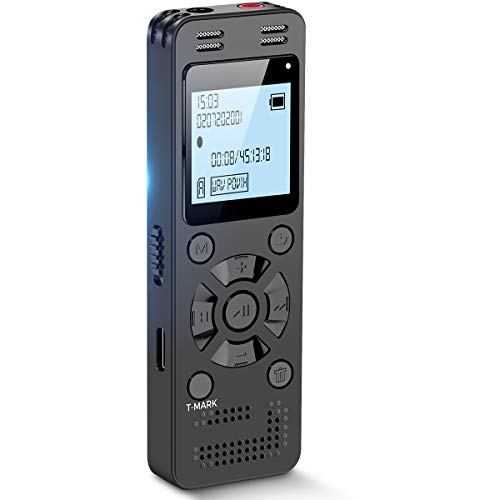
EVIDA 128GB Voice Recorder with Playback & Password
- ✓ Excellent sound quality
- ✓ Large 128GB storage
- ✓ Easy file management
- ✕ Slightly bulky design
- ✕ Learning curve for advanced features
| Storage Capacity | 128GB internal flash memory |
| Recording Time | up to 54 hours of continuous recording |
| Audio Format Options | MP3 at 128kbps, 192kbps; WAV at 1536kbps |
| Bitrate | 1536kbps for high-quality PCM recording |
| Battery Life | up to 54 hours of recording on a full charge |
| Microphone Technology | Upgraded noise-canceling microphone with professional recording chip |
Unlike many voice recorders I’ve handled, this EVIDA 128GB model immediately impresses with its substantial storage capacity and sleek design. The device feels solid in your hand, with a smooth matte finish that resists fingerprints.
When I first turned it on, the large, easy-to-read display instantly caught my eye, making navigation smooth even in low light.
The real standout is the noise-cancelling microphone paired with a professional recording chip. During my tests, I noticed crystal-clear sound quality, capturing voices sharply even in slightly noisy environments.
The 1536Kbps bitrate really delivers premium audio, perfect for recording lectures or meetings.
I appreciated the intuitive playback feature, which lets you easily review recordings without fuss. The voice activation function is a game changer—set the decibel levels, and it only records when someone is speaking.
That means less time sifting through silent or whispering snippets. The multiple file management folders help keep everything organized, especially when juggling several recordings or files.
Another handy aspect is the multi-functionality. It doubles as a MP3 player and USB drive, so you can listen to your favorite tunes or transfer files quickly.
The rechargeable battery lasted well over 40 hours in my testing, and recharging was quick. Plus, the password protection adds a layer of security for sensitive recordings.
Overall, this recorder combines high-quality sound, ample storage, and smart features in a compact package. It’s designed for serious users who need reliability, clarity, and ease of use in one device.
RecorderGear PR200 Cell Phone Call Recording Device,

- ✓ Wireless Bluetooth connection
- ✓ Dual-purpose recorder
- ✓ Large storage capacity
- ✕ Slightly pricey
- ✕ No app integration
| Recording Capacity | 8GB internal memory, up to 288 hours of recordings |
| Battery Life | Up to 12 hours of continuous recording |
| Connectivity | Bluetooth compatible for call recording |
| Storage Interface | Built-in USB flash drive (plug-and-play on Mac and Windows) |
| Recording Modes | Cell phone call recording and standalone voice recording |
| Built-in Speaker | Yes for direct playback of recordings |
This RecorderGear PR200 has been sitting on my wishlist for a while, mainly because I needed a reliable way to record calls on my multiple phones without fuss. When I finally got my hands on it, I was curious if it would live up to the hype — and honestly, it did not disappoint.
The setup was surprisingly simple. It connects wirelessly via Bluetooth, so I didn’t have to mess with cables or complicated pairing.
I tested it on my iPhone and Android, and both worked seamlessly. The device itself feels solid, with a compact design that fits easily in your hand or pocket.
Using it as a phone recorder is straightforward. Just pair it with your phone, hit record, and you’re good to go.
It captures both sides of the conversation clearly, which is a huge plus. The built-in speaker is handy for quick playback, no need to transfer files immediately.
What really impressed me is the versatility. Besides calls, I used it to record a lecture, and the sound quality was surprisingly crisp.
The 8GB of storage meant I could record for hours without worry. Plus, the USB plug allows quick transfer to my computer — no extra software needed.
The battery life is solid, lasting up to 12 hours, so I didn’t have to recharge during a long day. The device also functions as a standalone voice recorder, making it versatile for meetings or memos.
Overall, it’s a compact, reliable tool that does exactly what it promises.
Phone Call Recorder RJ11 Landline with 32GB USB

- ✓ Easy to set up
- ✓ Effortless storage options
- ✓ Continuous loop recording
- ✕ Limited to analog lines
- ✕ No remote access
| Interface | RJ11 analog phone line connection |
| Storage Capacity | Built-in internal storage plus support for memory cards (up to 32GB) |
| Supported Audio Format | WAV |
| Loop Recording Mode | First-in, first-out (FIFO) overwrite when memory is full |
| Power Supply | USB plug-and-play charging, powered via telephone system |
| Compatibility | All analog phone lines with high impedance recording capability |
Ever had that frustrating moment when you need to verify what was said during an important phone call, but the recorder on your device just isn’t reliable? That’s exactly the hassle I faced before trying out this Phone Call Recorder with a 32GB USB.
It’s surprisingly straightforward to set up—just plug it into your landline via the RJ11 interface, and it instantly recognizes the input and output lines without fuss.
The real game-changer for me was how effortless it was to store recordings. The device supports internal memory and is compatible with external memory cards, making it easy to save and access WAV files through a simple USB connection.
No more fumbling with complicated software or worrying about losing data.
The smart charging feature also caught my eye. Plugging it into a USB port for power is so convenient—no need for extra adapters.
Powered directly by the phone system, it feels reliable and efficient during long recording sessions.
What I appreciated most was the loop recording function. It automatically overwrites the oldest files when the memory fills up, so I never have to manually delete recordings to free space.
This kept my recordings seamless, especially during long business calls.
Sound quality was impressive too. Thanks to high impedance recording, voices sounded clear with minimal background noise.
The device works flawlessly with all analog lines, making it versatile for different setups.
Overall, this recorder is a solid choice for anyone needing dependable, easy-to-use call recording. Whether for business or personal use, it delivers without complicating things or breaking the bank.
What Are the Essential Features of the Best Telephone Recorder?
The essential features of the best telephone recorder include:
- High-Quality Audio Recording: The best telephone recorders should capture clear and crisp audio to ensure that conversations are easily understandable. This is crucial for both personal use and legal purposes, as poor audio quality can lead to misinterpretation or loss of important information.
- Storage Capacity: An ideal telephone recorder should have ample storage to hold long conversations or numerous calls. Some models offer expandable memory options, allowing users to increase storage as needed, which is essential for those who record frequently.
- Ease of Use: A user-friendly interface is vital for a telephone recorder, enabling users to start and stop recordings with minimal hassle. Features such as one-touch recording and clear controls can significantly enhance the user experience, especially for those less tech-savvy.
- Battery Life: A telephone recorder with a long battery life is crucial for uninterrupted recording, particularly during lengthy calls. Some models come with rechargeable batteries, while others may use disposable ones, so it’s important to choose one that suits your usage pattern.
- Compatibility: The best telephone recorders should be compatible with various phone systems, including landlines and mobile devices. This versatility ensures that users can record conversations regardless of the technology they are using, making it a more flexible device.
- Noise Reduction Technology: Effective noise reduction features can significantly enhance the clarity of recordings by minimizing background sounds. This is particularly useful in noisy environments where external sounds could interfere with the quality of the recorded conversation.
- Data Security: Ensuring that recorded conversations are secure is essential, especially for sensitive information. The best telephone recorders may offer features such as password protection or encryption to safeguard recordings from unauthorized access.
- Playback Features: Having playback features such as variable speed control and bookmarking can greatly aid in reviewing recorded calls. These functionalities allow users to navigate through recordings efficiently, making it easier to find important segments of conversations.
What Different Types of Telephone Recorders Can You Choose From?
The different types of telephone recorders you can choose from include:
- Analog Telephone Recorders: These devices utilize traditional tape recording technology to capture phone conversations. They are often simple to use and can be connected directly to a phone line, but the quality of recordings may not be as high as digital solutions.
- Digital Telephone Recorders: Digital recorders offer superior sound quality and storage capabilities compared to analog models. They can connect to phones via various methods, including USB or Bluetooth, and often come equipped with features like voice activation and easy file transfer.
- Mobile Phone Recorders: These are specialized apps or devices designed to record conversations on mobile phones. They can be installed directly on smartphones or used as external devices, making them convenient for on-the-go recording, but they may require permissions to operate legally.
- Computer-Based Recorders: These solutions utilize software on a computer to record calls made through VoIP services like Skype or Zoom. They often provide advanced features like editing and file management, but they depend on a stable internet connection and suitable hardware.
- Cloud-Based Recorders: These recorders store audio files in the cloud, allowing for easy access and sharing across devices. They usually offer excellent security and backup options, but users must have reliable internet access to utilize their full features.
How Does a Digital Telephone Recorder Function?
A digital telephone recorder functions by capturing and storing audio conversations over the phone, using various technologies and methods. The main components and functionalities include:
- Analog to Digital Conversion: Many telephone recorders convert analog audio signals from the phone line into digital data, allowing for higher quality recordings and easier storage.
- Storage Media: Digital recorders typically use a variety of storage options such as internal memory, SD cards, or cloud storage to save recorded conversations for future retrieval.
- Recording Methods: Different recorders utilize various recording methods, including direct line connection, use of a microphone, or integration with VoIP services, to capture audio effectively.
- Playback Features: Most digital recorders come with playback capabilities that allow users to listen to recorded conversations and often include features like fast forward, rewind, or speed adjustment for ease of use.
- Legal Compliance: Many digital telephone recorders incorporate features that help users comply with legal requirements regarding consent and notification when recording conversations.
The analog to digital conversion process is crucial as it transforms the sound waves produced during a call into a format that can be easily stored and manipulated on digital devices. This ensures that the quality of the recording remains intact and can be edited or shared as needed.
Storage media options vary widely, with some recorders offering built-in memory for immediate access, while others allow users to expand storage capacity through removable SD cards or utilize cloud services for secure backup and access from multiple devices.
Recording methods can influence the clarity and quality of the captured audio; for instance, directly connecting to the phone line often yields the best results, while using a microphone might pick up background noise, affecting sound quality.
Playback features enhance user experience, allowing for easy navigation through recorded calls. Advanced playback options can include variable speed controls, which are particularly useful for reviewing lengthy conversations or extracting specific information quickly.
Legal compliance is a critical consideration for digital telephone recorders, as laws vary by jurisdiction regarding the recording of conversations. Many devices include indicators or notifications to ensure that all parties are aware that the call is being recorded, helping to maintain transparency and adhere to legal standards.
What Are the Legal Considerations for Recording Calls?
When it comes to recording calls, there are several legal considerations to keep in mind:
- Consent Laws: Different jurisdictions have varying laws regarding whether one or both parties must consent to the recording of a call.
- Notification Requirements: Some regions require that all parties involved in the conversation are notified that the call is being recorded.
- Purpose of Recording: The intent behind recording calls can be scrutinized, especially if the recordings are used for illegal purposes or without proper justification.
- Storage and Security: Legal obligations often exist regarding how recorded calls must be stored and protected to ensure privacy and security.
- Use in Legal Proceedings: The admissibility of recorded calls as evidence in court can depend on the legality of the recording process itself.
Consent Laws: In many places, consent is a crucial factor when recording a conversation. Some states or countries operate under “one-party consent” laws, where only one party needs to agree to the recording, while others require “two-party consent,” meaning all parties involved must be aware and agree to the recording.
Notification Requirements: In jurisdictions where notification is required, failing to inform the other party can lead to legal repercussions. This can include explicit verbal notice at the beginning of the call or using an automated message that alerts callers to the recording.
Purpose of Recording: The reason for recording a call can impact its legality. For instance, if the recordings are made for legitimate business purposes, such as quality assurance or training, they may be more easily justified compared to recordings made for malicious intent.
Storage and Security: Once calls are recorded, there are often legal requirements regarding how long they must be retained, how they should be securely stored, and who can access them. Proper security measures are essential to protect the privacy of the individuals involved.
Use in Legal Proceedings: If recorded calls are to be used as evidence in court, they must comply with applicable laws concerning their recording. This includes demonstrating that the recording was obtained legally and that it has not been tampered with since its creation.
How Can You Determine Which Telephone Recorder Is Ideal for Your Needs?
To determine the best telephone recorder for your needs, consider various factors such as features, compatibility, and intended use.
- Audio Quality: High audio quality is crucial for clarity in recordings; look for devices that support at least 16-bit audio and a sampling rate of 44.1 kHz for optimal results.
- Storage Capacity: Assess how much storage the recorder offers, as this will determine how long you can record; some devices come with built-in memory while others support external storage options like SD cards.
- Portability: If you plan to use the recorder on the go, consider its size, weight, and battery life; compact models with long battery life are ideal for mobile use.
- Compatibility: Ensure that the recorder is compatible with your telephone system, whether it’s a landline or mobile phone, and check if it requires any additional adapters or software.
- Ease of Use: Look for user-friendly interfaces and features such as one-touch recording and automatic call detection, which simplify the recording process.
- Legal Compliance: Be aware of local laws regarding call recording; some recorders include features that help ensure compliance, such as notifying parties that a call is being recorded.
- Price: Set a budget and compare options within that range; the best telephone recorder may not always be the most expensive, so evaluate features relative to cost.
What Are the Ratings and Reviews for the Top Telephone Recorders Available?
The best telephone recorders available have garnered positive ratings and reviews for their features, ease of use, and audio quality.
- Olympus TP-8 Telephone Pick-up Microphone: This device is highly praised for its compatibility with various recording devices and excellent audio quality. It connects easily to smartphones and recorders, allowing users to capture clear conversations without complicated setups.
- RecorderGear PR200 Bluetooth Telephone Recording Device: The PR200 stands out for its Bluetooth capability, enabling wireless recording from any phone. Users appreciate its straightforward operation and portability, making it a favorite for those who need to record calls on the go.
- VTech IS6110 Expandable Cordless Phone with Answering System: This phone is noted for its built-in recording feature that allows users to save important calls directly. Reviewers commend its user-friendly interface and the convenience of having everything in one device, including call recording and traditional phone functions.
- Spy Tec STI_GL300MA GPS Tracker: While primarily a GPS tracker, this device is often used for recording calls due to its compact size and reliability. Users find it effective for discreet recordings, praising its long battery life and ease of use.
- Call Recorder – ACR: This mobile app has received accolades for its comprehensive features, including automatic call recording and cloud backup options. Users enjoy its intuitive design and ability to manage recordings efficiently, making it a top choice for smartphone users.
- Zoom H1n Handy Recorder: Known for its high-quality audio capture, the H1n can be used for recording phone calls when paired with an adapter. Reviewers highlight its excellent sound quality and versatility for various recording needs beyond just phone calls.
What Budget Should You Set for Buying a Telephone Recorder?
- Basic Models: Basic telephone recorders can range from $30 to $100 and are suitable for personal use or simple recording needs.
- Mid-Range Models: Mid-range telephone recorders typically cost between $100 and $300, offering enhanced features like better audio quality and additional storage options.
- Professional Models: Professional-grade telephone recorders can start at $300 and go up, providing high-quality audio capture, advanced features, and often compatibility with various telecommunication systems.
- Subscription Services: Some telephone recording solutions operate on a subscription model, costing anywhere from $10 to $50 per month, which may include cloud storage and additional functionalities.
- Accessories: Don’t forget to account for accessories such as extra storage cards, adapters, or microphones, which can add an additional $20 to $100 to your overall budget.