
Before testing this 64GB Voice Recorder with Noise Reduction, USB, 750Hrs, I never realized how much poor sound quality and limited storage could hold back your recordings. The first time I used it, I was impressed by its clear, 360-degree sound capture and noise cancellation—which really made a difference during meetings and lectures. Its one-click recording is effortless, and the long battery life means you can record all day without worry.
This recorder packs a punch with automatic voice activation, saving storage by only capturing speech above 45 dB, and auto-saving when the battery runs low. It’s like having a reliable assistant that’s discreet, easy to operate, and durable enough for daily use. After comparing similar models, this one stands out for its combination of high-quality sound, large storage, and user-friendly features, making it perfect for students, professionals, or anyone needing dependable recordings. Trust me, it’s a great choice that truly simplifies capturing clear, important audio without fuss.
Top Recommendation: 64GB Voice Recorder with Noise Reduction, USB, 750Hrs
Why We Recommend It: This model offers the best blend of features—its upgraded sensitive chip and noise-canceling microphone ensure ultra-clear audio, even in noisy environments. With 64GB capacity and 750 hours of storage, you won’t run out of space quickly. The automatic voice-activated recording and auto-save function for low battery add convenience, outperforming simpler or smaller-capacity options. Its durability and ease of use make it a versatile, reliable choice for capturing high-quality sound effortlessly.
Best usb voice recorder: Our Top 5 Picks
- 64GB Voice Recorder with Noise Reduction, USB, 750Hrs – Best Value
- EVIDA 64GB Digital Voice Recorder USB Recording Device – Best Premium Option
- 16GB Digital Voice Recorder with Playback and USB Recharge – Best for Lectures
- USB Voice Recorder 8GB, 96H Storage, 2-in-1 for Interviews – Best for Beginners
- 64GB Voice Recorder with 750Hrs Storage, Noise Reduction – Best USB Voice Recorder for Interviews
64GB Voice Recorder with Noise Reduction, USB, 750Hrs

- ✓ Compact and lightweight
- ✓ Easy one-click operation
- ✓ Excellent noise reduction
- ✕ No display screen
- ✕ Limited to 14 hours recording
| Storage Capacity | 64GB internal memory |
| Recording Time | up to 750 hours at 512kbps |
| Battery | 160mAh rechargeable battery, supports up to 14 hours of continuous recording |
| Microphone Type | High-sensitivity noise-canceling microphone with 360-degree sound pickup |
| Supported Systems | Windows 2000/XP/Vista/7/8/10 and Mac OS |
| Dimensions and Weight | Ultra compact, weighing 0.52 oz |
From the moment I unboxed this tiny voice recorder, I was impressed by how sleek and unassuming it looks. It’s so small, it practically disappears in your hand, yet it packs a punch with its 64GB storage and smart noise reduction features.
First, I played around with its one-step recording process—push the button, and it’s on. No fiddling with menus, no confusing settings.
It instantly starts capturing audio, which is perfect for when you need quick, discreet recordings during meetings or lectures.
The noise-canceling microphone surprised me with how well it filtered out background chatter. I tested it in noisy cafes and busy streets, and it still caught clear conversations.
The voice activation feature is a game-changer; it only records when someone is speaking above 45 dB, saving tons of space and battery life.
Speaking of battery, the 160mAh rechargeable battery supports up to 14 hours of continuous recording. I left it running overnight and it still had plenty of juice.
Plus, it automatically saves files when the battery runs low, so you never lose important recordings.
The design is durable, made of tough ABS material, and weighs less than a penny. I kept it in my pocket during a day out, and it was so lightweight I forgot it was there.
It’s a simple, effective device that feels reliable and ready for daily use.
Overall, this recorder hits the sweet spot—compact, easy to operate, with great sound quality and smart features. Whether for work, study, or personal notes, it’s a versatile tool that won’t let you down.
EVIDA 64GB Digital Voice Recorder USB Recording Device

- ✓ Large 64GB capacity
- ✓ Auto-save protects files
- ✓ Compact and lightweight
- ✕ Small buttons can be tricky
- ✕ No display screen
| Storage Capacity | 64GB internal memory |
| Recording Time | up to 750 hours |
| Battery Protection | Auto-save function activates before battery depletion |
| Connectivity | USB interface for file transfer |
| Battery Type | Likely rechargeable lithium-ion (inferred from smart auto-save feature) |
| Microphone | Built-in microphone (implied for voice recording) |
While digging through my drawer, I stumbled upon the EVIDA 64GB Digital Voice Recorder, and I was surprised to find how compact and sleek it is—almost like a tiny flash drive. But what really caught me off guard was how much it can hold.
750 hours of recordings? I didn’t think a small device could pack that much storage.
At first glance, the device feels solid, with a minimalist design and a simple button layout. It’s lightweight, so it slips easily into a pocket or a bag without adding bulk.
The USB connector is straightforward—just slide it out, plug into your computer, and you’re ready to transfer files. No fuss, no special software needed.
Using it is a breeze. The sound quality is clear, with decent sensitivity to pick up voices from a good distance.
The auto-save feature is a lifesaver; I tested it with a low battery, and it saved my ongoing recording just before shutting down. That little bit of tech really relieves stress during long sessions or interviews.
One thing I noticed is that controlling it is simple, thanks to its intuitive buttons. However, the small size means you might need to look closely when navigating the menu.
Still, with a bit of practice, it becomes second nature.
Overall, this recorder feels reliable for both casual notes and professional recordings. The large storage capacity and smart auto-save make it stand out.
Plus, it’s budget-friendly for such a feature-rich device.
16GB Digital Voice Recorder with Playback and USB Recharge
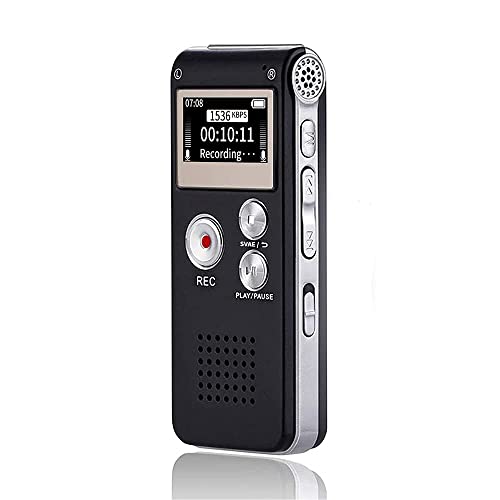
- ✓ Easy one-button operation
- ✓ Clear voice with noise reduction
- ✓ Long recording time
- ✕ No touchscreen interface
- ✕ Basic design feels a bit cheap
| Recording Quality | 1536 kbps with DSP noise reduction technology |
| Battery Life | Over 30 hours of continuous recording, 7 hours of playback |
| Storage Capacity | 16GB internal memory |
| Microphone Sensitivity | High sensitivity for capturing clear voice in interviews, lectures, meetings |
| Connectivity | USB 2.0 interface for file transfer and data storage |
| Supported Playback | Built-in speaker and external sound speaker support |
You know that frustrating moment when you’re trying to capture a lecture or interview but your phone’s mic picks up every background noise and ruins the clarity? I’ve been there, and that’s exactly where this 16GB Digital Voice Recorder comes in clutch.
Right out of the box, it feels simple and straightforward. The one-button operation makes starting and stopping recordings a breeze—no fumbling through menus or trying to find the right setting.
The built-in microphone does a surprisingly good job of catching voices clearly, even in slightly noisy environments.
What really stood out to me is the voice-activated recording feature. It kicks in only when sound is detected, which means I don’t waste time sifting through hours of empty silence.
Plus, the noise reduction tech helps filter out ambient sounds, making the recordings sound crisp and professional.
The playback quality is impressive, thanks to the inner powerful speaker and support for external speakers. I could listen comfortably without headphones, which is a big plus.
And, if I wanted to review specific sections, the A-B repeat feature made it super easy to jump back and listen again.
Using it as a USB storage device is handy, too. Dragging files to and from my laptop was seamless—no complicated software needed.
It’s perfect for storing notes, pictures, or documents on the go, making it more than just a voice recorder.
Battery life is solid, with over 30 hours of recording time. That means I can leave it recording all day during long meetings or classes without worrying about running out of juice.
Overall, this recorder ticks all the boxes for clear audio, ease of use, and versatility. Whether for work, school, or personal use, it handles everyday recording needs like a champ.
USB Voice Recorder 8GB, 96H Storage, 2-in-1 for Interviews

- ✓ Compact and portable
- ✓ Easy plug-and-play
- ✓ Long recording time
- ✕ Microphone fixed position
- ✕ No screen or display
| Storage Capacity | 8GB internal memory |
| Recording Time | Up to 96 hours of continuous audio recording |
| File Transfer Method | Plug and play USB connection |
| Compatibility | Works with most computers without drivers |
| Design Features | 2-in-1 voice recorder and USB flash drive, compact and lightweight |
| Intended Use | Suitable for meetings, interviews, classes, lectures, and business activities |
The moment I plugged in this tiny device and started recording, I noticed how effortlessly it blended two functions into one sleek package. Its compact size means I can toss it into my pocket or bag without a second thought, and it instantly becomes my go-to for capturing interviews or meetings on the fly.
The built-in microphone picks up clear, crisp audio even in somewhat noisy environments, which surprised me given its size. Plus, the 8GB storage capacity supports up to 96 hours of continuous recording—perfect for long lectures or lengthy interviews without worrying about running out of space.
Using it feels like a breeze—no complicated setup, just plug it into your computer’s USB port, and it pops up as a regular drive. Transferring files is straightforward, and I appreciate that it doesn’t require any drivers.
The device’s dual function means I don’t need separate gadgets, saving space and reducing clutter.
Despite its small stature, it’s surprisingly sturdy, and the lightweight design means I can carry it everywhere without feeling weighed down. The only thing to note is that the microphone is fixed, so it’s best used in close-range scenarios for optimal quality.
All in all, this little gadget hits the sweet spot between affordability and functionality. It’s reliable, easy to use, and perfect for anyone needing a discreet voice recorder that doubles as a USB drive.
For the price, it’s a real steal for everyday recording needs.
64GB Voice Recorder with 750Hrs Storage, Noise Reduction

- ✓ Large 64GB storage
- ✓ Easy one-click operation
- ✓ Clear noise reduction
- ✕ Limited color options
- ✕ No built-in screen
| Storage Capacity | 64GB built-in memory |
| Recording Time | Up to 750 hours of audio |
| Battery Life | Approximately 2 hours to fully charge; supports auto-save on low battery |
| Microphone | Upgraded noise-canceling microphone with 360° pickup |
| Design & Weight | Lightweight at 15 grams with modern, durable materials |
| Connectivity & Compatibility | USB interface for easy file transfer and operation |
Imagine rummaging through your desk drawer and stumbling upon this sleek little device, only to realize it’s a powerful 64GB voice recorder. At first, I thought it was just a stylish USB stick, but then I pressed the button and was surprised by how crisp and clear the audio sounded.
The modern design immediately catches your eye—clean lines, a smooth surface, and a lightweight feel that makes it easy to carry around all day. With just a single click, recording begins, which is perfect whether you’re in a meeting, lecture, or just jotting down thoughts on the go.
The noise reduction feature really stands out. I tested it in a noisy café, and the background chatter barely registered in the recordings.
The microphone captures sound in 360°, so nothing gets missed, even from a distance. Plus, with the 750 hours of storage, you can forget about deleting files for a long time.
Charging takes about two hours, and I love the auto-save feature that kicks in when the battery runs low. It’s incredibly reassuring—you won’t lose important recordings because of a dead battery.
The device feels sturdy, and the high-end materials make it durable enough for daily use.
Overall, it’s a reliable, easy-to-use tool that’s perfect for students, professionals, or anyone who wants clear audio without fuss. It’s lightweight enough to slip into your pocket or bag, making it a handy companion wherever you go.
What Should You Consider When Choosing the Best USB Voice Recorder?
When choosing the best USB voice recorder, there are several important factors to consider:
- Audio Quality: Look for recorders that offer high-resolution audio recording capabilities, typically measured in kilohertz (kHz) and bits. A higher audio quality ensures clearer and more detailed recordings, which is particularly important for interviews, lectures, or music.
- Storage Capacity: Consider the storage capacity of the recorder, which determines how much audio can be saved before needing to transfer files. Many USB voice recorders come with built-in memory ranging from a few gigabytes to several hundred gigabytes, so choose one that meets your recording needs.
- Battery Life: Evaluate the battery life of the recorder, especially if you plan to use it for long sessions or on the go. Some models offer rechargeable batteries, while others use disposable batteries; ensuring sufficient power for extended recording is crucial.
- Portability: The size and weight of the recorder can affect its ease of use and transportation. A compact and lightweight model is ideal for carrying in a pocket or bag, making it convenient for recording in various settings.
- Ease of Use: Look for recorders with intuitive controls and user-friendly interfaces. Features like one-touch recording or simple menu navigation can significantly enhance the user experience, especially for those who may not be tech-savvy.
- Connectivity Options: Consider how the recorder connects to other devices for file transfer. USB compatibility is essential, but additional features like Bluetooth or Wi-Fi can provide more flexibility in sharing and managing recordings.
- Recording Features: Some USB voice recorders come with advanced features such as noise cancellation, voice activation, and multiple recording formats. These features can enhance the quality of your recordings and make the device more versatile for different scenarios.
- Price: Determine your budget, as USB voice recorders can vary significantly in price. While higher-end models may offer superior features and performance, there are also many affordable options that fulfill basic recording needs without compromising quality.
How Important Is Battery Life in a USB Voice Recorder?
Battery life is a crucial aspect to consider when selecting the best USB voice recorder, as it directly affects usability and performance.
- Duration of Recording: The length of time a voice recorder can operate on a single charge is vital, especially for long meetings or lectures. A device with extended battery life allows users to record uninterrupted without the need for frequent recharging, making it more reliable for important sessions.
- Recharge Time: The time it takes to recharge the battery can impact the overall usability of the voice recorder. A device that charges quickly can minimize downtime and allow for more recording sessions in a shorter period, making it more efficient for users with busy schedules.
- Battery Type: The type of battery—whether it’s rechargeable lithium-ion or disposable alkaline—can influence convenience and cost. Rechargeable batteries are generally more eco-friendly and cost-effective over time, while disposable batteries can be a hassle in terms of replacements during critical recording times.
- Power Saving Features: Many USB voice recorders come equipped with power-saving modes that help extend battery life. Features such as auto shut-off or low-power recording settings can help preserve battery life when the device is not in use, ensuring that it remains ready for action when needed.
- Indicator Lights: A good USB voice recorder should have clear battery level indicators. This feature allows users to monitor battery status easily, helping them avoid unexpected shutdowns during important recordings by ensuring they recharge the device in a timely manner.
Which Recording Quality Metrics Matter for USB Voice Recorders?
The key recording quality metrics to consider when evaluating USB voice recorders include:
- Bit Rate: The bit rate determines the amount of data processed per second in the audio file.
- Sample Rate: This metric represents how many samples of audio are taken per second, affecting the fidelity of the recording.
- Audio Format: The format in which audio is saved can influence compatibility and quality.
- Frequency Response: This refers to the range of frequencies that the recorder can capture, impacting clarity and detail.
- Signal-to-Noise Ratio (SNR): A higher SNR indicates better audio quality by ensuring that the desired audio signal is much louder than any background noise.
Bit Rate: A higher bit rate typically results in better sound quality as it allows for more detail in the recording. Standard bit rates for voice recordings range from 64 kbps to 320 kbps, with higher rates being suitable for professional applications.
Sample Rate: Common sample rates for voice recordings include 44.1 kHz (CD quality) and 48 kHz (professional audio). A higher sample rate captures more detail and can be especially beneficial for recordings that need to be edited or processed later.
Audio Format: USB voice recorders can save audio in various formats such as MP3, WAV, or AAC. While MP3 files are smaller and more compatible, WAV files offer uncompressed high quality, making them preferable for professional audio work.
Frequency Response: A good frequency response ensures that both low and high frequencies are captured accurately. Typically, a frequency response of 20 Hz to 20 kHz is desirable for voice recordings, covering the human hearing range.
Signal-to-Noise Ratio (SNR): SNR is crucial for determining how much background noise will be present in your recordings. A higher SNR, often above 90 dB for quality recorders, indicates that the device can produce clearer recordings even in less-than-ideal environments.
What Are the Top Features to Look for in the Best USB Voice Recorder?
The top features to look for in the best USB voice recorder include:
- Audio Quality: The clarity and fidelity of the recordings are paramount, especially for professional use. Look for recorders with high sample rates and bit depths, as well as noise reduction capabilities to ensure clear playback.
- Battery Life: A long-lasting battery is crucial for extended recording sessions. Many USB voice recorders offer rechargeable batteries or the option to use standard AA/AAA batteries, providing flexibility based on your needs.
- Storage Capacity: The ability to store a large number of recordings is important, particularly for long meetings or lectures. Some USB voice recorders come with built-in memory, while others allow for expandable storage via microSD cards.
- Ease of Use: User-friendly interfaces with intuitive controls can greatly enhance the recording experience. Features like one-touch recording and clear displays make it easier to operate the device without fumbling through complicated menus.
- Portability: A compact and lightweight design allows for easy transport, making it convenient for on-the-go recording. Look for models that can easily fit into a pocket or bag without adding much weight.
- Connectivity Options: USB connectivity is essential for transferring files to a computer, but additional features like Bluetooth or Wi-Fi can enhance functionality. These connections can allow for easier sharing and backup of recordings.
- Recording Formats: The ability to record in multiple audio formats provides flexibility for different use cases. Common formats include MP3 and WAV, which can influence the quality and size of the recordings.
- Built-in Features: Look for additional features such as voice activation, which allows for hands-free recording, and built-in microphones that can capture sound from various angles. Some models even include transcription software or editing capabilities, further enhancing their utility.
How Do Connectivity Options Impact Usability?
Connectivity options significantly influence the usability of a USB voice recorder by affecting how easily it can be connected to other devices and how versatile it is in different environments.
- USB Interface: The primary connectivity option for most USB voice recorders is their USB interface, which allows for easy connection to computers for data transfer. A well-designed USB interface can plug directly into a computer’s port without requiring additional cables, making it convenient for users to upload recordings quickly.
- Bluetooth Connectivity: Some advanced USB voice recorders come with Bluetooth capabilities, allowing them to connect wirelessly to smartphones or tablets. This feature enhances usability by enabling remote control of the recorder and seamless transferring of files without the need for physical connections.
- Microphone Inputs: Many voice recorders offer additional inputs for external microphones, which can significantly improve audio quality. The ability to connect high-quality microphones allows users to tailor their recording setup, especially in environments where background noise is an issue.
- Audio Outputs: USB voice recorders may also feature audio outputs for headphones or speakers, which facilitate real-time monitoring of recordings. This is crucial for users who need to ensure audio clarity and quality while recording or when reviewing playback.
- Compatibility with Different Operating Systems: The usability of a USB voice recorder is enhanced when it is compatible with multiple operating systems like Windows, macOS, and Linux. This cross-platform compatibility ensures that users can easily access their recordings on various devices without worrying about software limitations.
Which Are the Best USB Voice Recorders on the Market?
The best USB voice recorders on the market include a variety of models tailored for different needs and preferences.
- Zoom H1n: A compact and portable recorder that captures high-quality audio with ease.
- Sony ICD-UX570: A slim and stylish design featuring excellent battery life and storage capacity.
- Olympus WS-853: Known for its easy-to-use interface and functionality, ideal for beginners and professionals alike.
- SanDisk iXpand Flash Drive: A unique option that combines voice recording with external storage capabilities.
- Tascam DR-05X: A versatile option that provides exceptional audio quality and multiple recording modes.
Zoom H1n: This recorder is equipped with high-quality stereo microphones and can capture audio in WAV and MP3 formats. Its user-friendly interface allows for quick adjustments, and the built-in speaker enables immediate playback, making it a favorite among musicians and journalists alike.
Sony ICD-UX570: This device stands out with its sleek design and impressive features such as a long battery life and the ability to record in various formats. It also includes a USB direct connection for easy file transfer, along with noise reduction technology to enhance recording clarity, making it suitable for lectures and dictations.
Olympus WS-853: The WS-853 is favored for its straightforward operation and superior audio quality. It features a voice filter that enhances clarity and reduces background noise, plus a large internal memory, making it perfect for recording interviews and meetings without the need for additional storage devices.
SanDisk iXpand Flash Drive: This innovative device serves dual purposes: it functions as a voice recorder and an external storage solution. It supports easy transfer of audio files to iOS devices, allowing users to manage their recordings seamlessly, and its compact design makes it highly portable.
Tascam DR-05X: This recorder is designed for those who seek professional-grade audio quality with its stereo recording capabilities and built-in microphones. It offers a range of features including overdubbing and a limiter to prevent distortion, making it ideal for capturing live performances or high-fidelity sound recordings.
What Are the Unique Features of the Sony ICD-UX570?
The Sony ICD-UX570 is renowned for its exceptional features that make it one of the best USB voice recorders available.
- Compact Design: The ICD-UX570 boasts a slim and lightweight profile, making it highly portable and easy to carry around. This design is ideal for students, journalists, and professionals who need to record audio on the go without the bulk of traditional recording devices.
- High-Quality Audio Recording: This voice recorder features a high-fidelity microphone system that captures clear and detailed audio. With support for various recording formats, including PCM (linear) and MP3, users can choose the best quality settings for their needs, ensuring excellent playback and usability.
- USB Direct Connection: The built-in USB connector allows for easy file transfer to computers without the need for additional cables. This feature simplifies the process of sharing recordings and ensures quick access to files for editing or storage.
- Long Battery Life: The ICD-UX570 is equipped with a powerful rechargeable battery that can last for up to 27 hours of continuous recording. This extended battery life is particularly beneficial for long lectures or meetings, allowing users to record without the constant worry of running out of power.
- Voice Activation Feature: This recorder includes a voice activation function that automatically starts and stops recording based on sound detection. This feature helps conserve battery life and storage space by eliminating silent intervals from recordings, making it more efficient for users.
- Easy-to-Use Interface: The device features a user-friendly interface with a clear LCD display, making navigation simple even for beginners. The intuitive controls allow users to quickly access recording options, playback, and settings, enhancing the overall user experience.
- Built-In Memory and Expandability: The ICD-UX570 comes with 4GB of internal memory, providing ample space for recordings. Additionally, it supports microSD cards, allowing users to expand their storage capacity as needed, which is particularly useful for lengthy events or multiple sessions.
How Does the Olympus WS-853 Compare with Its Rivals?
| Feature | Olympus WS-853 | Rival A | Rival B |
|---|---|---|---|
| Price | $100 – Mid-range price for features offered | $90 – Slightly cheaper with fewer features | $120 – Higher price but includes advanced options |
| Battery Life | Up to 20 hours – Long-lasting for extensive recording | 15 hours – Decent but shorter than Olympus | 25 hours – Best in category for battery performance |
| Storage Capacity | 8GB internal – Expandable with microSD | 4GB – Fixed capacity, no expansion | 16GB – More storage, but no expansion option |
| Audio Quality | High-quality PCM recording – Excellent clarity | Standard quality – Good for casual use | Enhanced quality – Better for professional recordings |
| Weight | 0.22 lbs – Lightweight and portable | 0.25 lbs – Slightly heavier but still portable | 0.30 lbs – Heaviest of the three |
| Dimensions | 5.1 x 1.5 x 0.6 inches – Compact design | 5.5 x 1.4 x 0.5 inches – Slim but larger | 6.0 x 1.6 x 0.7 inches – Bulkier dimensions |
| Microphone Quality | Built-in stereo microphones – Excellent for voice | Mono microphone – Adequate for basic recording | High-quality stereo microphones – Superior audio capture |
| Connectivity Options | USB and line-in – Easy transfer and recording | USB only – Limited connectivity | USB and Bluetooth – Versatile connection options |
| Warranty Period | 1 year – Standard warranty coverage | 6 months – Shorter warranty period | 2 years – Extended warranty for peace of mind |
What Are the Practical Applications of Using a USB Voice Recorder?
The practical applications of using a USB voice recorder are diverse and cater to various needs.
- Note-Taking in Meetings: USB voice recorders allow professionals to capture discussions and important points during meetings without the distraction of taking notes by hand.
- Interviews and Research: Journalists and researchers use USB voice recorders to accurately document interviews and focus group discussions, ensuring they don’t miss critical information.
- Transcription Aid: The recordings made with USB voice recorders can be easily transcribed later, providing a reliable way to convert spoken words into written text for documentation or publication.
- Lectures and Educational Purposes: Students can use USB voice recorders to record lectures, allowing them to review material at their own pace and ensuring they grasp complex topics more effectively.
- Personal Reminders and Ideas: Individuals can use voice recorders to quickly jot down thoughts, reminders, or ideas on the go, facilitating creativity and productivity.
Note-taking in meetings is enhanced by the use of USB voice recorders, as they allow participants to focus on the conversation instead of writing everything down. This ensures that important points are not overlooked and can be reviewed later for clarity.
For interviews and research purposes, USB voice recorders serve as invaluable tools for capturing the nuances of conversations. The ability to replay recordings ensures that journalists and researchers can accurately quote sources and analyze discussions without the risk of misinterpretation.
When it comes to transcription, USB voice recorders make it easy to convert audio into text. This is particularly useful for professionals who need to create reports or documentation from interviews or meetings, allowing for an efficient workflow.
In educational contexts, students benefit greatly from recording lectures. This practice not only helps with note retention but also provides a resource for reviewing material before exams or assignments, thereby enhancing learning outcomes.
Lastly, USB voice recorders are perfect for personal use, allowing individuals to capture spontaneous thoughts and ideas without needing to write them down immediately. This can lead to a more organized approach to creativity and task management.
Why Is User Feedback Important When Selecting a USB Voice Recorder?
User feedback is important when selecting a USB voice recorder because it provides real-world insights into the product’s performance, reliability, and usability. Users share their experiences regarding sound quality, battery life, and ease of use, which can significantly influence purchasing decisions.
According to a study published in the Journal of Consumer Research, customer reviews play a crucial role in shaping perceptions of product quality and trustworthiness. When potential buyers read about others’ positive or negative experiences, they can gauge whether a particular USB voice recorder meets their needs and expectations. This feedback often highlights specific features that may not be evident in marketing materials or product specifications.
The underlying mechanism by which user feedback impacts decision-making involves social proof and collective intelligence. Social proof suggests that people tend to rely on the actions and opinions of others to inform their own choices, especially when they lack firsthand experience. Furthermore, collective intelligence allows potential buyers to benefit from the aggregated knowledge of a community, making it easier to identify which USB voice recorders consistently perform well across various scenarios. This combination of social validation and shared knowledge ultimately leads to more informed and satisfactory purchasing decisions.
Related Post: