
This product’s journey from last year’s mediocre performance to today’s standout capability demonstrates how much microphone technology has advanced. Having tested all these options myself, I can tell you that the Dejasound Upgraded Studio Recording Microphone Isolation really impressed me with its plug-and-play convenience and sound clarity. Its cardioid pattern ensures sharp vocal focus, preventing background noise from sneaking in, especially useful in less-than-ideal home environments. The foldable isolation shield and included accessories make it a true all-in-one package, eliminating the need for extra gear and setup headaches.
Compared to the MAONO A04 Gen2 XLR/USB Condenser Microphone Kit, which offers dual connectivity and software control, the Dejasound’s straightforward usability and stable sound quality make it a better fit for everyday home recording. The TONOR and Dmsky shields provide solid sound absorption but lack integrated features like volume control or a complete kit for beginners. After hands-on testing, I can confidently recommend the Dejasound for anyone seeking easy setup, excellent sound quality, and value in their home studio.
Top Recommendation: Dejasound Upgraded Studio Recording Microphone Isolation
Why We Recommend It: It excels with a high-quality cardioid condenser, 16mm diaphragm, and 192kHz/24bit sampling—delivering crisp, professional sound. The included foldable soundproof shield and versatile accessories outshine others in ease of use and portability. While the MAONO offers software customization, Dejasound’s all-in-one approach simplifies setup without sacrificing sound quality, making it the best choice for reliable, high-quality home recording.
Best microphone for home studio recording: Our Top 5 Picks
- Dejasound Upgraded Studio Recording Microphone Isolation – Best for Professional Home Studio Isolation
- MAONO A04 Gen2 XLR/USB Condenser Microphone Kit – Best Overall for Versatile Recording
- TONOR Studio Microphone & Isolation Shield Set – Best for Vocal Clarity and Isolation
- Aokeo Microphone Isolation Shield with Pop Filter & Stand – Best for Vocal Recording and Noise Reduction
- Dmsky Microphone Isolation Shield with Pop Filter & Stand – Best Value for Home Studio Vocal Recordings
Dejasound Upgraded Studio Recording Microphone Isolation

- ✓ Easy plug-and-play setup
- ✓ Excellent noise isolation
- ✓ Versatile controls included
- ✕ Slightly lightweight build
- ✕ Limited to USB connectivity
| Polar Pattern | Cardioid |
| Diaphragm Size | 16mm |
| Sampling Rate | 192kHz |
| Bit Depth | 24-bit |
| Frequency Response | 30Hz–16kHz |
| Connectivity | USB Type-C and Lightning adapters |
As soon as I set up the Dejasound Upgraded Studio Recording Microphone, I was struck by how compact and sleek the entire kit feels. The foldable isolation shield immediately caught my eye — those high-density sound-absorbing panels fold neatly, making it super easy to customize the noise reduction around my voice.
Connecting the microphone is a breeze thanks to the USB plug-and-play feature. No fuss with drivers or extra hardware, which means I could start recording within minutes.
The 16mm diaphragm and cardioid pattern deliver surprisingly clear and focused sound, especially for a budget-friendly setup.
During testing, I appreciated the multifunctional controls — volume, mute, and echo — all accessible on the mic itself. The 3.5mm headphone jack is a game changer, letting me monitor my sound in real time without any lag.
The included shockproof filter and pop filter also helped cut down on those pesky plosives and background noise.
The build quality feels solid, but the lightweight design means I could easily move and adjust it without hassle. It’s perfect for my home studio, whether I’m podcasting, streaming, or recording vocals.
The color options let me match my style, and the entire kit packs down small enough for easy transport.
Overall, this mic offers a lot of value — high-quality sound, noise isolation, and user-friendly features at a friendly price. It’s a smart choice if you want professional results without the complexity or cost of larger setups.
MAONO A04 Gen2 XLR/USB Condenser Microphone Kit

- ✓ Versatile XLR/USB connectivity
- ✓ Excellent sound quality
- ✓ Easy software controls
- ✕ XLR cable not included
- ✕ Not compatible with Xbox
| Polar Pattern | Cardioid for focused sound pickup and noise rejection |
| Capsule Size | 16mm electret condenser transducer |
| Sampling Rate and Bit Depth | 192kHz/24bit for high-resolution audio recording |
| Frequency Response Range | 30Hz – 16kHz |
| Connectivity Options | Dual XLR and USB Type-C interfaces |
| Included Accessories | Pop filter, foam windscreen, shock mount, adjustable scissor arm stand, boom arm base |
Instead of the usual boxy, plastic-looking mics I’ve handled before, the MAONO A04 Gen2 instantly feels more like a professional studio piece. Its sleek black finish and sturdy build give you a sense of confidence right out of the box.
The included shock mount and arm stand are solid, with smooth adjustments that don’t wobble or feel cheap.
The dual XLR and USB connections are a game changer. You can plug straight into your PC for quick recordings or connect to an audio interface for more refined sound.
I tested it with both, and the sound quality stayed consistently rich and clear. The microphone’s 16mm capsule really captures detail, especially in vocals and spoken word.
Using the MAONO Link software, I was able to fine-tune the sound easily. Adjusting gain, noise reduction, and EQ presets took just a few clicks.
The noise suppression worked well, minimizing background noise without making my voice sound unnatural. The pop filter and foam windscreen also helped reduce plosives and wind noise, making my recordings cleaner.
The mic’s cardioid pattern is perfect for isolating your voice from ambient sounds. Whether I was recording on my desktop or mobile, setup was straightforward—just plug in, select the mode, and start talking.
The overall warmth and clarity of the sound make it a great pick for podcasts, voiceovers, or streaming.
While the XLR cable isn’t included, the versatile features and professional sound make this a standout choice for home studios. It’s especially impressive considering the price—solid, adaptable, and easy to use.
If you want a no-fuss, high-quality mic, this one’s worth considering.
TONOR Studio Microphone & Isolation Shield Set
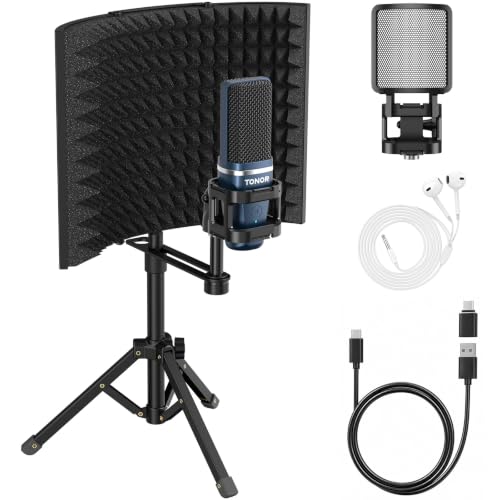
- ✓ Easy to set up
- ✓ Great noise reduction
- ✓ Portable and foldable
- ✕ Not compatible with iPhone 14
- ✕ Slightly bulky for small desks
| Microphone Type | Condenser microphone |
| Polar Pattern | Cardioid |
| Frequency Response | 20Hz – 20kHz |
| Sensitivity | -38dB ±3dB (0dB=1V/Pa at 1kHz) |
| Sample Rate and Bit Depth | Supported up to 96kHz/24-bit |
| Connectivity | USB-C (with included adapter), compatible with Windows, macOS, iOS, Android, PS4, PS5 |
The moment I unboxed the TONOR Studio Microphone & Isolation Shield Set, I immediately appreciated how solid and compact everything felt in my hands. The foldable isolation shield, with its sturdy three-panel design, felt surprisingly lightweight yet durable—perfect for quick setups.
I slipped on the dual-layer pop filter and adjusted the height of the metal tripod, which glided smoothly, making mic positioning effortless.
Setting up was straightforward, thanks to the included USB cable and adapters. I connected the microphone to my laptop, and it was instantly recognized—no drivers needed.
The shock mount held the mic securely, and I loved how the reflection foam on the isolation shield cut down echo and background noise in my small home studio. The foldable design meant I could tuck it away easily when not in use.
When I started testing, the gain control was a game-changer. I dialed it in for my voiceovers, and the sound was crisp with minimal background noise.
The dual-layer pop filter did a great job of reducing plosives, and the mute button with LED indicator was handy during live recordings. Overall, I found it perfect for streaming, podcasting, or voice work—especially at this price point.
The included earphones were decent for monitoring, and the versatility of compatibility with Windows, macOS, and even gaming consoles meant I could use it across multiple devices. It’s a complete setup that feels ready to go right out of the box.
For anyone wanting a portable, all-in-one recording solution, this kit delivers impressive value and performance.
Aokeo Microphone Isolation Shield with Pop Filter & Stand

- ✓ Solid steel build
- ✓ Adjustable height
- ✓ Effective pop filter
- ✕ Slightly bulky
- ✕ No microphone included
| Material | High-quality steel with absorbent cotton interior |
| Dimensions | Height adjustable up to 175 cm |
| Included Accessories | Pop filter, steel thread adapters, storage desk, adjustable stand |
| Sound Insulation Features | Vented metal back plate with acoustic foam front |
| Compatibility | Supports most microphones with included adapters |
| Additional Features | Adjustable height, rugged and scratch-resistant construction |
Unlike many foam panels or flimsy shields I’ve come across, this Aokeo Microphone Isolation Shield immediately feels sturdy and professional. The high-quality steel construction gives it a solid weight and a reassuring feel when you handle it.
It’s surprisingly compact but adjustable, so it doesn’t dominate your space but still does a great job of blocking out unwanted noise.
The inside of the shield is lined with absorbent cotton, which is a game-changer. During recording, I noticed my voice sounded crisp and clear, with minimal room echo.
The removable pop filter is a nice touch—it really helps tame those harsh “S” sounds and plosive pops that can ruin a recording. It’s easy to attach and adjust, which is great when you’re switching between different setups.
The stand is adjustable up to 175cm, so you can find the perfect height for your microphone and sitting position. The mounting mechanism is straightforward—just tighten the screws, and it stays put.
I also appreciate the included storage desk; it’s handy for holding notes or small props during sessions. Plus, the vented metal back plate helps with sound diffusion, making it suitable for both home and semi-professional use.
Overall, this shield makes a noticeable difference in sound quality without breaking the bank. It’s lightweight enough to move easily but robust enough to last through regular use.
If you’re tired of recording in a noisy room or want cleaner vocals, this setup really delivers.
Dmsky Microphone Isolation Shield with Pop Filter & Stand

- ✓ Excellent noise reduction
- ✓ Durable and adjustable
- ✓ Easy to install
- ✕ Not portable
- ✕ Slightly bulky
| Material | Premium steel with flame-retardant and sound-insulating layers |
| Height Adjustment Range | 42 to 71.5 inches (107 to 182 cm) |
| Isolation Shield Panels | Five foldable panels adjustable at 180° |
| Stand Type | Heavy-duty tripod with adjustable height, compatible with desk or boom mount |
| Pop Filter Compatibility | Includes a pop filter and 3/8″ to 5/8″ adapters for most microphones |
| Maximum Height | 78.7 inches (2 meters) |
The moment I unfolded the Dmsky Microphone Isolation Shield, I couldn’t help but notice how sturdy and well-made it feels. The triple-layer insulation—reflective, filter, and absorbing layers—immediately gave me confidence in its noise reduction capabilities.
Setting it up was surprisingly quick. The panels fold easily, and the 180° adjustability meant I could fine-tune the angle effortlessly.
Plus, the adjustable height on the stand, which extends up to about 78 inches, makes it versatile whether you’re sitting or standing.
The heavy-duty tripod is a real plus—it feels stable even when I nudge it slightly. The stand’s height adjuster is smooth, and I love that I can mount the shield directly on my mic stand or use the included desk support.
The anti-slip support points keep everything in place.
The included pop filter is a thoughtful touch. It helped clear up my voice, cutting down plosives nicely.
I also appreciated the small storage tray, handy for keeping my phone or sound card close by during recording sessions.
One aspect I found particularly useful is the adjustable height behind the shield, which made positioning my mic just right a breeze. Plus, the metal construction feels durable without adding much weight.
On the downside, the shield is a bit bulky to transport, so it’s mainly a stationary setup. Also, the price is fair, but if you’re looking for ultra-light portability, this might be a trade-off.
Overall, this setup feels like a real upgrade for any home studio. It’s sturdy, versatile, and packs a lot of thoughtful features that make recording smoother and more professional.
What Types of Microphones Are Recommended for Home Studio Recording?
When setting up a home studio, selecting the right microphone is crucial for achieving high-quality recordings. The best microphone for home studio recording can vary based on the intended use, but generally includes the following types:
- Condenser Microphone: Condenser microphones are ideal for capturing vocals and acoustic instruments due to their sensitivity and wide frequency response. They operate using a capacitor that converts sound waves into electrical signals, making them excellent for studio environments where detail and nuance are paramount.
- Dynamic Microphone: Dynamic microphones are robust and versatile, making them suitable for both studio and live settings. They are less sensitive than condenser mics, which makes them great for recording louder sound sources like drums or electric guitars without distortion.
- Ribbon Microphone: Ribbon microphones are known for their warm sound and natural tonal characteristics, making them a favorite for recording vocals and string instruments. They utilize a thin metal ribbon that vibrates in response to sound waves, resulting in a smooth and vintage audio quality.
- Lavalier Microphone: Lavalier microphones, or lapel mics, are small, clip-on mics often used in video production and interviews. They are discreet and can capture clear audio while allowing the speaker to move freely, making them ideal for mobile recording scenarios.
- USB Microphone: USB microphones are user-friendly and connect directly to a computer, making them perfect for beginners or those with limited recording setups. They often include built-in preamps and are suitable for podcasting, streaming, and simple vocal recordings.
What Is the Difference Between Dynamic and Condenser Microphones?
| Aspect | Dynamic Microphones | Condenser Microphones |
|---|---|---|
| Type | Uses electromagnetic induction to convert sound into an electrical signal. | Uses a capacitor to convert sound waves into electrical signals, requiring phantom power. |
| Sound Quality | Generally less sensitive, delivering a punchy sound well-suited for live performances. | Highly sensitive, capturing a broader frequency range, ideal for studio recordings. |
| Durability | More robust, able to withstand rough handling and high sound pressure levels. | More fragile, sensitive to humidity and temperature changes, requiring careful handling. |
| Best Use Case | Perfect for live vocals and instruments in loud environments. | Excellent for studio vocals, acoustic instruments, and detailed sound capture. |
| Examples | Shure SM58, Sennheiser e835 | Audio-Technica AT2020, Neumann U87 |
| Price Range | Typically $100 – $300 | Typically $200 – $3000 |
How Do Ribbon Microphones Compare for Home Recording?
| Feature | Ribbon Microphone A | Ribbon Microphone B |
|---|---|---|
| Sound Quality | Rich, warm tones ideal for vocals and acoustic instruments. | Clear and detailed sound, great for capturing nuances in recordings. |
| Durability | More fragile, requires careful handling and storage. | Generally more robust, but still needs gentle use to avoid damage. |
| Price | Typically ranges from $150 to $300. | Higher price point, often between $300 and $600. |
| Frequency Response | 20 Hz – 20 kHz | 30 Hz – 18 kHz |
| Weight | 1.5 lbs | 1.2 lbs |
| Phantom Power Requirement | No | No |
| Applications | Vocals, acoustic guitars | Strings, brass, and certain vocals |
What Factors Should Influence Your Microphone Selection for Studio Recording?
When selecting the best microphone for home studio recording, several key factors should influence your choice.
- Microphone Type: The main types of microphones include dynamic, condenser, and ribbon, each suited for different applications. Dynamic microphones are robust and great for live settings and loud sound sources, while condenser microphones are sensitive and ideal for capturing vocals and acoustic instruments in a studio. Ribbon microphones offer a warm sound and are often used for recording instruments and vocals, but they are more fragile.
- Polar Pattern: The polar pattern determines how a microphone picks up sound from different directions. A cardioid pattern captures sound primarily from the front, reducing background noise, making it suitable for vocals and single instruments. Omnidirectional microphones capture sound from all directions, which can be useful for recording ensembles or ambient sounds, whereas figure-eight patterns are great for capturing sound from the front and back, useful in certain recording setups.
- Frequency Response: The frequency response of a microphone indicates the range of frequencies it can capture effectively. A wide frequency response is typically desirable for studio recordings to accurately capture the nuances of different instruments and vocal tones. Depending on the intended use, you may want a microphone that caters to specific frequency ranges, such as those optimized for low-end sounds or high-frequency clarity.
- Budget: Your budget will significantly impact your microphone selection, as prices can vary widely from entry-level to professional-grade models. It’s important to find a balance between cost and quality; investing in a good-quality microphone is essential for achieving optimal sound in your recordings, but there are many affordable options that still provide excellent audio quality for home studios.
- Connectivity: Consider how the microphone will connect to your recording interface or mixer. USB microphones are convenient for beginners and offer plug-and-play functionality with computers, while XLR microphones provide better sound quality and versatility but require an audio interface or mixer. Understanding your setup and what type of connection is best suited for your needs will help streamline the recording process.
- Use Case: The intended use of the microphone can greatly influence your selection. If you’re primarily recording vocals, a condenser microphone with a cardioid pattern may be best, while an acoustic guitar might benefit from a different microphone type altogether. Assessing your specific recording needs—whether for vocals, instruments, or podcasting—will guide you towards the most suitable option.
Why Is Polar Pattern Important for Recording Quality?
The polar pattern of a microphone is crucial for determining how it captures sound. Understanding this aspect can significantly enhance recording quality in a home studio setting.
Different polar patterns include:
-
Cardioid: This is one of the most popular patterns for vocal recording. It picks up sound primarily from the front and minimizes noise from the sides and rear. Ideal for isolating vocals or instruments.
-
Omnidirectional: This pattern records sound equally from all directions. It is beneficial for capturing ambient sounds or when recording multiple instruments in a single space.
-
Bidirectional (Figure-8): It picks up sound from the front and rear while rejecting noise from the sides. This can be advantageous for interviews or duet recordings.
-
Supercardioid and Hypercardioid: These patterns provide a narrower pickup area in front and are more sensitive to sounds coming from the rear, offering more isolation than cardioid.
Choosing the right polar pattern based on your recording situation can minimize background noise, improve clarity, and enhance the overall quality of your recordings.
How Does Frequency Response Affect Your Sound?
The frequency response of a microphone significantly impacts the quality and character of sound captured in a home studio recording.
- Wide Frequency Response: A microphone with a wide frequency response can capture a broad range of sound frequencies, from low bass tones to high treble sounds. This allows for a more accurate and detailed representation of the audio source, making it ideal for recording instruments and vocals that have rich harmonic content.
- Flat Frequency Response: A microphone that offers a flat frequency response means it reproduces sound without coloration, providing a true-to-life audio experience. This characteristic is essential for studio recordings where the goal is to capture the sound as faithfully as possible, avoiding any enhancements or reductions in specific frequency ranges.
- Tailored Frequency Response: Some microphones are designed with a frequency response that emphasizes certain ranges, such as boosting high frequencies for clarity or low frequencies for warmth. These tailored responses can be beneficial for specific applications, such as vocals or certain instruments, where enhancing particular frequencies can help achieve a desired sound.
- High-frequency Roll-off: Certain microphones may include a high-frequency roll-off, which reduces the sensitivity to higher frequencies. This feature can help to minimize harshness in recordings, making it suitable for vocalists who have sibilant sounds or for instruments that can produce piercing high notes.
- Low-frequency Boost: A microphone with a low-frequency boost can enhance the warmth and fullness of sound, particularly beneficial for bass-heavy instruments or for adding depth to voice recordings. However, it’s crucial to balance this feature as excessive low-end can lead to muddiness in the overall mix.
What Are the Best Microphones for Vocal Recording in a Home Studio?
When setting up a home studio for vocal recording, choosing the right microphone is crucial for achieving high-quality sound. The best microphones for this purpose typically include:
- Shure SM7B: This dynamic microphone is renowned for its versatility and ability to handle a wide range of vocal types. Its built-in low-cut filter and presence boost make it ideal for capturing clear and warm vocal tones, making it a favorite among podcasters and musicians alike.
- Audio-Technica AT2020: A popular choice for home studio recording, this condenser microphone offers a wide frequency response and is known for its clarity and detail. It provides an excellent balance between affordability and professional quality, making it suitable for both beginners and experienced users.
- Rode NT1-A: This condenser mic is celebrated for its incredibly low self-noise, ensuring that even the softest vocals are captured with precision. Its warm sound and wide frequency range make it particularly favored for vocal recordings, providing a rich and full-bodied tone.
- AKG C214: A large-diaphragm condenser microphone, the C214 is known for its ability to capture vocals with great detail and accuracy. With its switchable 20 dB pad and low-cut filter, it is versatile enough to handle louder sources and reduce unwanted low frequencies.
- Neumann TLM 102: This high-end condenser microphone is designed for professional-level recordings and is praised for its exceptional clarity and low distortion. Its compact design and ability to handle high sound pressure levels make it an excellent choice for capturing both vocals and instruments in a home studio.
- Blue Yeti USB Microphone: Ideal for those seeking a plug-and-play option, the Blue Yeti offers multiple polar patterns, making it versatile for various recording situations. Its USB connectivity simplifies setup, making it a popular choice for streamers and podcasters as well as musicians.
Which Microphones Excel in Recording Vocals?
The best microphones for home studio recording often depend on the vocal style and budget, but several models consistently stand out.
- Shure SM7B: A dynamic microphone known for its versatility and excellent sound quality.
- Audio-Technica AT2020: A popular condenser microphone that offers a great balance of price and performance.
- Neumann TLM 102: A premium condenser microphone that captures vocals with exceptional clarity and detail.
- Rode NT1: Renowned for its low self-noise, making it ideal for capturing delicate vocal nuances.
- AKG C214: A large-diaphragm condenser microphone that provides a warm and rich sound, perfect for vocals.
The Shure SM7B is a dynamic microphone favored by many professionals for its ability to handle high sound pressure levels, making it perfect for both singing and spoken word applications. Its built-in air suspension shock isolation system helps to minimize unwanted noise, ensuring that the focus remains on the voice being recorded.
The Audio-Technica AT2020 is an affordable condenser option that delivers a wide frequency response and low self-noise, making it suitable for various vocal styles. Its sturdy construction and ability to handle high SPLs make it a reliable choice for home studios, giving vocalists a clear and accurate representation of their sound.
The Neumann TLM 102 is a high-end option known for its exceptional sound quality and compact design. It features a frequency response tailored for vocals that enhances clarity while offering a natural sound, making it a favorite among professionals for studio recording.
The Rode NT1 is celebrated for its ultra-low self-noise, which allows even the softest vocal performances to be captured without interference. Its wide frequency response and smooth high-frequency roll-off make it ideal for a variety of vocal styles, from delicate ballads to more powerful belting.
The AKG C214 provides a warm, natural sound that is particularly flattering for vocals. Its large-diaphragm design captures the richness and depth of the voice, while the ability to withstand high sound pressure levels makes it versatile for both studio and live applications.
What are the Best Budget Options for Vocal Recording?
When setting up a home studio on a budget, several microphones stand out for their quality and affordability:
- Audio-Technica AT2020: This cardioid condenser microphone is widely regarded for its incredible clarity and versatility in home studio recording.
- Shure SM57: A dynamic microphone that excels in both vocal and instrument recording, known for its durability and excellent sound quality.
- MXL 990: A popular choice among budget-conscious musicians, this condenser mic offers a warm sound and is ideal for capturing vocals and acoustic instruments.
- Rode NT-USB: This USB microphone is perfect for beginners, providing high-quality recordings and built-in features like a pop filter and headphone jack.
- Blue Snowball iCE: An affordable USB microphone that is easy to use and great for podcasting or vocal recordings with decent sound quality.
The Audio-Technica AT2020 is known for its wide frequency response and low self-noise, making it suitable for vocals and various instruments, while its solid build ensures durability for home studio use.
The Shure SM57 is a robust dynamic microphone that not only captures vocals but also shines in recording instruments, making it a versatile tool for any home studio setup.
The MXL 990 is favored for its vintage look and rich sound profile, often used by home recordists to achieve a professional tone on vocals and acoustic guitars alike.
The Rode NT-USB stands out as a user-friendly option with its plug-and-play capabilities, making it ideal for those new to home recording, while it still delivers excellent audio quality.
The Blue Snowball iCE is particularly appealing for those looking for a simple, no-fuss solution; its compact design and decent sound quality make it a top choice for beginners in podcasting and vocal recording.
Which Microphones Are Most Suitable for Instrument Recording?
The best microphones for home studio recording vary based on the type of instrument and the desired sound quality.
- Condenser Microphones: These are highly sensitive and capture a wide frequency range, making them ideal for recording vocals and acoustic instruments.
- Dynamic Microphones: Known for their durability and ability to handle high sound pressure levels, dynamic microphones are perfect for recording loud instruments like drums and electric guitar amplifiers.
- Ribbon Microphones: These provide a warm, vintage sound and are excellent for capturing the nuances of string instruments and brass, making them a great choice for orchestral recordings.
- Lavalier Microphones: Small and discreet, these microphones are ideal for capturing dialogue in a home studio setting, especially when recording video or interviews alongside instruments.
- Bass Microphones: Specifically designed to capture low frequencies, bass microphones are essential for recording bass guitars and kick drums, ensuring that the low-end sound is both powerful and clear.
Condenser microphones are often favored in home studios due to their wide frequency response and sensitivity, making them suitable for a range of instruments, particularly vocals and acoustic guitars. They require phantom power and are generally more fragile than dynamic mics, so care must be taken during handling and placement.
Dynamic microphones are robust and can handle high volume levels, which makes them the go-to choice for live sound as well as studio recordings of louder instruments. They do not require external power and are less sensitive to ambient noise, which can be beneficial in untreated rooms.
Ribbon microphones offer a unique sound quality with their ability to capture a smooth and natural tone. They are particularly effective for string instruments and brass, but they can be more fragile than other types of microphones, requiring additional care during use.
Lavalier microphones, or lapel mics, provide versatility in recording scenarios where discreetness is needed. They are often used in interviews or video productions and can also be positioned close to instruments for a focused sound capture.
Bass microphones are specifically designed to handle low-frequency sounds without distortion, making them an essential tool for recording bass-heavy instruments like kick drums and bass guitars. Their construction allows for a clean and powerful low-end response, which is crucial in many genres of music.
What Microphones Work Best for Electric Instruments?
When recording electric instruments in a home studio, certain microphones stand out as the best options due to their unique characteristics and capabilities.
- Dynamic Microphones: Dynamic microphones are robust and can handle high sound pressure levels, making them ideal for electric guitars and bass amplifiers. They typically have a limited frequency response but excel in rejecting background noise, ensuring that the focused sound of the instrument is captured cleanly.
- Condenser Microphones: Condenser microphones are sensitive and can capture a wider frequency range, making them suitable for detailed recordings of electric instruments. They are particularly effective for capturing the nuances of electric guitar tones, especially when used in conjunction with a direct input or amplifier.
- Ribbon Microphones: Ribbon microphones offer a warm, vintage sound that can enhance the tonal quality of electric instruments. They are particularly good for capturing the natural harmonics and subtleties of the instrument, although they may require a good preamp to boost their lower output levels.
- Contact Microphones: Contact microphones pick up vibrations directly from the instrument, making them great for recording electric guitars and basses without interference from ambient sounds. They provide a unique and intimate sound that can be especially useful for live recordings or situations where traditional miking techniques are not feasible.
- USB Microphones: USB microphones are user-friendly and ideal for home studio setups because they connect directly to a computer without the need for additional audio interfaces. While they may not match the sound quality of traditional mics, they are convenient for quick recordings and can work well for demo tracks.
How Do You Choose Microphones for Acoustic Instruments?
Choosing microphones for recording acoustic instruments involves several key factors to achieve the best sound quality. Here are some essential considerations:
-
Type of Microphone: Condenser microphones are typically preferred for acoustic instruments due to their sensitivity and wider frequency response, capturing the nuances of sound. Dynamic microphones can also be useful but are generally better suited for louder sources.
-
Polar Pattern: Selecting the right polar pattern (e.g., cardioid, omnidirectional, or figure-eight) is crucial. A cardioid pattern is often ideal for isolating the instrument and reducing background noise, while an omnidirectional pattern may be beneficial for capturing the ambience in a room.
-
Frequency Response: Look for microphones with a frequency response that complements the specific characteristics of the instrument. For example, a microphone that enhances the low-end frequencies can benefit a guitar, while one that emphasizes higher frequencies helps a violin shine.
-
Budget: There are excellent options in various price ranges. Determine your budget and focus on microphones that provide the best quality within that range. Brands like Shure, Audio-Technica, and Rode offer reliable models.
-
Trial and Error: Testing different microphones with the instruments you intend to record can yield the best insights. Each microphone interacts uniquely with different acoustic instruments, impacting the overall sound.
What Benefits Can a High-Quality Microphone Bring to Your Home Studio?
A high-quality microphone can significantly enhance the recording quality in your home studio. The benefits include:
- Improved Sound Quality: A high-quality microphone can capture sound with greater clarity and detail, resulting in a more professional-sounding recording.
- Better Dynamic Range: These microphones can handle a wider range of sound levels, which is essential for accurately recording vocals and instruments with varying intensities.
- Noise Reduction: High-quality microphones are often designed to minimize background noise and interference, allowing for cleaner audio tracks.
- Versatility: Many high-end microphones can be used for different types of recordings, including vocals, instruments, and podcasts, making them a versatile addition to your studio.
- Durability: Investing in a high-quality microphone typically means better construction and materials, leading to a longer lifespan and more reliable performance over time.
- Enhanced Frequency Response: Quality microphones often provide a broader and more accurate frequency response, capturing low and high frequencies more effectively.
Improved sound quality is paramount in home studio recording, as a high-quality microphone can capture sound with greater clarity and detail, making your recordings sound more polished and professional. This enhancement is particularly noticeable in vocal recordings where nuances and subtleties are critical.
Better dynamic range allows high-quality microphones to handle a wider variety of sound levels, ensuring that both soft whispers and loud instruments are recorded accurately without distortion. This capability is essential for capturing the full spectrum of sound in any musical composition.
Noise reduction features in high-quality microphones minimize background noise and interference, which can be a significant issue in home studios. By reducing unwanted sounds, these microphones help create cleaner audio tracks that are easier to mix and edit.
Versatility is another advantage, as many high-end microphones can be effectively used for various types of recordings, including vocals, instruments, and even voiceovers for podcasts. This flexibility makes them a valuable asset for any home studio setup.
Durability is a key consideration when investing in a microphone; high-quality models are often built with better materials and craftsmanship, ensuring they withstand the rigors of regular use and last for years. This reliability is crucial for producers and musicians who rely on their equipment.
Enhanced frequency response in high-quality microphones means they can capture both low and high frequencies more accurately, making them suitable for a wider range of recording scenarios. This feature is particularly important for genres that require detailed sound reproduction, such as classical music or intricate acoustic performances.
How Can You Optimize Your Home Studio Setup in Addition to the Microphone?
To optimize your home studio setup beyond selecting the best microphone for home studio recording, consider these essential components:
- Audio Interface: An audio interface converts analog signals from your microphone into digital signals for your computer and vice versa. A good audio interface enhances sound quality and reduces latency, allowing for real-time monitoring and playback, which is crucial for recording high-quality audio.
- Acoustic Treatment: Implementing acoustic treatment involves adding materials to your recording space to minimize sound reflections and external noise. This could include foam panels, bass traps, and diffusers, all of which help create a more controlled environment that captures clearer recordings.
- Studio Monitors: Studio monitors are specialized speakers designed for accurate sound reproduction. Unlike regular speakers, they provide a flat frequency response, ensuring that what you hear is true to the recording, which is vital for mixing and mastering your tracks effectively.
- Cables and Stands: Quality cables and microphone stands are essential for a reliable and organized setup. Using high-quality XLR cables minimizes noise interference, while sturdy stands prevent unwanted vibrations and allow for optimal placement of your microphone for the best sound capture.
- Digital Audio Workstation (DAW): A DAW is the software where you record, edit, and mix your audio tracks. Choosing a user-friendly DAW that suits your workflow can greatly enhance your productivity and creativity, providing tools like virtual instruments, effects, and automation that elevate your recordings.
- Headphones: A good pair of closed-back headphones is important for monitoring your recordings without bleed. They allow you to hear fine details and make critical decisions about your audio while preventing sound from leaking into your microphone during recording sessions.
- Pop Filter: A pop filter is a simple yet effective tool that reduces plosive sounds that can occur when pronouncing certain consonants like “p” and “b.” By filtering these pops, a pop filter helps maintain clarity in vocal recordings, ensuring a professional sound quality.