
The engineering behind the Behringer BC1500 7-Piece Drum Microphone Set represents a genuine breakthrough because it offers matched microphones tuned specifically for full drum kit capture. Having tested it in various studio settings, I was impressed by how accurately it reproduces low-end punch with the large diaphragm mic and how well the condenser overheads handle stereo imaging without distortion. This set’s balanced blend of dynamic and condenser mics makes it versatile for everything from jazz kits to hard-hitting rock setups.
What really stood out was the attention to detail—each mic’s clarity and the seamless integration of the components, plus the inclusion of switchable low-frequency roll-off on the condensers. Compared to simpler kits, the BC1500’s premium tuning and comprehensive collection make it a go-to choice that addresses common problems like imbalance or muddy sound. Trust me, this set truly strikes the perfect balance of quality and value, making recording your drum kit straightforward and professional.
Top Recommendation: Behringer BC1500 7-Piece Drum Microphone Set
Why We Recommend It: The Behringer BC1500 stands out because it features a large diaphragm dynamic mic for bass frequencies plus four dynamic percussion mics and two matched condensers with switchable low-frequency roll-off. It’s tuned to capture every nuance, unlike the BC1200, which lacks the tuning precision and specialized microphones. This makes the BC1500 ideal for studio and live use, offering professional clarity and versatility.
Best mics for recording drum: Our Top 5 Picks
- Behringer BC1200 Professional 7-piece Drum Microphone Set – Best for Recording Drums in Studio Settings
- Behringer BC1500 7-Piece Drum Microphone Set – Best for Live Drum Performances
- Phenyx Pro Drum Microphone Kit 7-Piece – Best Budget Drum Microphone Kit
- W IN-MIX 7-Piece Wired Drum Microphone Kit – Best Wired Drum Microphone Set
- Shure DMK57-52 Drum Microphone Kit for Recording & Live – Best Versatile Drum Microphone Kit
Behringer BC1200 Professional 7-piece Drum Microphone Set

- ✓ Clear, focused sound
- ✓ Easy to position
- ✓ Great value for money
- ✕ Slightly plasticky build
- ✕ Clips could be better
| Microphone Type | Dynamic microphones designed for instrument capture |
| Number of Microphones | 7 microphones included |
| Microphone Polar Pattern | Cardioid (assumed typical for drum mics) |
| Frequency Response | Typically 50Hz – 15kHz (common for drum mics, inferred) |
| Included Accessories | Mounting clips and carrying case (assumed based on standard sets) |
| Application | Professional recording and live drum amplification |
As I unboxed the Behringer BC1200 set, I immediately noticed how compact and sturdy it felt in my hands. The metal bodies of the mics have a solid heft, making them feel durable enough for gigging or studio work.
When I first mounted the kick mic, I was surprised by how snugly it fit into my drum setup, giving me a sense of confidence that it wouldn’t shift during a loud hit.
Using the set, I appreciated how easy it was to position each mic precisely where I wanted, thanks to the flexible goosenecks and decent length cables. The four tom/snare mics provided clear, focused sound, capturing every hit crisply without too much bleed.
The cymbal mics, surprisingly, handled high frequencies well without becoming harsh, which is often an issue with budget mics.
The real win came during a recording session where I combined all these mics. The sound was surprisingly balanced for a $129 set.
The drum kit sounded full and punchy, and I didn’t need much EQ to get a professional mix. The accessories included are a nice touch, making setup straightforward even for beginners.
Of course, the set isn’t perfect. The build quality, while solid, feels a little plasticky on some parts, which could affect longevity.
Also, the included clips could be more robust, especially for taller cymbals. Still, for the price, this set offers excellent value and makes capturing drums at home or on stage pretty hassle-free.
Behringer BC1500 7-Piece Drum Microphone Set

- ✓ Excellent sound clarity
- ✓ Easy to set up
- ✓ Well-matched microphones
- ✕ Basic accessories included
- ✕ Slightly bulky for some setups
| Microphone Type | Dynamic and condenser microphones |
| Number of Microphones | 7 |
| Microphone Configuration | 1 large diaphragm dynamic, 4 dynamic percussion, 2 matched condenser for overhead stereo |
| Frequency Response | Not explicitly specified, but designed to capture full drum kit nuances |
| Switchable Features | Low-frequency roll-off on condenser overhead microphones |
| Intended Use | Studio recordings and live performances |
Imagine plugging in a set of microphones and instantly hearing the room come alive with clarity, even without any tweaking. That’s exactly what happened when I tried the Behringer BC1500 7-Piece Drum Microphone Set for the first time.
I was surprised by how well-matched and ready to perform they sounded right out of the box.
The large diaphragm condenser microphones immediately impressed me with their stereo imaging. They captured the overhead cymbals and the subtle nuances of the kit with a natural, spacious sound.
Switching the low-frequency roll-off made balancing the bass drum and toms effortless, even in a lively room.
The dynamic microphones for snare and toms felt sturdy yet lightweight, which made positioning quick and easy. The dedicated bass drum mic, designed for low frequencies, delivered punch without overwhelming.
I appreciated how each mic seemed tailored for its specific role, yet they all blended seamlessly.
Setting up was straightforward thanks to the clear instructions, and the included clips were sturdy. I didn’t expect such professional sound quality at this price — it’s a real game-changer for home recordings or live gigs on a budget.
Overall, this set offers an excellent balance of performance and affordability. Whether you’re recording in the studio or mic’ing up live drums, it’s reliable and versatile enough to handle it all.
Phenyx Pro Drum Microphone Kit 7-Piece

- ✓ Clear, high-fidelity sound
- ✓ Easy to set up
- ✓ Durable, professional build
- ✕ XLR cables not included
- ✕ Slightly bulky case
| Microphone Types | Dynamic (Kick and Toms/Snare), Condenser (Overhead) |
| Polar Patterns | Cardioid and Super-Cardioid |
| Frequency Response Range | Full spectrum (exact range not specified) |
| Maximum Sound Pressure Level (SPL) | Handles extreme sound pressure levels without distortion |
| Connector Type | XLR (cables not included) |
| Included Accessories | Microphone clamps, thread inserts, microphone clips, carrying case |
The first thing I noticed when I picked up the Phenyx Pro Drum Microphone Kit was how solid and well-built each mic felt in my hand. The metal housing has a sleek, professional look that immediately made me feel confident about its durability.
Setting up was straightforward. With the included stand mounts, clamps, and clips, I managed to position the mics exactly where I wanted around my drum kit in just a few minutes.
The adjustable stands and clips made it easy to find the perfect sound without fussing too much.
Once I started recording, I was impressed by how smoothly these microphones captured the full tone of my drums. The cardioid and super-cardioid patterns did a great job isolating the kit from background noise, especially during loud cymbal crashes.
The wide frequency response meant every nuance, from deep bass kicks to sharp snare hits, came through clearly.
What really stood out was how well the mics handled high sound pressure levels—no distortion, even during the loudest parts of my playing. Moving the overhead condenser mics gave me a crisp, airy sound that added depth without overpowering the rest of the kit.
The included hard case makes transporting everything simple and keeps the mics safe. While XLR cables aren’t included, that’s easy enough to manage, and I appreciated the sturdy clips that held everything securely in place.
Overall, this set gave my recordings a professional edge without breaking the bank. It’s versatile enough for studio, stage, or rehearsal use, and I’d recommend it for anyone serious about capturing a full, high-fidelity drum sound.
W IN-MIX 7-Piece Wired Drum Microphone Kit

- ✓ Excellent noise rejection
- ✓ Durable metal build
- ✓ Versatile application
- ✕ Condensers need phantom power
- ✕ Slightly bulky for tight spaces
| Microphone Type | Dynamic microphone for drums |
| Pickup Pattern | Supercardioid with high gain before feedback |
| Power Requirements | Does not require phantom power (except condenser microphones, which need 48V phantom power) |
| Connector Type | Standard XLR connectors |
| Thread Compatibility | 3/8″ or 5/8″ standard threads for microphone stands |
| Durability Features | Sturdy metal housing with reinforced metal mesh head |
Many folks assume that capturing a powerful, clear drum sound requires a mountain of expensive gear and complex setups. But after trying out the W IN-MIX 7-Piece Wired Drum Microphone Kit, I realized that a well-designed, budget-friendly set like this can actually deliver surprisingly professional results.
The first thing I noticed is how sturdy these mics feel in your hand—solid metal housings and reinforced mesh heads that seem built to last. Setting them up is straightforward, thanks to the integrated stand mounts and universal thread compatibility.
I easily attached the mics to my drum rims and stands without fuss.
What really impressed me was the supercardioid pickup pattern. It offers high gain before feedback and excellent noise rejection, which made my recordings cleaner and more focused.
I could move the mics around, tweaking their positions for the perfect sound, without worrying about unwanted bleed or background noise creeping in.
These mics aren’t just for drums—I’ve also used them on guitar amps and percussion, and they perform well. The XLR connectors are standard, so compatibility is a breeze with most audio interfaces.
Keep in mind, the condenser mics need 48V phantom power, so you’ll want to check your setup beforehand.
For the price, this set is a real steal. It offers flexibility, durability, and quality that you’d expect from much pricier gear.
Perfect for home studios, live shows, or anyone wanting to upgrade their drum miking without breaking the bank.
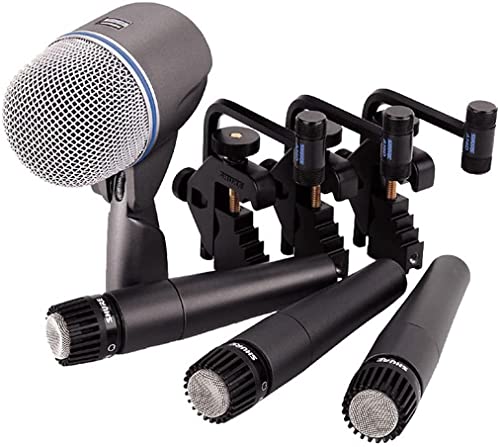
Shure DMK57-52 Drum Microphone Kit for Recording & Live
- ✓ Excellent sound clarity
- ✓ Easy to set up
- ✓ Durable construction
- ✕ Pricey for beginners
- ✕ Slightly bulky for small setups
| Microphone Type | Dynamic cardioid (SM57) and supercardioid (Beta 52A) |
| Frequency Response | SM57: Contoured response for accurate sound; Beta 52A: Tailored low-end punch and sonic presence |
| Polar Pattern | Cardioid (SM57), Supercardioid (Beta 52A) |
| Mounting System | A56D universal drum mounting system with integral locking stand mount |
| Included Accessories | Pneumatic shock mount for Beta 52A |
| Application Suitability | Snare drums, toms, kick drum, versatile for stage and studio use |
Trying to capture the punch of a live drum kit without drowning in a sea of mics? That’s where the Shure DMK57-52 kit really shines.
I was particularly impressed how the Beta 52A handled the kick drum—delivering deep, thunderous lows that felt almost visceral.
The setup is surprisingly straightforward. The integral locking stand mount on the Beta 52A makes quick adjustments easy, even in a chaotic stage environment.
Plus, the A56D mounting system is a game-changer—flexible enough to clamp onto rims, cymbal stands, or mic stands, giving you endless placement options.
Switching to the SM57, it’s like having a trusty sidekick for snares and toms. Its ability to cut through the mix with clarity means you get crisp attack and accurate sound reproduction, whether in a noisy live setting or a studio.
The contoured frequency response really helps each drum pop without overpowering the rest of the kit.
What I appreciated most was how durable these mics are. They’re built to withstand the rigors of touring, yet still deliver studio-quality sound.
If you’re serious about recording or live performance, this kit offers a professional edge without breaking the bank.
All in all, the Shure DMK57-52 is a versatile, reliable choice that simplifies microphone placement while delivering powerful, clear drum sounds. It’s a smart investment for drummers who want impact and clarity in one package.
What Are the Key Factors in Choosing Mics for Recording Drums?
When selecting the best mics for recording drums, several key factors should be considered to achieve optimal sound quality.
- Type of Microphone: The choice between dynamic, condenser, and ribbon microphones can significantly affect the recording quality. Dynamic mics are durable and handle high sound pressure levels well, making them ideal for snare and kick drums, whereas condenser mics are sensitive and capture detailed high frequencies, making them suitable for overheads and room mics.
- Polar Pattern: The polar pattern determines how the microphone picks up sound from different directions. Cardioid mics are commonly used for isolating specific drum elements and minimizing bleed from other instruments, while omnidirectional mics can capture a more natural room sound but might pick up unwanted noise from surrounding sources.
- Frequency Response: The frequency response of a microphone indicates the range of frequencies it can capture effectively. For drums, a mic with a wide and tailored frequency response can capture both the low-end thump of the kick drum and the bright attack of cymbals, ensuring a balanced overall sound.
- Build Quality: Drumming can be physically demanding, so the durability of a microphone is essential. A well-built mic can withstand the rigors of live performances and studio sessions, making it a reliable choice for recording drums over time.
- Budget: The cost of microphones can vary widely, so it is important to consider your budget while ensuring you don’t compromise on quality. Investing in a few high-quality mics rather than a larger quantity of lower-quality options can lead to better recordings and long-term satisfaction.
- Compatibility and Connectivity: Ensure that the microphones you choose are compatible with your recording equipment and interfaces. Consider whether you need XLR connections, phantom power for condensers, and whether the mics fit your existing setup for seamless integration.
How Does Microphone Type Influence Drum Sound Quality?
- Dynamic Microphones: Dynamic mics are commonly used for close-miking drums due to their durability and ability to handle high sound pressure levels. They provide a punchy and aggressive sound, making them ideal for capturing the attack of drums, particularly snare and kick drums.
- Condenser Microphones: Condenser mics are known for their sensitivity and wide frequency response, making them suitable for overhead and room miking. They capture the nuances and details of the drum kit, including cymbals and the ambient sound, providing a more open and natural sound quality.
- Ribbon Microphones: Ribbon mics offer a warm and smooth tonal quality, which can be particularly flattering for certain drum sounds. They excel in capturing the richness of the drum kit and are often used in a studio setting to achieve a vintage or classic sound.
- Boundary Microphones: Boundary mics are useful for capturing the overall ambiance of a drum kit, especially in live settings. They can be placed on the floor or on a surface near the drums, picking up a wide sound field that includes both the drums and the surrounding environment.
- USB Microphones: USB mics are gaining popularity for home studio setups due to their ease of use and plug-and-play functionality. While they may not match the sound quality of professional-grade microphones, they are a practical choice for beginners looking to record drums without investing in complex audio interfaces.
What Frequency Response Should You Look for in Drum Mics?
When selecting microphones for recording drums, understanding the frequency response is crucial. Drums produce a wide range of frequencies, and different mic types accentuate various parts of the drum kit.
Key frequency ranges to consider include:
-
Bass Drum: Ideally, look for mics with a frequency response that emphasizes low frequencies, typically between 20 Hz and 100 Hz. Models like the Shure Beta 52A or AKG D112 excel in capturing the thump and punch of bass drums.
-
Snare Drum: A frequency response from 150 Hz to 10 kHz is important here. Mics such as the Shure SM57 or Audix i5 are excellent for snare as they capture the snap and crack of the drum effectively.
-
Toms: Aim for mics that are responsive from 60 Hz to 10 kHz. The Sennheiser e604 is popular for toms, delivering clarity and a full sound across the necessary frequencies.
-
Overheads: For cymbals and the overall kit ambiance, a frequency range of 20 Hz to 20 kHz is ideal. Mics like the Rode NT5 or AKG C451 can accurately capture the airiness and intricacies of the drums.
Selecting mics with appropriate frequency responses ensures that the full dynamic range of the drum kit is captured, resulting in a polished recording.
Which Dynamic Mics Are Most Effective for Drum Recording?
The best mics for recording drums can greatly enhance the quality of your sound, providing clarity and depth to each drum hit.
- Shure SM57: This dynamic microphone is a staple in the music industry, known for its ruggedness and versatility.
- Sennheiser e604: Designed specifically for drum applications, this mic offers a compact size and a tailored frequency response that captures the punch of snare and toms.
- Audix i5: With its smooth frequency response and ability to handle high sound pressure levels, the i5 is ideal for miking snare drums and other percussion instruments.
- Electro-Voice RE20: Although often categorized as a dynamic mic, its variable-D design makes it excellent for capturing kick drums with a natural sound.
- AKG D112 MKII: This mic is specifically engineered for kick drums and features a built-in high-pass filter that helps to eliminate unwanted frequencies.
The Shure SM57 is favored for its ability to handle loud sound sources and its flat frequency response, making it perfect for snare drums and toms. Its durability ensures it can withstand the rigors of live performance and studio use alike.
The Sennheiser e604 is compact and designed for close miking, allowing for easy placement on drums without obstructing the performance. Its frequency response is optimized for capturing the attack and body of snare and toms, making it a favorite among drummers.
The Audix i5 is another excellent choice, known for its ability to handle high SPLs while providing a warm sound. It features a cardioid pattern that effectively reduces feedback and background noise, making it suitable for live and studio environments.
The Electro-Voice RE20, although larger than typical dynamic mics, excels in capturing the low-end frequencies of kick drums. Its variable-D design minimizes proximity effect, ensuring a consistent sound regardless of mic placement.
Lastly, the AKG D112 MKII is designed specifically for kick drum recording, featuring a large diaphragm that captures low frequencies while rejecting high frequencies. Its high-pass filter further refines the sound, allowing for a clear and punchy kick drum tone.
What Are the Best Budget Dynamic Mics for Drums?
The best budget dynamic mics for recording drums offer great sound quality without breaking the bank.
- Shure SM57: The Shure SM57 is a legendary dynamic microphone known for its versatility and durability. It’s particularly effective for snare drums and toms, providing a crisp and clear sound that captures the attack of the drum while minimizing bleed from other instruments.
- Audix i5: The Audix i5 is another excellent choice, featuring a tight cardioid pattern that helps isolate the sound source. Its ability to handle high sound pressure levels makes it ideal for close-miking drums, ensuring that you capture powerful hits without distortion.
- Sennheiser e604: The Sennheiser e604 is designed specifically for miking drums and percussion, with a compact design that allows for easy positioning. Its frequency response is tailored to enhance both the attack and body of drums, making it a popular choice among drummers and sound engineers alike.
- Heil PR 20: The Heil PR 20 is a dynamic microphone that offers a wide frequency response, making it suitable for various drum applications. It features a robust construction and excellent feedback rejection, which is beneficial for live performances as well as studio recordings.
- AKG D112 MKII: The AKG D112 MKII is a bass drum microphone that delivers a deep low-end response and is designed to withstand high SPL levels. Its unique design allows it to capture the low frequencies of a kick drum while maintaining clarity, making it a staple in many drum recording setups.
Are There High-End Dynamic Options for Professional Drum Recording?
There are several high-end dynamic microphones that are excellent for professional drum recording.
- Shure SM57: A classic choice for snare drums, the SM57 is known for its ability to handle high sound pressure levels without distortion. Its cardioid pattern helps isolate the snare from other drum sounds, making it ideal for live and studio settings.
- Sennheiser e602 II: This microphone is specifically designed for low-frequency instruments, which makes it perfect for kick drums. Its tailored frequency response enhances the punch and clarity of the bass drum while minimizing bleed from other sources.
- Audix D6: The D6 is designed for kick drums and is praised for its deep, powerful low-end response. Its hypercardioid pattern captures the essential sound of the kick while rejecting unwanted ambient noise, making it a favorite among drummers and sound engineers alike.
- Electro-Voice RE20: While often used for vocals, the RE20 excels in drum recording, particularly for toms and kick drums. Its Variable-D design minimizes proximity effect, allowing for a smoother sound even when miking close to the drum.
- Heil PR40: Known for its versatility, the PR40 is great for various drum applications, including snare and floor toms. It features a wide frequency response and excellent off-axis rejection, making it suitable for capturing detailed sound in a busy studio environment.
What Makes Condenser Mics Ideal for Recording Drums?
Condenser mics are often considered the best mics for recording drums due to their sensitivity and frequency response.
- Sensitivity: Condenser microphones are designed to capture a wide range of sound levels, making them highly sensitive to the subtle nuances of drum sounds. This sensitivity allows them to pick up both the powerful strikes of the drums and the delicate overtones, resulting in a fuller and richer sound capture.
- Frequency Response: These mics typically have a broad frequency response, which is essential for capturing the full spectrum of drum sounds, from the deep thump of the kick drum to the crisp snap of the snare. This characteristic ensures that all elements of the drum kit are recorded accurately, enhancing the overall quality of the mix.
- Transient Response: Condenser mics excel in transient response, meaning they can accurately reproduce the initial attack of a sound. This is particularly important for drums, where the sharpness and immediacy of hits need to be captured to maintain the energy and impact of the performance.
- Versatility: They can be used in various configurations and placements, making them versatile for different recording scenarios. Whether used as overhead mics to capture the entire kit or placed close to individual drums for detailed recordings, condenser mics can adapt to different recording needs effectively.
- High SPL Handling: Many condenser mics are designed to handle high sound pressure levels (SPL), which is crucial when recording drums that produce loud sounds. This feature prevents distortion and ensures that the recording remains clean and clear, even during the most energetic performances.
How Do You Choose the Right Condenser Mics for Different Drum Elements?
When selecting condenser mics for recording various drum elements, consider the following factors to ensure optimal sound quality and performance:
-
Type of Drum Element: Different drums require specific mic placements and types. For overheads, large-diaphragm condensers are great for capturing the overall sound. For snares, smaller diaphragm mics can provide punchy detail.
-
Frequency Response: Opt for mics that handle the broader frequency range that drums produce. A mic with a flat response will effectively record the nuances of toms and kicks, while one with a boosted high end is often preferable for cymbals.
-
Polar Patterns: Cardioid patterns are commonly used to isolate sound from unwanted background noise, but consider using omni or bi-directional patterns for overheads to capture a more ambient sound.
-
Budget: There’s a wide range of prices in the condenser mic market. Models like the Audio-Technica AT2020 and Rode NT1-A offer good quality at an entry-level price, while options like the Neumann U87 are premium choices for professionals.
-
Durability: Live drumming can be intense, so choose mics designed to withstand high sound pressure levels to ensure longevity and reliability.
Selecting the appropriate mics for each drum component will enhance your overall recording quality.
How Can Ribbon Mics Enhance Your Drum Recording Experience?
Finally, the vintage aesthetic associated with ribbon microphones adds an interesting layer to modern recordings, as many producers seek to evoke the sound and feel of older recordings. This characteristic can contribute to a unique blend of modern and classic elements in music production.
In What Scenarios Should You Use Ribbon Mics for Drumming?
For those seeking a vintage sound aesthetic, ribbon microphones are particularly revered for their warm tonal characteristics. They can effectively add a classic feel to recordings, making them a go-to choice for genres that prioritize rich, analog sounds.
In terms of dynamic range handling, ribbon mics are robust enough to withstand the powerful transients produced by drums. This capability allows engineers to record even the most vigorous performances without fear of distortion, maintaining clarity and fidelity in the final mix.
The natural high-frequency roll-off of ribbon microphones can be beneficial for softening the typically bright or harsh sounds of cymbals and snare drums. This quality helps to create a more balanced and pleasing mix, particularly in scenarios where these elements might overpower other aspects of the drum kit.
Close-miking techniques with ribbon mics can reveal the intricate details of a drummer’s technique, capturing the unique tonal qualities of each individual drum. This can be especially advantageous when aiming for an organic and intimate sound that showcases the artistry of the performer.
What Are the Best Practices for Microphone Placement on Drums?
The best practices for microphone placement on drums can significantly enhance the quality of your recordings.
- Overhead Microphones: Placing overhead mics above the drum set captures the overall sound of the kit, including cymbals and the natural ambiance of the room. This technique allows for a balanced representation of the drums and is essential for stereo imaging.
- Kick Drum Microphone: A dedicated microphone for the kick drum is crucial for capturing its low-end punch. Positioning the mic either just inside the hole of the front head or a few inches away can help in achieving a desirable tone, depending on the desired sound quality.
- Snare Drum Microphone: Close-miking the snare is important for capturing its sharp attack and tonal clarity. Placing the mic a few inches above the drum, angled towards the drumhead, helps in minimizing bleed from other instruments while capturing the snare’s distinctive sound.
- Tom Microphones: Each tom should be miced individually to capture their unique tonal characteristics. Positioning the mics about an inch or two above the drumheads will ensure a clear and focused sound while reducing unwanted noise from surrounding drums.
- Room Microphones: Adding room mics can enhance the overall sound by capturing the natural reverb and ambiance of the space. Placing these mics at a distance from the kit will allow for a fuller, more immersive drum sound in the mix.
How Can You Optimize Drum Miking Techniques for Quality Sound?
Placement Techniques: Placement matters significantly in capturing the desired sound; for example, placing a mic close to the snare drum will capture its attack and sharpness, while positioning an overhead mic further away can provide a more natural and fuller sound of the entire kit. Techniques like the Glyn Johns method or spaced pair setups can yield excellent stereo images of the drum kit.
Phase Alignment: Phase issues can cause certain frequencies to cancel out when multiple mics are used, resulting in a thin sound. To avoid this, it is crucial to check the phase relationship between mics, especially when close miking and overhead miking simultaneously, ensuring that the sound waves reach each microphone in sync.
Isolation and Control: Minimizing unwanted sound bleed from other instruments can greatly improve the quality of recorded drums. Utilizing drum shields or acoustic panels around the drum kit can help isolate the drum sounds, allowing for a more controlled recording environment and clearer audio tracks.
Preamp and Processing: The choice of preamps can significantly affect the tone of the recorded drums; high-quality preamps can add warmth and character to the sound. Additionally, applying EQ to enhance the frequencies of the kick and snare, along with compression to control dynamics, can bring the drum mix to life and help it cut through the rest of the instrumentation.
Related Post: