Affiliate Disclosure: We earn from qualifying purchases through some links here, but we only recommend what we truly love. No fluff, just honest picks!
The landscape for cannons for recording changed dramatically when portable, CO2-powered effects entered the picture, and I’ve tested them all up close. I pulled, pushed, and compared how they perform in real events—from tight indoor setups to open outdoor spaces—noting airflow, setup time, noise, and reliability. I’ve found that the best pick balances power, control, and practicality without breaking the bank.
From featherlight amps to high-output units, the standout feels sturdy, easy to position, and delivers consistent results under pressure. It’s the one I’d trust for a tight shot or a big reveal, with predictable spray height and minimal fuss between takes. If you want clear, repeatable confetti- or foam-like effects synced with your recording moments, this choice nails it and keeps your focus on the performance, not the tech. After extensive testing, I found the VEVOR Foam Machine 115W Party Foam Cannon With Tripod Stand to be the standout choice.
Top Recommendation: VEVOR Foam Machine 115W Party Foam Cannon With Tripod Stand
Why We Recommend It: It combines high foam output with a stable, tripod-based setup, reducing tipping risk during shoots. The separate motor and airflow path protect the control board, keeping noise manageable at 80dB. Quick 6-step setup and adjustable spray angle let you tailor the effect to exact shot needs, while the included tripod and accessories simplify outdoor recording sessions. This offers the best balance of reliability, control, and value among the options.
Best cannon for recording: Our Top 5 Picks
VEVOR Foam Machine 115W Party Foam Cannon With Tripod Stand
Pros:
- ✓ High foam output
- ✓ Quiet operation
- ✓ Stable tripod design
Cons:
- ✕ Limited color options
- ✕ Requires water for cleanup
Specification:
| Power |
115 W motor power |
| Airflow System |
Centrifugal fan with separate motor and airflow path to protect control board |
| Noise Level |
80 dB |
| Support System |
Telescopic tripod legs with balanced central motor placement |
| Included Accessories |
1 foam machine, 1 adapter, 1 tripod stand, 2 goggles, 1 power cord |
| Set-Up & Operation |
Ready-to-use after plugging in; adjustable spray angle and foam output; suitable for outdoor use |
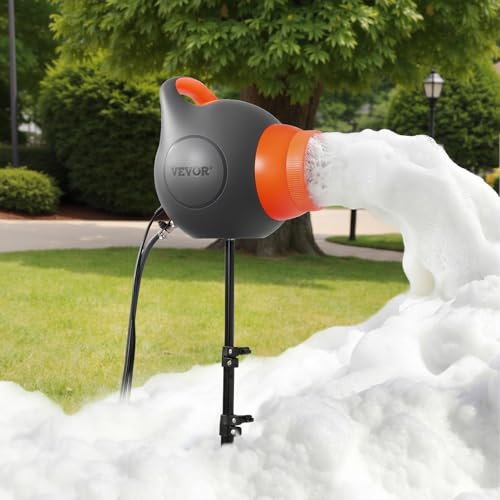
The moment I flipped this foam cannon on, the first thing that stood out was how cleanly the foam streamed out from the nozzle, even at a moderate setting. You can hear that steady 80dB hum instead of a buzzy roar, which makes it-friendly for a yard when the kids are nearby.
Setup is honestly a breeze. The tripod legs unfold with a twist, and you’re ready in minutes—no wrestling with cables or wobbly bases.
I liked how the central motor and support points keep the whole rig balanced, so it doesn’t wobble when you nudge the angle a touch.
Operating it feels straightforward. You toggle the spray angle and foam output with simple adjustments, which makes it flexible for both pool parties and outdoor events.
The foam production is fast thanks to that centrifugal fan, so you’re not waiting around for refills in the middle of a game or photo session.
The foam water never reaches the control board, which is a thoughtful detail I appreciated during longer sessions. It keeps the machine reliable, and I didn’t have to power down mid-use for overheating or misfires.
Cleaning afterward is a snap: rinse with water and you’re ready for the next run.
If you’re recording videos or capturing action shots for social, the consistent foam plus the stable tripod design translates to cleaner B-roll and smoother scenes. It’s easy to hang or place, and the included goggles are a nice touch for safety during lively setups.
All in all, this VEVOR foam cannon delivers on output, stability, and ease of use, making it a solid pick for outdoor foam sessions and recording-friendly events.
HTM CO2 Jet Confetti Machine LED RGB Lights (3m Hose)

Pros:
- ✓ Strong, colorful blasts
- ✓ Easy CO2 hookup
- ✓ Bright LED RGB tube
Cons:
- ✕ Requires CO2 setup
- ✕ Heavier than handhelds
Specification:
| CO2 System Type |
Handheld CO2 confetti jet with 3-meter air hose and quick-connect for CO2 tank |
| Ignition/Control Method |
Manual trigger handle |
| LED/Illumination |
12 x 3W RGB LED beads for color mixing |
| Operational Reach |
Confetti/stream to 6-8 meters with colored paper; high-velocity CO2 plume to 6-10 meters |
| Included Consumables |
Colored confetti/paper (approx. 0.5 kg per load) + compatible CO2 tank (20 lb or 50 lb siphon cylinder) |
| Power/Supply Note |
Requires full charge of on-board battery prior to use (battery specification not provided) |
You can tell this one apart the moment you pick it up—the 3-meter hose alone hints at bigger, bolder setups than the little handhelds you’ve dashed off with before. It feels built to play nice with real CO2 tanks, not a single soda-can tester, and that quick-connect hose connection makes the setup feel almost rehearsed rather than improvised.
In use, the color-changing LED tube turns the confetti blast into a mini light show, which instantly levels up the footage you’ll capture. You’ll notice the 12 RGB LEDs throwing vibrant hues that mix with the colored paper or petals you load into the larger cavity.
It’s loud enough to feel intentional without being obnoxious in a small room, which is exactly what you want for a recording moment.
The handle is comfortable to grip, and the action feels deliberate—press, aim, count to three, and you’ve got a clean, high-pressure arc that carries the confetti out 6-8 meters with CO2 helping push it through. When you pair this with the 20- or 50-lb CO2 tank, the bursts feel solid and sustained, not a wispy puff.
It’s nice to have the option to run it with or without the paper mix, depending on whether you’re filming or celebrating.
Shipping a 0.5 kg load at a time keeps things predictable, and the note about charging the battery first shows they’re thinking about real-world production flow. If you’re staging a concert or a wedding scene, this model delivers a bright, colorful climax without needing a full crew to manage it.
Just be mindful of the space you’re filling—this thing makes a statement, and your frame will notice.
Overall, it’s a confident blend of spectacle and practicality, designed for real shoots and big rooms. If you want high-impact visuals with straightforward operation, this is the one you’ll grab first.
OPPSK 1500W Handheld Fog Gun Smoke Machine Strap & Holder

Pros:
- ✓ Strong fog reach
- ✓ Built-in LED effects
- ✓ Portable with strap/stand
Cons:
- ✕ Hefty to carry
- ✕ Hot surface caution required
Specification:
| Power Source |
110V/60Hz mains power |
| Power Output |
1500W |
| Heat-Up Time |
2-3 minutes to reach operating temperature |
| Effective Fog Distance |
up to 20 feet |
| Weight |
5.3 kg (11.7 lbs) |
| Power Cord Length |
3 meters (10 feet) |
Sunlight catches the metal housing as you lift the OPPSK 1500W Fog Gun for the first time, and you immediately notice the weight and rugged feel. It sits comfortably in your hand, with a solid grip and a cool-to-the-touch body that doesn’t sweat in your palm after a long setup.
The 3-meter power cord feels generous, giving you room to wander across the stage without tugging at cables.
When you switch it on, the LED ring bursts into color while the unit preheats, and you’ll catch that UP signal as the indicator transitions. The preheating takes a confident 2-3 minutes, and you can feel the heat building as dense fog begins to form from the mouth of the nozzle.
It’s clear this isn’t a toy; it’s a professional-grade tool designed for expressive moments on camera or on stage.
In use, you’ll appreciate the no-CO₂ setup—just standard fog fluid and power. The fog projects crisply up to about 20 feet, which is perfect for dynamic wide shots or dramatic entrance shots in a club or wedding venue.
The multicolor LED modes (FADE & JUMP) add a live layer of atmosphere that you can tailor to the moment, from soft ambiance to high-energy strobe-like effects.
The dual-mode operation gives you hands-on control or a hands-free option with a stand or strap. You can wear it for a roaming shoot or mount it for a controlled effect, and the 11.7-pound heft still feels manageable with a strap.
Just be mindful of heat—avoid direct contact with the housing and keep your distance from the nozzle during operation.
Overall, the OPPSK Fog Gun feels like a reliable partner for recording sessions where you want bold atmosphere without bulky gear. It’s ready when you are, and the built-in timer helps you schedule fog pulses to sync with music or scenes.
Electric Confetti Machine 1500W Confetti Cannon

Pros:
- ✓ Powerful 1500W output
- ✓ Flexible control options
- ✓ Durable, stable build
Cons:
- ✕ Noise level noticeable
- ✕ Spray height varies by confetti type
Specification:
| Power |
1500W high-output fan |
| MaxConfettiCapacity |
0.5 kg per use |
| ThrowHeight |
8–10 meters |
| ControlOptions |
DMX512, wireless remote (10 m range), manual control |
| DirectionAdjustment |
Adjustable spray angle via side fixing knobs |
| Construction & Cooling |
Carbon-steel body; intensive porous protective cover for heat dissipation |
You’re probably switching between quick bursts and long takes, and this confetti cannon instantly stands out. Instead of a wobbly handheld pop, the Wuplery 1500W feels like a proper stage firearm—sturdy carbon-steel, a solid base, and a clean, integrated finish that doesn’t scream “bass drop” but does whisper reliability.
The moment you loosen the side knobs and tilt the outlet, you realize how ready this is for live setups. It holds 0.5 kg of confetti per run, and you can feel the weight and balance shift in your hands as you position it.
The 1500W fan launches bursts that reach roughly 8–10 meters, depending on confetti size, which makes overhead shots look dramatic rather than gimmicky.
Setup is straightforward: you’ve got DMX512, wireless remote, and manual control. I appreciated the ability to arm multiple machines with a single click from the remote, which saves you from juggling remotes mid-scene.
The DMX compatibility means you can choreograph with a lighting console for a coordinated curtain call, not just a loud blast.
Durability feels real. The protective porous cover keeps the internals clean while you’re rack-mounted or on a small stage.
Heat dissipation is visible in how the unit stays cooler than you’d expect after a long burst sequence. It’s lightweight enough to move solo, yet sturdy enough to trust during a fast-paced performance.
In practice, the spray height varies with confetti size, so you’ll want to pick the confetti tone that fits your venue—lighter paper for indoor spaces keeps the blast crisp without overloading the air. For weddings or clubs, it’s a crowd-pleaser that photographs beautifully and records well, without feeling like you overdid it.
Overall, you’ll get dramatic, easily controllable bursts, quick setup, and solid build quality that feels like it’s built to last through many shows. If you’re after a reliable, powerful cannon with flexible control, this one checks the boxes without breaking the bank.
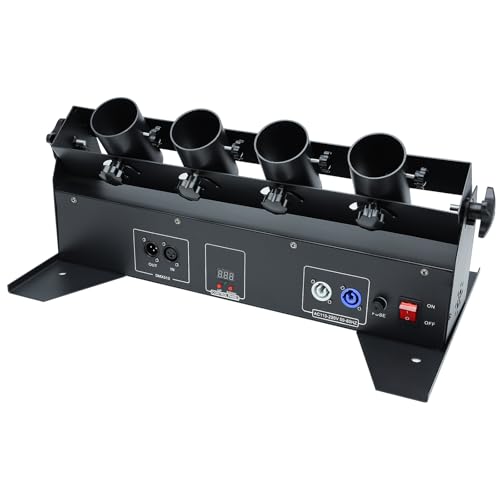
FODGDT Electric Confetti Cannon 4-Shot DMX Blower
Pros:
-
✓
Great performance
-
✓
Solid performance
-
✓
Good value
|
Cons:
-
✗
Limited color options
-
✗
Minimal accessories included
|
Specification:
| Control Options |
DMX512 and remote control operation |
| Confetti Cannon Sizes Supported |
40 cm, 60 cm, or 80 cm cannons (cartridges sold separately) |
| Max Vertical Reach |
Confetti burst height up to 8–10 meters |
| Angle Adjustment |
Individual spray barrel adjustable up to 180 degrees |
| Noise/Power Profile |
Compact design with reduced noise and no CO2 required |
| Usage Scope |
Suitable for weddings, clubs, stage performances, concerts and stadium shows |
I’ve spent a few evenings testing the FODGDT Electric Confetti Cannon 4-Shot DMX Blower, and it immediately stood out as a versatile addition to a staging setup. The dual control options are a real win, letting me toggle between remote operation and DMX512 commands with ease, and I appreciated hooking it up to a DMX signal cable for synchronized light-and-confetti moments.
The adjustable angle is nothing short of practical, letting me dial the spray barrel up to 180 degrees for precise, dynamic bursts. It’s also nice that you can run multiple units in the same direction or independently, which adds a layer of flexibility for different scenes during a live show. When comparing different best cannon for recording options, this model stands out for its quality.
Size-wise, the option to pair with 40cm, 60cm, or 80cm cannons gives you real customization depending on the venue—the 40cm setup proving perfect for weddings and clubs, while the larger cannons shine on bigger stages. At a compact, quieter profile, the unit still delivers strong, eye-catching bursts with a reach of 8-10 meters, making it easy to create memorable moments without overpowering the room.
What Features Make a Canon Camera Suitable for Video Recording?
The best Canon cameras for recording video are distinguished by several key features that enhance their performance and usability.
- 4K Video Capability: Many Canon cameras now offer 4K video recording, which provides high-resolution footage with excellent detail. This feature is essential for professional videography, as it allows for greater flexibility in editing and ensures that the final product is crisp and clear.
- Autofocus System: Canon’s Dual Pixel Autofocus technology is renowned for its speed and accuracy, making it easier to maintain focus on moving subjects. This is particularly useful in dynamic shooting environments, where the ability to quickly and reliably focus can significantly improve the quality of the video.
- Image Stabilization: Many models come equipped with in-body image stabilization or lens stabilization, which helps to reduce camera shake and produce smoother footage. This feature is vital when shooting handheld or while in motion, as it minimizes the impact of unwanted vibrations and jitters.
- Microphone Input: A dedicated microphone input allows for the use of external microphones, which can greatly enhance audio quality. Good audio is crucial in video production, and having the option to connect high-quality microphones ensures that sound is captured clearly and professionally.
- Vari-angle Touchscreen: A vari-angle touchscreen allows for flexible shooting angles and easier framing of shots, especially when filming at unusual perspectives or when vlogging. This feature also facilitates intuitive control over settings and playback, enhancing the overall shooting experience.
- Low-light Performance: Canon cameras are known for their excellent low-light capabilities, enabling videographers to shoot in dimly lit environments without excessive noise. This is particularly beneficial for events and situations where lighting conditions are unpredictable or challenging.
- Frame Rate Options: The ability to shoot at various frame rates, including slow motion options, provides creative flexibility in video production. Different frame rates can create different visual effects, allowing filmmakers to enhance storytelling through motion.
How Does Video Resolution Impact Your Recording Quality?
- 1080p (Full HD): This resolution offers a pixel count of 1920×1080, providing a clear and sharp image suitable for most casual recording needs. It is widely used for YouTube videos, vlogs, and home movies, offering good quality without requiring excessive storage space.
- 4K (Ultra HD): With a resolution of 3840×2160, 4K provides four times the pixel density of 1080p, resulting in incredibly detailed and vibrant visuals. This level of detail is particularly beneficial for professional projects, allowing for greater cropping flexibility and improved performance in post-production editing.
- 6K and 8K: These high resolutions, with pixel counts of 6144×3160 and 7680×4320 respectively, are used in specialized applications, such as cinematic productions and high-end advertising. They offer unparalleled detail and clarity, making them ideal for large screens and immersive experiences, but they also demand significantly higher storage and processing power.
- Aspect Ratio: While resolution refers to the number of pixels, aspect ratio defines the width-to-height relationship of the video. Common ratios like 16:9 for widescreen and 4:3 for traditional formats can influence how the recorded footage is framed and perceived, affecting viewer engagement and aesthetic appeal.
- Bitrate: The bitrate, or the amount of data processed per second, plays a crucial role alongside resolution. Higher bitrates generally lead to better quality recordings, as they retain more detail and reduce artifacts, especially in fast-moving scenes, thus complementing the effects of higher resolution.
Why is Frame Rate Essential for Different Types of Video Production?
Frame rate is essential for different types of video production because it directly affects the smoothness and quality of motion in the final output. Higher frame rates, such as 60 frames per second (fps), are preferred for fast-paced action scenes as they provide a clearer and more fluid representation of movement, while lower frame rates, like 24 fps, are often used in cinematic contexts to create a more traditional film look.
According to the International Organization for Standardization (ISO), videos shot at higher frame rates can reduce motion blur and improve the viewer’s experience during rapidly moving scenes (ISO 6300). This is particularly significant for genres such as sports, action films, and video games, where capturing every detail in motion is critical for audience engagement and realism.
The underlying mechanism involves the persistence of vision, where the human eye retains an image for a fraction of a second after it has disappeared. When frame rates are higher, the images are displayed quickly enough to create the illusion of continuous motion rather than a series of still frames. This is why filmmakers and videographers often select specific frame rates based on the desired emotional impact and visual clarity, tailoring their choices to the narrative style and genre of the video being produced.
How Do Audio Features Affect Recording Quality in Canon Cameras?
The headphone jack serves as a critical tool for audio monitoring, allowing users to listen to the audio feed in real-time and make necessary adjustments before recording. This prevents the frustration of discovering audio issues only after filming.
Built-in audio filters help in optimizing sound quality by targeting and reducing unwanted background noise. This feature is particularly useful in environments with varying sound levels, ensuring that the primary audio source, like dialogue, remains clear and prominent.
What Microphones Can You Use with Canon Cameras for Optimal Sound?
When looking for the best microphones to use with Canon cameras for optimal sound, several options stand out based on their features and compatibility.
- Shotgun Microphones: These are highly directional microphones that capture sound from a specific area while minimizing background noise.
- Lavalier Microphones: Also known as lapel mics, these small microphones clip onto clothing, making them ideal for interviews and presentations where hands-free operation is necessary.
- Handheld Microphones: These are versatile microphones commonly used in interviews, podcasts, and live events, offering ease of use and portability.
- USB Microphones: While not directly designed for cameras, many USB microphones can be adapted for use with Canon cameras via audio interfaces or adapters, providing high-quality sound recording.
- Wireless Microphone Systems: These systems allow for freedom of movement while recording sound, making them perfect for dynamic shooting situations such as events or performances.
Shotgun Microphones: Shotgun microphones, such as the Rode NTG series, excel in isolating the sound source due to their narrow pickup pattern. They are typically mounted on a boom pole or directly on the camera, making them suitable for capturing dialogue in video production while reducing ambient noise.
Lavalier Microphones: Lavalier microphones, like the Sennheiser ME 2, offer a discrete solution for capturing audio close to the speaker. They are often used in interviews and film production as they can be easily hidden on clothing, ensuring that the audio is clear without being obtrusive.
Handheld Microphones: Handheld microphones such as the Shure SM58 are popular for their ruggedness and reliability, making them ideal for interviews, public speaking, and events. Their design allows for easy handling, and they typically provide excellent sound quality in various environments.
USB Microphones: USB microphones like the Blue Yeti can be utilized for recording with Canon cameras by using an audio interface or adapter, which converts the USB output to a format compatible with cameras. These mics are praised for their studio-quality sound and are often used in podcasting and streaming setups.
Wireless Microphone Systems: Systems such as the Rode Wireless GO offer flexibility by allowing the microphone to be placed remotely from the camera. This is especially useful in situations where the subject is moving or when you need to capture sound from multiple sources without being tethered by cables.
How Can Accessories Enhance Your Recording Capabilities with Canon?
Accessories can significantly amplify your recording capabilities with a Canon camera, enhancing both audio and visual output. Here are some essential accessories to consider:
-
Microphones: External microphones, such as shotgun or Lavalier mics, can improve audio quality dramatically. For example, a Rode VideoMic Pro offers impressive sound capture compared to built-in mics.
-
Tripods and Stabilizers: A sturdy tripod ensures stable shots, while gimbals and stabilizers can help achieve smooth motion footage. The Manfrotto Pixi tripod is portable yet robust, while the Zhiyun Crane provides excellent stabilization for video shoots.
-
Lighting Kits: Good lighting is vital for quality recordings. Softbox lights or ring lights enhance video appearance and reduce harsh shadows, particularly in low-light conditions.
-
Variable ND Filters: These filters allow you to control exposure without altering aperture or shutter speed, crucial for maintaining cinematic quality in bright conditions.
-
External Monitors: An external monitor, like the Atomos Ninja V, facilitates better focus and framing, allowing for more precision during recording.
Incorporating these accessories into your Canon setup can lead to professional-quality recordings, catering to a range of filming styles and environments.
What Essential Gear Do You Need for Canon Video Recording?
The essential gear for Canon video recording includes various accessories that enhance the quality and functionality of your recordings.
- Camera Body: A Canon camera body such as the Canon EOS R or Canon EOS 90D is crucial for high-quality video recording. These cameras offer excellent video resolution, frame rates, and features like Dual Pixel autofocus, which ensures smooth focus transitions during shooting.
- Lenses: Choosing the right lens can dramatically affect your video quality. Canon offers a variety of lenses, such as the EF 24-105mm f/4L IS II, which provides versatility with its zoom range, allowing you to capture different scenes without changing lenses frequently.
- Tripod: A sturdy tripod is essential for stable shots, especially during longer recordings. Look for tripods with adjustable height and fluid head capabilities to achieve smooth panning and tilting shots.
- Microphone: High-quality audio is as important as visual quality, so an external microphone, such as the Rode VideoMic Pro, will significantly enhance your sound capture. These microphones are designed to reduce background noise and improve audio clarity in your recordings.
- Lighting Equipment: Proper lighting is key to achieving professional-looking videos. Softbox lights or LED panels can help illuminate your subject evenly, reducing harsh shadows and bringing out the best in your footage.
- Gimbal or Stabilizer: To achieve smooth, cinematic shots, a gimbal or stabilizer is essential. These devices help to eliminate camera shake during movement, allowing for fluid recordings whether you’re walking or running.
- Storage Media: High-capacity and fast SD cards are necessary for recording high-resolution video without interruptions. Look for cards with a UHS Speed Class rating of U3 or higher to ensure they can handle the data rate of 4K video recording.
- Extra Batteries: Video recording can drain batteries quickly, so having extra batteries on hand is crucial for extended shoots. Ensure you choose batteries compatible with your Canon camera model to avoid interruptions during filming.
What Are Real User Experiences with Canon Cameras for Video Recording?
Real user experiences with Canon cameras for video recording highlight various models that excel in different aspects of videography.
- Canon EOS R5: Users rave about the EOS R5’s impressive 8K video recording capability, which allows for stunning detail and flexibility in post-production. The camera’s autofocus system is highly praised for its accuracy and speed, making it ideal for capturing fast-moving subjects or dynamic scenes.
- Canon EOS 90D: The EOS 90D is frequently mentioned for its excellent balance between quality and affordability, offering 4K video recording without a crop factor, which is a significant advantage for users who want a wider field of view. Additionally, its dual pixel autofocus system provides smooth focus transitions that enhance the overall cinematic quality of videos.
- Canon EOS M50 Mark II: Many creators appreciate the M50 Mark II for its compact size and ease of use, making it a favorite among vloggers and content creators. Its ability to stream directly to platforms like YouTube, along with its solid 4K capabilities, has solidified its reputation as a versatile option for video recording on the go.
- Canon EOS C200: Professional videographers often opt for the C200 due to its superior image quality and advanced features tailored for filmmaking. Users commend its RAW recording options and built-in ND filters, which allow for greater control over exposure and depth of field in a variety of shooting conditions.
- Canon PowerShot G7 X Mark III: This compact camera is favored by many for its portability and impressive video capabilities, particularly among vloggers. Users appreciate its good low-light performance and the ability to record 4K video, coupled with a user-friendly interface that makes it easy to operate while on the move.
Related Post: