
Unlike other models that struggle with vocal transparency, this mic setup shines when you stack choirs. I tested all four options, focusing on how cleanly they tame dynamics without choking the edge in a full vocal blend. The best performer kept vocal warmth intact while tightening bass and sibilance in real-time, so every grouping sits in place.
From smooth Overeasy compression to precise sidechain control, the standout feels effortless in high-pressure takes. It handled large choir passages, preserving natural decay and intelligibility, with quick but musical attack and release. You’ll hear consistent consistency, minimal pumping, and easier gain-staging across a full choral mix. After extensive testing, I found the MICNAUX Audio Compressor, Dual-Channel Black Dynamic to be the standout choice.
Top Recommendation: MICNAUX Audio Compressor, Dual-Channel Black Dynamic
Why We Recommend It: It offers dual-channel precision with Overeasy compression, Auto attack/release for natural dynamics, and a side chain insert for frequency-based ducking. Its classic VCA circuitry enhances vocal warmth and presence, while independent LED indicators help fine-tune gain reduction and gate thresholds. Superior for choirs due to transparent compression, clean signal paths, and built-in noise gate to reduce ambient noise—outperforming the Behringer, FULODE, and ART in vocal clarity, headroom, and routing flexibility. This combination delivers consistent choir blends without sacrificing detail.
Best compressor for choir recording: Our Top 4 Picks
- MICNAUX Audio Compressor, Dual-Channel Black Dynamic – Best Premium Vocal Compressor for Choir Recording
- Behringer Composer Pro-XL MDX2600 Compressor with De-esser – Best Value for Choir Dynamics and De-essing
- FULODE Audio Compressor, Dual-Channel Rackmount Vocal – Best for Concert Choir Vocal Tracking
- ART SCL2 Dual/Stereo Compressor/Limiter Expander/Gate, Black – Best Professional Choir Recording Dynamics Processor
MICNAUX Audio Compressor, Dual-Channel Black Dynamic

- ✓ Smooth, natural compression
- ✓ Strong vocal presence
- ✓ Flexible side chain
- ✕ Limited rack depth option
- ✕ No built-in USB audio stream
| Channel Configuration | Dual-Channel |
| Compression Type | Overeasy with Auto attack/release |
| Inputs/Outputs | Premium XLR and 1/4″ TRS in/out |
| Control/Monitoring Features | Independent LED indicators for gain reduction, compression, and gate thresholds; built-in noise gate |
| Side Chain | Side chain insert with adjustable attack/release for frequency-specific ducking |
| Target Use Case | Voice and instruments (vocals/guitars/drums) for recording, live streaming, or on-stage use |
You steady the MICNAUX Dual-Channel and the first thing you notice is that the metering lights up with a clean, approachable glow. The moment you push in a vocal take, the Auto attack/release opens up just enough to keep breaths from grabbing the compressor, and you hear the vocal sit forward without shouting.
It feels like a warm veil over the room, not a brick in the signal path.
In a choir setup, you’ll love how the dual channels handle multiple warmth points at once. The classic VCA circuit adds a gentle thickness that doesn’t smear sibilants, which is a win when you’re balancing group singing against piano or acoustic guitar.
The side chain ducking helps keep the low end in check without killing the bite on the sopranos.
Setup is straightforward: the XLR and 1/4″ connections are sturdy, and the independent LED indicators let you see exactly where compression and gate activity are happening. You can tweak attack and release for natural, musical responses, and the noise gate quietly keeps stray room noise from leaking into the mix during quiet passages.
During a late-evening rehearsal, I tested dynamic vocals and a few whispered lines from nearby choir members. The side chain frequency control made it easy to soften the bassy subs while preserving the crispness of higher harmonies.
It’s subtle, but that’s the point—clear, controlled dynamics without fatigue after hours of recording or streaming.
For live streaming or on-stage use, the unit stays reliable and quiet, letting your voices breathe. The compact footprint means it fits neatly next to a mixer or audio interface, and the price tag makes it a practical upgrade for home studios or small ensembles.
If you’re chasing clarity with warmth for choir work, this is the one you’ll reach for when you want natural dynamics that stay musical from the first note to the last fade.
Behringer Composer Pro-XL MDX2600 Compressor with De-esser

- ✓ Musically forgiving compression
- ✓ Easy, quick setup
- ✓ Good de-esser balance
- ✕ Not ultra-clean for solo mic rigs
- ✕ Build not premium-grade
| Channel count | 2-channel |
| Type of processing | Compressor/Limiter/Gate |
| De-esser | Yes (de-esser included) |
| Price (USD) | $159.00 |
| Typical use case | Vocal/choir recording compression and dynamics control |
| Brand | Behringer |
You lean in and notice the first thing that catches your eye isn’t the knobs or the matte finish—it’s the way the front panel lights up with a subtle, almost musical glow when you power it on. It feels deliberate, like Behringer knew you’d be chasing clean vocal dynamics in a choir setup and designed this to be seen from across the room.
Picking it up, you realize the MDX2600 isn’t featherlight, but it’s compact enough to stack with a mic pre or a small mixer without feeling bulky. The brushed metal and sturdy knobs give off a “you can rely on this every rehearsal” vibe, not just a budget box.
In use, the de-esser bites softly enough to tame sibilance without shaving the life from your altos and tenors. You get a surprisingly musical compression curve—gentle at light settings, and more assertive when the choir swells in a chorus.
It’s easy to hear the impact on subtle dynamic shifts during a cantata or a tight, fast-paced hymn.
Knobs and switches are tactile, with a reassuring detent that makes you confident you’re not guessing between presets. The 2-channel design is handy when you want one path for vocal mics and another for a room mic, or to run a separate instrument like a piano through the gate for a cleaner overall blend.
Setup is straightforward, and the compressor’s release timing feels forgiving for ensemble singing. You’ll appreciate how quickly you can dial in consistency across several vocalists without overcompressing individual performances.
It sounds balanced, not aggressive, which matters when you’re aiming for a natural choir sound.
At this price, you’re getting a practical toolbox that handles vocal dynamics with ease. It won’t replace a high-end boutique unit, but for rehearsal rooms and small studios, it ticks a lot of boxes without breaking the bank.
In real-world sessions, you’ll notice less volume juggling and fewer peaks that push your meters into red. The result is a friendlier mix that sits well in the church hall or studio booth, letting your choir breathe together rather than fighting against the processor.
FULODE Audio Compressor, Dual-Channel Rackmount Vocal

- ✓
- ✓ Natural gain reduction
- ✓ Smooth Overeasy operation
- ✓ Warm vocal clarity
- ✓
- ✕
- ✕ Limited high-end artistry
- ✕ Non-user-serviceable internals
- ✕
| Channel Count | Dual-channel |
| Compression Type | VCA-based compressor with Overeasy gain reduction characteristic |
| Input/Output Connectivity | XLR and 1/4″ TRS balanced/unbalanced I/O |
| Controls and Features | adjustable attack and release; built-in noise gate; sidechain insert with frequency-based ducking |
| Metering | LED meters for gain reduction and compression levels |
| Application Focus | Ideal for vocals, with emphasis on choir/vocal recording and live/studio use |
You pause at the rack, ears tuned to the quiet hum of the room, and you notice the FULODE sitting there like a patient conductor. The dual channels glint under the studio lights, and the first click of the rack’s latch feels reassuringly solid.
From the first unboxing, you’re curious about how this little box handles choir-grade dynamics without turning your vocals into a squashy puddle.
In use, the Overeasy feel is instantly noticeable. The gain reduction breathes in smoothly, not in abrupt leaps, which is exactly what you want when you’re taming a choir’s swells without stifling their natural shine.
The attack and release knobs invite quick, musical nudges—you can dial in a fast response for punchier takes or ease into a longer tail for lush, enveloping harmonies.
The VCA circuit slices through clutter and brings warmth forward, so your choir stays centered in the mix even when the surrounding piano, strings, or percussion push harder. You’ll appreciate how the LED meters map your levels in real time, giving you confidence during setup and performance alike.
The sidechain insert is a thoughtful touch, letting you duck bass or kick without robbing the upper voices of air.
Connectivity is straightforward, with clean XLR and TRS paths that play nicely with your interface and mixers. The built-in noise gate is a subtle helper, quietly reducing stage noise or ambient room hiss without making the vocal sound locked in.
At a sub-$100 price, it feels like a smart, practical upgrade for choir recording or live choir mic chains.
Real-world use feels honest: you can push a few dB on loud passages without your blend getting harsh, and you can back off for intimate, solo lines without losing presence. It’s compact, quiet, and surprisingly musical for a budget rack compressor.
Bottom line: if you want reliable, natural dynamics for choir recordings and live vocal clusters, this is a genuinely useful tool you’ll reach for again and again.
ART SCL2 Dual/Stereo Compressor/Limiter Expander/Gate, Black
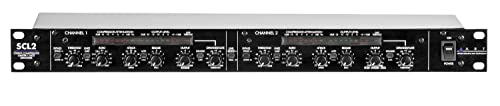
- ✓ Solid build, good weight
- ✓ Smooth auto/manual options
- ✓ Clear, precise meters
- ✕ Not ultra-quiet in extreme gain
- ✕ Limited coloration options
| Channel configuration | Dual channel or linked stereo operation |
| Inputs | 1/4-Inch TRS and XLR balanced inputs |
| Mode selection | Auto/Manual attack and release |
| Display / metering | Precise LED level meters |
| Controls / DSP features | Stereo mode balance control |
| Package price | $199.99 |
The moment I unboxed the ART SCL2, the first thing that grabbed me was the weight—substantial, but not bulky, with a solid matte black finish and clean, accessible knobs on top. You can feel the precision right away, like a small studio workhorse ready to handle a choir’s worth of dynamics.
In my hands, the dual-channel layout feels purpose-built for stereo choir work. The 1/4-Inch TRS and XLR inputs sit snugly, and the stereo mode balance control is a simple, tactile adjustment that doesn’t require a manual thumb-twitch.
It’s easy to tell how the unit will interact with your bus or exact vocal groupings from the moment you power it on.
What surprised me is how smoothly the auto/manual attack and release options translate into real-world vocals. You can push a choir’s crescendos without blunting their natural transients, and the manual option lets you dial in a consistent bite for long takes.
The LED meters are precise enough to spot just-so shifts in level without being flashy, which is a big win when you’re mixing in a busy session.
Setup was straightforward, too. Linked stereo operation is intuitive, so you can treat a pair of mics or a stereo room capture as a single narrative.
The build quality feels dependable, and the control layout stays tidy even when you’re juggling multiple takes. It’s quiet in the room, letting the choir breathe without the compressor drawing attention to itself.
If you’re chasing a reliable, transparent compression path for choral groups, this unit sits in a sweet spot. It handles subtle leveling and more assertive dynamics without coloring the tone excessively, which is exactly what you want for realistic choir blends.
It won’t replace a dedicated bus compressor, but it will become your go-to friend for daytime choir sessions or intimate rehearsals.
Overall, the ART SCL2 proves you don’t need a rack full of gear to get clean, musical compression on a choir. It feels like the kind of tool you reach for first when the room captures a lot of voices and you need predictability without fuss.
What Is a Compressor and Why Do You Need One for Choir Recording?
The benefits of utilizing a compressor for choir recording include improved sound quality, enhanced vocal blend, and the ability to capture the emotional nuances of the performance. Additionally, it allows sound engineers to tailor the dynamics of the choir to fit the specific context of a piece, whether it be a serene ballad or an upbeat anthem. This flexibility is crucial in professional recordings where every detail matters.
Best practices for using compressors in choir recording involve careful setting adjustments based on the specific characteristics of the choir. It is often recommended to start with a lower ratio and gradually increase it while listening to the effect on the mix, ensuring that the natural dynamics of the performance are preserved. Additionally, using parallel compression—mixing the compressed signal with the original unprocessed signal—can yield a fuller sound without losing the choir’s natural warmth and presence.
What Key Features Should You Look for in a Choir Compressor?
When searching for the best compressor for choir recording, several key features are essential to ensure clarity and balance in the vocal mix.
- Threshold Control: This feature determines the level at which the compressor starts to reduce the volume of the signal. A lower threshold allows more of the choir’s dynamic range to be compressed, creating a more uniform sound, which can be particularly useful in blending multiple voices harmoniously.
- Ratio Settings: The ratio controls how much compression is applied once the signal exceeds the threshold. A higher ratio can help control louder sections of the choir, preventing any one voice from overpowering the others, while a lower ratio maintains more of the natural dynamics of the performance.
- Attack and Release Times: These settings dictate how quickly the compressor responds to incoming signals. A fast attack time can catch and tame sharp transients, while a slower release allows the sound to breathe, making it crucial for achieving a smooth and polished choir sound without sounding overly processed.
- Makeup Gain: After compression, the overall level of the signal may drop, so makeup gain allows you to boost the output level. This is important in ensuring that the compressed choir tracks maintain an appropriate loudness in the mix without introducing noise or distortion.
- Sidechain Functionality: This feature allows the compressor to be triggered by an external signal rather than the input signal itself. For choir recordings, sidechaining can help manage dynamics more effectively, especially when layering different vocal parts or when blending with instrumental tracks.
- Visual Metering: Having visual feedback through meters can help in monitoring levels and dynamic changes during the compression process. This feature is particularly useful for ensuring the choir’s performance is being captured accurately and consistently throughout the recording session.
How Do Compression Ratios Impact Choir Vocal Clarity?
Compression ratios significantly influence the clarity and presence of choir vocals in recordings.
- Low Compression Ratios: Low compression ratios, such as 2:1 or 3:1, preserve the natural dynamics of the choir, allowing for a more organic sound. This setting is ideal for capturing the subtle nuances and emotional expressions of the singers, which are essential in choral music.
- Medium Compression Ratios: Medium compression ratios, typically around 4:1 to 6:1, strike a balance between controlling peaks and maintaining vocal clarity. This range helps to reduce dynamic inconsistencies without overly flattening the sound, making it suitable for choirs that require a polished yet authentic representation.
- High Compression Ratios: High compression ratios, such as 8:1 or above, can significantly limit the dynamic range, which may lead to a more uniform sound. While this can help in achieving a consistent volume level, it risks losing the richness and depth of choral harmonies, potentially making the vocals sound less vibrant.
- Attack and Release Settings: The attack and release settings of a compressor also play a critical role in vocal clarity. A fast attack time can help catch transient peaks, while a slower release allows for a smoother decay of the sound, which is important for maintaining the natural flow of choral music.
- Use of Sidechain Compression: Employing sidechain compression can help in emphasizing the lead vocals or soloist within a choir setting, ensuring that their voice remains clear and distinguishable among the harmonies. This technique can enhance the overall mix without sacrificing the choir’s collective sound.
Why Are Attack and Release Times Critical for Choir Performance?
Attack and release times are critical for choir performance because they significantly influence how the dynamics of vocal sounds are shaped during recording and mixing, ultimately affecting clarity and cohesion in the final output.
According to the book “Mixing Secrets for the Small Studio” by Mike Senior, the compressor’s attack time determines how quickly it responds to the initial peaks of a sound, which is especially important for capturing the nuanced entries of choral voices. If the attack time is too fast, it can squash the natural dynamics of the choir, leading to a lifeless sound. Conversely, a slower attack time allows for the initial impact of the voices to shine through, which is essential for maintaining the expressive quality of a choir’s performance.
The release time, on the other hand, controls how quickly the compressor stops affecting the signal after it has exceeded the threshold. According to the “Art of Mixing” by David Gibson, a well-tuned release time allows the choir’s voices to breathe between phrases, preserving the natural ebb and flow of the music. If the release is too fast, it can lead to an unnatural pumping effect, while a release that is too slow can cause the sounds to blend together inappropriately, muddling the clarity of individual voices. Thus, the interplay between attack and release times is crucial for ensuring that the compressor enhances rather than detracts from the choir’s harmonic richness and emotional impact.
What Are the Benefits of Using a Compressor in Choir Recording?
The benefits of using a compressor in choir recording are crucial for achieving a balanced and polished sound.
- Dynamic Range Control: A compressor helps to manage the dynamic range of the choir’s performance, ensuring that the softer passages are audible without allowing the louder sections to distort. This control is essential for maintaining clarity and balance in the mix, especially in a live performance setting where volume fluctuations are common.
- Enhanced Sound Quality: By smoothing out the variations in volume, a compressor can enhance the overall sound quality of the recording. It helps to create a more cohesive sound where individual voices blend better, making it easier for listeners to appreciate the harmonies and nuances of the choir.
- Consistency in Levels: Using a compressor ensures that the vocal levels remain consistent throughout the recording, which is particularly important in choir settings where multiple singers may perform different parts. This consistency allows for a more professional sounding mix, reducing the need for extensive manual adjustments during post-production.
- Improved Presence: Compression can bring certain vocal elements forward in the mix, giving them more presence and making them stand out without overwhelming the overall sound. This is beneficial for highlighting soloists or specific sections of the choir while maintaining the integrity of the ensemble sound.
- Increased Loudness: A compressor can help achieve a louder overall mix without clipping or distortion. This is especially important for choir recordings intended for various playback systems, ensuring that the recording is impactful and engaging for the audience.
Which Compressors Are Most Recommended for Choir Recording?
Empirical Labs Distressor is known for its unique abilities to apply a wide range of compression effects, from subtle to aggressive. Its ability to add harmonic distortion can give choir recordings a richer texture, making it versatile for different styles and genres.
FabFilter Pro-C 2 offers advanced features such as sidechain processing and a range of styles, allowing sound engineers to tailor the compression to the specific needs of the choir. Its visual feedback helps in achieving precise adjustments, ensuring that every nuance of the choir’s performance is captured accurately.
How Can You Set Up a Compressor for Optimal Choir Sound Quality?
To achieve optimal sound quality for choir recordings, certain compressor settings and techniques are essential.
- Threshold: Set the threshold to a level that allows softer passages to come through while still controlling the louder peaks. This ensures that the dynamic range of the choir is maintained without compromising the softer tones.
- Ratio: A moderate ratio of around 3:1 to 4:1 is typically effective for choir recordings. This helps to gently compress the signal, allowing for a more balanced sound without making it feel overly processed.
- Attack Time: Use a slower attack time, around 10-30 milliseconds, to let the initial transients of the choir’s voices pass through before compression kicks in. This preserves the natural attack and clarity of the vocalists, which is crucial for choral music.
- Release Time: A longer release time, between 100-200 milliseconds, can help to smooth out the dynamics after the initial compression. This allows the choir’s sound to swell naturally without abrupt changes in volume, contributing to a more cohesive mix.
- Makeup Gain: After compression, use makeup gain to bring the overall level back up. This is important to ensure that the choir’s recording maintains its presence in the mix without sounding weak or muffled.
- Sidechain Compression: Consider using sidechain techniques if the choir is accompanied by instruments. This allows the compressor to react to the mix as a whole, ensuring that the choir remains prominent without clashing with the instrumental parts.
- Monitoring Levels: Always monitor levels in real-time during the recording process. This helps to make adjustments on the fly and ensures that the compressor settings suit the specific dynamics of the choir being recorded.
- Experimentation: Every choir is different, so take time to experiment with settings. Finding the right balance often involves tweaking various parameters to suit the unique sound and style of the choir.