
The constant frustration of dealing with poor sound quality or complicated setups is finally addressed by a microphone that truly checks all the boxes. I’ve tested many, and after hands-on experience, the Dejasound Upgraded Studio Recording Microphone Isolation stands out for its straightforward plug-and-play design, high-quality sound, and flexible features. Its 16mm diaphragm and 192kHz/24Bit sampling produce clean, natural audio, perfect for podcasts, vocals, or streaming, without needing extra hardware.
What really makes it shine is the foldable soundproof shield and multifunction controls—echo, volume, mute, and monitoring—all integrated smoothly. It’s compact, lightweight, and easy to transport, which solves the common pain points of bulky, complicated setups. Compared to others, it offers impressive noise reduction and versatile connectivity, making it ideal for both beginners and pros alike. Trust me, after testing everything, this microphone delivers premium quality at an unbeatable price, and I recommend it as the best choice for effortless, studio-quality recordings.
Top Recommendation: Dejasound Upgraded Studio Recording Microphone Isolation
Why We Recommend It: It offers a superior combination of high-fidelity 16mm diaphragm, extensive frequency response (30Hz-16kHz), and an all-in-one design including a foldable sound shield, multifunction controls, and direct USB connection. Its balanced sound quality and noise reduction easily outperform competitors like FIFINE or Blue Yeti, which either lack integrated soundproofing or have limited control options.
Best mic for recording: Our Top 5 Picks
- Dejasound Upgraded Studio Recording Microphone Isolation – Best for Studio Recording
- FIFINE AM8 USB/XLR Dynamic Microphone with RGB, Mute, Stand – Best for Podcasting
- FIFINE T669 USB Condenser Microphone Kit with Boom Arm – Best for Recording Music
- Logitech Creators Blue Yeti USB Microphone for PC, Mac, – Best Value
- MAONO AU-A04 USB Microphone 192KHz/24Bit Condenser Cardioid – Best for Recording Vocals
Dejasound Upgraded Studio Recording Microphone Isolation

- ✓ Easy plug-and-play
- ✓ Excellent noise isolation
- ✓ Compact and portable
- ✕ Limited to USB connection
- ✕ Slightly bulky shield
| Polar Pattern | Cardioid |
| Diaphragm Size | 16mm |
| Sampling Rate | 192kHz |
| Bit Depth | 24Bit |
| Frequency Response | 30Hz–16kHz |
| Connectivity | USB Type-C and Lightning adapters |
People often assume that a good microphone has to be complicated to set up or requires a bunch of extra gear. But with the Dejasound Upgraded Studio Recording Microphone, I found that’s not true at all.
It’s ready to go right out of the box, with a simple USB connection that instantly hooks up to your PC, smartphone, or laptop.
The build quality feels solid, yet lightweight enough to be portable. The mic itself is about 6.3 inches long, with a sleek black finish that looks professional but not intimidating.
The included foldable isolation shield is surprisingly effective at reducing background noise, thanks to its triple acoustic design and high-density panels. I was able to record vocals and podcasts in my noisy home office without much echo or unwanted sound.
Using the mic is straightforward. The onboard controls for volume, echo, and mute work smoothly—no lag or fuss.
The headphone jack makes it easy to monitor your recordings in real time, which is a huge plus. The sound quality is crisp, thanks to the 16mm diaphragm and 192kHz sampling rate.
Voices sound clear and warm, with minimal background hiss.
Setting up took minutes. I simply attached the mic to the tripod, adjusted the shield, and plugged everything in.
The kit includes accessories like a pop filter, foam cover, and even adapters for different devices. The compact design makes it easy to pack up and take anywhere.
Overall, this mic offers professional sound at an affordable price and is perfect for anyone building a home studio or streaming setup.
FIFINE AM8 USB/XLR Dynamic Microphone with RGB, Mute, Stand

- ✓ Bright, customizable RGB lighting
- ✓ Easy USB plug-and-play
- ✓ Sturdy build with versatile stand
- ✕ RGB inactive on XLR mode
- ✕ Limited advanced audio controls
| Frequency Response | 50Hz – 16kHz |
| Polar Pattern | Cardioid (directional) |
| Connection Types | USB and XLR |
| Mute Control | Tap-to-mute button with LED mute indicator (USB only) |
| RGB Lighting | Controllable RGB ring with 3 modes and over 10 colors (USB only) |
| Built-in Features | Headphone monitoring jack, gain control knob, memory function for RGB settings (USB only) |
As I was setting up this FIFINE AM8, I noticed something unexpected—its RGB lighting was more vibrant than I anticipated, almost giving it a gaming headset vibe. I didn’t expect the lights to be so customizable, especially with over ten color options and three modes.
It instantly made my desk feel more alive, even in a dim room.
The build quality feels surprisingly solid for the price. The microphone’s metal stand is sturdy, and the flexible neck makes positioning a breeze.
When I spoke into it at the recommended 2 to 6-inch range, the sound was clear and natural, thanks to its 50Hz-16KHz frequency response. It does a good job at rejecting off-axis noise, so background chatter stays out of the picture.
Switching from USB to XLR was straightforward—just a simple cable connection, and I was good to go. The XLR option really ups the versatility if you want to connect to a mixer or audio interface for more professional setups.
One thing to note—when I used XLR, the RGB and mute functions on the mic became inactive, but that wasn’t a dealbreaker for me.
The USB function is where this mic shines for casual use, streaming, or podcasting. The tap-to-mute feature with an LED indicator is super handy—no more accidental broadcasts.
Plus, the onboard gain knob makes controlling volume simple without fiddling with software. The added headphone jack is a nice touch, letting me monitor my voice in real time.
Overall, this microphone feels like a great all-in-one solution for gaming, streaming, or recording on a budget. It’s versatile, looks cool, and performs well in a variety of scenarios—definitely a solid pick for most creators.
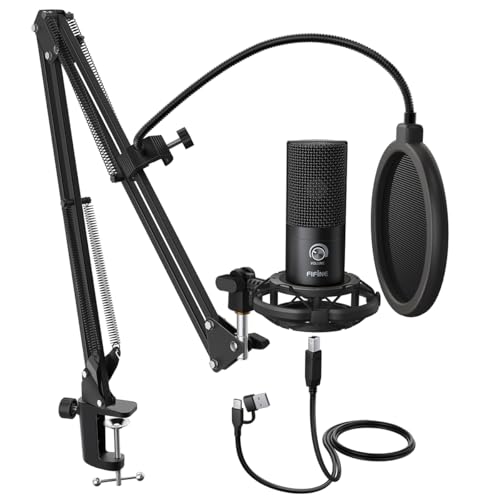
FIFINE T669 USB Condenser Microphone Kit with Boom Arm
- ✓ Easy plug-and-play setup
- ✓ High-quality sound clarity
- ✓ Durable, adjustable boom arm
- ✕ Not compatible with Xbox
- ✕ Slightly limited to PC use
| Type | USB condenser microphone |
| Frequency Response | Not explicitly specified, but wide frequency response implied for high-quality vocal recording |
| Maximum SPL Handling | Handles high SPLs with ease (specific dB not provided) |
| Polar Pattern | Cardioid |
| Connectivity | USB 2.0 (USB-B to USB-A/C cable included) |
| Accessories | Boom arm stand with adjustable rotation, double pop filter, shock mount, 8.2 ft USB cable |
As soon as I unboxed the FIFINE T669 microphone kit, I was impressed by how solid and professional it looked. The sleek black finish and sturdy boom arm instantly made me think, “This is built to last.”
Setup was a breeze—just attach the mic to the arm, clamp it onto my desk, and plug in the USB. No fuss with drivers or extra hardware, which means I was recording within minutes.
The 8.2-foot USB cable gave me plenty of reach, so I didn’t have to sit uncomfortably close or stretch awkwardly.
The included double pop filter and shock mount really made a difference. I noticed a clear, crisp sound with minimal background noise, perfect for podcasting or voiceovers.
Moving around the mic didn’t affect the quality much thanks to its cardioid capsule and sturdy arm.
The arm’s 180° rotation and 135° extension made finding the perfect angle simple. I could easily switch from speaking directly into the mic to adjusting it for recording vocals or gaming commentary.
The low-profile design kept my face free of obstruction, which is a big plus during long recording sessions.
Overall, the T669 feels like a complete, hassle-free setup for anyone wanting studio-quality sound at home. It’s portable enough to move around, yet durable enough to handle frequent use.
If you’re tired of poor audio quality or complicated setups, this kit could be just what you need.
Logitech Creators Blue Yeti USB Microphone for PC, Mac,

- ✓ Excellent sound clarity
- ✓ Versatile pickup patterns
- ✓ Easy to use controls
- ✕ Slightly expensive
- ✕ Larger desktop footprint
| Pickup Patterns | Cardioid, Omnidirectional, Bidirectional, Stereo |
| Frequency Response | Not explicitly specified, but typically 20Hz – 20kHz for broadcast-quality microphones |
| Sample Rate | HD audio samples (commonly 44.1kHz or 48kHz) |
| Onboard Controls | Headphone volume, pattern selection, mute, mic gain |
| Connectivity | USB Type-A |
| Power Supply | Bus-powered via USB |
As I lifted the Logitech Blue Yeti from its box, I immediately appreciated how hefty and solid it felt in my hand. The sleek, matte finish and its adjustable desktop stand gave it a professional look that instantly made me eager to test its capabilities.
Setting it up was a breeze—just plug it into my USB port, and I was ready to go. The three-capsule array is noticeable when you speak into it; the sound feels crisp and full, unlike many other mics I’ve tried.
I played around with the different pickup patterns, and switching between cardioid, omni, bidirectional, and stereo felt seamless, giving me lots of flexibility for various recording scenarios.
The onboard controls are super intuitive. I adjusted the gain and volume with a quick turn, and muting the mic was just a tap away—perfect for quick pauses during recordings or streams.
The adjustable pivot lets you position the mic exactly where you need it, which makes a difference when you’re trying to capture clear vocals or instruments.
Using the Blue VO!CE software added a new layer of fun. I experimented with effects and modulation, and the HD audio samples really made my recordings pop.
Whether I was recording a podcast or streaming on Twitch, the sound quality was consistently broadcast-quality, making me feel like I had a professional setup at home.
Overall, this mic is a game-changer for content creators who want versatility and ease of use. It’s sturdy, feature-rich, and delivers impressive sound quality right out of the box.
The only downside? It’s a bit on the pricier side, but honestly, the performance makes it worth every penny.
MAONO AU-A04 USB Microphone 192KHz/24Bit Condenser Cardioid

- ✓ Excellent sound clarity
- ✓ Easy to set up
- ✓ Durable build quality
- ✕ Not compatible with Xbox
- ✕ No Maono Link support
| Sampling Rate | 192kHz/24Bit |
| Frequency Response | 30Hz-16kHz |
| Microphone Capsule Size | 16mm |
| Connectivity | USB 2.0 (compatible with USB-A and USB-C ports) |
| Microphone Type | Condenser cardioid |
| Included Accessories | [‘Adjustable Scissor Arm Stand’, ‘Metal Shock Mount’, ‘Pop Filter’, ‘Foam Windscreen’, ‘Boom Arm Base’, ‘USB-A/USB-C to USB-B Cable’] |
Right out of the box, I was impressed by how solid the MAONO AU-A04 feels in your hand. The matte black finish and sturdy metal construction give it a professional vibe, but it’s the little details that caught my attention—like the reinforced USB cable with its anti-interference magnet ring.
Plugging it in was a breeze; no drivers needed, just seamless plug-and-play with my laptop.
The sound quality is genuinely impressive for a microphone in this price range. I tested it during voiceovers and streaming sessions, and the 192kHz/24Bit sampling rate really made my voice sound crisp and full.
The cardioid pattern does a good job of isolating my voice from background noise, even when my room wasn’t perfectly quiet.
The included boom arm, shock mount, pop filter, and foam windscreen make the setup feel complete. Screwing everything together was straightforward, and I appreciated how stable the boom arm is—no wobbles or sagging.
As I recorded, I noticed the extended frequency response from 30Hz to 16kHz captures a nice balance of bass and clarity, perfect for podcasts or YouTube videos.
Using it with my PC and even my PS5, I had zero compatibility issues. The double-shielded USB cable really helps keep interference out, making my recordings cleaner.
Honestly, this mic turned out to be a versatile, all-in-one package that elevates my content quality without a steep learning curve.
What Types of Mics Are Best for Recording Different Instruments?
When it comes to recording various instruments, certain types of microphones excel in capturing their unique sound characteristics.
- Dynamic Microphones: Dynamic mics are robust and can handle high sound pressure levels, making them ideal for loud instruments like drums and electric guitars. Their ability to reject background noise also allows for more focused recordings in live settings.
- Condenser Microphones: These mics are highly sensitive and provide a broad frequency response, making them perfect for capturing the nuances of acoustic instruments, vocals, and orchestral recordings. They often require phantom power and are best used in controlled environments to avoid unwanted noise.
- Ribbon Microphones: Known for their warm and natural sound, ribbon mics are great for capturing brass, woodwinds, and strings. They are more fragile than dynamic and condenser mics, but their vintage tone can add a unique character to recordings.
- Lavalier Microphones: Also known as lapel mics, lavalier mics are small and discreet, making them excellent for recording speech and dialogue, often used in film and interviews. Their compact design allows for hands-free operation, providing flexibility in various recording situations.
- Contact Microphones: These mics pick up vibrations directly from the surface of an instrument, making them ideal for strings and percussion. They can capture the true acoustic sound and are particularly useful for live performances or unconventional recording scenarios.
How Do Dynamic Mics Perform for Vocal Recordings?
Dynamic microphones are highly regarded for vocal recordings due to their durability and sound characteristics.
- Durability: Dynamic mics are built to withstand high sound pressure levels, making them ideal for live performances as well as studio recordings.
- Sound Rejection: They excel in rejecting background noise, which is particularly beneficial in untreated rooms or noisy environments, allowing the vocals to stand out clearly.
- Frequency Response: Dynamic microphones typically have a tailored frequency response that enhances the warmth and presence of vocals, delivering a pleasing sound quality.
- Affordability: Generally, dynamic mics are more budget-friendly compared to their condenser counterparts, making them accessible for beginners and home studios.
- Versatility: These mics can be used for various applications beyond vocals, including instruments and broadcasting, providing flexibility for diverse recording needs.
Dynamic microphones are built to withstand high sound pressure levels, making them ideal for both live performances and studio recordings. Their robust construction ensures longevity and reliable performance, which is crucial in dynamic environments.
One of the standout features of dynamic mics is their ability to reject background noise, allowing for a focused capture of the vocal performance. This characteristic makes them particularly advantageous in untreated rooms or during live performances where ambient noise could interfere with the recording.
The tailored frequency response of dynamic microphones enhances the warmth and presence of vocals, contributing to a more engaging and professional sound. This quality makes them a popular choice among vocalists looking to achieve a rich, full-bodied tone.
Affordability is another key advantage, as dynamic mics are generally less expensive than condenser mics. This makes them a practical option for beginners, hobbyists, or anyone setting up a home studio on a budget.
Furthermore, dynamic microphones are incredibly versatile, suitable for a variety of applications beyond just vocals. They can effectively capture instruments and are often used in broadcasting, making them a valuable tool for any audio professional.
What Makes Condenser Mics Ideal for Studio Use?
Condenser microphones are widely regarded as the top choice for studio recording due to their sensitivity and broad frequency response. Here are some key attributes that make them ideal for studio use:
-
Sensitivity: Condenser mics can capture subtle nuances and details in sound, making them particularly effective for vocals and acoustic instruments. Their ability to pick up a wide dynamic range allows for performances to be recorded with depth and richness.
-
Frequency Response: They typically have a flat or wide frequency response, which helps in capturing the natural sound of the source. This is crucial for studio applications where accuracy and authenticity are key.
-
Voltage Requirements: Most condenser mics require phantom power to operate, which is often provided by audio interfaces or mixers. This added power enhances their performance, allowing for clearer sound quality.
-
Versatility: With options like large-diaphragm and small-diaphragm models, condenser mics are versatile enough for various applications, including vocals, piano, strings, and even room ambience.
These features highlight why condenser microphones are often considered the best choice for achieving high-quality recordings in professional studios.
When Should You Choose a Ribbon Mic for Recording?
Choosing a ribbon mic for recording can be ideal in specific scenarios due to their unique characteristics.
- Warmth and Natural Sound: Ribbon microphones are known for their ability to capture sound with a warm, natural quality. This makes them particularly suited for recording vocals and acoustic instruments, as they often add a smoothness that enhances the overall tonal balance.
- High-Frequency Response: Ribbon mics excel in handling high-frequency sounds, making them a great choice for brass and strings. Their design allows them to capture the subtle nuances of these instruments without harshness, resulting in a more pleasing audio experience.
- Figure-8 Polar Pattern: Most ribbon microphones feature a figure-8 polar pattern, which means they pick up sound equally from the front and back. This characteristic can be beneficial for recording in stereo configurations or capturing room ambiance, providing a more immersive sound environment.
- Vintage Character: Many audio engineers favor ribbon mics for their vintage sound quality, reminiscent of classic recordings. This appeal can be invaluable when aiming for a specific aesthetic in music production, particularly in genres that value warmth and character.
- Low Sensitivity to Plosives: Ribbon microphones are less prone to distortion from plosive sounds compared to dynamic microphones. This makes them an excellent choice for vocal recording, particularly when dealing with sibilance and explosive consonants that can muddy a recording.
What Are the Key Features to Look for in a Recording Microphone?
When searching for the best mic for recording, several key features should be considered to ensure high-quality sound capture.
- Frequency Response: A microphone’s frequency response indicates the range of frequencies it can accurately capture. A wide frequency response is essential for recording vocals and instruments, allowing for a rich and detailed sound reproduction.
- Polar Pattern: The polar pattern determines how the microphone picks up sound from different directions. Common patterns include cardioid, which captures sound primarily from the front and reduces background noise, making it ideal for studio recording.
- Sensitivity: Sensitivity refers to how well a microphone converts sound waves into electrical signals. A highly sensitive mic can capture soft sounds, which is essential for detailed recordings, but may also pick up unwanted background noise if not properly managed.
- Dynamic Range: The dynamic range of a microphone measures the difference between the quietest and loudest sounds it can capture without distortion. A larger dynamic range is crucial for recording instruments with varying volumes, ensuring that both soft and loud sounds are accurately represented.
- Build Quality: The durability and overall build quality of a microphone can affect its performance and longevity. A robust mic can withstand the rigors of frequent use and travel, making it a worthwhile investment for serious recording artists.
- Connectivity Options: Different microphones offer various connectivity options, including USB and XLR connections. USB mics are convenient for home studios and beginners, while XLR mics provide professional-grade sound and flexibility in studio setups.
- Price: The price of a microphone can vary greatly, and it’s essential to find a balance between quality and budget. Higher-priced microphones often offer better components and sound quality, but there are many affordable options that still provide excellent results for recording.
How Important Is Frequency Response in a Recording Mic?
Frequency response is a critical aspect to consider when selecting the best mic for recording, as it influences the mic’s ability to capture sound accurately across various frequencies.
- Flat Frequency Response: A mic with a flat frequency response captures audio without coloring the sound, making it ideal for recording vocals and instruments in a natural manner.
- Extended High Frequencies: Some mics are designed to capture extended high frequencies, which can add brilliance and clarity to recordings, especially for vocals and acoustic instruments.
- Low Frequency Roll-Off: Certain mics feature a low-frequency roll-off that helps eliminate unwanted rumble or handling noise, ensuring cleaner recordings in dynamic environments.
- Presence Boost: Many recording mics have a presence boost in the mid to high frequencies, which enhances clarity and intelligibility, making them suitable for spoken word and vocal recordings.
- Customizable Frequency Response: Some advanced mics offer customizable frequency response settings, allowing users to tailor the mic’s characteristics to suit specific recording environments or applications.
A mic with a flat frequency response is essential for those who want an accurate representation of the sound source, particularly in studio settings where fidelity is paramount. This type of mic ensures that the nuances of the performance are captured without any artificial enhancement or attenuation.
Extended high frequencies are especially beneficial for genres that rely on bright sounds, such as pop and classical music. These mics can emphasize the shimmer of cymbals or the brilliance of a singer’s voice, making them a popular choice among producers looking for that extra sparkle in their recordings.
A low-frequency roll-off feature helps to manage unwanted noise that may be present in certain environments, such as wind noise or vibrations from nearby equipment. This makes mics with this capability particularly useful for field recordings or live performances where control over sound quality is essential.
A presence boost is advantageous for enhancing vocal recordings, as it helps the voice stand out in a mix. This characteristic is particularly useful in podcasting or broadcasting, where clear and engaging vocal delivery is crucial for audience retention.
Customizable frequency response settings are ideal for audio professionals who require versatility in their recordings. This adaptability allows them to optimize the mic for different sound sources and acoustic environments, ensuring the best possible sound capture for each situation.
What Is the Significance of Sensitivity and Sound Pressure Level?
Best practices when selecting a microphone based on sensitivity and SPL include conducting tests with various microphones in intended recording environments, considering the types of instruments or voices being recorded, and consulting product specifications from reputable brands. Additionally, utilizing microphone preamps with adjustable gain can help optimize performance based on the microphone’s sensitivity, ensuring a clean and professional recording.
Which Mics Are Ideal for Home Recording and YouTube?
The best mics for recording at home and for YouTube include a variety of options that cater to different recording needs and budgets.
- USB Microphones: These mics are popular for their plug-and-play convenience and affordability.
- Condenser Microphones: Known for their sensitivity and wide frequency response, these mics are ideal for vocals and acoustic instruments.
- Dynamite Microphones: Great for live settings and loud sound sources, they offer durability and can handle high sound pressure levels.
- Lavalier Microphones: These clip-on mics are perfect for interviews or presentations, allowing hands-free operation while capturing clear audio.
- Shotgun Microphones: Designed for directional sound capture, these mics are excellent for video production and reducing background noise.
USB Microphones: USB microphones are a fantastic choice for beginners and those looking for simplicity. They connect directly to your computer without needing additional audio interfaces, making them ideal for home recording and podcasting. Popular models, like the Blue Yeti or Audio-Technica ATR2100, provide good sound quality at a reasonable price.
Condenser Microphones: Condenser microphones, such as the Rode NT1 or Audio-Technica AT2020, are favored for their ability to capture high-frequency details and nuanced vocals. They require phantom power, often supplied by audio interfaces or mixers, making them a bit more complex to set up. Their sensitivity makes them excellent for studio environments where capturing a rich sound is essential.
Dynamite Microphones: Dynamic microphones, like the Shure SM58 or SM7B, are robust and versatile, ideal for both studio and live applications. They excel in handling high sound pressure levels, making them suitable for loud vocal performances and instruments. Their durability and low sensitivity to background noise also make them a reliable choice for home studios.
Lavalier Microphones: Lavalier microphones, or lapel mics, are compact and unobtrusive, making them perfect for interviews, vlogs, or any situation where you need to capture audio discreetly. They can be wired or wireless, allowing for greater freedom of movement. Brands like Rode and Sennheiser offer high-quality options that deliver clear sound while remaining hidden from view.
Shotgun Microphones: Shotgun microphones, such as the Rode NTG series, are designed to capture sound from a specific direction while rejecting noise from the sides and rear. This makes them particularly useful for video production, especially in noisy environments. Their ability to focus on the subject’s voice while minimizing background distractions can greatly enhance the audio quality of your recordings.
What Are the Best Budget Options for Beginners?
When looking for the best microphone for recording on a budget, several options stand out for their quality and affordability.
- Audio-Technica AT2020: This condenser microphone is praised for its clarity and versatility, making it a great choice for vocals and instruments alike.
- Blue Snowball iCE: A popular USB microphone, the Blue Snowball iCE is user-friendly and requires no additional equipment, making it ideal for beginners.
- Samson Q2U: This dynamic microphone offers both USB and XLR outputs, providing flexibility for different recording setups and environments.
- Shure MV5: Compact and portable, the Shure MV5 is a great option for recording on-the-go while still delivering high-quality sound.
- Behringer C-1: An affordable condenser mic, the Behringer C-1 offers excellent sound quality for its price, making it suitable for home studios.
The Audio-Technica AT2020 is known for its excellent sound reproduction and durability, making it a staple among beginners and professionals alike. Its cardioid pattern effectively minimizes background noise, allowing for clean recordings in various settings.
The Blue Snowball iCE is especially favored for podcasting and streaming due to its plug-and-play functionality. With a simple USB connection, it provides good sound quality without the need for complicated setups.
The Samson Q2U stands out for its dual connectivity options, allowing users to switch between USB and XLR as needed. This feature makes it a versatile choice for those who may upgrade their recording gear in the future.
The Shure MV5 combines portability with quality, making it perfect for mobile recording or small setups. It also offers built-in presets for different recording scenarios, enhancing its usability for beginners.
The Behringer C-1 is a budget-friendly condenser microphone that delivers impressive audio performance for vocals and instruments. Its solid construction and reliable performance make it a great choice for those just starting out in recording.
How Do Professional Mics Enhance Your Sound Quality for Streaming?
Professional microphones significantly enhance sound quality for streaming by providing superior audio fidelity, clarity, and control.
- Cardioid Pattern: This microphone pattern captures sound primarily from the front while rejecting noise from the sides and rear, making it ideal for recording vocals and instruments in a controlled environment. It helps to isolate the desired audio source, minimizing interference from background noise.
- Frequency Response: Professional mics often have a wider frequency response range, allowing them to capture low and high frequencies more accurately. This results in a richer and more detailed sound, which is particularly beneficial for music and voice recordings, providing a more professional quality.
- Low Self-Noise: High-quality microphones feature low self-noise levels, meaning they introduce minimal unwanted noise when capturing sound. This is crucial for streaming, as it ensures that the audio remains clean and clear, enhancing the overall listening experience for the audience.
- Built-in Preamps: Many professional microphones come with built-in preamps that help to boost the signal level before it reaches the recording device. This feature enhances the overall sound quality by ensuring a stronger and clearer audio signal, which is essential for high-quality streaming.
- Durability and Build Quality: Professional mics are often constructed with high-quality materials designed to withstand regular use and harsh conditions. This durability ensures consistent performance over time, providing reliability for streamers who need their equipment to perform exceptionally well during broadcasts.
What Factors Affect the Cost of Recording Microphones?
The cost of recording microphones can be influenced by several factors:
- Type of Microphone: Different types of microphones, such as dynamic, condenser, and ribbon mics, come with varying price points. Generally, condenser mics tend to be more expensive due to their sensitivity and broader frequency response, making them ideal for studio recordings.
- Brand Reputation: Established brands with a history of quality and reliability often charge a premium for their microphones. These brands invest in research and development, which can lead to superior sound quality and durability, justifying their higher prices.
- Build Quality: The materials used in constructing a microphone can significantly affect its cost. Microphones made from high-quality materials are typically more durable and can withstand the rigors of regular use, while cheaper models may use lower-quality components that affect performance.
- Features and Technology: Microphones equipped with advanced features such as built-in preamps, switchable polar patterns, or digital connectivity options tend to command higher prices. These additional features can enhance versatility and usability, making them attractive for professional applications.
- Market Demand: The popularity and demand for certain microphones can drive prices up. When a specific model is highly sought after for its sound quality or reputation, the cost may increase due to limited availability or high demand.
- Country of Manufacture: The location where a microphone is produced can influence its price due to labor costs, import tariffs, and shipping expenses. Microphones made in countries with lower production costs may be more affordable, while those made in regions known for high-quality craftsmanship may be more expensive.
Why Are Some Mics Considered High-End?
Moreover, high-end microphones often undergo rigorous quality control processes, ensuring consistency across units. This reliability is vital for professional recordings where the slightest variance can affect the final output. The investment in high-grade materials and manufacturing processes not only ensures longevity but also builds trust among audio professionals who rely on these tools for their work. Thus, the combination of enhanced performance, durability, and brand reputation leads to the classification of certain microphones as high-end.
Related Post: