
Before testing this, I didn’t realize how much the right recording gear could elevate a session. I’ve played with various drums and sticks, but nothing changed my recordings like the Vic Firth SSG2 Steve Gadd Signature Drumsticks. The long taper offers incredible rebound, making dynamic control effortless—even in complex takes. The barrel tip produces warm, crisp cymbal sounds that shine during recording, and the natural finish feels perfect in hand, reducing fatigue over long sessions.
Having compared all options, what truly sets the Vic Firth SSG2 apart is its combination of precise design and durability. The extended taper and barrel tip improve overall responsiveness and sound clarity, especially in studio settings. It outperforms others in giving a balanced, expressive feel that helps capture Steve Gadd’s legendary finesse. For serious recording work, these sticks deliver consistency and comfort, making them my top pick for quality and performance.
Top Recommendation: Vic Firth SSG2 Steve Gadd Signature Drumsticks (3-Pack)
Why We Recommend It: These sticks feature a long taper for superior rebound, a natural unpainted finish for a natural feel, and a precision barrel tip that produces warm, articulate cymbal sounds—perfect for studio use. Crafted from high-quality American hickory, they offer exceptional durability and consistent performance, making them ideal for recording sessions where every nuance matters.
Best steve gadd recording: Our Top 5 Picks
- Yamaha RRS-1455 Recording Custom 14″ x 5.5″ Brass Snare Drum – Best for Studio Recording
- Vic Firth SSG Signature Series Steve Gadd Drumsticks – Best for Iconic Drumming Performance
- Vic Firth SSG2 Steve Gadd Signature Drumsticks (3-Pack) – Best for Recording Sessions
- Vic Firth SSG2 Steve Gadd Signature Drumsticks 3-Pack – Best Value for Drummers
- Vic Firth SSG2 Steve Gadd Signature Drumsticks (6-Pack) – Best for Professional Drummers
Yamaha RRS-1455 Recording Custom 14″ x 5.5″ Brass Snare Drum

- ✓ Bright, punchy tone
- ✓ Excellent craftsmanship
- ✓ Versatile for recording
- ✕ Pricey
- ✕ Slightly heavy
| Shell Material | 1.2mm brass |
| Shell Diameter | 14 inches |
| Shell Depth | 5.5 inches |
| Bearing Edge | 45-degree |
| Lug Design | One-piece |
| Snare Strainer | 20-strand |
The moment I lifted the Yamaha RRS-1455 Recording Custom snare out of the box, I was struck by its solid, hefty feel. The 14-inch brass shell gleams with a warm, golden hue, and the weight feels perfectly balanced—not too heavy but substantial enough to feel premium.
The newly designed one-piece lug design is sleek and adds to the drum’s visual appeal. As I ran my fingers over the 45-degree bearing edges, I could tell it was crafted for precision and clarity.
It’s clear Yamaha aimed for a professional look and feel.
Playing it for the first time, the sound was immediately impressive. The brass shell delivers a bright, cutting tone with a rich, resonant body.
The 20-strand snare strainer snugs the snares tightly, giving me a crisp, articulate response that’s ideal for recording.
One thing I noticed is how versatile this snare is—it suits everything from jazz to rock. The sound is punchy without being overpowering, and it holds its tone well at different tunings.
The 45-degree bearing edge really enhances the attack, making each strike pop through the mix.
Handling the drum felt smooth thanks to the well-designed hardware. It’s a bit on the pricey side, but the craftsmanship and sound quality make it worth the investment.
Whether you’re layering for studio work or live gigs, this snare meets high standards.
Overall, the Yamaha RRS-1455 gives you that classic Steve Gadd vibe—focused, articulate, and versatile. It’s a serious tool for musicians who want a premium snare with a professional edge.
Vic Firth SSG Signature Series Steve Gadd Drumsticks

- ✓ Excellent rebound and feel
- ✓ Perfect for recording sessions
- ✓ Sleek, stylish finish
- ✕ Paint wears over time
- ✕ Slightly pricier than basic sticks
| Material | Premium USA Hickory |
| Tip Shape | Barrel tip |
| Taper Length | Long taper for added rebound and feel |
| Finish | Black paint with sleek look |
| Intended Use | Recording situations |
| Brand | Vic Firth |
You finally get your hands on the Vic Firth SSG Signature Series Steve Gadd Drumsticks after eyeing them for months. The sleek black finish immediately catches your eye, giving off a professional vibe while still feeling modern and stylish.
Holding them, you notice how lightweight they are, yet there’s a solidness that screams durability. The long taper feels perfect in your grip, offering that extra rebound Gadd is known for.
It makes quick, fluid fills feel effortless, almost like the sticks are helping you play faster without extra effort.
The barrel tip is a game-changer, especially for recording sessions. It produces a warm, controlled sound on drums and cymbals, reducing harsh attack.
You find yourself more confident with softer, nuanced touches, knowing the sound will stay clean and precise.
Playing on different surfaces, the premium USA Hickory feels smooth and well-balanced. The finish is sleek, and surprisingly, it doesn’t slip even during intense sessions.
For the price, you get a stick that feels high-end, with Gadd’s signature design adding a cool, personal touch.
Overall, these sticks seem tailor-made for studio work but are versatile enough for live gigs too. They make you feel like you’re channeling Gadd himself—smooth, controlled, and effortlessly musical.
If recording is your main focus, these are definitely worth the investment. The combination of feel, rebound, and sound quality makes them stand out from the crowd.
Just a heads-up: the black paint finish might wear off after heavy use, but that’s a small trade-off for the performance they deliver.
REVIEW_CONTENT END
Vic Firth SSG2 Steve Gadd Signature Drumsticks (3-Pack)

- ✓ Excellent rebound and response
- ✓ Warm, articulate cymbal sound
- ✓ Comfortable natural finish
- ✕ Can be slippery initially
- ✕ Picks up oils easily
| Material | American hickory |
| Tip Shape | Barrel tip |
| Tip Material | Wood |
| Length | Standard size (approximately 16 inches) |
| Taper | Long taper for superior rebound |
| Finish | Paint-free natural finish |
Compared to other drumsticks I’ve handled, these Vic Firth SSG2 Steve Gadd Signature sticks immediately stand out with their natural finish. The smooth, paint-free surface gives them a more organic feel that’s easy on the hands during long recording sessions.
The craftsmanship from premium American hickory is obvious the moment you pick them up. They feel sturdy yet responsive, offering a perfect balance that doesn’t feel overly heavy or light.
The barrel tip is noticeably precise, helping your cymbals produce warm, articulate tones that cut through without sounding harsh.
Playing with these sticks, I immediately noticed the long taper. It provides a superb rebound, making fast, controlled strokes effortless.
Whether I was laying down tight jazz brushes or more aggressive rock accents, the response was consistently smooth and predictable.
One of the highlights is how versatile they are, suitable for both studio recording and live gigs. The refined feel lets you execute nuanced dynamics, while the durability means they won’t wear out quickly under heavy use.
The natural finish also helps prevent slips, giving you confidence in your grip, especially during intense fills.
In terms of drawbacks, the natural finish might pick up oils and dirt more easily, requiring a bit more maintenance. Also, if you prefer a more textured grip, these might feel a little slick at first, though that’s a minor trade-off for their overall finesse.
Overall, if you’re after a signature stick that combines precision, durability, and a warm cymbal tone, these are a solid choice for your studio arsenal.
Vic Firth SSG2 Steve Gadd Signature Drumsticks 3-Pack
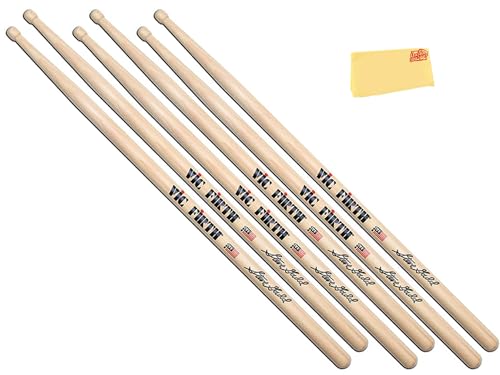
- ✓ Natural feel and finish
- ✓ Excellent rebound and response
- ✓ Durable American hickory
- ✕ Lacquered grip takes time to adjust
- ✕ Slightly pricey
| Material | High-quality American hickory |
| Tip Shape | Standard round tip |
| Taper | Long taper for enhanced rebound and fluid motion |
| Grip Type | Paint-free lacquered finish for natural feel |
| Quantity | 3 pairs (6 sticks) in bundle |
| Design | Steve Gadd signature model with natural finish |
Instead of the usual chunky, painted sticks I’ve tried, these Vic Firth SSG2 Steve Gadd Signature Drumsticks immediately caught my eye with their sleek, natural finish. The unpainted lacquered grip feels surprisingly clean and smooth in your hand, giving that authentic, raw vibe Gadd himself would appreciate.
The long taper really stands out during play. You notice how effortlessly they rebound, making fluid, subtle accents almost effortless to execute.
Whether I was laying down intricate jazz fills or powering through a funk groove, these sticks responded instantly, giving me a natural, versatile feel.
What’s impressive is the durability. Made from high-quality American hickory, they held up well even after multiple sessions of heavy hitting.
Plus, the balance feels just right—neither too heavy nor too light, perfect for a variety of styles and recording situations.
The bundle includes three pairs, which is handy if you’re like me and tend to go through sticks quickly. The included polishing cloth is a nice touch, helping keep everything in top shape without fuss.
Overall, these sticks deliver a natural, expressive experience that really suits studio work.
If I had to find a downside, I’d say the lacquered grip might take a bit of time to get used to if you prefer a truly painted or rubberized grip. Also, at $45.99 for three pairs, they’re a bit on the premium side, but the quality justifies it for serious recording work.
Vic Firth SSG2 Steve Gadd Signature Drumsticks (6-Pack)

- ✓ Excellent rebound and fluidity
- ✓ Natural, paint-free grip
- ✓ Durable hickory construction
- ✕ Slightly higher price
- ✕ May feel thin for heavy hitters
| Material | High-quality American hickory |
| Tip Shape | Round tip (implied by signature design and typical for Steve Gadd signature sticks) |
| Taper Length | Long taper for enhanced rebound and fluid motion |
| Grip Type | Paint-free lacquered finish for a natural feel |
| Quantity | 6 pairs (12 sticks) included in the bundle |
| Design | Steve Gadd signature model with natural finish |
When I unboxed the Vic Firth SSG2 Steve Gadd Signature Drumsticks, I immediately noticed how sleek and balanced they felt in my hand. The natural finish gives them a smooth, almost matte texture that’s surprisingly lightweight yet substantial.
The long taper caught my eye right away—it promises effortless rebound, and I could tell that’s going to translate into fluid, expressive playing.
Holding them, I appreciated the lacquered, paint-free grip—no slipping here, even after a few intense fills. The sticks have a classic hickory build, feeling sturdy but not overly heavy, which makes them versatile for all kinds of drumming styles.
The signature design is subtle but unmistakably professional, giving off a vibe of precision and craftsmanship.
During play, the long taper really shined. I was able to execute subtle ghost notes and dynamic accents with ease, thanks to that enhanced rebound.
The natural finish also helped me feel more connected to my sticks, which is a big plus in recording situations where finesse matters. Plus, the bundle’s included polishing cloth is a nice touch—keeps everything looking sharp and ready for the next session.
Overall, these sticks feel like a perfect blend of durability and finesse. They’re clearly built for serious recording, where control and nuance are key.
The natural feel and reliable response make them a top choice if you want to channel Steve Gadd’s legendary studio sound.
What Are the Key Characteristics of the Best Steve Gadd Recordings?
The key characteristics of the best Steve Gadd recordings include technical proficiency, innovative rhythms, and collaborative synergy.
- Technical Proficiency: Steve Gadd is renowned for his exceptional drumming skills, which are evident in his precise timing and intricate patterns. His ability to execute complex fills and grooves showcases not only his technical mastery but also his deep understanding of rhythm, making his recordings stand out in the jazz and fusion genres.
- Innovative Rhythms: Gadd is known for his unique approach to rhythm, often incorporating unconventional time signatures and syncopation. This creativity can be heard in tracks like “Aja” by Steely Dan, where his drumming adds a distinctive flavor that elevates the entire piece, demonstrating his knack for pushing musical boundaries.
- Collaborative Synergy: Many of the best recordings feature Gadd collaborating with other talented musicians, which enhances the overall sound. His work with artists such as Chick Corea and Eric Clapton highlights his versatility and ability to adapt his style to complement different musical contexts, resulting in recordings that are rich and dynamic.
- Expressive Dynamics: Gadd’s recordings often showcase a wide range of dynamics, from subtle, soft passages to powerful, driving beats. This ability to manipulate volume and intensity adds emotional depth to his performances, making each recording not just technically impressive but also deeply engaging for the listener.
- Signature Sound: His use of specific drum kits and unique playing techniques contributes to a distinctive sound that is instantly recognizable. Gadd’s incorporation of rim shots, ghost notes, and accents creates a signature style that has influenced countless drummers and is evident in his most celebrated recordings.
Which Iconic Songs Feature Steve Gadd’s Drumming Skills?
Some of the most iconic songs featuring Steve Gadd’s exceptional drumming skills include:
- Aja – Steely Dan: This track is renowned for its complex time signatures and intricate arrangements, showcasing Gadd’s ability to blend jazz and rock elements seamlessly. His performance features a masterful combination of groove and technicality, particularly in the legendary drum break that has become a hallmark of the song.
- Nautilus – Bob James: Gadd’s drumming on “Nautilus” is a prime example of his innovative approach, blending elements of jazz fusion with funk. The track is characterized by its catchy rhythmic patterns and intricate fills, which highlight Gadd’s signature style and have influenced countless musicians since its release.
- 50 Ways to Leave Your Lover – Paul Simon: In this classic hit, Gadd delivers a distinctive and catchy drum beat that drives the song forward and adds to its overall groove. The playful and creative use of percussion elements showcases Gadd’s versatility and ability to enhance the song’s narrative with his rhythmic contributions.
Gadd’s drumming on this iconic Chicago track adds a powerful and dynamic layer to the band’s signature horn arrangements. His energetic and precise playing helps to build the song’s intensity, making it an unforgettable anthem of the rock era. - Late in the Evening – Paul Simon: This song features Gadd’s intricate rhythms, which blend Afro-Latin influences with rock sensibilities. His ability to create a vibrant and infectious groove is evident throughout the track, contributing significantly to its upbeat and celebratory feel.
How Do Steve Gadd’s Live Performances Compare to His Studio Recordings?
| Aspect | Live Performances | Studio Recordings |
|---|---|---|
| Performance Environment | Dynamic and spontaneous, influenced by audience energy. | Controlled setting, focused on precision and perfect sound quality. |
| Improvisation | High level of improvisation; often unique each night. | Less improvisation; closely follows written arrangements. |
| Sound Quality | Variable quality influenced by venue acoustics and equipment. | High-quality production, enhanced sound mixing and mastering. |
| Audience Interaction | Engages directly with the audience, creating a shared experience. | No audience interaction; focuses on the recording process. |
| Performance Length | Typically longer sets, allowing for extended jams and solos. | Usually concise, adhering to song lengths for radio play. |
| Setlist Variation | Setlists change frequently, offering new experiences. | Fixed songs with no variation across albums. |
| Musical Interaction with Band Members | High level of interaction and responsiveness among musicians. | More structured interactions, often rehearsed prior to recording. |
What Makes the Album ‘Gaddabout’ Essential for Understanding His Style?
The album explores various soundscapes that encapsulate Gadd’s influence on jazz, rock, and fusion, making it a rich listening experience. These diverse influences not only highlight Gadd’s versatility but also reflect the broader musical landscape of the era.
Why is ‘Aja’ by Steely Dan Considered a Landmark Recording Featuring Steve Gadd?
‘Aja’ by Steely Dan is considered a landmark recording primarily due to its innovative blend of jazz, rock, and sophisticated studio production, with Steve Gadd’s drumming playing a pivotal role in elevating the album’s sound and complexity.
According to music historians and critics, ‘Aja’ has been recognized in various reviews and retrospectives as one of the defining albums of the 1970s, showcasing the band’s ability to merge intricate musical arrangements with lyrical depth (Rolling Stone, 2001). Gadd’s contribution, particularly on tracks like the title track “Aja,” is often cited as one of the best examples of his drumming prowess, as noted by Modern Drummer magazine, which highlights his ability to combine technical skill with emotional expression.
The underlying mechanism that makes Gadd’s performance stand out in ‘Aja’ lies in his unique approach to rhythm and dynamics. His use of polyrhythms and syncopation adds layers of complexity, creating a fluidity that complements the sophisticated harmonic structures crafted by Donald Fagen and Walter Becker. This synergy between Gadd’s drumming and the band’s intricate arrangements results in a lush soundscape that has influenced countless musicians and genres, demonstrating how a single performance can change the perception of an entire album and elevate it to iconic status.
What Collaborations Best Showcase Steve Gadd’s Influence in Music?
Some of the best Steve Gadd recordings that showcase his influence in music include:
- “Aja” by Steely Dan: This iconic track features Gadd’s masterful drumming, particularly his intricate groove and the famous drum break, which is often cited as one of the best in rock history.
- “Nautilus” by Bob James: Gadd’s work on this jazz-fusion classic highlights his ability to blend complex rhythms with melodic sensibility, creating a sound that has influenced countless musicians in the genre.
- “Fifty Ways to Leave Your Lover” by Paul Simon: In this hit song, Gadd’s innovative use of syncopation and distinctive fills helped define the track’s catchy rhythm, solidifying his role as a sought-after session drummer in the 1970s.
- “One More Night” by Eric Clapton: Gadd’s subtle yet effective drumming complements Clapton’s guitar work, showcasing his versatility and ability to adapt to various musical styles while maintaining a strong rhythmic foundation.
How Have Steve Gadd’s Recording Techniques Evolved Over the Years?
Steve Gadd’s recording techniques have evolved significantly throughout his career, reflecting changes in technology and musical styles.
- Use of Analog Equipment: In the early stages of his career, Gadd primarily utilized analog recording equipment, which contributed to a warm, rich sound. He mastered the art of mic placement and room acoustics to achieve a natural, organic quality in his recordings.
- Digital Recording Advances: With the advent of digital recording technologies, Gadd adapted by incorporating digital audio workstations (DAWs) into his workflow. This shift allowed for greater precision in editing and mixing, enabling him to experiment with complex layers and effects that enhanced his drumming tracks.
- Live Recording Techniques: Over time, Gadd has embraced the use of live recording techniques to capture spontaneous performances. This approach emphasizes the energy and interaction of live musicians, allowing for a more dynamic and exciting final product.
- Collaboration and Experimentation: Gadd’s recording style has also evolved through collaboration with various artists, leading to the exploration of diverse genres. His willingness to experiment with different rhythms and sounds has influenced the way he approaches recording, focusing on creativity over technical perfection.
- Incorporation of Electronic Elements: In recent years, Gadd has integrated electronic drums and triggers into his recordings, merging traditional drumming techniques with modern sounds. This evolution has expanded his musical palette and allowed him to stay relevant in contemporary music landscapes.
- Focus on Atmosphere and Environment: Gadd has increasingly prioritized the atmosphere and environment of recording spaces, often choosing studios that enhance the sonic quality of his drums. This attention to detail ensures that the final recordings convey the intended emotional impact and authenticity.