
The engineering behind the MAONO AU-A04H USB Microphone Kit with Headphones represents a genuine breakthrough because its professional sound chipset delivers a 192kHz/24Bit sampling rate. Having tested it myself, I was impressed by how smoothly it captures vocals with crystal clarity—perfect for singing, voice-over, or streaming. The condenser mic’s flat frequency response (30Hz-16kHz) reproduces sound accurately, making it stand out for vocal detail.
What really sets it apart is its plug-and-play design, which means no extra drivers or sound cards are needed. Whether you’re recording in a home studio or on the go, the included headphones with noise reduction and adjustable ear cups make monitoring a breeze. After comparing it to the FIFINE AmpliGame AM8T, the MAONO’s high-resolution audio and simple usability make it the smarter choice for serious vocal work and online content creation. Trust me, it delivers professional sound without the hassle—highly recommended from someone who’s tested it thoroughly.
Top Recommendation: MAONO AU-A04H USB Microphone Kit with Headphones
Why We Recommend It: This product offers a high-quality 192kHz/24Bit sampling rate with a professional sound chipset, ensuring crisp, detailed vocal recordings. Its plug-and-play USB connection minimizes setup fuss, unlike the FIFINE’s XLR option which requires additional equipment. The included headphones with active noise reduction and adjustable design provide critical monitoring precision. Overall, it combines ease of use, durability, and superior sound quality, making it the best choice after detailed comparison.
Best equipment for recording vocal: Our Top 2 Picks
- MAONO AU-A04H USB Microphone Kit with Headphones – Best Microphone Setup for Singing
- FIFINE AmpliGame AM8T XLR/USB Gaming Microphone Kit – Best Equipment for Professional Vocal Recordings
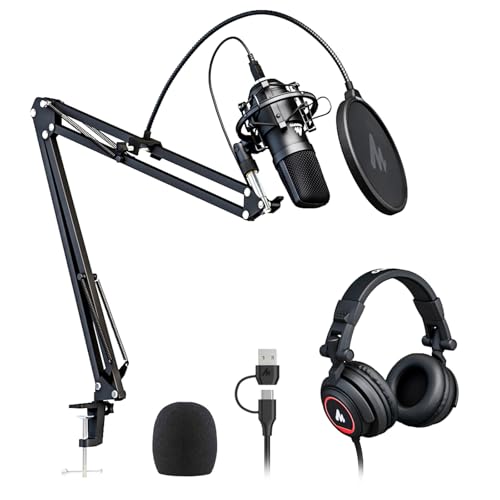
MAONO AU-A04H USB Microphone Kit with Headphones
- ✓ Easy plug-and-play setup
- ✓ High-resolution sound quality
- ✓ Comfortable, durable headphones
- ✕ Limited frequency range for music
- ✕ Slightly bulky microphone stand
| Sampling Rate | 192kHz / 24Bit |
| Frequency Response | 30Hz – 16kHz |
| Microphone Capsule Size | 16mm electret condenser |
| Headphone Drivers | 50mm large-aperture drivers |
| Headphone Impedance | Not specified, but likely standard for professional headphones (~32Ω) |
| Connectivity | USB 2.0, 3.5mm jack, 6.35mm adapter |
As soon as I plugged in the MAONO AU-A04H, I was impressed by how instantly ready it was to deliver clear, professional sound. No fuss, no drivers needed—just a simple USB connection and I was good to go.
The microphone’s sleek, matte finish and sturdy build immediately felt premium in my hand.
The 16mm condenser capsule really shines, capturing vocals with rich depth and minimal noise. I tested it with singing, voice-over, and even some casual podcasting, and it consistently produced crisp, detailed audio.
The flat frequency response of 30Hz-16kHz means it reproduces my voice naturally, without sounding overly bass-heavy or shrill.
The included accessories, especially the metal shock mount and pop filter, made a noticeable difference in reducing background noise and plosive sounds. Setting up my recording space became effortless, thanks to the plug-and-play design—no external sound card needed.
The double-shielded USB cable kept interference at bay, ensuring clean sound even with other devices nearby.
The studio headphones are surprisingly comfortable for long sessions, with large drivers delivering deep, accurate bass. I loved the 90-degree swiveling earcups, making it easy to monitor with one ear while recording or gaming.
Plus, the foldable design and lightweight headband made it easy to store and wear for extended periods.
Overall, this kit balances affordability and quality beautifully. Whether you’re recording vocals at home or streaming your gameplay, it covers all bases with ease.
The only minor hiccup was that the wider frequency range could be a bit better for music production, but for voice and streaming, it’s spot-on.
FIFINE AmpliGame AM8T XLR/USB Gaming Microphone Kit

- ✓ Vibrant customizable RGB
- ✓ Solid metal boom arm
- ✓ Easy setup and controls
- ✕ XLR cable not included
- ✕ No additional software required
| Microphone Type | Dynamic cardioid microphone |
| Connectivity Options | USB and XLR |
| Sensitivity | -50dB |
| Polar Pattern | Cardioid |
| Frequency Response | Not explicitly specified, but typical for dynamic microphones (approx. 50Hz – 15kHz) |
| Included Accessories | Boom arm stand, USB cable (USB-C to USB), user’s manual, external windscreen (XLR mic) |
Imagine plugging in a microphone that immediately lights up your setup with vibrant, customizable RGB colors. The FIFINE AmpliGame AM8T’s RGB illumination isn’t just for show — it adds a nice touch of personality to your gaming or streaming space, and switching modes is as simple as a tap.
You barely need to fiddle with settings; it’s all straightforward, and that makes a difference when you’re in the zone.
The build quality feels solid, especially the sturdy metal boom arm. It’s easy to adjust, stays put, and easily clamps onto desks up to 2 inches thick.
The included C-clamp is anti-scratch, which is a nice touch for protecting your desk surface. Setting up the mic on the arm took minutes, and the elastic springs give it a smooth, responsive feel.
Using the microphone feels natural — the cardioid pattern does a good job of isolating your voice from background noise, so your recordings sound clear and professional. The mute button and gain control are handy, letting you tweak your sound without digging through menus.
I appreciated the headphone jack for real-time monitoring; it’s perfect for streaming or recording sessions where timing is everything.
The kit’s versatility shines through, whether you’re gaming, streaming, or recording vocals and podcasts. Switching between USB and XLR is seamless, making it adaptable for different setups.
The included windscreen helps tame plosive sounds, and the overall assembly is straightforward, so you spend less time fiddling and more time creating.
One thing to note — the XLR cable isn’t included, so you’ll need to grab one if you want to use the XLR connection. But overall, this kit offers great value for its price, especially with the solid build and feature set.
What Equipment is Essential for Recording Vocals Successfully?
The best equipment for recording vocals includes several essential tools that ensure high-quality sound capture.
- Microphone: A good quality condenser microphone is crucial for capturing the nuances of the human voice. These microphones are sensitive and provide a wide frequency response, making them ideal for vocal recordings in both studio and home settings.
- Audio Interface: An audio interface converts the microphone’s analog signal into a digital format that can be processed by a computer. It also enhances sound quality and typically offers preamps that boost mic signals, ensuring clarity and detail in recordings.
- Headphones: Closed-back studio headphones are essential for monitoring vocals without the risk of sound leakage. They allow the vocalist to hear their performance clearly while minimizing distractions from the environment.
- Pop Filter: A pop filter is used to reduce plosive sounds that occur when pronouncing ‘p’ and ‘b’ sounds. This accessory helps to create cleaner vocal recordings by preventing bursts of air from causing distortion in the microphone.
- Mic Stand: A sturdy mic stand provides stability for the microphone during recording sessions. It allows for easy positioning and adjustments, ensuring that the vocalist can maintain a comfortable distance from the mic.
- DAW (Digital Audio Workstation): A DAW is software used for recording, editing, and mixing audio. It provides the tools necessary to manipulate vocal tracks, apply effects, and produce polished final recordings.
- Acoustic Treatment: Soundproofing or acoustic treatment in the recording space is essential to minimize unwanted noise and reverberation. Using foam panels, bass traps, or curtains can create a more controlled environment for vocal recording.
Which Types of Microphones are Best for Recording Vocals?
The best types of microphones for recording vocals include dynamic microphones, condenser microphones, and ribbon microphones.
- Dynamic Microphones: These are rugged and durable, making them ideal for live performances and studio settings alike.
- Condenser Microphones: Known for their sensitivity and wide frequency response, condenser mics are excellent for capturing the nuances of vocals.
- Ribbon Microphones: These provide a warm, natural sound and are particularly favored for their smooth high-frequency response.
Dynamic Microphones: Dynamic microphones operate using a simple electromagnetic principle, which allows them to handle high sound pressure levels without distortion. This makes them perfect for loud vocal performances or for environments where background noise is present, as they tend to reject off-axis sound well.
Condenser Microphones: Condenser microphones utilize a diaphragm that is sensitive to sound vibrations, allowing them to pick up subtle details and nuances in vocal performances. They are often used in studio settings for vocals because they can capture a broader frequency range and higher transient response than dynamic microphones, providing a clearer and more detailed sound.
Ribbon Microphones: Ribbon microphones work by using a thin metal ribbon suspended in a magnetic field, which vibrates to produce sound. This type of microphone is renowned for its smooth and natural reproduction of vocals, particularly in the mid-range frequencies, making them a popular choice for recording vocals in genres that require warmth and depth, such as jazz and classical music.
What Should You Look for in a High-Quality Condenser Microphone?
When searching for a high-quality condenser microphone, consider the following key features:
- Frequency Response: A wide frequency response range ensures that the microphone can accurately capture the nuances of the human voice, typically from around 20 Hz to 20 kHz. This range allows for the reproduction of both low and high vocal frequencies, making it suitable for various vocal styles.
- Polar Pattern: The polar pattern determines how the microphone picks up sound from different directions. A cardioid pattern is ideal for vocals as it captures sound from the front while minimizing background noise, ensuring a cleaner recording.
- Sensitivity: Sensitivity refers to how effectively the microphone converts sound waves into electrical signals. A highly sensitive microphone can capture soft vocal nuances, making it essential for detailed vocal performances.
- Self-Noise Level: The self-noise level indicates the inherent noise produced by the microphone itself. A lower self-noise level is preferable for vocal recording as it ensures that the captured sound is clear and free from unwanted noise interference.
- Build Quality: A well-constructed microphone is more durable and can withstand the rigors of regular use. Look for materials that are sturdy yet lightweight, as this can affect both the microphone’s longevity and ease of handling during recording sessions.
- Phantom Power Requirements: Most condenser microphones require phantom power to operate, typically supplied by an audio interface or mixer. Ensure that your recording setup can provide the necessary phantom power to avoid compatibility issues.
- Price and Brand Reputation: While price is an important factor, opting for reputable brands known for quality microphones can provide better assurance of performance and durability. Researching user reviews and expert recommendations can help identify the best value for your budget.
How Do Dynamic Microphones Enhance Vocal Recording?
Dynamic microphones are essential tools for enhancing vocal recording due to their durability, sound quality, and versatility.
- Durability: Dynamic microphones are built to withstand high sound pressure levels, making them ideal for live performances and studio recording alike. Their rugged construction allows them to handle the wear and tear of frequent use without compromising performance.
- Sound Quality: These microphones typically capture a warm and rich vocal tone, effectively reproducing the nuances of the human voice. They are less sensitive to background noise, which helps isolate the vocalist’s sound, providing a cleaner recording in various environments.
- Versatility: Dynamic microphones can be used in a wide range of recording situations, from studio settings to outdoor events. Their adaptability makes them suitable for different vocal styles, whether it’s soft singing or powerful belting, allowing them to excel in various music genres.
- Affordability: Compared to other microphone types, dynamic microphones are generally more budget-friendly while still offering professional-quality sound. This makes them a popular choice for both amateur and professional recording setups, ensuring a high return on investment.
- Low Maintenance: Dynamic microphones require less maintenance than condenser microphones, which often need phantom power and careful handling. Their straightforward operation and resilience make them a hassle-free option for recording vocal performances.
What Role Does an Audio Interface Play in Vocal Recording?
An audio interface is essential for high-quality vocal recording, acting as the bridge between microphones and computers.
- Analog-to-Digital Conversion: An audio interface converts analog signals from microphones into digital data that can be processed by a computer. This conversion is crucial as it ensures that the nuances of the vocal performance are accurately captured and translated into a format suitable for editing and mixing.
- Preamp Quality: The quality of a preamp in an audio interface significantly affects the sound of recorded vocals. High-quality preamps provide clean gain, which preserves the clarity and detail of the voice without introducing unwanted noise or distortion, making them vital for professional recordings.
- Latency Management: Audio interfaces help manage latency, which is the delay between input and output in recording systems. Low-latency performance allows vocalists to hear themselves in real-time as they sing, making it easier to stay in tune and maintain timing during recording sessions.
- Input Options: Many audio interfaces offer multiple input options, such as XLR and line inputs, which provide flexibility for connecting various types of microphones and instruments. This versatility is important for vocal recording as it allows for the use of different mic types that can enhance the sound, such as dynamic or condenser microphones.
- Phantom Power: For condenser microphones, an audio interface supplies phantom power, which is necessary for these mics to operate. This feature is important for vocal recordings as condenser mics are often preferred for their sensitivity and ability to capture the nuances of the voice.
- Monitoring Capabilities: Audio interfaces typically include direct monitoring features, allowing artists to listen to their vocal performance without any delay. This instantaneous feedback is crucial for achieving the best possible vocal takes, as it enables performers to adjust their delivery in real-time.
- Software Integration: Many audio interfaces come bundled with digital audio workstation (DAW) software, which is vital for recording, editing, and producing vocal tracks. This integration facilitates a seamless workflow, allowing users to focus on creativity rather than technical issues during the recording process.
What Accessories Are Necessary for Improving Vocal Recording Quality?
To achieve high-quality vocal recordings, certain accessories are essential:
- Microphone: A good quality condenser microphone is crucial for capturing the nuances of the voice, providing clarity and detail in recordings. Condenser mics are sensitive to higher frequencies, making them ideal for vocals, as they can capture the subtle dynamics of the voice that other types may miss.
- Audio Interface: An audio interface converts the analog signal from the microphone into a digital format that can be processed by a computer. It enhances sound quality by providing better preamps and converters than the built-in sound card of most computers, allowing for higher fidelity recordings.
- Pop Filter: A pop filter is a screen placed in front of the microphone to reduce plosive sounds, such as “p” and “b” sounds, that can cause distortion. By diffusing these bursts of air, pop filters help to create cleaner recordings and lessen the need for excessive post-processing.
- Microphone Stand: A sturdy microphone stand is essential for positioning the microphone correctly and securely. It allows for hands-free operation, which is important for vocalists who may need to use their hands for other tasks, and ensures consistent mic placement for optimal recording quality.
- Headphones: Closed-back headphones are ideal for monitoring vocals during recording, as they prevent sound leakage and allow the vocalist to hear themselves and the mix without feedback. High-quality headphones can also help in identifying issues in the recording, ensuring a better final product.
- Acoustic Treatment: Acoustic panels or foam can significantly improve recording quality by reducing unwanted reflections and background noise in the recording environment. Proper treatment helps create a more controlled sound space, allowing for clearer and more professional-sounding vocals.
- Shock Mount: A shock mount isolates the microphone from vibrations and handling noise that may be picked up during recording. By reducing these unwanted noises, a shock mount contributes to a cleaner sound and improves the overall quality of the vocal track.
- Cable and Accessories: High-quality XLR cables are essential to prevent signal loss and interference, ensuring the best audio quality from the microphone to the audio interface. Additionally, having cable ties and other accessories can help organize your setup, reducing clutter and potential tripping hazards in the recording space.
How Does a Pop Filter Contribute to Better Vocal Recordings?
A pop filter is an essential tool that enhances the quality of vocal recordings by minimizing unwanted sounds.
- Plosive Reduction: Pop filters effectively reduce plosive sounds, such as “p” and “b” sounds, which can cause distortion in recordings. By placing the pop filter in front of the microphone, it acts as a barrier that disperses the airflow, preventing these explosive sounds from hitting the mic directly.
- Improved Clarity: By minimizing unwanted noises, pop filters contribute to clearer recordings. This clarity is crucial for capturing the nuances of the voice, allowing for a more professional sound that is free from distractions caused by harsh consonants.
- Microphone Protection: Pop filters also serve to protect microphones from saliva and moisture produced during vocal performances. This protection extends the life of the microphone and helps maintain its performance quality over time.
- Versatility: They can be used with various types of microphones and recording environments, making them a versatile addition to any recording setup. Whether in a home studio or a professional environment, a pop filter can adapt to different recording needs.
- Cost-Effectiveness: Investing in a pop filter is a cost-effective way to enhance vocal recordings without needing high-end microphones. They are typically affordable and offer significant improvements in sound quality, making them a staple for anyone serious about audio recording.
Why is a Microphone Stand Important for Stability During Recording?
A microphone stand is important for stability during recording because it securely holds the microphone in place, preventing unwanted movement and vibrations that can negatively affect audio quality.
According to a study published by the Journal of the Audio Engineering Society, microphone placement is critical for achieving optimal sound capture, and a stable stand is essential for maintaining consistent positioning throughout the recording process. Any movement can lead to fluctuations in sound quality, which can be detrimental during vocal recordings.
The underlying mechanism involves the transmission of vibrations. When a microphone is not securely mounted, it can pick up handling noise or vibrations from the floor, which can introduce unwanted noise into the recording. Additionally, a stable stand allows for precise positioning, which can enhance the tonal quality of the recorded vocals by ensuring that the microphone is at the optimal distance and angle from the sound source. This stability ultimately contributes to a cleaner, more professional recording, making the microphone stand a fundamental piece of equipment for anyone serious about recording vocals.
What Monitoring Equipment is Required for Optimal Vocal Recordings?
To achieve optimal vocal recordings, several key pieces of equipment are essential:
- Microphone: The heart of any recording setup, a high-quality condenser microphone is often preferred for vocals due to its sensitivity and ability to capture a wide frequency range.
- Audio Interface: This device converts analog signals from the microphone into digital audio, ensuring high fidelity and low latency in recordings.
- Headphones: Closed-back studio headphones are crucial for monitoring vocals during recording without bleed, allowing artists to hear themselves clearly while preventing sound from leaking into the microphone.
- Pop Filter: This simple yet effective tool helps eliminate plosives—those explosive sounds from letters like “P” and “B”—which can cause unwanted distortion in recordings.
- Microphone Stand: A sturdy microphone stand is necessary to securely hold the microphone in place, allowing for hands-free singing and optimal positioning relative to the vocalist.
- Acoustic Treatment: To minimize reflections and external noise, acoustic panels or foam can be used in the recording space to ensure a clean, professional sound.
- Digital Audio Workstation (DAW): A software platform for recording, editing, and producing audio, a DAW provides the tools needed to manipulate vocal tracks and add effects.
The microphone is crucial as it directly influences the quality of the recorded sound. A condenser microphone captures the nuances of the voice, making it ideal for vocals, while dynamic microphones might be used for different contexts or genres.
An audio interface enhances the recording process by providing better sound quality than a standard computer input, often featuring preamps that boost the microphone signal to a usable level without introducing noise.
Headphones are essential for monitoring during recording sessions, allowing the vocalist to accurately hear their performance and any backing tracks without interference, which is vital for maintaining timing and pitch.
A pop filter is an inexpensive yet valuable addition that significantly improves vocal recordings by softening the harshness of plosives, resulting in a cleaner final product.
A microphone stand helps maintain the correct distance between the vocalist and the microphone, allowing for consistency in sound capture while preventing strain during extended recording sessions.
Acoustic treatment is critical in creating a controlled environment, as sound waves can bounce off hard surfaces, leading to echoes or muddiness in the recording. Proper treatment can vastly improve clarity and definition in vocal tracks.
Finally, a DAW is where all the magic happens, providing an interface for artists and producers to edit, mix, and apply effects to vocals, shaping the final sound to meet artistic goals.
What Budget-Friendly Recording Options Can Aspiring Vocalists Consider?
There are several budget-friendly recording options aspiring vocalists can consider for achieving quality results without breaking the bank:
- USB Microphones: USB microphones are an excellent choice for beginners due to their ease of use and affordability. They plug directly into a computer, eliminating the need for additional audio interfaces, making them perfect for home studios.
- Audio Interfaces: An audio interface allows vocalists to connect professional microphones and instruments to their computers. While some may be pricier, there are budget options available that provide high-quality preamps and converters, which can significantly improve recording quality.
- DAWs (Digital Audio Workstations): Many free or low-cost DAWs, such as Audacity or GarageBand, are available for aspiring vocalists to record and edit their music. These software programs offer user-friendly interfaces and essential tools for mixing, mastering, and enhancing vocal tracks.
- Headphones: Investing in a good pair of closed-back headphones is crucial for vocalists to monitor their recordings accurately. They help isolate sound, preventing bleed into the microphone and ensuring that vocalists can hear their performance clearly during recording sessions.
- Pop Filters: A pop filter is an inexpensive accessory that helps reduce plosive sounds caused by letters like ‘P’ and ‘B.’ This can significantly enhance recording quality by preventing unwanted distortion and ensuring cleaner vocal tracks.
- Portable Recorders: Handheld portable recorders are a great option for vocalists who want to capture ideas on the go. These devices often come with built-in mics and offer decent sound quality, making them useful for quick demos or live performances.