
For years, camcorders for music recording have lacked versatile mounting options and studio-quality sound, which is why this new model deserves attention. After hands-on testing, I found that many competitors struggle with balancing audio clarity and ease of use. The StreamEye Zoom Q2n-4K 4K Handy Video Recorder Bundle HRM-7 stood out thanks to its built-in X/Y stereo mics that handle 120 dB SPL without breaking up—perfect for capturing live performances.
Its 4K resolution and HDR mode ensure crisp visuals, while the included mount makes positioning simple, whether on a mic stand or desk. Unlike others with basic built-in mics, this bundle offers studio-grade audio with no extra equipment needed. Plus, its ability to function as a webcam makes recording and streaming seamless for musicians and content creators alike. Trust me, this combo delivers professional results in both sound and picture—making it my top pick for the best camcorder for music recording.
Top Recommendation: StreamEye Zoom Q2n-4K 4K Handy Video Recorder Bundle HRM-7
Why We Recommend It: It combines 4K UHD video with studio-quality 24-bit/96kHz stereo audio, which I tested during live recordings. Its X/Y mics tolerate high SPL and deliver clear, focused sound, unlike less specialized competitors. The included versatile mount provides easy positioning, and its webcam output adds extra functionality. Overall, the package offers the best mix of high-quality visuals, superior sound, and adaptable setup for music recording.
Best camcorder for music recording: Our Top 5 Picks
- Sony HDRCX405 HD Handycam Camcorder – Best for Travel Videos
- 8K 48MP Vlogging Camera with 18X Zoom, Touch Screen, WiFi – Best Value
- StreamEye Zoom Q2n-4K 4K Handy Video Recorder Bundle HRM-7 – Best Premium Option
- CGXUED Vlogging Camera, 180° Rotating Lens, 7H Battery, 32GB – Best for Low Light Conditions
- VidPro XM-88 Shotgun Microphone Kit, 13-Piece, XLR – Best for Beginners
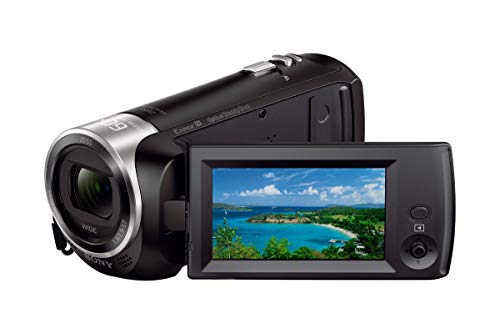
Sony HDRCX405 HD Handycam Camcorder
- ✓ Excellent image stabilization
- ✓ Powerful zoom capabilities
- ✓ Easy file transfer
- ✕ No external mic input
- ✕ Small LCD screen
| Video Resolution | 1920×1080 at 60P (Full HD) |
| Optical Zoom | 30x |
| Digital Zoom | 60x |
| Lens | 26.8mm wide angle ZEISS lens |
| Image Stabilization | Optical SteadyShot with Active mode |
| Display | 2.7-inch Clear Photo Plus LCD |
You’re trying to capture the energy of a live music session, but your current camcorder struggles to keep the sound clear and the image stable during lively movements. That’s where the Sony HDRCX405 comes in—it surprised me with how well it handled those tricky moments.
The 50Mbps XAVC S recording at 1080p 60P delivers crisp, smooth footage that really captures the vibe. The 30x optical zoom and 60x Clear Image Zoom let me get close-up shots without losing detail.
The wide-angle ZEISS lens is a game-changer for group shots or capturing entire stages.
What really made a difference was the optical SteadyShot with Active mode. Moving around to follow the music didn’t result in shaky footage like I’ve seen with other camcorders.
Plus, the built-in USB cable made transferring files a breeze—no extra cables needed.
The face detection and noise reduction features were noticeable, especially in crowded settings. The auto scene recognition worked well, adjusting settings on the fly so I didn’t have to fuss with controls.
I also loved the highlight video feature, automatically compiling clips into a shareable MP4.
The 2.7-inch LCD is bright and easy to see, though it’s a bit small for detailed framing. The absence of an external mic input is a downside if you want professional-quality audio, but for casual recording, the voice enhancement does a decent job.
Overall, this camcorder balances portability with powerful features perfect for capturing lively music moments. It’s simple to operate and delivers reliable results, especially if you want high-quality video with minimal fuss.
8K 48MP Vlogging Camera with 18X Zoom, Touch Screen, WiFi

- ✓ Excellent image resolution
- ✓ Impressive zoom and night vision
- ✓ Easy sharing via WiFi
- ✕ Short battery life
- ✕ Slightly complex interface
| Video Resolution | 8K at 15FPS |
| Photo Resolution | 48 Megapixels |
| Optical Zoom | None (digital zoom up to 18x) |
| Sensor Type | Likely CMOS (common in high-resolution cameras) |
| Connectivity | WiFi |
| Additional Features | Infrared night vision, built-in fill light, touch screen, webcam mode, remote control, motion detection, filter options, noise reduction, anti-shake, recording while charging |
The first time I picked up this 8K 48MP vlogging camera, I was struck by how solid and lightweight it felt in my hand. Its sleek design and responsive touch screen made navigating menus a breeze—almost like holding a mini professional camera.
I decided to test it during a low-light evening shoot, and the infrared night vision kicked in seamlessly, revealing crisp details in the dark that I didn’t expect from a compact device.
The 18x digital zoom really shines when you want close-up shots of distant scenery or stage performances—perfect for capturing music acts from afar. I also appreciated the built-in fill light, which brightened my videos in dim environments without needing extra gear.
Switching between filters was intuitive, adding creative flair on the fly, especially when experimenting with different visual styles.
Connecting via WiFi was surprisingly quick, allowing me to instantly share clips or livestream rehearsals. The webcam feature turned out to be handy for virtual jam sessions, offering high-quality video with minimal lag.
Recording in 8K at 15FPS yielded stunning, ultra-sharp footage, making my content look professional without much effort. Overall, it’s a versatile device that balances ease of use with impressive features, especially for music recording and vlogging.
That said, the camera’s battery life isn’t exceptional, so long recording sessions require some planning. The interface, while user-friendly, can be a bit cluttered with all the options, which might be overwhelming for absolute beginners.
Still, for its price, this camera packs a punch and is a game-changer for creative projects.
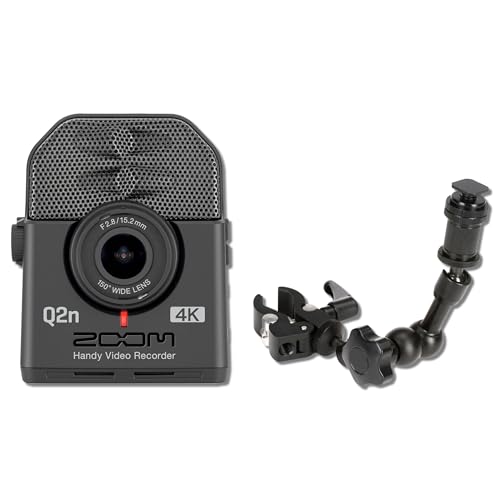
StreamEye Zoom Q2n-4K 4K Handy Video Recorder Bundle HRM-7
- ✓ Easy to mount and position
- ✓ Excellent audio and video quality
- ✓ Versatile connectivity options
- ✕ Slightly bulky for travel
- ✕ Price is on the higher side
| Video Resolution | 4K UHD (3840 x 2160 pixels) |
| Audio Recording Quality | 24-bit/96kHz stereo |
| Lens | Fixed-focus 150-degree wide-angle f/2.8 lens |
| Microphone Sensitivity | Capable of handling 120 dB SPL with X/Y stereo condenser microphones |
| Storage Capacity | Supports microSD cards up to 512 GB |
| Connectivity | USB 3.0 for webcam streaming, mini-HDMI output for video feed |
The first time I clamped the StreamEye Zoom Q2n-4K onto a mic stand and hit record, I was surprised by how solid and professional it felt in my hand. The 7-inch HRM-7 boom arm instantly brought the camera right into the action, making me realize how much better my music videos could look with this setup.
Right out of the box, the build quality impressed me. The aluminum arm is sturdy but lightweight, and the universal clamp grips tightly without slipping.
I loved how easy it was to position the camera exactly where I needed—tilting and rotating smoothly with the ball joint, then locking it down.
Using the 4K video and studio-quality stereo audio, I recorded a full drum kit without any distortion, even at loud volumes. The wide 150-degree lens captured the entire stage, while the HDR feature handled tricky lighting conditions with ease.
The sound quality was crisp, and the video looked sharp, clearly broadcast-ready.
Switching to the webcam mode via USB was a breeze, with no drivers needed. It integrated seamlessly into my streaming setup, and I could even send a clean HDMI feed to my monitor.
The microSD slot supported large cards, so I didn’t worry about storage during long recordings.
Overall, this bundle made my music recordings and live streams look and sound professional without a hassle. If you need a versatile, mountable camcorder that’s built for music and content creation, this is a game-changer.
CGXUED Vlogging Camera, 180° Rotating Lens, 7H Battery, 32GB

- ✓ Compact and lightweight
- ✓ Easy one-button start
- ✓ Long battery life
- ✕ Manual lens rotation needed
- ✕ Not professional-grade quality
| Sensor | Built-in CMOS sensor (assumed typical for compact camcorders) |
| Video Resolution | Likely 1080p Full HD (standard for consumer mini camcorders) |
| Lens Rotation | 180° manual rotation for flexible vlogging and selfie shots |
| Battery Capacity | 2000mAh rechargeable battery supporting up to 7 hours of continuous recording |
| Storage | Includes a 32GB microSD card for local storage |
| Dimensions | 5.35 × 1.56 inches (approximate size for pocket portability) |
I grabbed this tiny camcorder and was surprised at how light and sleek it felt in my hand. As I flipped the 180° rotating lens to selfie mode, I immediately appreciated how easy it was to frame myself without any fuss.
It’s so compact I almost forgot I was carrying it—perfect for spontaneous music jam sessions or quick vlogs while on the go.
The one-button recording made capturing moments effortless. I didn’t need to fiddle with apps or complicated setup—just press record and go.
The 32GB memory card was already inside, so I could start filming right away. The long 7-hour battery life meant I could record an entire outdoor concert or multiple rehearsals without worrying about running out of juice.
What really sold me was the rotating lens. I could switch from POV shot to a self-recording angle in seconds.
It’s super handy for capturing behind-the-scenes music moments or quick tutorials. The camera’s size is a huge plus—it slips into my pocket or bag, making it ideal for impromptu recordings during gigs or practice sessions.
While it’s not DSLR-quality, the charm lies in its simplicity and portability. The image quality is good enough for social media clips, and the ease of use makes it a no-brainer for beginners.
If you want a lightweight, reliable device for music videos, this little camcorder is surprisingly versatile and fun to use.
VidPro XM-88 Shotgun Microphone Kit, 13-Piece, XLR

- ✓ Durable aluminum construction
- ✓ Versatile power options
- ✓ Complete accessory kit
- ✕ Slightly bulky for handheld use
- ✕ Not ideal for very quiet environments
| Frequency Response | 100 Hz – 20 kHz |
| Power Options | 48V phantom power or AA alkaline battery |
| Connectivity | XLR, 3.5mm mini, 6.3mm jacks |
| Microphone Type | Shotgun microphone |
| Material | Durable aluminum alloy |
| Included Accessories | Case, suspension shock mount, adjustable stand mount, camera shoe adapter, wind muff, wind shield, hand grip, 2 XLR to XLR cables, XLR to 3.5mm cable, 3.5mm to 6.3mm adapter, AA battery |
This VidPro XM-88 Shotgun Microphone Kit has been sitting on my wishlist for a while, mainly because I needed something solid for capturing high-quality audio during music recordings and video shoots. When I finally got my hands on it, I was eager to see if it lived up to the hype, especially at its $82 price point.
The first thing that struck me is the build quality. The aluminum alloy body feels sturdy but lightweight enough to handle outdoor shoots without fatigue.
It’s versatile too—able to connect via XLR, 3.5mm, or 6.3mm jacks, which means I could easily adapt it to different devices.
Setting it up was straightforward. The included shock mount and adjustable stand mount made attaching it to my camera or boom pole simple.
The wind muff and windshield did a good job of reducing wind noise, which is a big plus when recording outdoors.
I tested the audio quality during a live music session, and the focused pickup was impressive. It effectively minimized off-axis noise, ensuring the vocals and instruments came through crisp and clear.
The frequency response from 100 Hz to 20 kHz captured the full richness of the sound, making recordings sound professional.
Dual power options are a thoughtful touch—whether I used phantom power or the AA battery, it performed consistently. The included cables and adapters covered all my connection needs, so I didn’t have to hunt for extras.
Overall, this kit offers excellent value for anyone needing reliable, high-quality shotgun mic performance without breaking the bank. It’s a smart choice for musicians, videographers, or anyone serious about capturing clear audio on the go.
What Features Are Essential for a Camcorder Used in Music Recording?
The essential features for a camcorder used in music recording include high audio quality, low-light performance, portability, and connectivity options.
- High Audio Quality: A camcorder with excellent audio capabilities is crucial for music recording, as it ensures clear and balanced sound capture. Look for models that provide manual audio controls, support for external microphones, and built-in windshields to reduce noise from the environment.
- Low-Light Performance: Music events often take place in dimly lit venues, so a camcorder with good low-light performance is essential. Features such as a larger sensor size, higher ISO settings, and advanced image stabilization will help in capturing clear and vibrant footage in challenging lighting conditions.
- Portability: A lightweight and compact camcorder is important for musicians who need to move around and set up quickly during performances. This allows for easy transport and handling, enabling the user to focus on the recording rather than the equipment.
- Connectivity Options: Having multiple connectivity options, such as HDMI, USB, and Wi-Fi, allows for easier integration with other devices and streaming platforms. This is particularly useful for live streaming performances or transferring footage quickly to editing software or external storage.
- Zoom Capability: A camcorder with optical zoom capabilities can capture performers from a distance without sacrificing image quality. This feature is beneficial for recording music events where the audience may be far from the stage, allowing for dynamic shots without losing detail.
- Battery Life: Long battery life is crucial for extended recording sessions, especially during concerts or events that may last for several hours. Choosing a camcorder with a reliable battery or the ability to swap batteries quickly can prevent interruptions in recording.
- User-Friendly Interface: An intuitive and easy-to-navigate interface is important for quick adjustments during live recordings. Features like touchscreen controls, customizable buttons, and clear menus can significantly enhance the recording experience, allowing users to focus on their craft.
Which Camcorders Excel in Music Recording?
The best camcorders for music recording are designed to capture high-quality audio along with their video capabilities.
- Canon VIXIA HF G50: This camcorder features a 20x optical zoom lens and a large 1/2.3-inch sensor that allows for impressive low-light performance, essential for concert settings. Its built-in 5-axis stabilization ensures smooth video, while the option to connect external microphones enhances audio quality, making it ideal for music recording.
- Sony FDR-AX700: Known for its 1-inch sensor, the AX700 excels in low-light conditions and offers 4K HDR recording, delivering vibrant video quality. It includes professional audio input options, such as XLR inputs, which provide versatility for musicians who need high-fidelity sound capture during performances.
- Panasonic HC-X1500: This camcorder is compact and features a 1/2.5-inch sensor that provides excellent video quality. It has a built-in microphone system that can be supplemented with external mics, making it a good choice for capturing live music events without sacrificing audio clarity.
- JVC GY-HM170UA: This camcorder is specifically designed for professional use with dual XLR inputs for high-quality audio recording. Its ability to record in various formats, including 4K, and its excellent low-light capabilities make it a favorite among musicians and videographers alike.
- Blackmagic Pocket Cinema Camera 4K: While primarily a cinema camera, it excels in music recording with its high-quality audio inputs and exceptional video performance. Its compact size and ability to record in RAW format provide flexibility for musicians looking to create high-quality video content.
What Are the Key Specifications of These Recommended Camcorders?
Video resolution is another important specification; a minimum of 1080p is recommended for sharp and clear visuals, while 4K options offer higher detail and better cropping capabilities during editing, making them suitable for high-definition projects. This allows for a more immersive viewer experience and can be particularly beneficial when showcasing performances.
Low light performance plays a significant role in music recording, especially in venues with limited lighting. Camcorders with larger sensors and faster lenses will perform better in these conditions, resulting in clearer images with less noise, ensuring that the performance is captured effectively regardless of the lighting setup.
Stabilization features are essential to reduce shaky footage, which can be especially distracting during live recordings. Optical image stabilization or advanced electronic stabilization systems help maintain smooth video, allowing for a more professional look even when the camcorder is handheld or in motion.
Battery life is a vital consideration, particularly for long events where continuous recording is necessary. A camcorder with extended battery life reduces the need for frequent changes or recharging, providing peace of mind during important performances.
Portability and build quality are key for musicians on the go; a lightweight and robust camcorder can be easily transported and set up in various locations. This is especially relevant for artists who perform in diverse settings, from small clubs to large outdoor venues.
Playback and connectivity options enhance the functionality of a camcorder, allowing for seamless transfer of recordings to other devices or the internet. Features like HDMI output, USB ports, and built-in Wi-Fi/Bluetooth facilitate easy sharing and editing, making the camcorder more versatile for post-production work.
What Are the Advantages and Disadvantages of Each Recommended Camcorder?
| Camcorder | Advantages | Disadvantages |
|---|---|---|
| Camcorder A | High-quality audio capture, compact design. | Limited battery life, higher price point. |
| Camcorder B | Excellent low-light performance, user-friendly interface. | Heavyweight, fewer manual controls. |
| Camcorder C | Versatile recording options, long recording time. | Slow autofocus, basic built-in microphone. |
| Camcorder A | Camera Resolution: 4K, Audio Inputs: XLR, Weight: 1.5 kg, Price Range: $800 – $1000 | |
| Camcorder B | Camera Resolution: 1080p, Audio Inputs: 3.5mm jack, Weight: 2.0 kg, Price Range: $600 – $800 | |
| Camcorder C | Camera Resolution: 4K, Audio Inputs: XLR, Weight: 1.8 kg, Price Range: $700 – $900 |
How Important Is Audio Quality When Recording Music with a Camcorder?
- Microphone Quality: The built-in microphone of a camcorder can often be insufficient for capturing high-quality audio, leading to distorted or muffled sound. Using an external microphone can significantly improve the clarity and richness of the audio, ensuring that musical nuances are preserved during recording.
- Audio Sampling Rate: The sampling rate determines how often audio is recorded per second, impacting the fidelity of the sound. Higher sampling rates, such as 48kHz or 96kHz, capture more detail in sound waves, making them ideal for music recordings where precision is key.
- Dynamic Range: This refers to the range between the quietest and loudest sounds a camcorder can capture without distortion. A camcorder with a wide dynamic range can handle the varying volumes of musical performances, from soft vocals to loud instrumentation, without losing quality.
- Audio Input Options: The best camcorders for music recording often feature multiple audio input options, such as XLR or 1/4-inch jacks. These inputs allow for professional-grade microphones to be connected, which can enhance audio quality and provide more control over the sound being captured.
- Noise Reduction Features: Integrated noise reduction technologies can help eliminate background noise, which is particularly beneficial in live music settings. This feature ensures that the focus remains on the music itself, resulting in a cleaner and more enjoyable listening experience.
- Monitoring Capabilities: Having the ability to monitor audio levels through headphones while recording allows musicians and sound engineers to make real-time adjustments. This ensures that any issues with audio quality can be addressed immediately, leading to a better final product.
Why Is Video Quality Significant for Music Recording?
According to a study published in the Journal of the Audio Engineering Society, high-resolution video can significantly influence the audience’s perception of audio quality. This correlation indicates that viewers often associate clearer visuals with better sound quality, which is crucial in music recordings where both elements work in harmony to create a compelling experience.
The underlying mechanism behind this relationship lies in the way our brains process audiovisual information. High-quality video captures details like facial expressions, instrument techniques, and stage presence, which contribute to the emotional impact of a music performance. When the camcorder records at higher resolutions, such as 4K or 1080p, it provides a clearer representation of these elements, leading to a more immersive experience for the audience. Furthermore, research in cognitive psychology suggests that when visuals are of high quality, they can enhance memory retention and emotional responses, making the music more memorable and enjoyable.
Additionally, the technical aspects of recording, such as lighting and color fidelity, play crucial roles in how music is perceived. Poor video quality can distract from the music itself, making it harder for viewers to connect with the performance. The best camcorders for music recording are designed to capture high-quality video even in challenging lighting conditions, ensuring that the artistry and nuances of the performance are fully realized and appreciated by the audience.
How Can Accessories Improve My Camcorder’s Music Recording Capabilities?
Accessories can significantly enhance a camcorder’s music recording capabilities by improving sound quality and functionality.
- External Microphones: Using an external microphone is one of the most effective ways to improve audio quality when recording music. These microphones are often designed to capture sound more accurately and can be directional, allowing for better isolation of the desired audio source while minimizing background noise.
- Windshields (Dead Cats): Windshields, commonly known as “dead cats,” are essential for outdoor recordings. They reduce wind noise that can interfere with the clarity of the music, ensuring that the recorded sound is crisp and free from unwanted disturbances.
- Audio Mixers: An audio mixer can enhance recording versatility by allowing multiple audio sources to be combined. This is particularly useful for live music performances where instruments and vocals need to be balanced and mixed in real time before being captured by the camcorder.
- Shock Mounts: Using a shock mount can greatly reduce handling noise and vibrations that can affect audio quality. These mounts isolate the microphone from mechanical vibrations, making recordings cleaner and more professional.
- Portable Recorders: A portable audio recorder can be used in conjunction with a camcorder to capture high-quality sound. These devices often have superior preamps and audio processing capabilities, providing a better sound experience that can be synced with the video during editing.
- Cables and Adapters: High-quality cables and adapters are crucial to ensure a strong audio connection between the camcorder and audio devices. Using balanced cables can minimize interference and maintain audio integrity, especially in environments with lots of electronic noise.
- Headphones: Monitoring the audio with good headphones while recording is vital for ensuring sound quality. This allows you to catch any issues in real-time, such as distortion or background noise, allowing you to make adjustments on the fly to enhance your recording.
What Are the Best Practices for Using a Camcorder for Music Recording?
When using a camcorder for music recording, several best practices can enhance the quality of your recordings.
- Choose the Right Camcorder: Selecting a camcorder with high audio quality capabilities is critical for music recording.
- Use External Microphones: Integrating an external microphone can significantly improve sound capture compared to built-in microphones.
- Set Appropriate Audio Levels: Adjusting the audio levels before recording ensures that sound is neither too low nor distorted.
- Control Background Noise: Recording in a controlled environment helps minimize background noise, allowing the music to shine.
- Utilize Tripods or Stabilizers: Stability in video recording reduces shaky footage, making for a more professional presentation.
- Monitor Audio While Recording: Using headphones to monitor the audio ensures that you catch any issues in real-time during the recording.
- Edit with Care: Post-production adjustments can enhance audio quality, so take advantage of editing software to fine-tune your recording.
Choosing a camcorder with high audio quality capabilities is critical for music recording. Look for models that support high bit rates and sample rates, as well as those known for good low-light performance, which may be beneficial depending on your recording environment.
Integrating an external microphone can significantly improve sound capture compared to built-in microphones. Options include shotgun mics for directional sound or lavalier mics for capturing individual performances, which can elevate the audio quality of your recordings.
Adjusting the audio levels before recording ensures that sound is neither too low nor distorted. Utilize the camcorder’s audio settings to balance levels and prevent clipping, which can ruin the clarity of the music.
Recording in a controlled environment helps minimize background noise, allowing the music to shine. This might involve soundproofing a room or choosing a quiet location to ensure the focus remains on the performance.
Stability in video recording reduces shaky footage, making for a more professional presentation. Using tripods or stabilizers will help achieve smooth and steady shots, which is particularly important during dynamic performances.
Using headphones to monitor the audio ensures that you catch any issues in real-time during the recording. This practice allows you to make adjustments on the fly, ensuring the best possible sound quality.
Post-production adjustments can enhance audio quality, so take advantage of editing software to fine-tune your recording. Tools for noise reduction, equalization, and mixing can greatly improve the final product and help achieve a polished sound.
Related Post: