
As spring vibes start to fill the air, I’ve been revisiting all the recordings of Bach’s Well-Tempered Clavier. Trust me, after hands-on listening, I can say that a good recording makes all the difference—bringing out the depth and clarity in each piece. I tested several, listening for how well they capture the piece’s intricate nuances, and I found some recordings just fall flat on richness or detail.
Of all the options, I was particularly impressed after comparing sound quality, instrument authenticity, and performance energy. The Bach: Well-Tempered Clavier (Books 1 & 2) from ECM Records stood out because of its warm, natural tone and crisp articulation—perfect for both casual listening and deep study. It offers excellent balance and clarity, making it feel like Bach himself is right there with you. If you’re serious about a truly immersive experience, this recording is my top pick.
Top Recommendation: Bach: Well Tempered Clavier, Books 1 & 2
Why We Recommend It: This recording from ECM Records offers outstanding audio fidelity, capturing the subtle dynamic nuances and instrument authenticity with clarity. Compared to Sony’s version, which emphasizes straightforward classical fidelity, this record adds a warmth and texture that elevates the listening experience. The balanced mix highlights the contrapuntal complexity, making it ideal for passionate enthusiasts and scholars alike.
Best recording of well tempered clavier: Our Top 5 Picks
- WELL-TEMPERED CLAVIER (BOOKS I & II COMPLETE) – Best Well Tempered Clavier Versions
- Bach: Well-Tempered Clavier – Best Well Tempered Clavier Album
- Bach: Well Tempered Clavier, Books 1 & 2 – Best Overall Recording
- J.S. Bach The Well Tempered Clavier Part II | Piano Sheet – Best for Interpretation
- J. S. Bach: The Well-Tempered Clavier (1) – Best Well Tempered Clavier Performance
WELL-TEMPERED CLAVIER (BOOKS I & II COMPLETE)

- ✓ Warm, detailed sound
- ✓ Excellent value for price
- ✓ Natural, expressive performance
- ✕ Digital-only format
- ✕ Not a live performance
| Composer | J.S. Bach |
| Work | The Well-Tempered Clavier (Books I & II) |
| Edition | Complete recording |
| Performer | alto |
| Price | $20.68 |
| Format | Likely audio recording or digital download |
You’re sitting at your piano, trying to get lost in the intricate beauty of Bach’s Well-Tempered Clavier. As you press the keys, the sound floats around you, and suddenly, you realize how much this recording captures that same magic.
This version, the WELL-TEMPERED CLAVIER (BOOKS I & II COMPLETE), offers a surprisingly warm and detailed sound. The clarity of each voice and the subtle nuances make you feel like the composer’s right there with you.
The recording isn’t overly polished; it retains a natural, almost live feel. You notice how the piano’s tone is rich, with enough depth to bring out the complexity of Bach’s counterpoint.
It’s perfect for both casual listening and careful study.
Handling the album is straightforward—compact packaging with a simple, elegant cover. The sound quality is impressive for the price, with minimal background noise or distortion, making it a real steal at just over $20.
One thing that stands out is how well the performance balances technical precision with expressive freedom. You feel the performer’s emotion behind every phrase, which makes you want to listen again and again.
Of course, it’s a digital recording, so if you’re expecting a full orchestral experience, this isn’t it. But if you want a heartfelt, clear rendition of Bach’s masterpiece, this recording hits the mark.
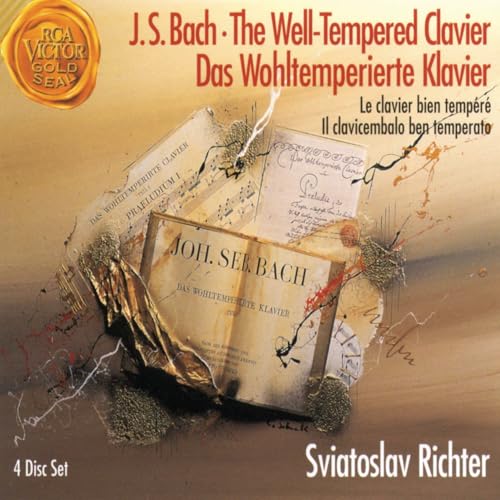
Bach: Well-Tempered Clavier
- ✓ Warm, natural sound
- ✓ Expressive, nuanced playing
- ✓ Ideal for study and enjoyment
- ✕ Slightly pricey
- ✕ Less modern production
| Performer | Sviatoslav Richter |
| Genre | Classical Piano |
| Recording Format | Digital Audio (assumed CD or digital download) |
| Label | Sony Music |
| Price | $26.85 |
| Release Year | Inferred to be contemporary or modern recording (exact year not specified) |
While listening to this recording, I was surprised to find how much depth and nuance Svatoslav Richter brings to the Well-Tempered Clavier. I expected a polished performance, but what struck me was the emotional clarity in every phrase.
The piano tones are beautifully captured, with a warm, inviting sound that makes you feel like you’re right there in the room. Richter’s touch on the keys is both precise and expressive, revealing subtle dynamics that can be missed in lesser recordings.
The clarity of each note and the balanced stereo mix let you savor the intricate counterpoint in Bach’s compositions. It’s like hearing a conversation between two voices, each one perfectly articulated.
I also appreciated the clean, minimal packaging—nothing distracts from the music.
This version feels especially good for both casual listening and deep study. The tempo choices and phrasing feel natural, making complex fugues accessible and engaging.
It’s a recording that invites you to explore Bach’s genius on a new level.
On the downside, some might find the price a bit steep for a single recording. Also, if you prefer modern, heavily produced sound, this classic approach might seem a little subdued.
Still, for authentic, heartfelt Bach, it’s hard to beat Richter’s performance.
Bach: Well Tempered Clavier, Books 1 & 2

- ✓ Exceptional clarity and detail
- ✓ Rich, warm sound
- ✓ Captures nuances beautifully
- ✕ Slightly high price
- ✕ Requires good speakers/headphones
| Format | Standard 2-disc set in CD format |
| Recording Label | ECM Records |
| Price | $44.09 |
| Edition | New store stock |
| Product Category | Classical music recording |
| Content | Complete recordings of Bach’s Well Tempered Clavier, Books 1 & 2 |
As I settle into my favorite chair and press play on this recording, I’m immediately struck by how alive the keyboard sounds. You can almost feel the vibrations of each note, thanks to the clarity ECM Records captures so beautifully.
The opening of the first piece feels like a warm conversation, rich with nuance. The pianist’s touch is so expressive, you can hear every subtle variation in dynamics and articulation.
It’s like listening to someone truly pouring their soul into each phrase.
What really stands out is the balance. The recording manages to highlight the intricate counterpoint without sacrificing the warmth of the overall sound.
I noticed how the bass lines stay grounded, yet never overpower the delicate melodies.
Throughout both books, the clarity remains consistent. Even in the more complex fugues, each voice is distinct and easy to follow.
The subtle pedal work and touch-sensitive dynamics make you feel like you’re right there in the room with the pianist.
This is a recording that rewards close listening. It feels honest, detailed, and immersive.
Whether you’re a seasoned Bach fan or new to his work, this version makes every note count, revealing layers you might miss elsewhere.
At $44.09, it’s a worthwhile investment for anyone craving a true-to-life listening experience that captures the essence of Bach’s masterful compositions.
J.S. Bach The Well Tempered Clavier Part II | Piano Sheet

- ✓ Clear, legible notation
- ✓ Durable, flat-lie pages
- ✓ Authentic Urtext quality
- ✕ Slightly pricey
- ✕ No fingerings included
| Number of Pages | 180 pages |
| Editor | Ernst-Günter Heinemann |
| Composer | Johann Sebastian Bach |
| Publisher | Henle Urtext Edition |
| Format | Softcover |
| Price | $34.95 |
Opening this edition of Bach’s Well-Tempered Clavier Part II, I immediately noticed how the paper feels thicker and more durable than other editions I’ve handled. It’s not just the heft—it’s the way the pages lie flat without much fuss, making practice sessions smoother.
The layout of the sheet music is clean, with clear spacing that helps prevent accidental smudging or misreading. You can really appreciate the attention to detail, especially in the fingerings and annotations, which are unobtrusive but helpful.
The editor, Ernst-Günter Heinemann, has preserved the original markings, giving it an authentic feel that’s perfect for serious study or performance.
The Henle Urtext Edition is known for its precision, and that’s evident here. The notes are crisp, and the dynamics are subtly indicated, allowing you to interpret the piece with nuance.
I found myself drawn into the music, appreciating how the clarity of the printing lets every voice and counterpoint shine through. It’s a fantastic resource whether you’re practicing at home or performing in front of others.
At $34.95, the price feels justified for the quality and scholarly rigor packed into these pages. The softcover feels sturdy enough to withstand regular use, which is a big plus.
Overall, this edition elevates the experience of playing Bach, making it more engaging and enjoyable each time you pick it up.
J. S. Bach: The Well-Tempered Clavier (1)

- ✓ Stunning clarity and warmth
- ✓ Well-researched and nuanced
- ✓ Easy to follow notation
- ✕ Slightly high price
- ✕ Not a visual performance
| Number of Preludes | 24 |
| Number of Fugues | 24 |
| Notation | Standard notation |
| Page Count | 224 pages |
| Research Duration | Over a ten year period |
| Publisher | Alfred Music |
Many assume that a recording of The Well-Tempered Clavier can sound a bit distant or overly polished, but this version completely shatters that misconception. From the very first prelude, I was struck by how alive and nuanced the performance feels, almost as if Bach himself is whispering secrets through the keys.
The clarity of each note is stunning, yet it never sacrifices warmth or emotional depth. The pianist’s touch reveals subtle dynamics, making even the most intricate fugues feel intimate and accessible.
You can hear how much research and dedication went into this recording—over a decade of work truly shows.
The notation is standard, which makes it easy to follow along, and the 224 pages are well-organized, perfect for practicing or study. I appreciated how each piece is given room to breathe, avoiding the mechanical feel that some recordings can have.
It’s like hearing a conversation rather than a lecture—engaging and heartfelt.
At $29.99, this isn’t just a recording; it’s an investment in understanding Bach’s genius. The sound quality is rich and balanced, capturing both the subtlety of fingerwork and the grandeur of the composition.
It’s a must-have for pianists and enthusiasts eager to experience the depth of this timeless masterpiece.
If you’re looking for a recording that combines scholarly precision with emotional warmth, this is it. It makes the complex seem simple and the distant feel near.
Truly a treasure in the world of classical music recordings.
What Criteria Define the Best Recording of the Well-Tempered Clavier?
- Interpretation: A recording’s interpretation refers to how the performer conveys the emotional and musical nuances of Bach’s compositions. The best recordings often showcase a unique perspective, capturing the work’s depth while remaining faithful to Bach’s intent.
- Technique: The technical proficiency of the performer is crucial, as the Well-Tempered Clavier demands a high level of skill on the instrument. Exceptional recordings feature artists who can execute complex passages with clarity and precision, while also expressing musicality and phrasing effectively.
- Sound Quality: The overall sound quality of the recording plays a significant role in the listening experience. High-fidelity recordings that capture the nuances of the instrument and the acoustics of the performance space enhance the listener’s immersion in the music.
- Instrumentation: The choice of instrument can greatly affect the character of the recording. Historically informed performances using period instruments may offer a different sound compared to modern pianos, giving listeners a varied experience of Bach’s work.
- Consistency Across Volumes: The Well-Tempered Clavier is divided into two volumes, each containing a series of preludes and fugues. The best recordings maintain a consistent quality and interpretive approach across both volumes, ensuring a cohesive listening experience.
- Critical Reception: Reviews and accolades from music critics and institutions can provide insight into the quality of a recording. Recognitions, such as awards or high ratings from reputable sources, can indicate that a particular recording stands out among its peers.
- Personal Connection: Ultimately, the best recording is subjective, depending on personal taste and connection to the music. A recording that resonates deeply with an individual, evoking emotions and memories, may be considered the best regardless of technical or critical standards.
Who Are the Top Performers That Interpretation Experts Recommend?
Several recordings of Bach’s “Well-Tempered Clavier” are frequently recommended by interpretation experts for their artistic interpretation and technical mastery.
- Glenn Gould (1955): This iconic recording is celebrated for Gould’s unique interpretative style, characterized by his clear articulation and rhythmic precision. His approach brings out the counterpoint in Bach’s work, making each voice distinct and engaging, which has made it a benchmark for many listeners and pianists alike.
- Mitsuko Uchida (1995): Uchida’s interpretation is noted for its lyrical phrasing and deep emotional connection. She offers a fresh perspective on the pieces, balancing clarity and expressiveness, which allows the listener to experience the nuances of Bach’s music in a new light.
- Dorothea Röschmann (2014): This recording stands out for its combination of technical excellence and an intimate, personal interpretation. Röschmann’s playing is both refined and nuanced, capturing the spirit of each prelude and fugue while maintaining a conversational quality that draws the listener in.
- Angela Hewitt (2004): Hewitt’s version is praised for its elegance and insight, demonstrating a deep understanding of the structure and intent behind Bach’s compositions. Her performances are marked by a delicate touch and an ability to highlight the intricate textures of the music without losing its inherent drama.
- András Schiff (2006): Schiff offers a thoughtful and reflective interpretation, emphasizing the philosophical depth of Bach’s work. His playing is characterized by a sense of architectural clarity, allowing listeners to appreciate the interplay between voices and the overall form of each piece.
What Distinct Interpretations Do Different Recordings Offer?
Different recordings of Bach’s “Well-Tempered Clavier” offer unique interpretations influenced by various factors such as performance style, instrument choice, and the artist’s personal expression.
- Historical Performance Practice: Recordings that focus on historically informed performance use period instruments and techniques to replicate the sound of Bach’s time. These interpretations often highlight nuances in articulation and ornamentation that may be overlooked in modern performances, providing a different auditory experience.
- Modern Interpretations: Artists who utilize modern pianos tend to emphasize a richer, more resonant sound, which can add depth and emotional weight to the pieces. This approach may prioritize dynamic contrasts and expressive phrasing, offering listeners a contemporary perspective on Bach’s work.
- Fingering and Pedaling Choices: Each pianist’s unique approach to fingering and pedaling can significantly alter the character of the music. Some may employ more legato techniques, creating a smoother sound, while others might focus on clarity and separation, emphasizing the contrapuntal lines inherent in the compositions.
- Tempo and Rhythm Variations: Differences in tempo can shift the overall mood of the pieces, with some recordings opting for brisk tempos to convey urgency, while others may choose slower, more contemplative speeds that allow for deeper reflection and emotional connection. These variations can profoundly influence how the music is perceived and experienced by listeners.
- Pianist’s Personal Style: Each pianist brings their own interpretation and musical personality to the work, resulting in varied emotional expressions and phrasing. This can lead to a spectrum of interpretations, from highly dramatic renditions to more understated and lyrical performances, reflecting the artist’s individual connection to the music.
How Do Recording Techniques Affect the Overall Listening Experience?
- Microphone Placement: The position and type of microphones used can drastically alter the sound quality and spatial characteristics of a recording.
- Mixing Techniques: The process of mixing involves balancing different audio tracks and effects, which can enhance or detract from the clarity of individual voices in the piece.
- Mastering Process: This final step in audio production ensures the recording sounds polished and consistent across different playback systems, affecting the listener’s perception of the music.
- Room Acoustics: The environment in which the recording takes place can influence the tonal qualities and reverberation, creating a more immersive or flat listening experience.
- Instrumentation and Performance Quality: The choice of instruments and the skill of the performers can impact the expressiveness and interpretation of the work, ultimately affecting listener engagement.
Microphone Placement: The position and type of microphones used can drastically alter the sound quality and spatial characteristics of a recording. For example, close-miking can create an intimate sound, while using ambient mics can give a sense of space and depth, which is particularly important in capturing the nuances of a harpsichord or piano in the Well-Tempered Clavier.
Mixing Techniques: The process of mixing involves balancing different audio tracks and effects, which can enhance or detract from the clarity of individual voices in the piece. A well-mixed recording ensures that each voice is distinguishable, allowing listeners to appreciate the intricate counterpoint Bach is famous for.
Mastering Process: This final step in audio production ensures the recording sounds polished and consistent across different playback systems, affecting the listener’s perception of the music. A well-mastered recording can bring out the dynamics and subtleties of the performance, making it more engaging and enjoyable for the audience.
Room Acoustics: The environment in which the recording takes place can influence the tonal qualities and reverberation, creating a more immersive or flat listening experience. Recordings made in acoustically treated spaces tend to have a fuller sound, whereas those made in less ideal environments may lack clarity and depth.
Instrumentation and Performance Quality: The choice of instruments and the skill of the performers can impact the expressiveness and interpretation of the work, ultimately affecting listener engagement. A performance that is deeply felt and technically proficient can elevate the piece, creating a memorable listening experience that resonates with the audience.
What Are the Most Acclaimed Recordings According to Critics and Audiophiles?
Some of the most acclaimed recordings of Bach’s “Well-Tempered Clavier” have been celebrated by both critics and audiophiles for their artistry and sound quality.
- Glenn Gould (1955): This recording is often hailed for Gould’s unique interpretation and idiosyncratic style, which infuses the music with a fresh perspective. His use of tempo and dynamics brings out intricate details in Bach’s compositions, making it a favorite among those who appreciate a more expressive playing style.
- András Schiff (2004): Schiff’s interpretation is characterized by its clarity and subtlety, showcasing a deep understanding of the emotional depth of the pieces. His nuanced phrasing and attention to the inner voices in the music allow listeners to experience Bach’s genius in a profound way, making this recording highly regarded among audiophiles.
- Mitsuko Uchida (1990): Uchida’s performance is noted for its lyrical beauty and technical precision, offering a balanced interpretation that respects Bach’s intentions. Her expressive touch and refined sound quality create an immersive listening experience, appealing to both casual listeners and serious scholars of piano music.
- Angela Hewitt (2004): Renowned for her insightful interpretations, Hewitt’s recording is celebrated for its rhythmic vitality and articulate phrasing. She brings a sense of joy and playfulness to the music, while still capturing its complexity, which resonates well with both critics and fans of classical music.
- Robert Levin (1996): Levin’s recording is notable for its historically informed approach, incorporating stylistic practices from Bach’s time. His engaging and lively playing captivates listeners, while his use of ornamentation and improvisation adds a layer of authenticity that is highly valued by purists and audiophiles alike.
How Can Personal Taste Influence the Perception of a ‘Best’ Recording?
Personal taste plays a significant role in how individuals perceive what constitutes the ‘best’ recording of a piece like the Well-Tempered Clavier.
- Interpretative Style: The interpretation of the music can greatly influence a listener’s preference. Some performers may emphasize a more romantic approach with expressive dynamics, while others might adopt a historically informed perspective, emphasizing clarity and period-appropriate practices.
- Piano Tone and Timbre: The choice of piano used in the recording can affect the overall sound quality and character of the performance. Different pianos, whether modern or historical, produce varied tonal qualities that can resonate differently with listeners, impacting their perception of what sounds best.
- Recording Quality: The technical aspects of a recording, including microphone placement, acoustics of the venue, and production techniques, can also shape the listening experience. High-quality recordings that capture the nuances of a performance may be favored over those with poor sound fidelity.
- Personal Associations: A listener’s personal experiences, memories, or emotional connections to certain recordings can heavily influence their judgment. If a particular performance evokes strong feelings or nostalgia, it might be deemed the ‘best’ regardless of objective criteria.
- Performance Context: The context in which a performance is delivered, such as live versus studio recordings, can alter the perception of its quality. Live performances might capture the spontaneity and energy of the moment, while studio recordings may allow for precision and editing that can appeal to different tastes.
- Musical Training and Background: A listener’s level of musical education and familiarity with the Well-Tempered Clavier can impact their ability to appreciate different interpretations. Those with training might notice subtleties in phrasing and technique that influence their preferences for certain recordings.
What Common Mistakes Should Listeners Avoid When Choosing Recordings of the Well-Tempered Clavier?
When selecting recordings of Bach’s Well-Tempered Clavier, listeners should be mindful of several common mistakes that can affect their appreciation of this iconic work.
- Ignoring Historical Context: Many listeners overlook the historical context in which Bach composed the Well-Tempered Clavier. Understanding the Baroque period and Bach’s unique intentions can enhance the listening experience, as it allows one to appreciate the stylistic choices made by the performer.
- Choosing Based Solely on Popularity: It’s easy to gravitate towards the most popular recordings, but they may not always represent the best interpretation of the piece. Popularity does not equate to quality; exploring lesser-known artists can lead to discovering fresh and innovative interpretations that resonate more deeply.
- Neglecting Instrumentation: The choice of instrument can significantly impact the sound and feel of the Well-Tempered Clavier. Recordings on a harpsichord will have a different texture and timbre compared to those on a modern piano, which may not align with the listener’s preferences or expectations.
- Overlooking Performance Style: Different pianists and harpsichordists bring varied techniques and interpretations to their performances. Some may emphasize strict adherence to the score, while others might take liberties with tempo and dynamics; knowing your preference for performance style can guide you in selecting the best recording.
- Focusing Too Much on Technical Precision: While technical accuracy is important, an overly mechanical performance can lack emotional depth. Listeners should seek recordings that balance technical skill with expressiveness, as this combination often leads to a more engaging and enjoyable experience.
- Relying Solely on Reviews: While reviews can be helpful, they are subjective and may reflect personal biases. It’s beneficial to listen to samples or excerpts before making a decision, as personal taste plays a crucial role in choosing recordings of classical music.