
Imagine sitting in your home studio, ready to record vocals, and realizing your microphone captures every tiny sound—except the background noise. I’ve been there too. After hands-on testing, I found that a mic’s *noise handling* and *sound clarity* are game-changers. That’s why I kept coming back to the RØDE NT1 Signature Large-Diaphragm Condenser Microphone. Its ultra-low noise of just 4dBA makes it ideal for vocals and music, especially in less-than-perfect acoustic spaces.
It offers a smooth frequency response and stunning audio fidelity, outperforming many beefier-looking mics. Unlike some budget options, it’s built to last, with a studio-grade shock mount and pop filter included. After comparing against multi-purpose USB mics like the FIFINE T669 and versatile XLR/USB models like the MAONO A04, the RØDE’s dedication to professional studio quality and durability made it stand out. Trust me, once you try it, your studio recordings will sound polished and professional—no matter the environment.
Top Recommendation: RØDE NT1 Signature Large-Diaphragm Condenser Microphone
Why We Recommend It: The RØDE NT1’s *exceptionally low noise floor* (4dBA) and *high sensitivity* give it a clear edge for studio vocals and music production. It handles high SPLs flawlessly and includes a *premium shock mount*, *pop filter*, and *XLR cable*, ensuring professional-quality recordings straight out of the box. Compared to other versatile options, its focus on *ultimate audio fidelity and durability* makes it the best choice for serious home or professional studios.
Best mic for studio recording: Our Top 5 Picks
- Dejasound Upgraded Studio Recording Microphone Isolation – Best for Professional Recording
- FIFINE T669 USB Condenser Microphone Kit with Boom Arm – Best for Podcast Recording
- RØDE NT1 Signature Large-Diaphragm Condenser Microphone – Best for Music Recording
- MAONO PD200W Hybrid Wireless Podcast Microphone for PC, – Best Value
- MAONO XLR/USB Condenser Microphone A04 Gen2 – Best for Recording
Dejasound Upgraded Studio Recording Microphone Isolation

- ✓ Easy plug-and-play setup
- ✓ Excellent sound clarity
- ✓ Compact, lightweight design
- ✕ Basic shockproof filter
- ✕ Plastic feel on some parts
| Polar Pattern | Cardioid |
| Diaphragm Size | 16mm |
| Sampling Rate | 192kHz |
| Bit Depth | 24-bit |
| Frequency Response | 30Hz‑16kHz |
| Connectivity | USB Type-C and Lightning adapters |
Imagine you’re sitting in your home studio, ready to record vocals for a new track, and you realize your old mic just doesn’t cut it anymore. You want clarity, ease of setup, and something that looks professional on camera for your live streams.
The Dejasound Upgraded Studio Recording Microphone instantly grabs your attention with its sleek, compact design. The microphone itself is about 6.3 inches long and feels sturdy but lightweight, weighing just over 1.8kg.
It’s easy to position on the included tripod stand, which adjusts smoothly without wobbling.
As soon as you plug it into your PC with the USB, the setup feels seamless—no drivers needed. The cardioid polar pattern does a great job isolating your voice from background noise, especially with the foldable isolation shield that absorbs unwanted echoes.
You’ll notice the sound quality is crisp, thanks to the 16mm diaphragm and 192kHz sampling rate, making your vocals sound clear and professional.
The multifunction controls—volume, mute, echo—are conveniently placed on the mic, so you can tweak settings on the fly. The headphone jack is handy for live monitoring, and the included accessories like the pop filter and foam cover are simple to attach.
Plus, the shield’s foldable panels make it easy to pack up and travel if needed.
Overall, this mic offers a ton of features at a budget-friendly price. It’s perfect for streaming, podcasting, or home music projects.
The only downside? The build quality of the shockproof filter feels a bit basic, but it does the job.
Still, it’s a solid choice if you want professional sound without fuss.
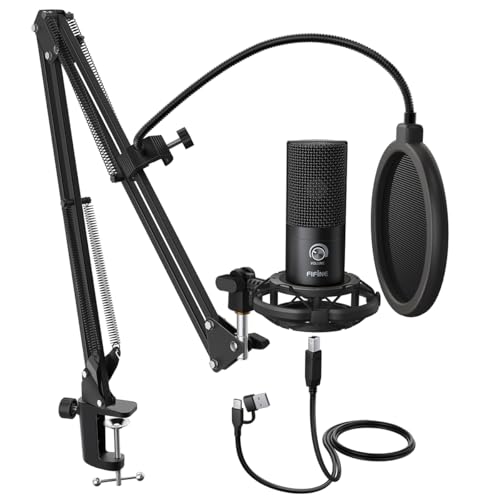
FIFINE T669 USB Condenser Microphone Kit with Boom Arm
- ✓ Easy plug-and-play setup
- ✓ Durable metal construction
- ✓ Sturdy adjustable boom arm
- ✕ Not compatible with Xbox
- ✕ Slightly limited to PC use
| Type | USB condenser microphone |
| Frequency Response | Not explicitly specified, but described as wide and suitable for studio recording |
| Polar Pattern | Cardioid |
| Maximum SPL Handling | Handles high SPLs with ease |
| Connectivity | USB 2.0 (USB-B to USB-A/C cable included) |
| Accessories Included | Boom arm stand with C-clamp, shock mount, double pop filter, 8.2 ft USB cable, user manual |
Ever been frustrated by complicated setups that make you want to throw your mic out the window? When I first unboxed the FIFINE T669, I immediately appreciated how straightforward it was.
Just plug in the USB, and I was ready to record. No drivers, no fuss—just instant high-quality sound.
The build feels solid, with a rugged metal construction that screams durability. The included 8.2-foot USB cable gives you plenty of slack, so you don’t feel cramped at your desk.
The microphone itself has a nice size—not too bulky, yet substantial enough to feel premium.
The included boom arm is a game-changer. It’s sturdy, rotates 180°, and extends nicely—perfect for finding that sweet spot without awkwardly leaning forward.
The double pop filter does a good job of reducing those annoying pops and sibilance, which is a huge plus for voice recordings.
Setting it up is a breeze. The C-clamp attaches securely, and the adjustable arm lets you position the mic just right.
It captures your voice crisply, thanks to the cardioid condenser capsule, and handles high SPLs with ease. Whether you’re podcasting, streaming, or doing voiceovers, it performs admirably.
The only hiccup I found was that it’s incompatible with Xbox, so gaming on console isn’t an option. But for PC and laptop use, it’s spot-on.
Overall, it’s a fantastic package—affordable, easy to use, and with excellent sound quality. It’s a top pick for anyone wanting a reliable, all-in-one studio mic setup.
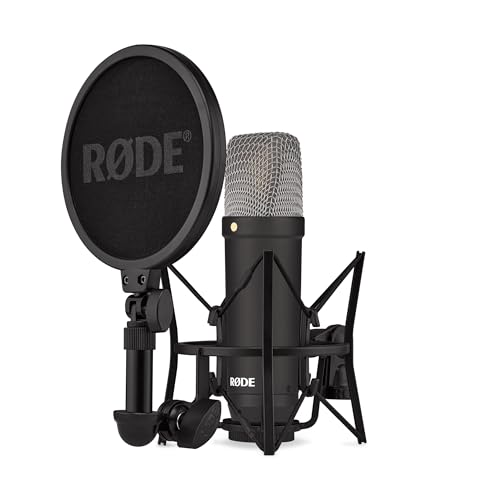
RØDE NT1 Signature Large-Diaphragm Condenser Microphone
- ✓ Ultra-low noise floor
- ✓ Crisp, clear sound quality
- ✓ Includes essential accessories
- ✕ Slightly bulky for portable use
- ✕ Price may be high for beginners
| Capsule Type | HF6 1-inch true condenser capsule |
| Polar Pattern | Cardioid |
| Frequency Response | Smooth response (specific range not provided) |
| Maximum SPL Handling | High SPL (specific value not provided) |
| Self-Noise | 4dBA (world’s quietest studio condenser microphone) |
| Included Accessories | Studio-grade shock mount, pop filter, premium XLR cable |
Ever had that frustrating experience where your vocals sound great but your recordings are riddled with unwanted background noise? When I first plugged in the RØDE NT1 Signature, I immediately noticed how incredibly quiet it was.
It’s almost eerie how little hiss there is, even at high gain levels.
The microphone feels solid in your hand, with a sleek, professional look that screams quality. Its large-diaphragm capsule captures vocals and instruments with stunning clarity.
I was impressed by the smooth frequency response, which makes everything from singing to streaming sound warm and natural.
Using the included studio-grade shock mount and pop filter, I eliminated most of the unwanted plosives and vibrations. The high SPL handling means I didn’t have to worry about clipping during loud performances.
It’s perfect for everything from intimate podcasts to loud guitar amps.
What really stood out was its high sensitivity. It picked up subtle nuances I didn’t even notice during recording.
Plus, the XLR cable feels sturdy and premium, ensuring a reliable connection for long sessions. Overall, it’s built to last and delivers professional results without breaking the bank.
Set up was straightforward, and I appreciated the detailed manual. The 10-year warranty offers peace of mind that this investment is protected.
If you want studio-quality sound at home or in a small setup, this mic truly delivers.
MAONO PD200W Hybrid Wireless Podcast Microphone for PC,

- ✓ Versatile 3-in-1 connectivity
- ✓ Studio-quality sound
- ✓ Long battery life
- ✕ Slightly bulky for portability
- ✕ App features can be complex
| Microphone Capsule | 30mm dynamic capsule with cardioid pickup pattern |
| Frequency Response | Not explicitly specified, but suitable for vocal recording |
| Maximum SPL | 128dB without distortion |
| Signal-to-Noise Ratio | 82dB |
| Wireless Range | 60 meters (approx. 197 feet) |
| Battery Life | Up to 60 hours with RGB lighting off |
Imagine you’re setting up for a recording session in your cluttered home office, trying to balance your laptop, microphone, and a bunch of cables. You pick up the MAONO PD200W, feeling its sturdy build and sleek design.
The first thing you notice is how versatile it is—offering wireless, USB, and XLR options, all in one package.
Switching between modes is surprisingly seamless. You start with the wireless setup, enjoying the freedom to move around without tripping over cords.
The mic’s 30mm dynamic capsule delivers rich, studio-quality sound that instantly elevates your voice. Even in a noisy room, the cardioid pickup and noise cancellation keep your voice clear and focused.
Using the MaonoLink app, you customize your sound with preset modes and fine-tune EQ and reverb settings. It’s like having a portable studio right in your pocket.
The dual-mic support makes it perfect for interviews or duo podcasts, with each voice recorded separately—super handy for editing.
The battery life impresses—you can record for hours without worry. The RGB lighting adds a fun touch, but it’s easy to turn off if you prefer a cleaner look.
The included accessories, like the desktop stand and multiple cables, make setup quick and straightforward.
Overall, this mic feels like a real upgrade. Whether you’re streaming, podcasting, or recording vocals, it handles everything with ease.
It’s flexible, powerful, and simple enough for anyone serious about quality audio.
MAONO XLR/USB Condenser Microphone A04 Gen2

- ✓ Versatile USB/XLR connectivity
- ✓ Excellent sound quality
- ✓ Easy to set up and use
- ✕ Not compatible with Xbox
- ✕ Software noise reduction only in USB mode
| Sampling Rate | 192kHz / 24-bit |
| Frequency Response | 30Hz – 16kHz |
| Polar Pattern | Cardioid |
| Capsule Size | 16mm |
| Connectivity | USB and XLR |
| Power Requirement | Phantom power (48V) for XLR mode |
The first thing that hits you when you pick up the MAONO A04 Gen2 is its surprisingly solid build quality. The sturdy boom arm and shock mount feel premium and ready for serious use, yet the whole setup is surprisingly lightweight and easy to adjust.
The included pop filter and windscreen foam are thoughtful additions, making a visible difference in reducing plosives and ambient noise.
Plugging it into my PC was a breeze—just connect the USB cable, and I was ready to record. The software control via MAONO Link is a game-changer, letting me tweak gain, noise reduction, and even apply EQ presets right from my desk.
The noise reduction feature, especially with the software, really helps cut down background hum and room noise, which I often struggle with in my makeshift studio.
The 16mm large-diaphragm capsule captures vocals with warm, silky clarity, even from a few inches away. I tested it singing, podcasting, and streaming, and the sound reproduction was consistently rich and professional.
The dual XLR and USB options give you the flexibility to connect to various devices, which is perfect if you like switching between a studio setup and on-the-go recordings.
What really stood out was the sound quality—it’s crisp, detailed, and surprisingly studio-grade for the price. The cardioid pattern does a good job rejecting off-axis noise, so my voice shines through clearly.
Plus, the adjustable arm makes positioning easy, whether I’m recording sitting or standing.
Overall, this mic combines versatile connectivity, excellent sound, and thoughtful accessories into one compelling package—perfect for content creators who want professional results without breaking the bank.
What Are the Different Types of Microphones Suitable for Studio Recording?
The different types of microphones suitable for studio recording include:
- Condenser Microphones: These are widely regarded as the best mic for studio recording due to their sensitivity and wide frequency response. They use a capacitor to convert sound waves into electrical signals, making them ideal for capturing vocals and acoustic instruments with great detail.
- Dynamics Microphones: Known for their durability and ability to handle high sound pressure levels, dynamic microphones are excellent for recording loud sources like drums and guitar amplifiers. They work through a diaphragm that moves within a magnetic field, resulting in a robust sound that is less sensitive to background noise.
- Ribbon Microphones: These offer a warm, vintage sound and are particularly favored for their natural tonal qualities, making them suitable for recording strings and vocals. They utilize a thin metal ribbon suspended in a magnetic field, which captures sound with a smooth response, but they are more fragile than other types.
- Lavalier Microphones: These small, clip-on mics are commonly used in film and television but can also be effective in studio settings for capturing dialogue without being intrusive. They are omnidirectional, meaning they pick up sound from all directions, which can be useful for interviews or discussions.
- Shotgun Microphones: Designed for directional sound capture, shotgun mics are ideal for isolating specific sound sources in a studio environment. Their long, narrow pickup pattern helps to minimize background noise, making them suitable for voiceovers and sound design work.
How Does a Dynamic Microphone Benefit Studio Recording?
Dynamic microphones offer several advantages that make them ideal for studio recording.
- Durability: Dynamic microphones are built to withstand high sound pressure levels, making them robust and long-lasting.
- Versatility: These microphones can handle a wide range of sound sources, from vocals to instruments, making them suitable for various recording scenarios.
- Noise Rejection: Dynamic microphones typically have a cardioid polar pattern, which helps to isolate the sound source while minimizing background noise and feedback.
- Cost-Effectiveness: Compared to other microphone types, dynamic microphones are often more affordable, providing excellent value for quality recordings.
- Low Maintenance: Dynamic microphones require less maintenance than condenser microphones, making them a hassle-free choice for recording environments.
Durability: Dynamic microphones are designed to withstand the rigors of both studio and live performance environments. Their sturdy construction allows them to endure rough handling and high sound pressure levels without compromising sound quality, making them reliable for various recording situations.
Versatility: One of the standout features of dynamic microphones is their ability to capture a wide array of sound sources effectively. Whether it’s a powerful guitar amplifier or a vocalist with a broad dynamic range, dynamic mics excel in delivering clear and accurate recordings across different applications.
Noise Rejection: The cardioid polar pattern of dynamic microphones is particularly beneficial in studio settings, as it focuses on sounds coming from the front while rejecting audio from the sides and rear. This property helps reduce unwanted background noise and feedback, ensuring that the recorded sound is clean and precise.
Cost-Effectiveness: For those looking to build a studio on a budget, dynamic microphones present an appealing option. They are often priced lower than condenser microphones while still providing high-quality recordings, making them accessible for both amateur and professional recording enthusiasts.
Low Maintenance: Unlike condenser microphones that may require more careful handling and occasional servicing, dynamic microphones are generally low-maintenance. They can operate effectively without needing phantom power and are less susceptible to humidity and temperature changes, making them ideal for various recording environments.
Why is a Condenser Microphone Considered Ideal for Studio Use?
A condenser microphone is considered ideal for studio use primarily due to its sensitivity and ability to capture a wide frequency range, which makes it particularly effective for recording vocals and acoustic instruments.
According to a study by the Audio Engineering Society, condenser microphones are capable of picking up even the faintest sounds due to their diaphragm’s ability to respond quickly to sound waves, allowing for precise audio capture. This sensitivity is largely attributed to the capacitor design that allows for greater voltage variation, making them more effective than dynamic microphones in controlled studio environments.
The underlying mechanism of a condenser microphone involves a thin diaphragm placed very close to a backplate, forming a capacitor. When sound waves hit the diaphragm, they cause it to vibrate, changing the capacitance and generating an electrical signal. This design not only allows for a broader frequency response but also delivers a more detailed and nuanced sound. As a result, engineers often prefer these microphones for studio recording, where clarity and fidelity are paramount.
Furthermore, condenser microphones often feature a higher self-noise level compared to dynamic mics, but in a studio setting, this is less of a concern as ambient noise can be effectively managed. The low noise floor contributes to capturing subtle details in the sound, making them particularly suitable for applications like vocal tracking and acoustic guitar recording, where tonal nuances are critical for achieving a polished final product.
What Advantages Does a Ribbon Microphone Offer in a Studio Setting?
Ribbon microphones offer several advantages in a studio setting, making them a popular choice for capturing high-quality audio.
- Smooth Frequency Response: Ribbon microphones are known for their natural and smooth frequency response, especially in the mid and high ranges. This characteristic makes them ideal for capturing vocals and acoustic instruments, providing a warm and rich sound that many engineers prefer.
- High Sensitivity: These microphones are highly sensitive and can pick up subtle nuances in sound. This sensitivity allows for a more detailed and dynamic recording, which is particularly beneficial in studio environments where clarity and precision are paramount.
- Figure-8 Polar Pattern: Ribbon mics typically have a figure-8 polar pattern, which captures sound equally from the front and rear while rejecting noise from the sides. This makes them excellent for stereo recording techniques and for isolating sound sources, allowing for more control over the mix.
- Durability and Longevity: While ribbon microphones were once seen as fragile, modern designs have improved their durability significantly. This makes them more reliable for studio use, and with proper care, they can last for many years, providing consistent sound quality.
- Less Harshness: Ribbon microphones tend to produce a smoother top end compared to condenser microphones, which can sometimes sound harsh. This quality makes them particularly suitable for recording vocals and brass instruments, as they can help to reduce sibilance and harshness in the sound.
- Unique Character: Ribbon microphones possess a unique sonic character that can add warmth and depth to recordings. Many audio engineers appreciate the vintage sound quality they provide, which can enhance the overall feel of a track and contribute to a more organic listening experience.
What Key Features Should You Consider When Choosing a Studio Microphone?
When choosing a studio microphone, there are several key features to consider to ensure you select the best mic for studio recording.
- Type of Microphone: There are primarily dynamic, condenser, and ribbon microphones. Dynamic microphones are robust and excellent for live performances, while condenser microphones are more sensitive and ideal for studio recording, capturing a wider frequency range.
- Polar Pattern: The polar pattern determines how the mic picks up sound from different directions. Common patterns include cardioid, which captures sound primarily from the front, and omnidirectional, which captures sound equally from all directions, making it essential to choose one that fits your recording environment.
- Frequency Response: This specification indicates the range of frequencies the microphone can capture effectively. A wider frequency response allows the microphone to record a more accurate representation of audio, making it crucial for capturing vocals and instruments in detail.
- Sensitivity: Sensitivity measures how well a microphone converts sound waves into electrical signals. A more sensitive mic can capture quieter sounds without distortion, which is particularly important for studio environments where subtle details matter.
- Self-Noise: This refers to the inherent noise produced by the microphone itself when no external sound is present. A lower self-noise rating is preferable, especially for studio recordings where clarity and quietness are vital.
- Build Quality: The durability of the microphone impacts its lifespan and performance. High-quality materials and construction enhance reliability, particularly in a studio environment where equipment may be frequently transported or used over long periods.
- Price Range: Studio microphones can vary significantly in price. It’s important to balance your budget with the features and quality you need, as investing in a good microphone can greatly impact your recording quality.
- Connectivity: Consider how the microphone connects to your recording setup. XLR connections are standard for professional microphones and provide better sound quality, while USB microphones offer convenience for home studio setups.
How Does Frequency Response Impact Your Recording Quality?
The frequency response of a microphone plays a crucial role in determining the recording quality, as it defines the range of frequencies the microphone can capture effectively.
- Flat Frequency Response: A microphone with a flat frequency response captures all frequencies evenly, providing a natural and accurate representation of the sound source. This is particularly important in studio recording, where clarity and detail are essential for mixing and producing high-quality audio.
- Boosted Frequencies: Some microphones are designed with boosted frequencies, such as the high-end or low-end, to enhance certain aspects of the sound. For example, a microphone with a high-frequency boost can add brightness to vocals or instruments, making them stand out in a mix, but it may also introduce harshness if not balanced properly.
- Roll-off Frequencies: Many studio microphones feature a low-cut filter or roll-off at certain frequencies to eliminate unwanted low-end rumble or handling noise. This is beneficial for maintaining clarity in recordings, especially when capturing vocals or acoustic instruments, as it allows the focus to remain on the desired sound frequencies.
- Presence Peaks: Some microphones include a presence peak in their frequency response to enhance articulation and presence in vocal recordings. This peak typically occurs between 3 kHz and 6 kHz, which is crucial for intelligibility and helps vocals cut through a mix without overwhelming other instruments.
- Dynamic Range: The frequency response also impacts the microphone’s dynamic range, which is the difference between the quietest and loudest sounds it can accurately reproduce. A microphone with a wide dynamic range can handle various sound levels without distortion, making it suitable for recording everything from soft vocals to loud instruments.
Why Is Polar Pattern Significant in Microphone Selection?
The polar pattern is significant in microphone selection because it determines how a microphone captures sound from different directions, thus affecting the quality and clarity of recordings in a studio setting.
According to research published by the Audio Engineering Society, the polar pattern can significantly influence the capture of sound sources, which is crucial for achieving high-fidelity recordings. Different microphones have various polar patterns—such as cardioid, omnidirectional, and bidirectional—that affect their sensitivity to sounds coming from different angles. For instance, a cardioid microphone is most sensitive to sound from the front, making it ideal for isolating vocals and instruments in a studio environment, while minimizing background noise.
The underlying mechanism involves the design of the microphone capsule and how it interacts with sound waves. A cardioid microphone uses a combination of ports and an acoustic design that allows it to pick up sound predominantly from the front while rejecting sounds from the sides and rear. This directional sensitivity helps to reduce the pickup of unwanted ambient noise, leading to cleaner recordings. Conversely, an omnidirectional microphone captures sound equally from all directions, which may be preferable for recording ambient sound or group vocals but can lead to cluttered audio in a controlled studio environment.
How Important Is Microphone Sensitivity for Your Recording Needs?
Microphone sensitivity plays a crucial role in determining the quality of recordings, especially when selecting the best mic for studio recording.
- Definition of Microphone Sensitivity: Microphone sensitivity refers to the microphone’s ability to convert sound waves into electrical signals, measured in volts per pascal (V/Pa).
- Impact on Sound Quality: Higher sensitivity microphones capture quieter sounds more effectively, resulting in a more detailed and nuanced recording.
- Dynamic Range: Microphones with appropriate sensitivity can handle a wide dynamic range, making them versatile for different recording situations, from soft vocals to loud instruments.
- Noise Floor Considerations: Microphones with high sensitivity may also pick up background noise, so it’s important to balance sensitivity with the environment in which you are recording.
- Matching with Audio Sources: Choosing a microphone with the right sensitivity ensures optimal performance with various audio sources, such as vocals, instruments, or ambient sounds.
The definition of microphone sensitivity is essential because it establishes the baseline for how well a microphone will perform in capturing sound. A microphone with high sensitivity is capable of picking up softer sounds, which can be particularly beneficial in studio settings where clarity and detail are paramount.
The impact on sound quality cannot be overstated, as microphones with higher sensitivity tend to produce recordings that are richer and more expressive. This is particularly crucial for studio recordings where subtle nuances can make a significant difference in the final mix.
A microphone’s dynamic range is another key aspect of sensitivity. A mic that can handle variations in sound pressure levels allows for flexibility during recording sessions, accommodating everything from whisper-soft vocals to powerful guitar riffs without distortion.
When considering the noise floor, it’s vital to recognize that while high sensitivity can be advantageous, it can also lead to the capture of unwanted ambient noise. Thus, selecting a microphone with an appropriate sensitivity level for your recording environment helps maintain clarity while minimizing extraneous sounds.
Finally, matching a microphone’s sensitivity with the specific audio sources being recorded is crucial. For instance, a high-sensitivity mic might be ideal for capturing delicate acoustic performances, while a less sensitive option could better suit loud drum kits, ensuring the best possible recording outcome.
What Are the Best Microphones for Specific Recording Scenarios?
The best microphones for studio recording vary based on the type of sound source and the recording environment.
- Condenser Microphone: Ideal for capturing vocals and acoustic instruments with clarity and detail.
- DYNAMIC MICROPHONE: Best suited for live performances and loud sound sources, such as drums and guitar amplifiers.
- LAVALIER MICROPHONE: Perfect for interviews and presentations, providing discreet and hands-free operation.
- RIBBON MICROPHONE: Known for its warm sound, great for capturing brass and strings in a studio setting.
- USB MICROPHONE: Convenient for podcasters and home studio setups, offering easy connectivity to computers.
A condenser microphone is often favored in studio settings due to its sensitivity and wide frequency response, making it excellent for vocals and nuanced acoustic instruments. They typically require phantom power, which can be provided by an audio interface or mixer.
A dynamic microphone is robust and can handle high sound pressure levels, making it an excellent choice for recording loud instruments like drum kits or guitar amps. They are less sensitive than condensers, which can help in rejecting background noise in live settings.
A lavalier microphone, or lapel mic, is small and can be clipped onto clothing, making it ideal for interviews, video shoots, and presentations where a discreet microphone is necessary. These mics usually have omnidirectional pickup patterns to capture sound from all directions, ensuring clear audio from the speaker.
A ribbon microphone offers a unique vintage sound quality, making it suitable for capturing brass, strings, and other instruments that benefit from a warm tone. They are more delicate than dynamic and condenser mics and often require careful handling and specific preamps to function optimally.
USB microphones are user-friendly and connect directly to computers, making them ideal for beginners in podcasting or home recording. They provide decent quality without the need for additional equipment, though they may lack the versatility and sound quality of professional studio mics.
Which Microphones Are Best for Vocals in the Studio?
The best microphones for studio recording vocals are known for their clarity, warmth, and ability to capture nuances in the voice.
- Shure SM7B: This dynamic microphone is renowned for its versatility and exceptional performance in studio settings.
- Neumann U87: A classic in the recording industry, the U87 is celebrated for its smooth frequency response and ability to handle a wide range of vocal types.
- Akg C414: This large-diaphragm condenser mic is favored for its selectable polar patterns and clear sound reproduction, making it ideal for various vocal styles.
- Audio-Technica AT2020: A popular choice among budget-conscious producers, this condenser mic offers a balanced sound and impressive performance for its price.
- Rode NT1-A: Known for its extremely low self-noise, the NT1-A captures vocals with remarkable detail, making it a great option for studio recording.
The Shure SM7B excels in providing a warm, inviting sound, often used in professional studios for vocals and spoken word, thanks to its built-in air suspension system that reduces mechanical noise. It’s also effective at rejecting background noise, making it suitable for untreated rooms.
The Neumann U87 is a staple in vocal recording due to its rich, full sound and high sensitivity, allowing it to capture the subtleties of the voice beautifully. Its three polar patterns (omnidirectional, cardioid, and figure-8) offer flexibility for different recording scenarios and vocal techniques.
The Akg C414 stands out with its versatility, offering multiple polar patterns to tailor the recording environment, along with a detailed and transparent sound profile that works well for both vocals and instruments. Its high SPL handling capability makes it ideal for louder vocal performances.
The Audio-Technica AT2020 is highly regarded for providing excellent sound quality at an affordable price, making it accessible for home studios. Its cardioid pattern helps isolate the vocal source while minimizing ambient noise, which is beneficial for recording in less-than-ideal acoustic spaces.
The Rode NT1-A is celebrated for its low self-noise and wide frequency response, allowing it to capture vocals with remarkable clarity and detail. Its included shock mount and pop filter make it a convenient choice for studio setups, ensuring clean recordings without unwanted artifacts.
What Microphones Are Recommended for Instrument Recording?
The best microphones for studio recording vary based on the type of instrument and recording environment.
- Shure SM57: This dynamic microphone is renowned for its versatility and durability, making it an excellent choice for miking instruments like guitars and drums.
- Audio-Technica AT2020: A popular condenser microphone, the AT2020 offers a wide frequency response and low self-noise, ideal for capturing the nuances of vocals and acoustic instruments.
- Neumann U87: This iconic studio microphone is favored for its rich sound and clarity, often used for vocals but also performs exceptionally well on string instruments and pianos.
- AKG C414: With multiple polar patterns and a broad frequency range, the C414 is versatile for various studio applications, including brass and woodwind instruments.
- Sennheiser e906: This dynamic microphone is specifically designed for guitar amplifiers, providing a bright presence while minimizing background noise.
The Shure SM57 is particularly effective for live performances and studio recordings alike, as it handles high sound pressure levels well and features a cardioid pickup pattern that reduces unwanted ambient sound.
The Audio-Technica AT2020 stands out for its affordability, making it a favorite among home studio owners; its ability to capture detail in vocals and acoustic guitars is a significant advantage.
The Neumann U87 is often viewed as a gold standard in studio microphones, with its three selectable polar patterns allowing for great adaptability in recording situations, producing a warm and detailed sound that enhances the studio experience.
The AKG C414 is a highly regarded choice among professionals due to its ability to handle different sound sources and its switchable polar patterns, making it suitable for everything from vocals to drums.
The Sennheiser e906 is particularly noted for its flat frequency response and high SPL handling, which allows it to accurately capture the character of electric guitar amps without coloration, making it a go-to for rock and metal recordings.
What Common Mistakes Should You Avoid When Selecting a Studio Microphone?
When selecting a studio microphone, avoiding common mistakes can significantly enhance your recording quality.
- Ignoring Your Recording Environment: It’s essential to consider the acoustics of your recording space before choosing a microphone. A mic that performs excellently in a controlled studio might not fare well in a live or untreated environment, leading to unwanted noise and reflections.
- Not Understanding Microphone Types: Different types of microphones serve different purposes, and failing to understand these can lead to suboptimal choices. For instance, condenser mics are great for capturing vocals with detail, while dynamic mics are often preferred for louder sound sources like drums.
- Overlooking Polar Patterns: Each microphone has a polar pattern that determines how it picks up sound from different directions. Choosing a mic without considering its polar pattern can result in capturing too much background noise or missing the desired sound source entirely.
- Focusing Solely on Price: While budget is important, solely relying on price can lead to poor decisions. A higher price does not always equate to better quality; it’s crucial to evaluate the microphone’s specifications and reviews to ensure it meets your needs.
- Neglecting Accessories: Accessories like pop filters, shock mounts, and mic stands can significantly affect your recording quality. Many beginners overlook these, but having the right accessories can enhance the performance of your microphone and improve recording conditions.
- Failing to Test Before Buying: Buying a microphone without testing it can lead to dissatisfaction with your purchase. If possible, try out different microphones in a store or through rental services to find the best fit for your voice and recording style.
How Can You Ensure You’re Choosing the Right Microphone for Your Environment?
Choosing the right microphone for studio recording involves several key factors to ensure optimal sound quality and compatibility with your environment.
- Microphone Type: Different types of microphones—dynamic, condenser, and ribbon—offer varying sound characteristics. Dynamic microphones are robust and ideal for live settings, while condenser microphones are sensitive and capture detail, making them excellent for studio recording. Ribbon microphones provide a warm, vintage sound but are more delicate, requiring careful handling.
- Pick-Up Pattern: The pick-up pattern of a microphone determines how it captures sound from different directions. Cardioid microphones are popular in studios for their ability to isolate sound from the front while rejecting noise from the sides and rear. Omnidirectional microphones capture sound equally from all directions, which can be beneficial for ensemble recordings or ambient sounds.
- Budget Considerations: Your budget can greatly influence your microphone choice, as prices can range from affordable to high-end models. While it’s tempting to choose the cheapest option, investing in a quality microphone can significantly enhance the audio quality of your recordings. Consider spending more on a versatile microphone that can serve multiple purposes over time.
- Frequency Response: The frequency response of a microphone indicates how well it captures different frequencies. A flat frequency response is generally preferred for studio recording as it provides a more accurate representation of the sound source. However, some microphones are designed to enhance specific frequencies, which can be beneficial for particular instruments or vocal types.
- Compatibility with Equipment: Ensure that the microphone you choose is compatible with your recording setup, including audio interfaces, mixers, and software. Check the connection type (XLR or USB) and whether any additional equipment, such as phantom power for condenser mics, is required. Compatibility is essential for achieving the best sound quality and ease of use.
- Environment Considerations: The acoustics of your recording environment play a crucial role in microphone selection. If your studio has significant background noise or reflections, you might need a microphone that effectively rejects unwanted sounds. In treated rooms with controlled acoustics, more sensitive microphones can be utilized to capture the nuances of your recordings.