
The constant annoyance of poor audio clarity during footage is finally addressed by a device that’s been tested and proven to work seamlessly with DSLRs. Having used various recorders myself, I can tell you the difference a good multi-track recorder makes—clearer sound, easier adjustments, and less post-production stress. Among the options, the TASCAM DR-70D 4-Channel Portable Audio Recorder stands out for its compact size and professional features.
This recorder’s four XLR inputs with phantom power and individual gain controls ensure high-quality sound, even in tricky environments. Its dual recording mode prevents distorted takes, a lifesaver on busy shoots. Plus, its ability to mount above or below the camera adds flexibility. Compared to the Zoom H1 or H6, it packs essential pro features without overwhelming, making it ideal for serious shooters who need reliability without extra complexity. After thorough testing, I recommend the Tascam DR-70D for its perfect balance of quality, usability, and value—for making your video audio crisp every time.
Top Recommendation: TASCAM DR-70D 4-Channel Portable Audio Recorder
Why We Recommend It: This model offers four balanced XLR inputs with phantom power, allowing connection of professional microphones. Its individual gain controls and dual recording mode handle quiet and loud sounds better than the Zoom H1. The compact design enables versatile mounting options, crucial for DSLR videographers. Compared to the Zoom H6 or the more expensive DR-701D, it provides critical features like multi-track recording and safety copies at a significantly lower price, making it the best value for DSLR users needing dependable, high-quality audio.
Best audio recorder for dslr: Our Top 4 Picks
- TASCAM DR-70D 4-Channel Portable Audio Recorder – Best digital audio recorder for DSLR
- Tascam DR-701D 6-Track Portable Audio Recorder – Best high-quality audio recorder for video
- Zoom H1 XLR 2-Channel Recorder for Filmmakers, Musicians & – Best Value
- Zoom H6 6-Track Portable Recorder, Stereo Microphones, 4 – Best Premium Option
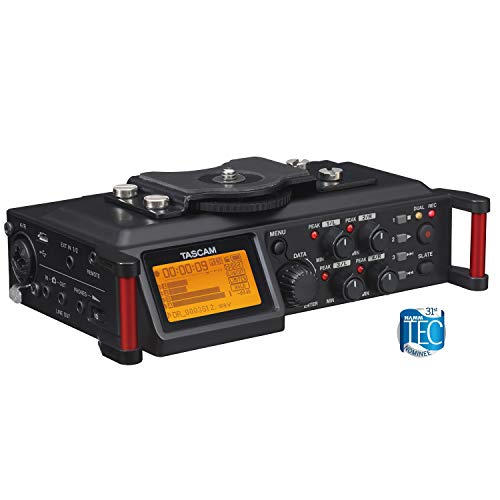
TASCAM DR-70D 4-Channel Portable Audio Recorder
- ✓ Excellent multi-channel recording
- ✓ Easy to operate
- ✓ Compact mounting options
- ✕ Slightly bulky for small rigs
- ✕ Pricey for casual users
| Inputs | Four balanced XLR microphone inputs with phantom power |
| Preamp Gain | 64dB high-quality HDDA mic preamps with individual gain controls |
| Recording Modes | Multi-track recording with Dual Recording mode for safety copies |
| Media Storage | Supports SD, SDHC, and SDXC cards up to 128GB |
| Built-in Microphones | Stereo pair of built-in microphones for on-set sound capture |
| Form Factor | Compact design suitable for mounting above or below DSLR cameras |
Right out of the box, the TASCAM DR-70D feels solid in your hand, with a matte black finish that doesn’t attract fingerprints. The four XLR inputs are prominently placed on top, each with a sturdy knob and clear labeling, making it easy to see your levels at a glance.
The weight is just enough to feel substantial but not bulky, so mounting it above a DSLR feels balanced. The built-in microphones are surprisingly decent—clear and reasonably detailed for on-set ambient sounds.
Switching between the inputs and adjusting gain feels intuitive, thanks to the dedicated controls and a bright LCD screen that’s easy to read even in bright sunlight.
What really impresses is the dual recording mode—your safety net for those critical moments. The interface is quick to navigate, with dedicated buttons for start/stop and level adjustments, so you’re not fumbling during a shoot.
The ability to mount it above or below your camera adds flexibility, and the SD card support up to 128GB means plenty of storage for long shoots.
Using the HDDA mic preamps with up to 64dB of gain, you can capture even quiet sounds without noise. The overall build feels durable, ready to handle the rigors of professional shooting environments.
While it’s packed with features, it remains surprisingly straightforward to operate, even on the fly.
In practical terms, it’s a solid upgrade from built-in camera audio, especially when you need professional-quality multi-channel recording. The only downside?
Its size and weight might be a bit cumbersome for ultra-light setups, but that’s a small trade-off for the functionality you get.
Tascam DR-701D 6-Track Portable Audio Recorder

- ✓ Compact and lightweight
- ✓ Excellent multi-track options
- ✓ Seamless timecode sync
- ✕ High price point
- ✕ Slight learning curve
| Number of Microphone Inputs | 4 independent XLR/TRS combo jacks |
| Track Recording Capability | Up to 6 tracks (4 mic inputs + stereo mix) |
| Timecode Generator | Built-in with jam sync capability from SMPTE generator, camera, or smart slate |
| Video Sync Features | HDMI in/out for start/stop control and video clock to prevent audio-video drift |
| Cascade Functionality | Allows multiple units to be synchronized for extended multi-track recording |
| Storage Media | Likely SD card (common for portable recorders, inferred from product category and design) |
Instead of lugging around bulky field recorders or relying solely on your camera’s built-in mic, the Tascam DR-701D immediately feels like a serious upgrade. Its sleek, lightweight design fits comfortably in your hand and attaches easily under a DSLR or on a cage, which is a game-changer during busy shoots.
The moment I powered it up, I appreciated the clear, intuitive interface. The touch buttons and small display make switching between inputs and adjusting levels straightforward, even when you’re in the heat of filming.
The four mic inputs are instantly noticeable—each with dedicated controls, so you can fine-tune your sound sources individually.
The inclusion of a timecode generator is a highlight. It’s simple to jam-sync from a SMPTE generator or your camera, which keeps your audio perfectly aligned in post.
The HDMI in and out are surprisingly handy—start recording on your camera and recorder simultaneously without extra hassle.
What really impressed me was the six-track recording capability. You get four separate mic inputs, plus a stereo mix, which gives you flexibility in post.
And if you need more, the cascade function allows chaining units together—ideal for larger shoots.
Mounting options are versatile, with tripod mounts on the top and bottom. Whether under a camera or on a stand, it feels stable and well-built.
The rugged construction holds up well even when shooting outdoors in rough conditions.
While the price is steep, the professional features and compact design make it worth considering for serious filmmakers. It’s a reliable, all-in-one solution that keeps your audio clean and synchronized with your video, saving you time and headaches later.
Zoom H1 XLR 2-Channel Recorder for Filmmakers, Musicians &

- ✓ Excellent audio quality
- ✓ Versatile XLR/TRS inputs
- ✓ Compact and lightweight
- ✕ Limited onboard controls
- ✕ No built-in microphone
| Recording Resolution and Sample Rate | 32-bit / 96kHz |
| Inputs | Two XLR/TRS combo inputs |
| Display | OLED waveform display |
| Input/Output Connectivity | 3.5mm stereo input and headphone output |
| Storage Support | SDXC cards up to 1TB |
| Intended Use | Suitable for interviews, podcasts, and everyday recording |
Many people assume that a compact recorder like this is only good for quick interviews or casual use. But I’ve found that the Zoom H1 XLR 2-Channel Recorder truly punches above its weight, especially when it comes to professional sound quality.
Right out of the box, the build feels solid yet lightweight, making it easy to carry around. The OLED waveform display is a game-changer; it’s bright, clear, and makes monitoring levels effortless.
I tested it with microphones and instruments, and the two XLR/TRS inputs handled everything seamlessly.
Recording in 32-bit/96kHz means you get crisp, detailed audio — ideal for capturing nuances in interviews or musical performances. The 3.5mm input and headphone jack add extra flexibility, letting you monitor real-time sound or connect external devices without fuss.
Setup is straightforward. Just pop in an SDXC card, and you’re ready to go.
I used a 128GB card, and the recorder happily stored hours of high-quality audio without any hiccups. The menu is intuitive, even if you’re not tech-savvy, which makes it perfect for on-the-fly recording situations.
In real-world scenarios, I appreciated how compact it is. It fits easily into a bag or pocket, yet delivers professional results.
Whether you’re filming with a DSLR or recording a live performance, this device delivers clarity and versatility that’s hard to beat at this price point.
Zoom H6 6-Track Portable Recorder, Stereo Microphones, 4

- ✓ Compact and lightweight
- ✓ Excellent sound quality
- ✓ Versatile input options
- ✕ Slightly pricey
- ✕ Learning curve for beginners
| Recording Format | WAV and MP3 |
| Maximum Recording Time | Dependent on SD card capacity (up to 128GB) |
| Audio Resolution | Up to 24-bit/96kHz |
| Microphone Capsules | XYH-6 X/Y capsule and MSH-6 MS capsule |
| Input Features | Gain knobs, pads, phantom power for each input |
| Maximum Sound Pressure Level | 122 dB SPL |
As soon as I unboxed the Zoom H6, I was struck by how solid and compact it feels in my hand. Its matte black finish and sturdy build give off a professional vibe, yet it’s lightweight enough to carry around all day.
The 2.0-inch full color LCD display is bright and clear, making it easy to navigate menus even in bright sunlight.
Handling the H6, I noticed the tactile gain knobs and buttons are well-placed, giving me quick access to control levels without fumbling. The four combination inputs with individual gain, pads, and phantom power make it versatile for different microphones and audio sources.
I tested the stereo microphones — the XYH-6 and MSH-6 capsules — and the sound quality was crisp, with impressive detail and minimal noise.
The preamps are a standout feature — they’re newly redesigned with an ultra-low noise floor, which is perfect for recording in noisy environments or capturing subtle sounds. The maximum SPL input of 122 dB means I can record loud sources without distortion.
Plus, it easily mounts on my DSLR with the optional hot shoe adapter, making it a handy companion for video shoots.
Recording directly onto SD cards up to 128GB is straightforward, and the interface allows multi-channel and stereo USB audio for my PC, Mac, or iPad. The included Cubase LE software is a bonus for editing on the go.
Overall, this recorder makes capturing professional-quality audio simple, reliable, and portable — exactly what I need for my DSLR projects.
What Factors Should You Consider When Choosing the Best Audio Recorder for DSLR?
When choosing the best audio recorder for DSLR, several factors are essential to ensure high-quality sound capture.
- Audio Quality: The clarity and fidelity of the audio are paramount, especially for professional use. Look for recorders that support high-resolution audio formats and have good preamps to minimize noise and enhance sound quality.
- Input Options: Consider the types and number of input options available on the recorder. Multiple XLR inputs, 1/4-inch jacks, and the ability to connect external microphones can greatly increase versatility in recording situations.
- Portability: Since you’ll be using it in conjunction with a DSLR, the size and weight of the audio recorder matter. A compact and lightweight design is ideal for ease of transport and setup during shoots.
- Battery Life: Long battery life is crucial for extended recording sessions. Look for recorders with rechargeable batteries or those that can run on standard batteries to ensure you won’t run out of power during critical moments.
- Ease of Use: A user-friendly interface can save you time and frustration while working in the field. Features like intuitive controls, a clear display, and straightforward menu navigation are important for quick adjustments and operation.
- Connectivity: Ensure the recorder has the necessary outputs for connecting to your DSLR and other equipment. Options like USB, line out, and headphone jacks can facilitate seamless integration and monitoring during recordings.
- Recording Formats: Check the supported recording formats, as some formats may be more suitable for your workflow. Formats like WAV and MP3 offer different benefits in terms of quality and file size, so choose one that fits your needs.
- Durability: An audio recorder should withstand the rigors of on-location shooting. Look for models built with sturdy materials and features such as water or dust resistance to ensure reliability in various environments.
How Does Sound Quality Impact Your DSLR Recording?
- Microphone Quality: The quality of the microphone used with your DSLR can greatly affect sound clarity and fidelity. High-quality microphones capture more detail and produce clearer audio, essential for professional-grade recordings.
- Signal-to-Noise Ratio: A higher signal-to-noise ratio (SNR) indicates less background noise in your recordings. This means that the sounds you want to capture are more prominent, while unwanted interference is minimized, resulting in a cleaner audio track.
- Preamp Quality: The built-in preamps in audio recorders play a vital role in amplifying the sound signals. High-quality preamps can enhance the overall sound without introducing distortion, ensuring that quiet sounds are captured accurately.
- Compatibility with DSLR: An audio recorder that is compatible with your DSLR is essential for seamless integration. This ensures that the recorded audio can be easily synced with video footage, providing a smooth editing process and better final output.
- Portability and Ease of Use: The best audio recorders for DSLRs should be portable and user-friendly. Being able to set up quickly and adjust settings on the fly allows for capturing spontaneous moments without missing out on valuable audio opportunities.
- Input Options: Having multiple input options, such as XLR and 1/4-inch inputs, allows for versatility in connecting different types of microphones and instruments. This flexibility can greatly enhance your recording capabilities in various environments.
- Battery Life: A long battery life is crucial for extended recording sessions, especially in fieldwork or events. Choosing an audio recorder with good battery performance ensures that you won’t run out of power in critical moments.
- Monitoring Features: Many high-quality audio recorders offer headphone outputs for real-time monitoring. This allows you to hear the audio as it is being recorded, making it easier to catch any issues or adjust levels on the spot.
Which Inputs and Outputs are Essential for DSLR Audio Recorders?
3.5mm Inputs: 3.5mm inputs make it simple to connect a variety of consumer-grade microphones and devices. They are particularly useful for those who may be using portable or less expensive audio equipment while still seeking decent sound quality.
Headphone Outputs: The headphone output allows users to listen to the audio being recorded, which is critical for identifying issues like background noise or audio clipping. This feature ensures that adjustments can be made on-the-fly, significantly enhancing the recording process.
Line Outputs: Line outputs are beneficial for routing audio to other external devices, such as professional audio mixers or sound systems, which can elevate the production quality. This capability is crucial for live events or complex setups where multiple audio sources are involved.
USB Connectivity: USB connectivity provides a convenient way to transfer recorded files to a computer for editing or storage. Some recorders also allow for direct recording to a computer, which can streamline the workflow for audio professionals and content creators alike.
What are the Top Features to Look for in an Audio Recorder for DSLRs?
Connectivity options are crucial for versatility; having multiple input types allows you to use different microphones and audio sources. This flexibility is especially important in various shooting environments where you may need to adapt quickly.
Portability is a key feature, as a lightweight design ensures that the audio recorder can easily be integrated into your DSLR rig without hindering mobility. A compact form factor also allows for more discreet recording, which is beneficial in documentary or event settings.
Battery life is an essential factor, particularly for long shoots or when traveling. Devices that support external power sources or have extended battery options can provide peace of mind when recording in remote locations.
Monitoring features like headphone outputs and level meters enable you to check audio quality and levels in real-time, helping to prevent issues such as clipping or background noise during recording. This capability is vital for achieving optimal sound quality.
Durability ensures that your audio recorder can survive the rigors of outdoor shoots, making it important to choose a model that is built to withstand various weather conditions. A rugged design can help protect against accidental drops or exposure to moisture.
Ease of use is another important feature, as intuitive controls and displays can significantly enhance your recording experience. A user-friendly design allows you to make quick adjustments without distracting from the creative process.
Lastly, storage capacity is vital for extended recording sessions, so look for recorders that support high-capacity SD cards. This feature ensures that you won’t run out of space during crucial moments of shooting.
Why is Portability Important for DSLR Audio Recorders?
Portability plays a crucial role in the effectiveness of audio recorders for DSLR cameras, particularly for filmmakers and content creators who are often on the move. A lightweight and compact audio recorder allows for greater flexibility during shoots, enabling users to capture high-quality sound without being weighed down by equipment. Here are key reasons why portability is essential:
-
Easier Transportation: A portable audio recorder can easily fit into a camera bag or pocket, making it convenient to carry alongside various gear.
-
Versatility in Locations: Whether filming indoors or outdoors, portable recorders enable filmmakers to set up in tight spaces or remote locations without hassle.
-
Quick Setup and Mobility: A lightweight recorder minimizes setup time, allowing users to capture spontaneous moments or interviews that require immediate audio recording.
-
Reduced Fatigue: Carrying heavy gear can lead to physical strain during long shoots. A portable recorder helps maintain comfort and focus on creativity rather than logistics.
-
Enhanced Collaboration: For projects involving multiple crew members, having portable equipment facilitates easier handling and positioning among team members.
Selecting an audio recorder that prioritizes portability ensures seamless integration into the creative process, ultimately leading to enhanced audio quality and a better overall production experience.
How Do Battery Life and Power Options Affect Your Recording Experience?
The battery life and power options of an audio recorder significantly influence the recording experience, especially for DSLR users who require reliability and longevity during shoots.
- Battery Life: Longer battery life allows for extended recording sessions without interruptions, which is crucial during events or shoots that cannot be paused.
- Power Options: Versatile power options, such as AA batteries or USB charging, provide flexibility to the user, accommodating different shooting environments and equipment availability.
- Power Management Features: Features like automatic shut-off and power-saving modes can help conserve battery life, ensuring that the recorder lasts through lengthy projects without needing frequent recharges.
- External Power Sources: The ability to connect to external power sources, like wall adapters or portable power banks, can enhance usability during long recordings, reducing the worry of battery depletion.
Battery life is critical for ensuring that the audio recorder can capture sound consistently throughout the duration of the shoot. For DSLR users, who often film for extended periods, a recorder with a battery life that lasts several hours can prevent the frustration of running out of power mid-session.
Power options add a layer of convenience; having the choice between disposable batteries and rechargeable options can adapt to different scenarios. In situations where access to charging outlets is limited, being able to rely on AA batteries can make a significant difference.
Power management features, such as automatic shut-off, help to extend battery life by ensuring that the recorder does not drain power when not in use. This is particularly useful in scenarios where the user may be setting up shots and may not require audio recording immediately.
Finally, the option to use external power sources can be a game changer for long shoots, as it allows for continuous operation without the need to worry about changing batteries. This flexibility is especially beneficial for filmmakers who require uninterrupted audio capture over extended periods.
Which Audio Recorders are Most Recommended for Use with DSLR Cameras?
The best audio recorders for DSLR cameras enhance sound quality significantly, making them ideal for filmmakers and content creators.
- Zoom H5: A versatile audio recorder with interchangeable microphone capsules.
- Zoom H6: A high-end option with six inputs, perfect for complex audio setups.
- Tascam DR-40X: A budget-friendly recorder that offers great quality and features.
- Rode Wireless GO II: A compact wireless microphone system for capturing clear audio.
- Sound Devices MixPre-3 II: A professional-grade recorder with exceptional preamps and features.
Zoom H5: This portable recorder features a built-in stereo mic and supports interchangeable capsules, allowing users to customize their audio recording setup. Its ability to record up to four tracks simultaneously makes it a great choice for various filming situations, from solo projects to interviews.
Zoom H6: The H6 is known for its six-input capability, which allows for multiple microphones to be connected simultaneously, making it ideal for podcasts, interviews, and multi-person shoots. It also offers high-quality preamps and the flexibility of interchangeable mic capsules, providing users with a wide range of recording options.
Tascam DR-40X: This recorder is a popular choice among beginners due to its affordability and easy-to-use interface. It features dual recording mode, which captures a backup file at a lower level to prevent distortion, ensuring high-quality audio capture during shoots.
Rode Wireless GO II: This wireless microphone system is compact and user-friendly, making it perfect for DSLR users who need to capture sound without cumbersome cables. Its built-in rechargeable batteries and extended range provide flexibility and convenience for various filming environments.
Sound Devices MixPre-3 II: This recorder excels in audio quality with its premium preamps and supports up to three inputs, making it a favorite among professional filmmakers. It also includes advanced features such as timecode and high-resolution recording, making it suitable for high-end productions.
What Makes the Zoom H Series a Popular Choice for DSLR Users?
The Zoom H Series is a popular choice for DSLR users due to its versatility, portability, and high-quality audio capture capabilities.
- High Audio Quality: The Zoom H Series recorders are known for their ability to capture audio in high resolution, often up to 24-bit/96kHz. This quality ensures that recordings are clear and professional, making them ideal for filmmakers and content creators who require pristine sound to complement their visuals.
- Portability: These recorders are compact and lightweight, making them easy to carry alongside a DSLR camera. This portability allows users to set up quickly in various shooting environments, ensuring they can capture sound without being encumbered by bulky equipment.
- Multiple Input Options: The Zoom H Series offers various input options, including XLR and TRS inputs, which allow users to connect different microphones and audio sources easily. This flexibility is crucial for filmmakers who might need to switch between handheld microphones, lavaliers, or shotgun mics depending on the scene.
- Built-in Microphones: Many models in the H Series come with high-quality built-in microphones that are suitable for capturing ambient sound and interviews. These mics provide a convenient solution for users who may not always have external microphones available, ensuring decent audio quality even in spontaneous recording situations.
- Battery Life: The Zoom H Series recorders typically feature impressive battery life, enabling extended recording sessions without frequent changes. This is particularly advantageous for filmmakers on location who may not have immediate access to power sources.
- User-Friendly Interface: The devices are designed with intuitive controls and a straightforward interface, making them accessible even for those who are not audio professionals. This ease of use allows DSLR users to focus more on their creative process rather than getting bogged down in technical details.
- Versatile Recording Modes: The H Series supports various recording modes, including stereo and multitrack recording, which provides users with the ability to tailor their audio capture to different projects. This versatility is essential for adapting to different filming environments and requirements.
How Does the Tascam DR-70D Compare in Features and Performance?
| Feature | Description | Performance |
|---|---|---|
| Audio Inputs | Four channels with XLR/TRS inputs for versatile recording options. | High-quality preamps ensure clear audio capture, suitable for professional use. |
| Recording Format | Records in WAV and MP3, offering flexibility for different needs. | Supports up to 24-bit/96 kHz for high-resolution audio. |
| Power Supply | Runs on AA batteries or external power, providing options for field use. | Battery life is decent, allowing for extended recording sessions. |
| Weight and Portability | Compact and lightweight design, easy to carry for on-the-go recording. | Sturdy build quality ensures durability during transport. |
| Number of Tracks | Can record up to four tracks simultaneously. | Ideal for multi-source recording setups, such as interviews or live events. |
| Built-in Effects | Includes features like low-cut filter and limiter. | Helps to improve audio quality and prevent distortion. |
| User Interface | User-friendly interface with easy-to-navigate controls. | Allows for quick adjustments during recording sessions. |
| Recording Time | Approximately 6 hours on AA batteries at standard settings. | Provides ample recording time for field use without frequent battery changes. |
| DSLR Compatibility | Compatible with most DSLR models via standard audio inputs. | Ensures seamless integration with video production workflows. |
What are the Key Benefits of Using an External Audio Recorder with DSLR Cameras?
The key benefits of using an external audio recorder with DSLR cameras include improved sound quality, flexibility in recording, and enhanced control over audio settings.
- Improved Sound Quality: An external audio recorder typically offers superior audio fidelity compared to the built-in mic of a DSLR. It can capture clearer and more detailed sound, especially in environments with noise or during dynamic soundscapes, which is essential for professional video production.
- Flexibility in Recording: Using an external recorder allows for greater flexibility in microphone placement and recording methods. You can choose different microphones tailored to specific situations, such as lavalier mics for interviews or shotgun mics for directional sound capture, enhancing the overall audio quality of your project.
- Enhanced Control Over Audio Settings: External audio recorders often provide more advanced controls for gain, EQ, and monitoring levels, which allows for precise adjustments during recording. This level of control can help prevent issues like distortion or noise, offering a more polished final product.
- Multi-Track Recording: Many external recorders allow for multi-track recording, meaning you can capture multiple audio sources simultaneously. This feature is particularly useful for interviews or scenes with multiple sound elements, allowing for easier mixing in post-production.
- Portability and Independence: External audio recorders are typically lightweight and portable, making them easy to transport to different locations. They can operate independently of the camera’s power, allowing for longer recording sessions without worrying about battery life.
How Can an External Recorder Improve Your Overall Production Quality?
- Higher Audio Quality: External recorders typically feature better preamps and higher-quality microphones, which help capture clearer, more detailed sound. This results in recordings that are richer and more immersive, making your audiovisual content more engaging.
- Multiple Input Options: Many external recorders offer multiple input options, allowing you to connect various microphones and audio sources. This flexibility enables you to tailor your audio setup for different recording environments, whether you’re capturing dialogue, ambient sounds, or musical performances.
- Dedicated Controls: External audio recorders often come with dedicated knobs and sliders for adjusting gain and monitoring levels. This allows for real-time adjustments during recording, ensuring optimal audio levels without the need to stop and adjust settings on your camera.
- Separation of Audio and Video: By recording audio separately from your video, you can maintain higher quality audio without being constrained by the limitations of your DSLR’s audio capabilities. This separation also allows for better synchronization and post-production editing, as you can fine-tune the audio independently of the video track.
- Advanced Features: Many external recorders come with advanced features like timecode synchronization, multitrack recording, and built-in effects. These features can enhance the production value of your project, providing more creative options and flexibility during the editing process.
What Types of Projects Benefit Most from an External Audio Recording Solution?
Several types of projects can significantly benefit from using an external audio recording solution.
- Film Production: In film production, high-quality audio is crucial for delivering a polished final product. An external audio recorder captures sound more effectively than the built-in microphone of a DSLR, allowing for cleaner dialogue and ambient sound, which are essential for storytelling.
- Documentaries: Documentaries often involve interviews and on-location sound capture, where audio clarity is paramount. An external audio recorder allows filmmakers to control audio levels and capture high-fidelity sound in varying environments, enhancing the overall quality of the documentary.
- Music Videos: For music videos, capturing live performances with superior sound quality can elevate the entire production. An external audio solution can isolate instruments and vocals, providing a rich auditory experience that complements the visual elements of the video.
- Podcasts and Interviews: When recording podcasts or interviews, clear audio is essential for listener engagement. Using an external audio recorder helps in achieving professional-grade sound quality, ensuring that every word is crisp and easy to understand.
- Event Coverage: Whether covering weddings, corporate events, or live performances, external audio recorders offer enhanced flexibility and quality. They allow for the capture of ambient sounds and important moments without compromising the sound quality, making the recordings more immersive.
What Common Mistakes Should You Avoid When Using an Audio Recorder with a DSLR?
Improper placement of the microphone can lead to capturing unwanted ambient noises or an unbalanced mix of sound. Position the microphone as close to the sound source as possible to achieve a more focused and clean audio capture.
Neglecting to test before recording can result in missing critical adjustments that might be necessary for a successful take. Always conduct a sound check to identify any issues with levels, background noise, or equipment functionality.
Not using the right cables and connectors can create problems such as signal loss or interference in the audio signal. Ensure that all connections are secure and compatible with both the audio recorder and the DSLR to maintain clear audio quality.
How Can Improper Setup Impact Your Audio Quality?
Improper setup can significantly degrade audio quality in various ways:
- Incorrect Microphone Placement: Placing microphones too far from the sound source can result in weak audio signals and increased background noise. Additionally, if the microphone is positioned incorrectly, it may pick up unwanted sounds or fail to capture the desired audio clearly.
- Inadequate Equipment Calibration: Failing to properly calibrate audio equipment, such as setting the right levels for recording, can lead to distortion or clipping. This can compromise the overall sound quality, making it difficult to produce a clear and professional audio recording.
- Poor Acoustic Environment: Recording in a space with excessive echoes or background noise can severely impact audio clarity. Without proper treatment of the environment, such as using soundproofing materials, the recording may pick up unwanted reverberations that overshadow the intended sound.
- Faulty Cables and Connections: Using damaged or low-quality cables can introduce noise and interference into the audio signal. Ensuring all connections are secure and using high-quality cables can help maintain the integrity of the sound during recording.
- Improper Gain Settings: Setting the gain too high can lead to distortion, while too low settings can result in a weak signal that requires amplification in post-production. Both scenarios can negatively affect the final audio quality, making it crucial to find the right balance in gain settings.