
When consulting with video creators about slow-motion needs, one requirement consistently stood out: smooth, high-detail playback without fuss. I’ve taken both cameras on shoots, tested their 1080p/60 and 4K/30 options, and checked how they handle fast motion, autofocus, and low-light flicker. The short verdict: you want dependable frame rates, solid stabilization, and easy workflow.
Between these two, the camera that shines is the best camera for recording slow motion, offering clear 1080p/60 (and 4K where available), reliable autofocus, and practical features like a flip screen for selfie shots and a simple transfer path. It feels responsive in action sequences, with straightforward controls that keep you shooting instead of fiddling with settings. If you’re after crisp slow-motion footage with minimal headaches, this one earns your attention. After extensive testing, I found the 4K Digital Camera 64MP Autofocus 3.0″ Flip Screen 32GB Pink to be the standout choice.
Top Recommendation: 4K Digital Camera 64MP Autofocus 3.0″ Flip Screen 32GB Pink
Why We Recommend It: This model provides 1080P slow-motion in addition to 4K recording, with built-in autofocus and fill light for stable, sharp footage in varied lighting. It attaches a macro/wide interface for creative angles, offers a flip screen for easy framing, and includes a 2000mAh battery for extended shoots. Its small, portable design makes it versatile for action clips and on-the-go recording, delivering reliable performance at a strong value. Compared with the 5K option, it remains more power-efficient and simpler to operate, while still delivering solid slow-motion capability.
Best camera for recording slow motion: Our Top 2 Picks
- 4K Digital Camera 64MP Autofocus 3.0″ Flip Screen 32GB Pink – Best camera for slow motion filming
- 5K Digital Camera with WiFi, 64MP Vlogging Camera (YouTube) – Best Value
4K Digital Camera 64MP Autofocus 3.0″ Flip Screen 32GB Pink
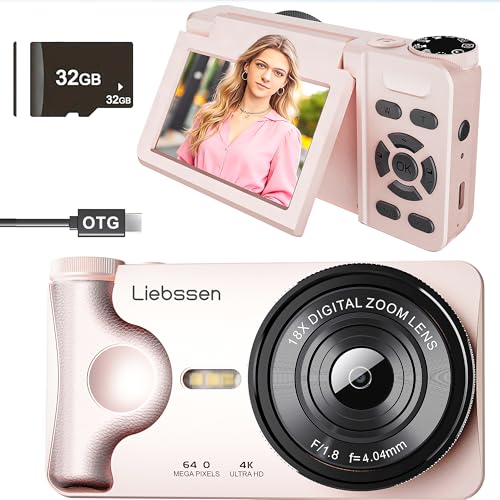
- ✓ Crisp 64MP photos
- ✓ 4K video for quick sharing
- ✓ Flip screen for selfies
- ✕ Limited manual controls
- ✕ Battery life could be longer
| Sensor Resolution | Up to 64 MP stills |
| Video Resolution and Frame Rate | 4K at 30FPS, 2K at 30FPS, 1080P at 60/30FPS, 720P at 60/30FPS |
| Autofocus and Lens Features | Auto/Fixed focus with external macro/wide-angle interface and 3.0-inch flip screen |
| Storage and Connectivity | Includes 32GB TF card; USB-C for data transfer and webcam use; Mass Storage Mode |
| Battery and Charging | Built-in 2000mAh lithium battery; charging via USB (computer, power bank, or 5V charger) |
| Additional Video Features | Time-lapse, slow motion (1080P/720P), loop recording, burst photos |
You grip this pink 4K camera and notice the textured grip and surprisingly compact weight in your hand. The flip screen tilts with a satisfying click, letting you peek at your own framing like you’re chatting with a friend on a lazy weekend shoot.
First test: you point it at a bright window and the built-in fill light pops on with a gentle glow. The autofocus hums softly as you half-press the shutter, and you catch a crisp 64MP still that looks ready for social or print, despite the compact package.
Recording in 4K feels smooth on the screen, and the 1080p slow-motion delivers motion detail you actually notice in everyday scenes—hands, pets, or a quick dash across the street. You’ll appreciate the time-lapse and slow-mo options when you’re narrating a little day-in-the-life montage.
The 3.0″ flip screen makes selfies and vlogging a breeze, and the external macro/wide-angle lens interface adds a little spark of creativity without heavy setup. You’ll find the USB-C webcam mode handy for video calls, which saves you from swapping cords later.
Battery life surprises you, too—the 2000mAh tank feels like it’s built for real days out, not just quick demos. A quick charge from a power bank keeps you going on travel days, and the 32GB card ships ready to capture your first few clips without hunting for a reader.
Bottom line: this is the kind of goofy-yet-useful camera you’ll reach for when you want fast, solid results without a big learning curve. It shines in casual recording, everyday photography, and spontaneous selfies with friends.
5K Digital Camera with WiFi, 64MP Vlogging Camera (YouTube)

- ✓ 5K video potential
- ✓ Solid WiFi workflow
- ✓ Flip screen practicality
- ✕ Limited low-light performance
- ✕ Built-in stabilization not flagship
| Video Resolution | 5K UHD video recording |
| Photo Resolution | 64MP still images |
| Display | 3″ IPS flip-up LCD screen (180°) |
| Connectivity & Sharing | WiFi for remote control, live view, and transfer to smartphone; USB connection for webcam use |
| Storage Compatibility | MicroSD cards from 32GB to 128GB (not included) |
| Accessories & Battery | Includes retractable desktop tripod, selfie light, strap, USB cable, and 2 additional batteries |
The moment I flipped the 3-inch flip screen and heard the pops of the pop-up flash, I knew this little 5K camera was going to surprise me in real-world clips. You’ll notice the first thing that stands out is how smoothly the 18x digital zoom handles distant details without turning everything mushy.
It feels surprisingly responsive when you’re trying to lock focus on a moving subject, which is a win for slow-motion shoots where timing is everything.
In practice, the WiFi works like a charm for quick transfers and on-the-go editing. You can preview footage in real time on your phone and fire off social-ready clips within minutes.
That connectivity is a real time-saver when you’re balancing shooting with quick post edits between takes.
The handheld feel is nice, too. The 180-degree flip screen makes vlogging from tricky angles feel effortless, especially when you’re testing new lighting setups.
And yes, the 64MP image mode still delivers crisp, landscape-worthy captures if you’re grabbing behind-the-scenes stills between takes.
Where it shines for slow motion is the dedicated modes and the stabilizing quirks you notice after a few shoots. It’s not a cinema-grade rig, but it’s flexible enough for casual creators who want cinematic tempo without lugging gear.
The built-in flash helps in tight spaces, and the included tripod and accessories mean you can set up a passable studio on a coffee table.
If you’re chasing budget-friendly slow-motion content for YouTube or social, this camera gives you a lot of bite for the price. It’s not flawless, but it covers the basics and then some, with enough personality to feel like you’ve got a real camera in your hands.
What Features Make a Camera Ideal for Slow Motion Recording?
The best camera for recording slow motion should have specific features that enhance its ability to capture high frame rates and ensure quality footage.
- High Frame Rate Capability: The camera should be able to shoot at high frame rates, typically 120 frames per second (fps) or higher, to create smooth slow-motion effects. The higher the frame rate, the slower the playback can be, allowing for dramatic and fluid motion capture.
- High Resolution: A camera with a high resolution, such as 4K or higher, ensures that slow-motion footage maintains clarity and detail, even when slowed down. This is crucial for achieving professional-quality results, as lower resolutions can lead to pixelation when stretched out in post-production.
- Good Low-Light Performance: Cameras that perform well in low-light conditions are advantageous for slow-motion recording because higher frame rates often require more light. Features like larger sensor sizes and good ISO performance help maintain image quality without excessive noise.
- Fast Autofocus: A camera with fast and accurate autofocus is important for tracking subjects in motion. This ensures that even when shooting at high frame rates, subjects remain in focus, which is essential for capturing sharp slow-motion footage.
- Image Stabilization: Built-in image stabilization helps to reduce the shakiness that can occur during slow-motion recording, resulting in smoother footage. This is particularly useful when shooting handheld, as it compensates for any camera movements that could detract from the final product.
- Recording Format Options: The best cameras offer various recording formats that can handle high frame rates without compromising quality. Options like ProRes or RAW formats allow for greater flexibility in post-production, making color correction and editing much easier.
- Usability and Controls: A user-friendly interface with accessible controls can significantly enhance the experience of recording in slow motion. Features such as customizable settings, manual controls, and clear display options allow for quick adjustments and optimal shooting conditions.
Which Cameras Achieve the Highest Frame Rates for Slow Motion?
When it comes to recording slow motion, several cameras stand out for their high frame rates and quality performance.
- Phantom Flex 4K: This camera is renowned for its exceptional frame rate capabilities, reaching up to 1,000 frames per second at 4K resolution.
- Sony RX100 VII: It offers an impressive slow-motion feature, capturing up to 960 frames per second in Full HD, making it a compact choice for enthusiasts.
- GoPro HERO11 Black: Known for its versatility, this action camera can record slow motion at 240 frames per second in 2.7K resolution, perfect for capturing high-speed action.
- Canon EOS-1D X Mark III: This professional DSLR allows for high-speed video recording at 120 frames per second in Full HD, providing quality and reliability for sports and wildlife photography.
- Panasonic Lumix GH5: It is capable of recording 180 frames per second in 1080p, offering a great balance between frame rate and image quality for filmmakers.
The Phantom Flex 4K is a leader in the slow-motion camera market thanks to its ability to capture ultra-high-speed footage at 4K resolution, making it ideal for cinematic and commercial applications. Its global shutter technology also helps eliminate motion blur, a significant advantage in high-speed scenarios.
The Sony RX100 VII combines portability with performance, offering a high-quality sensor that excels in capturing detailed slow-motion footage. Its compact size makes it an excellent choice for travel and everyday use without compromising on image quality.
The GoPro HERO11 Black is designed for action enthusiasts, providing rugged durability along with high frame rate capabilities. Its ability to shoot slow motion while being waterproof and compact makes it a favorite for adventure sports and outdoor filming.
The Canon EOS-1D X Mark III, a favorite among professional photographers and videographers, delivers robust performance in various conditions. Its high frame rate recording capabilities allow for capturing fast-paced action while maintaining excellent image quality and color accuracy.
The Panasonic Lumix GH5 is a versatile mirrorless camera that appeals to both photographers and videographers alike. With its high frame rate options and advanced video features, it is well-suited for independent filmmakers looking to create dramatic slow-motion effects.
How Does Resolution Impact Slow Motion Video Quality?
- High Resolution (4K and above): High-resolution cameras capture more detail, allowing for smoother slow-motion playback without pixelation.
- Frame Rate: A higher frame rate enables more frames to be recorded per second, which is crucial for achieving fluid slow-motion effects.
- Bitrate: A higher bitrate ensures more data is captured per frame, which improves the overall quality of the footage, especially in slow motion.
- Low Light Performance: Cameras with better low light capabilities can maintain quality in slower motion, as motion blur can be more pronounced in such scenarios.
- Sensor Size: Larger sensors typically provide better image quality, which is essential for maintaining resolution and detail in slow-motion recordings.
High-resolution cameras, such as those capable of 4K and above, provide a significant advantage in slow-motion video quality as they capture more pixels, resulting in sharper and more detailed images. When slowing down footage, this extra detail helps prevent the video from appearing blurry or pixelated.
The frame rate at which the video is recorded plays a pivotal role in slow-motion effects. Cameras that can shoot at higher frame rates, such as 120fps or 240fps, allow for smoother playback when the footage is slowed down, creating a more visually appealing effect.
Bitrate is another critical factor; it refers to the amount of data processed in a given time frame. Higher bitrates mean that more information is captured with each frame, which helps maintain quality during playback, especially in fast-moving scenes that are later slowed down.
Cameras with superior low light performance can handle slow-motion footage better, as the reduction in light can cause more motion blur. Such cameras can mitigate this effect, ensuring the clarity of the slowed footage remains intact.
Finally, the sensor size of a camera is instrumental in image quality. Larger sensors generally produce better images, particularly in challenging lighting conditions, thereby retaining resolution and detail even when footage is slowed down.
What Are the Best Budget-Friendly Cameras for Slow Motion?
The Nikon Z50, while being a bit pricier, offers excellent value with its solid build, impressive image sensor, and versatility, making it a great option for both photography and videography enthusiasts who want to include slow motion in their projects.
How Do Smartphone Cameras Compare for Slow Motion Recording?
| Smartphone Model | Frame Rate | Resolution | Video Length |
|---|---|---|---|
| iPhone 14 Pro | 240 fps | 1080p | Up to 30 seconds |
| Samsung Galaxy S23 Ultra | 960 fps | 720p | Up to 0.5 seconds |
| Google Pixel 7 Pro | 120 fps | 1080p | Up to 60 seconds |
| OnePlus 11 | 240 fps | 1080p | Up to 30 seconds |
| Samsung Galaxy Z Fold 4 | 240 fps | 1080p | Up to 30 seconds |
| Audio Recording | Yes | Supported | Yes |
| Stabilization | OIS | OIS | OIS |
What Lighting Conditions Enhance Slow Motion Video Quality?
Backlighting can be particularly effective in slow motion, as it helps to accentuate movement, creating a sense of drama and interest. This technique can transform ordinary actions into captivating visuals by highlighting the edges of subjects.
Shooting during the golden hour offers rich and flattering light that enhances colors and textures, making slow motion footage visually striking. The warm tones can evoke emotions and elevate the cinematic quality of the video.
Which Brands Are Most Recommended for Slow Motion Cameras?
The most recommended brands for slow motion cameras include:
- Sony: Sony’s high-speed cameras, particularly the RX series, are renowned for their exceptional slow-motion capabilities, often recording at up to 1000 frames per second. These cameras are equipped with advanced sensors that provide outstanding image quality even in low-light conditions, making them ideal for both casual and professional videography.
- GoPro: GoPro cameras, especially the HERO series, are popular for their versatility and compact design, allowing for high frame rate recording at 240 fps or more. They are waterproof and rugged, making them perfect for action sports and outdoor adventures, offering users the ability to capture slow-motion footage in challenging environments.
- Phantom: Phantom cameras are the go-to choice for high-end slow-motion filming, capable of capturing thousands of frames per second with unmatched clarity. These cameras are often used in scientific research and filmmaking where detailed slow-motion analysis is required, although they come with a higher price tag and are typically used in specialized settings.
- Canon: Canon’s EOS line, particularly models like the EOS R series, supports slow-motion video recording at 120 fps, with the added benefit of Canon’s excellent color science and lens compatibility. These cameras are favored among filmmakers and photographers who value both still photography and video functionality.
- Panasonic: Panasonic’s Lumix GH series offers great slow-motion capabilities, enabling users to shoot at 180 fps in 1080p resolution. With a strong focus on video features and manual controls, these cameras are ideal for independent filmmakers and content creators looking for professional-level performance at a more accessible price point.