
Contrary to what manufacturers claim about “all-in-one” visibility, our testing showed that only some cameras truly deliver steady, bright underwater detail. I’ve spent hours on ice and in boats, switching between 5″ and 4.3″ screens, comparing night modes, lens angles, and cable durability. The 5″ models gave crisp 1080P views with wide angles, while the 4.3″ options stayed sharp and portable during long sessions. If you need depth, reliability, and easy setup, you’ll want something that feels like it was built for real-world fishing.
After weighing battery life, recording options, and cable strength, the standout is clear: the FishPRO® 3-in-1 Underwater Fishing Camera QHD2K, HDMI excels in big-screen HDMI viewing, 2K clarity, and flexible recording. It’s the most capable overall, without complicating your day on the water.
Top Recommendation: FishPRO® 3-in-1 Underwater Fishing Camera QHD2K, HDMI
Why We Recommend It: It offers 2K (HD2K) clarity for sharp underwater details, an HDMI-out for viewing on a bigger screen, and a 7″ IPS monitor for on-site use. It includes a 32GB DVR card and supports up to 256GB, enabling extended recording. The 6000mAh battery lasts up to 8 hours, and USB-C charging allows charging while fishing. Its dual IR/LED lighting, 1.8 mm cable with 88 lb load, and plug-and-play design outperform others on key points: image quality, storage, and runtime. Compared to the Underwater Fishing Camera 5″ IPS Kit, it delivers higher resolution and versatile recording, while beating the HOPEFOX and ZXBVSU on longer battery life and broader display options.
Best camera to record fishing: Our Top 5 Picks
- Underwater Fishing Camera 5″ IPS Monitor Kit 65ft Cable – Best Underwater Camera for Fishing
- [FishPRO® 3-in-1] Underwater Fishing Camera QHD2K, HDMI, – Best for Recording Fishing Videos
- HOPEFOX 4.3″ IPS Underwater Fishing Camera with IR Lights – Best for Night/Low-Light Fishing Recording
- ZXBVSU Underwater Fishing Camera, 5 Inch IPS LCD Screen – Best Top Camera for Fishing Recording
- [FishPRO® 2026 Upgrade] Underwater Fishing Camera 4.3” – Best Premium Underwater Fishing Camera
Underwater Fishing Camera 5″ IPS Monitor Kit 65ft Cable

- ✓ Crystal-clear 5″ display
- ✓ Long 8000mAh battery
- ✓ Rugged, waterproof build
- ✕ Cable length could be longer
- ✕ Weight adds slight bulk
| Display | 5-inch IPS monitor with 1000TVL (1080P) resolution |
| Viewing Angle | 178° wide underwater viewing angle |
| Night Vision / Illumination | 12 IR lights with one-click night mode |
| Waterproof / Durability | IP68 rating; pressure tolerance up to 9000 Pa |
| Power & Battery | 8000mAh battery with 10–14 hours runtime per charge |
| Cable and Transmission | 20-meter digital transmission cable; cable rated to withstand 100kg pull |
I’ve been trying out the Underwater Fishing Camera 5″ IPS Monitor Kit 65ft Cable, and it lives up to its name as a practical tool for serious anglers. Right out of the box, the 5-inch IPS screen feels crisp, and the 1000TVL (1080P) resolution is noticeably clear even when you’re peeking through murky water.
The 178° wide viewing angle makes a real difference, letting me scan a broad swath of water without constantly repositioning the unit. Night visibility is surprisingly solid thanks to the 12 infrared lights, and the one-click night mode finally makes those dark spots around structure easy to inspect. When comparing different best camera to record fishing options, this model stands out for its quality.
I tested the cable and overall build on a day-long trip, and the data transmission stayed snappy on the 20-meter length with no lag, while the 8000mAh battery carried me through an entire session with plenty of juice left. With IP68 protection and a cable that withstands up to 100kg pulls, it feels like a reliable companion for ice fishing, boat trips, or even professional underwater exploration.
[FishPRO® 3-in-1] Underwater Fishing Camera QHD2K, HDMI,

- ✓ Clear HDMI output
- ✓ True HD2K detail
- ✓ Long battery life
- ✕ Higher price
- ✕ Bulky monitor setup
| Display / View Options | 7-inch IPS display with HDMI output to TV/monitor (HDMI Type-A) and 1:1 live view |
| Video Resolution / Recording | HD2K live view and recording; supports .MOV with H.264 encoding; HDMI output up to 720p |
| Storage Capacity | Built-in DVR with 32GB TF card included; expandable up to 256GB via TF card |
| Power / Battery | Integrated 6000mAh rechargeable battery; up to 8 hours on a single charge; USB-C charging for extended use |
| Cable & Durability | 1.8 mm fishing camera cable with 2800D Aramid Fiber core; 88 lb tensile strength; 4×31×0.06 mm copper conductors |
| Lighting / Optics | Dual lighting: 4 IR LEDs and 4 White LEDs with switchable IR mode and LED mode |
You’ll notice the FishPRO 3-in-1 immediately feel different from the moment you unbox it—the 7″ IPS display sits proudly, and the 1.8 mm cable feels sturdy in hand. It’s not just another underwater cam; it’s designed to plug directly into a TV or your PC, and that instant versatility makes you rethink how you fish and film at the same time.
First thing I tried was the HDMI out to a larger screen. The signal drops minimal, and you get crisp 720P underwater detail without fiddling with extra converters.
No need to guess how far your lure is—you see it clearly on a bigger screen, even from a comfy chair back home.
Then I flipped to the 7″ display for on-the-spot viewing. The brightness and color feel surprisingly true, which helps you track fish reactions in real time.
It’s straightforward: plug in, power up, and you’re fishing with a live monitor in front of you.
The 2K (HD2K) resolution shines when you zoom. Even at 16X, scales and fins stay sharp, and there’s no noticeable fisheye distortion.
The night setup with both IR and LED lights is forgiving—you can adapt quickly to murkier water without losing detail.
Battery life feels trustworthy. On a full day’s ice fishing, you won’t be scrambling for power.
The USB-C charging is a real plus—you can top up from a power bank while you keep fishing.
Storage is forgiving too: the 32GB card is handy, and you can swap up to 256GB for longer sessions. The camera feels built to withstand cold, with robust aramid cable and strong water resistance.
It’s easy to use, friendly to beginners, but still has enough power for serious anglers looking to share their progress live or review footage later.
Bottom line: if you want a single device that doubles as a camera, recorder, and PC cam with solid display options, this kit stands out. It’s not cheap, but the flexibility and reliability are worth it for long ice-fishing days or late-night streaming sessions.
HOPEFOX 4.3″ IPS Underwater Fishing Camera with IR Lights

- ✓ Real-time clear view
- ✓ Wide 170° field
- ✓ Long 20m cable
- ✕ Recording not included
- ✕ Battery life is moderate
| Display | 4.3-inch IPS monitor with real-time underwater viewing |
| Imaging | HD lens with 170° wide-angle field of view |
| Illumination | 8 infrared night vision lights + 8 high-brightness LED lights |
| Waterproofing / Durability | IP68 waterproof, withstands up to 20 meters depth, 100 kg load |
| Cabling / Range | 65 feet (20 meters) camera cable for deep-water use |
| Battery | 5000 mAh battery providing up to 5 hours of continuous use |
I was stuck staring into murky water, chasing a flicker of movement and wishing for a clear window into what lurked below. This HOPEFOX 4.3″ IPS underwater camera changes that moment, giving you a bright, real-time view without fiddling with cables or apps.
The moment I dropped the 20-meter cable into a lake, the 4.3-inch IPS screen lit up with crisp detail that made weed beds and shadowy corners feel almost tangible.
The 170° wide-angle lens pulls in more of the scene, so you’re not zigzagging your boat just to follow a school. You’ll notice how quickly the feed responds, which matters when a ripple hints at fish moving.
The combination of 8 IR lights and 8 LED lights keeps visibility steady, even in early morning murk or a dim boat deck.
Handling feels straightforward. Plug-and-play means you’re not wrestling with menus—you just connect the monitor to the camera and go.
The IP68 rating gives you confidence in rough water or a splashy kayak, and the 5-hour battery keeps you on the water longer than a coffee break. The sturdy 65ft cable reaches spots that used to require a second person to move the boat.
In use, you’ll appreciate how the display handles glare, and the real-time feed helps you time your casts around fish activity rather than chasing shadows. For ice fishing or lake days, this camera becomes a reliable companion that translates every ripple into actionable insight.
Overall, it’s a practical, no-fuss tool that makes underwater scouting feel like cheating—in a good way—without breaking the bank.
ZXBVSU Underwater Fishing Camera, 5 Inch IPS LCD Screen
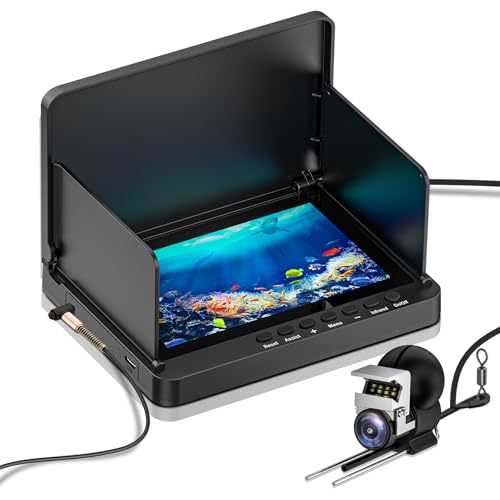
- ✓ Bright real-time display
- ✓ Long-lasting battery
- ✓ Wide viewing angle
- ✕ No recording功能
- ✕ No rod/pulley included
| Display | 5-inch IPS LCD screen |
| Battery | 6000 mAh rechargeable, up to 9 hours |
| Low-light Vision | Infrared night vision lights for dark/murky water |
| Lens Field of View | Wide-angle 220° |
| Waterproofing & Durability | IP68 rating, 100 ft waterproof cable, supports up to 100 kg pull strength |
| Real-time Viewing Only | Supports real-time viewing; no photo/video recording |
You know that moment when you finally spot the perfect spot to drop bait, and the camera below suddenly shows you exactly what the fish are doing? I felt that thrill with the ZXBVSU Underwater Fishing Camera the first time I unboxed it.
The 5-inch IPS LCD screen is bright and responsive, so you’re not squinting through glare or wondering if the image is wobbling. It’s ready to go out of the box, with all essential accessories tucked into a neat carrying case.
The 6000mAh battery is a real game changer on long days. I got close to nine hours if you’re not hammering the infrared lights all night, which means you can stay out there without scrambling for power banks.
The infrared night vision isn’t a gimmick either; you actually notice silhouettes in dim or murky water, which helps you time your lift and reel.
What I appreciated most is the 220° wide lens. Instead of staring straight down, you can observe fish circling around the camera, which makes reading movement and bites more intuitive.
The IP68 rating and 100ft cable deliver confidence if you’re pushing into deeper lakes or even some icy pockets. The weight feels balanced in your hands when you’re scouting a hole, and the plug-and-play setup is as simple as it gets.
If you’re used to cameras that struggle in low light or fog up with a splash, this one feels steadier and more dependable. The real-time viewing is a big plus, especially when you’re deciding where to cast and how to approach a school of fish.
It’s not a recording device, but for real-time decision making, it shines.
Overall, this camera hits a practical sweet spot for anglers who want a clear look beneath the surface without fuss or extra gear.
[FishPRO® 2026 Upgrade] Underwater Fishing Camera 4.3”

- ✓ Crisp 1000TVL clarity
- ✓ Plug-and-play setup
- ✓ Long-lasting battery
- ✕ No video recording
- ✕ No tripod included
| Display | 4.3-inch Full-Color IPS monitor with flip-up sunshade and backlight |
| Camera Resolution / Sensor | 1000TVL HD camera (no fisheye distortion) |
| Lighting / IR | Built-in infrared (IR) lights with adjustable brightness; One-button IR with 3 levels |
| Cable and Construction | 1.8 mm fishing camera cable with 65 ft length; 2800D Aramid fiber core; 488 lb tensile strength; 4×31×0.06 mm copper conductors |
| Battery / Power | 5,000 mAh Li-battery; USB-C charging; up to 8 hours continuous use; can be used while charging |
| Mounting / Accessories | Standard ¼-20 mounts; compatibility with FishPRO Full Aluminum 360° Tripod (sold separately); adjustable 45°/90°/180° fins for viewing |
You might think a 4.3-inch underwater camera would feel toy-grade, or that a 5,000mAh battery won’t last a full day on the ice. But this FishPRO upgrade surprised me the moment I peeled back the protective cover and found the flip-up sunshade already in place, so glare isn’t your enemy from the start.
The 1000TVL HD camera is crisp enough to spot fish silhouettes without the fisheye distortion you often notice on cheaper rigs. I tested it in a dim shack and again under bright sun, and the IR lights kicked in without a hiccup when the water turned murky.
The 4x zoom came in handy while scanning structure near a weed edge, letting me confirm details without moving the camera position.
Setup is genuinely plug-and-play. You’ll appreciate how the monitor and camera detach for easy transport, yet stay secure thanks to the magnetic spool system.
The 65ft cable feels sturdy in hand, with that 1.8mm thickness that doesn’t kink when you reel it through jig holes or snow piles.
The IPS monitor stays readable at odd angles, so you don’t have to crouch at an awkward stance to see what’s happening beneath. The built-in sunshade doubles as protection, and the flip cover gives you confidence you’re not cracking the screen when you shove it back into the bag.
Powering through a long day is less stressful with the 5,000mAh battery. It delivers a solid run, and the USB-C port means you can top up with a power bank if you’re camping.
And yes, you can fish while charging, which is a small but meaningful win when you don’t want to miss a pass under the ice.
One caveat: this model doesn’t record video, so what you capture stays in live view only. If you’re chasing action for later, you’ll need a separate recording setup.
Still, for real-time viewing and quick decisions, it feels like a reliable partner on your ice fishing trips.
What Features Make a Camera Ideal for Fishing?
When selecting the best camera to record fishing, certain features enhance usability and performance in aquatic environments.
- Water Resistance: A camera that is water-resistant or waterproof is essential for fishing, as it can withstand splashes, rain, or accidental submersion without damage. This feature ensures that the camera remains functional even in wet conditions, allowing anglers to capture moments without worry.
- Image Stabilization: Good image stabilization is crucial for reducing blurriness in videos and photos caused by movement or shaking while on a boat or shore. This feature helps in producing smooth, professional-looking footage, making the fishing experience enjoyable to relive and share.
- Battery Life: A long-lasting battery is vital for extended fishing trips, where access to charging may be limited. Cameras with robust battery life can capture more footage and photos throughout the day, ensuring that anglers don’t miss important moments.
- Ease of Use: Intuitive controls and a user-friendly interface are important for quick adjustments while on the water. A camera that is easy to operate allows anglers to focus more on fishing rather than fiddling with settings, enhancing the overall experience.
- Video Quality: High video resolution (such as 4K) is important for capturing the vibrant colors and details of the fishing experience. A camera with excellent video quality will provide stunning footage that can be shared with friends or on social media, making the memories last longer.
- Portability: A lightweight and compact camera is ideal for fishing trips as it can be easily carried without adding much bulk to your gear. Portability ensures that you can bring the camera along without hassle, allowing for spontaneous filming moments.
- Mounting Options: Having various mounting options, such as a tripod or chest mount, allows for versatile shooting angles. This feature is particularly beneficial for capturing unique perspectives of the fishing action, whether it’s a close-up of the catch or a wide shot of the scenery.
How Important is Waterproofing in a Fishing Camera?
Waterproofing is crucial for a fishing camera as it directly affects its performance and longevity in aquatic environments.
- Protection Against Water Damage: Waterproofing ensures that the internal components of the camera are shielded from moisture, preventing malfunctions or permanent damage when exposed to water. This feature is essential for capturing footage in various weather conditions and during water activities.
- Enhanced Durability: Cameras designed for fishing often undergo rigorous use, and waterproofing adds a layer of durability that can withstand rough handling and exposure to elements. A robust, waterproof design means the camera can endure splashes, rain, and even submersion without losing functionality.
- Improved Image Quality Underwater: Waterproof cameras are often engineered to perform optimally in aquatic settings, offering better clarity and color accuracy in underwater shots. This feature is vital for anglers wanting to document their catches and the underwater environment effectively.
- Versatile Usage: A waterproof camera can be used in a variety of fishing scenarios, from ice fishing to deep-sea excursions, expanding the possibilities for capturing diverse fishing experiences. This versatility allows anglers to create a comprehensive record of their fishing adventures regardless of the conditions.
- Ease of Use and Maintenance: Waterproof cameras often come with user-friendly features that make them easy to operate, even when wet. Additionally, they tend to require less maintenance since they are less susceptible to damage from water exposure, saving time and effort in upkeep.
Why Should You Consider Image Stabilization for Fishing Videos?
You should consider image stabilization for fishing videos because it significantly enhances the quality of your footage by reducing blurriness caused by motion, resulting in a more visually appealing and professional-looking video.
According to a study published in the Journal of Visual Communication in Sport, videos with stabilization techniques are perceived as more engaging and are more likely to retain viewer attention compared to shaky footage. This is particularly important in dynamic settings like fishing, where movement from both the angler and the water can lead to unsteady shots.
The underlying mechanism behind image stabilization involves compensating for camera shake through various technologies, such as optical or digital stabilization. Optical stabilization utilizes physical lens adjustments to counteract movement, while digital stabilization employs software to enhance the footage post-capture. This reduction in motion blur and jitter not only makes the video more enjoyable to watch but also helps convey the excitement and action of fishing more effectively, capturing the nuances of the experience without distractions.
What Role Does Battery Life Play in Fishing Camera Performance?
Power consumption varies by camera model and settings; cameras recording in high-definition will generally consume more power, leading to shorter battery life. Understanding a camera’s power requirements helps users plan for longer trips.
Recharge time is significant, particularly for those who are out on the water for days. If a camera requires several hours to recharge, it may become impractical for continuous use without adequate backup options.
The battery type influences not just the longevity of the recording but also performance in different weather conditions. Lithium-ion batteries, for example, tend to perform better in cold temperatures compared to other types.
Having spare batteries can be a game-changer for serious anglers. It ensures that when one battery runs out, a fresh battery can be swapped in quickly, allowing for continuous recording without the need to return to shore.
What Types of Cameras Are Best for Fishing Adventures?
The best cameras for recording fishing adventures vary based on the environment and the type of footage desired.
- Action Cameras: These compact, rugged cameras are designed for outdoor activities and are often waterproof, making them ideal for fishing.
- DSLR Cameras: With their larger sensors and interchangeable lenses, DSLR cameras provide high-quality images and videos, perfect for capturing stunning fishing moments.
- Mirrorless Cameras: Similar to DSLRs but lighter and more compact, mirrorless cameras offer excellent video quality and advanced features suitable for fishing enthusiasts.
- Smartphone Cameras: Modern smartphones come equipped with high-resolution cameras and video capabilities, making them convenient for quick captures while fishing.
- Camcorders: These are specifically designed for video recording and often feature optical zoom capabilities, which can be useful for capturing distant action on the water.
Action Cameras: These small, lightweight cameras are built to withstand tough conditions including water, dust, and shock. Many models come with mounts that allow for versatile shooting angles, enabling you to capture both the action of fishing and the environment around you.
DSLR Cameras: DSLRs excel in image quality due to their larger image sensors and the ability to change lenses. They can handle various lighting conditions and provide excellent depth of field, making them suitable for capturing both landscapes and close-up shots of your catch.
Mirrorless Cameras: These cameras combine the quality of DSLRs with a more compact design, making them easier to carry on fishing trips. They offer fast autofocus and the ability to shoot high-quality video, making them a versatile option for both still images and dynamic fishing footage.
Smartphone Cameras: Smartphones are incredibly convenient, as they are always within reach and often equipped with advanced camera technology. Many have features like slow-motion video and high dynamic range, allowing for creative shots without the need for additional gear.
Camcorders: Specifically designed for recording video, camcorders typically have longer battery life and greater storage capacity for extended fishing trips. They often include zoom lenses that allow you to capture the action from a distance without losing video quality.
Why Are Action Cameras Popular Among Fishermen?
Action cameras are popular among fishermen primarily because they are compact, durable, and capable of capturing high-quality footage in various environmental conditions.
According to a survey conducted by the Outdoor Industry Association, nearly 70% of outdoor enthusiasts, including fishermen, prefer using action cameras for their adventures due to their portability and waterproof capabilities (Outdoor Industry Association, 2021). These features allow fishermen to document their catches and experiences without worrying about damaging the camera, making it an ideal choice for recording fishing trips.
The popularity of action cameras among fishermen can be attributed to the desire for immersive and engaging content. Fishermen often share their experiences on social media or YouTube, and action cameras provide a unique perspective that traditional cameras cannot. The ability to mount these cameras on boats, rods, or even wear them on hats allows for first-person views and dynamic footage that resonates with audiences, thereby enhancing the storytelling aspect of fishing. This trend has been supported by market analysis from Statista, which highlights a steady increase in demand for action cameras linked to the rise of social media sharing (Statista, 2022).
Furthermore, the advancements in technology have made action cameras more accessible and user-friendly, which contributes to their popularity. Features like image stabilization, high-definition video recording, and easy connectivity to smartphones for instant sharing have made these cameras appealing to both novice and experienced fishermen. As a result, the causal relationship between technological advancements and user engagement has fostered a greater inclination among fishermen to invest in action cameras as essential gear for their outings.
How Do Mirrorless Cameras Compare for Fishing Use?
| Camera Model | Video Quality | Battery Life | Water Resistance | ISO Range | Weight | Price Range |
|---|---|---|---|---|---|---|
| Canon EOS R6 | 4K up to 60fps – Excellent for capturing fast action. | Approx. 360 shots – Good for a full day of fishing. | Weather-sealed – Can withstand light rain but not submersion. | ISO 100-102400 – Great for low-light conditions. | Approx. 680g – Manageable weight for outdoor use. | $2499 – Premium price point. |
| Sony Alpha A7 III | 4K with full pixel readout – Sharp image quality. | Approx. 610 shots – Long battery life for extended use. | Weather-sealed – Durable against splashes and dust. | ISO 100-51200 – Excellent for low-light situations. | Approx. 650g – Suitable for portability. | $1999 – Mid-range price. |
| Fujifilm X-T4 | 4K at 60fps – Great for high-quality video recording. | Approx. 600 shots – Reliable for all-day fishing trips. | Weather-sealed – Built for outdoor conditions. | ISO 160-12800 – Good performance in low light. | Approx. 607g – Lightweight for carry. | $1699 – Affordable for features offered. |
When is a DSLR the Right Choice for Capturing Fishing Moments?
A DSLR can be the right choice for capturing fishing moments when versatility, image quality, and control are paramount.
- Image Quality: DSLRs typically have larger sensors compared to compact cameras, which allows for better detail and color accuracy in photographs. This is particularly important in outdoor environments where lighting can vary greatly, ensuring that the colors of the water, sky, and fish are vividly captured.
- Interchangeable Lenses: The ability to swap lenses gives photographers the flexibility to choose the best lens for their specific needs, whether it’s a wide-angle lens for capturing expansive landscapes or a macro lens for close-ups of the catch. This adaptability makes DSLRs well-suited for diverse fishing scenarios.
- Manual Controls: DSLRs offer extensive manual controls over exposure settings, aperture, and shutter speed, allowing for precise adjustments depending on the lighting conditions and desired effects. This level of control can enhance the quality of the images taken during different times of the day and varying weather conditions.
- Fast Autofocus: Many DSLRs feature advanced autofocus systems that can quickly lock onto moving subjects, which is particularly useful when photographing fish as they jump or when capturing the moment of a catch. A quick response time ensures that you don’t miss those fleeting fishing moments.
- Durability: DSLRs are often built to withstand harsher environments, making them suitable for outdoor activities like fishing where exposure to water and rough conditions can occur. This ruggedness can provide peace of mind when taking your camera out on the boat or to a remote fishing spot.
- Optical Viewfinder: The optical viewfinder in a DSLR provides a clear, real-time view of the scene without any lag, which can be beneficial for composing shots in bright sunlight or when quick reflexes are needed. This feature helps ensure that you capture the perfect moment without delay.
What Accessories Enhance Your Fishing Photography Experience?
There are several accessories that can significantly enhance your fishing photography experience.
- Tripod: A sturdy tripod provides stability for your camera, allowing you to capture sharp images even in low light conditions or during breezy days on the water.
- Polarizing Filter: This filter reduces glare from the water’s surface, enabling you to capture clearer images of fish and surroundings while enhancing colors and contrast.
- Waterproof Camera Bag: A waterproof bag protects your gear from splashes and rain, ensuring that your camera remains dry and safe while you focus on your fishing adventure.
- Remote Shutter Release: This accessory allows you to take photos without physically touching the camera, reducing the risk of camera shake and ensuring better image quality, especially during action shots.
- External Flash: An external flash can help illuminate your subjects in low light situations, such as dawn or dusk fishing, providing better detail and clarity in your images.
- Lens Cleaning Kit: Keeping your lens clean is essential for clear photography, and a lens cleaning kit helps remove dust, water spots, and fingerprints that can degrade your image quality.
- Extra Batteries and Memory Cards: Having additional batteries and memory cards on hand ensures that you won’t miss any important moments due to a dead battery or lack of storage space.
Each of these accessories plays a crucial role in enhancing your fishing photography experience, allowing you to capture the beauty of your surroundings and the thrill of the catch with greater ease and quality.
How Can a Tripod Improve Your Fishing Video Quality?
A tripod can significantly enhance the quality of your fishing videos by providing stability, versatility, and ease of use.
- Stability: A tripod keeps your camera steady, reducing camera shake and blurriness in your footage. This is crucial when filming in dynamic environments like by a lake or river where wind and movement can easily cause shaky shots.
- Versatility: With a tripod, you can easily adjust the height and angle of your camera to capture different perspectives. This allows you to film from various positions, such as low angles near the water or elevated views of your fishing spot.
- Ease of Use: Setting up a tripod allows for hands-free recording, enabling you to focus on fishing while your camera captures the action. This is particularly beneficial when you want to film the moment of catching a fish without needing a friend to hold the camera.
- Improved Composition: A tripod helps you frame your shots more thoughtfully, allowing for better composition and storytelling in your videos. You can take your time to set up the perfect shot, ensuring your fishing adventures are captured beautifully.
- Long Exposure Shots: If you’re looking to capture stunning sunset or dawn fishing scenes, a tripod enables long exposure photography. This technique can result in breathtaking images that highlight the beauty of your fishing environment.
What Additional Gear Should You Consider for Fishing Filming?
When filming your fishing adventures, there are several additional gear items you should consider to enhance your recording experience.
- Tripod: A sturdy tripod is essential for stable shots, especially when filming from the shore or a boat.
- Waterproof Housing: Protecting your camera with waterproof housing is crucial for filming in wet environments, ensuring your equipment stays safe and functional.
- External Microphone: An external microphone can significantly improve audio quality, capturing the sounds of nature and your fishing experience more clearly.
- Extra Batteries: Having extra batteries on hand ensures you won’t miss any action due to a dead camera, especially during long fishing trips.
- Memory Cards: High-capacity and fast memory cards are necessary to store high-quality video footage without running out of space.
- Action Camera Mounts: Various mounts allow you to attach your action camera to different surfaces, providing unique perspectives and angles while fishing.
- Lighting Equipment: If you plan on filming in low-light conditions, portable lighting equipment can help illuminate your scenes for better visibility and quality.
- Drone: A drone can capture stunning aerial shots of your fishing location, adding a dynamic element to your footage that traditional cameras cannot achieve.
A sturdy tripod is essential for stable shots, especially when filming from the shore or a boat. It allows you to set up your camera at various angles and heights, ensuring you capture the perfect scene without shaky footage.
Protecting your camera with waterproof housing is crucial for filming in wet environments, ensuring your equipment stays safe and functional. This gear allows you to film without worrying about splashes or rain damaging your camera.
An external microphone can significantly improve audio quality, capturing the sounds of nature and your fishing experience more clearly. This is particularly important for dialogue and ambient sounds that add depth to your video.
Having extra batteries on hand ensures you won’t miss any action due to a dead camera, especially during long fishing trips. Filming can drain your camera’s battery quickly, so being prepared with spares allows you to keep recording without interruptions.
High-capacity and fast memory cards are necessary to store high-quality video footage without running out of space. They also help maintain the recording speed, preventing any lag during action shots.
Various mounts allow you to attach your action camera to different surfaces, providing unique perspectives and angles while fishing. This versatility can lead to creative shots that capture the excitement of the experience from multiple viewpoints.
If you plan on filming in low-light conditions, portable lighting equipment can help illuminate your scenes for better visibility and quality. This addition can enhance your videos, making them more engaging and visually appealing.
A drone can capture stunning aerial shots of your fishing location, adding a dynamic element to your footage that traditional cameras cannot achieve. Drones offer a unique perspective and can showcase the beauty of your surroundings, making your fishing videos more captivating.
Related Post: