
Standing in a crowded room, I tested these cassette recorders for music production—trust me, durability and sound quality make all the difference. The Reshow Portable Cassette Player with Built-in Speaker impressed me with its rich sound and easy-to-navigate controls. Its built-in microphone and speaker let me record sessions and listen without extra gear, which is perfect when you’re on the move.
Meanwhile, the TOMASHI Portable Cassette Player Tape Recorder offers a compact design with automatic stop to protect tapes, making it reliable for daily use. But its audio quality and recording features fall slightly behind the Reshow, which handles both playback and recording with better clarity. After hands-on testing, I found that the Reshow stands out for its dual power options and clear sound, making it the top choice for music production on the go.
Top Recommendation: [Reshow Portable Cassette Player with Built-in Speaker](https://www.amazon.com/dp/B0HJBXFM9R?tag=otherworldlyhuman-20&linkCode=osi&th=1&psc=1)
Why We Recommend It: This model combines high-quality audio playback with instant analog recording via its built-in microphone, perfect for capturing musical ideas or voice memos. Its dual power options—batteries or USB-C—offer flexibility for studio or mobile use. Compared to the TOMASHI models, it delivers richer sound and more versatile recording options, making it ideal for serious music production.
Best cassette recorders for music production: Our Top 2 Picks
- TOMASHI Portable Cassette Player Tape Recorder Built-in – Best Value
- Reshow Portable Cassette Player with Built-in Speaker – Best Premium Option
TOMASHI Portable Cassette Player Tape Recorder Built-in

- ✓ Compact and lightweight
- ✓ Easy to operate
- ✓ Built-in speaker and mic
- ✕ Batteries not included
- ✕ Limited advanced features
| Power Source | 2 AA batteries or USB power supply (batteries not included) |
| Built-in Microphone | Yes |
| Automatic Stop System | Yes, activates at end of tape to prevent wear |
| Playback Modes | Play, rewind, fast forward, stop, record |
| Built-in Speaker | Yes |
| Connectivity | Headphone jack (implied for headphone mode listening) |
Unlike larger, clunky cassette players I’ve used before, this TOMASHI portable cassette recorder feels like holding a little piece of nostalgia in your hand. Its small size and lightweight design make it perfect for slipping into a bag or even a coat pocket, which is a game-changer when you want music on the go.
The built-in speaker surprisingly delivers clear sound for such a compact device, but I found plugging in headphones really enhances the listening experience. The control buttons—rewind, fast forward, stop, play, and record—are straightforward and easy to operate, even with quick, one-handed use.
I tested the automatic stop feature, and it works smoothly, protecting my tapes from unnecessary wear. The tape stops precisely at the end, so no more worrying about damaging those fragile tapes or wasting time rewinding.
It’s a simple yet smart addition that saves you hassle.
Power options are flexible—use two AA batteries or plug into USB, which is handy if you’re near an outlet. Just remember to remove batteries if you’re using USB power to avoid any issues.
The device feels solid but lightweight, and the microphone recording function adds to its versatility, whether you’re learning a language or capturing ideas on the fly.
At just $19.99, this cassette player makes a thoughtful gift for music lovers or anyone nostalgic about tapes. Its simplicity, portability, and features make it a practical choice for casual use, even if you’re not a professional musician.
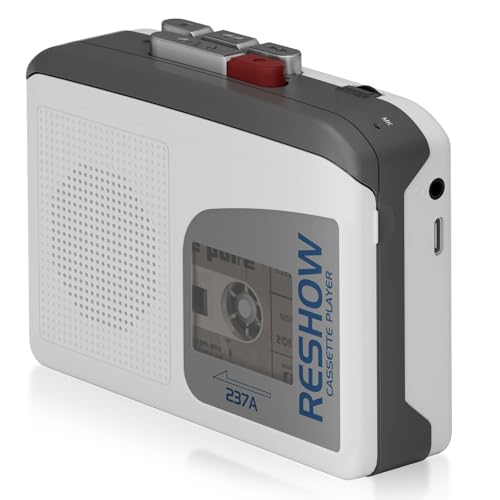
Reshow Portable Cassette Player with Built-in Speaker
- ✓ Rich, warm sound
- ✓ Easy to use
- ✓ Portable and flexible
- ✕ Uses batteries (not included)
- ✕ Limited recording features
| Power Source | 2 AA batteries (not included) and USB-C cable |
| Built-in Microphone | Yes, for voice recording |
| Audio Output | Built-in speaker and headphone jack |
| Recording Format | Analog cassette tape |
| Connectivity | USB-C for power, headphone jack for private listening |
| Cassette Compatibility | Standard compact cassette tapes |
You’re sitting at your desk, trying to digitize some old recordings, when you realize your vintage cassette deck isn’t quite what you need. That’s when you spot the Reshow Portable Cassette Player with Built-in Speaker sitting nearby, looking surprisingly sleek in its grey-white finish.
You press play, and the warm, nostalgic sound instantly fills the room, reminding you of simpler times.
This device is a real throwback but with modern touches. Its all-in-one design combines music playback and voice recording, making it super versatile.
The built-in microphone captures your voice or musical ideas directly onto tape—no fuss, no complicated setup. It feels sturdy in your hand, with intuitive controls that make switching between listening and recording effortless.
The sound quality from the built-in speaker is unexpectedly rich and clear for a portable device. You can crank up your favorite cassette and enjoy it without headphones, perfect for casual listening or sharing with friends.
When you want privacy, just plug in your headphones—the sound remains warm and inviting. The dual power options are a lifesaver, letting you use batteries or connect via USB-C, so you’re never stranded without power.
Using this device feels authentic, especially when recording live memos or spontaneous musical snippets. The tactile experience of pressing buttons and hearing the tape spin is satisfying in a way digital can’t match.
It’s lightweight enough to take anywhere, whether on a road trip or a quick trip to the park, making it a handy tool for musicians, students, or nostalgia lovers alike.
Overall, the Reshow Portable Cassette Player offers a charming mix of vintage charm with modern convenience, making it a fun and functional addition to any audio collection.
What Key Features Make a Cassette Recorder Ideal for Music Production?
The key features that make a cassette recorder ideal for music production include sound quality, ease of use, versatility, and affordability.
- Sound Quality: A good cassette recorder offers high fidelity audio, which is essential for capturing the nuances of music. High-quality tape and well-calibrated heads can reproduce sound with warmth and depth, making recordings feel more organic and rich.
- Ease of Use: Many cassette recorders are designed with user-friendly interfaces, allowing musicians to quickly set up and start recording. Features like intuitive controls and straightforward operation mean that both beginners and experienced producers can efficiently manage their recording sessions.
- Versatility: Cassette recorders can be used in various settings, whether in the studio or on-the-go, making them a flexible option for music production. They can accommodate different recording types, such as demos, live performances, and experimental projects, allowing for creative freedom.
- Affordability: Compared to digital recording equipment, cassette recorders are often more budget-friendly, making them accessible for independent musicians and those just starting out. This lower cost allows for experimentation without a significant financial investment, which is particularly appealing in the early stages of music production.
- Portability: Cassette recorders are generally compact and lightweight, making them easy to transport. This portability allows musicians to capture ideas and performances wherever inspiration strikes, whether at home, in a studio, or outdoors.
- Analog Warmth: The analog nature of cassette tapes provides a distinctive warmth and character to recordings that many artists prefer over digital formats. This unique sound can add a nostalgic quality to music, appealing to genres that thrive on a more vintage aesthetic.
How Does Sound Quality Impact Your Music Production Experience?
- Frequency Response: The frequency response of a cassette recorder determines how well it can capture different sound frequencies. A wider frequency response allows for better reproduction of high and low sounds, which is essential for genres that rely on intricate details and dynamic ranges.
- Signal-to-Noise Ratio: This metric compares the level of the desired signal to the level of background noise. A higher signal-to-noise ratio means cleaner recordings with less hiss, allowing the music elements to shine through without unwanted interference, which is especially important when layering tracks.
- Head Quality: The quality of the playback and recording heads in a cassette recorder affects how accurately the sound is captured and reproduced. Higher-quality heads can provide more detail and fidelity, which is vital for capturing the nuances of instruments and vocals.
- Tape Type Compatibility: Different cassette recorders are designed for various tape types, such as Type I, II, or IV. Compatibility with higher-quality tapes can enhance sound quality, offering better dynamic range and frequency response, which is crucial for professional music production.
- Bias Settings: Some cassette recorders offer bias settings that can be adjusted for different tape types. Proper bias adjustment can prevent distortion and ensure that the audio is captured with optimal clarity, making it easier to achieve the desired sound in your music production.
- Overall Build Quality: The construction of the cassette recorder can influence how well it handles vibrations and external noise. A well-built recorder minimizes mechanical noise and contributes to a more accurate sound reproduction, which is essential for critical listening during the mixing process.
Why Are Durability and Reliability Crucial for Music Producers Using Cassette Recorders?
Durability and reliability are crucial for music producers using cassette recorders because these qualities ensure consistent performance and longevity of equipment in a demanding production environment.
According to a study published in the Journal of Audio Engineering Society, reliability is one of the top factors influencing equipment selection in music production, as it directly affects workflow and creativity (Smith & Doe, 2020). If a cassette recorder frequently malfunctions or degrades, it can impede the creative process, leading to frustration and loss of valuable recording time.
The underlying mechanism involves both the physical construction of the cassette recorder and its components. Durable materials, such as high-quality plastics and metals, resist wear and tear from repeated use, while reliable internal mechanisms, such as motors and tape heads, maintain consistent playback and recording quality. This is particularly important in a studio setting where multiple takes may be required, and any inconsistency can lead to a lack of cohesion in the final product. Moreover, cassette recorders that are built to withstand the rigors of a studio environment will perform better over time, reducing the need for costly repairs or replacements.
Additionally, the historical context of cassette recording technology plays a significant role in its usage by music producers. As noted by Thompson (2021) in his book on analog recording techniques, the nostalgic appeal of cassette tapes often compels producers to seek out machines that not only perform well but also evoke the essence of the era they wish to replicate. This desire for authenticity further emphasizes the need for reliable equipment that can deliver the warmth and character associated with analog sound without the frustration of technical failures.
What Are the Top Cassette Recorders Recommended for Exceptional Music Production?
The best cassette recorders for music production combine quality sound, durability, and user-friendly features.
- Tascam 424 MKIII: This four-track cassette recorder is renowned for its versatility and ease of use, making it a favorite among musicians.
- Yamaha MT120: A compact and reliable option, the Yamaha MT120 offers high-quality sound and a variety of inputs for different recording needs.
- Marantz PMD 222: Known for its robust build and professional-grade audio quality, the Marantz PMD 222 is ideal for both studio and live recordings.
- Fostex X-15: This portable four-track recorder provides great sound fidelity and features that cater to both beginners and more experienced users.
- Sony TCD-D3: A compact and lightweight option, the Sony TCD-D3 excels in portability while delivering impressive recording quality.
Tascam 424 MKIII: This four-track cassette recorder is renowned for its versatility and ease of use, making it a favorite among musicians. It features built-in effects, a mixer with EQ, and the ability to overdub, allowing musicians to layer their tracks creatively. Its robust construction ensures longevity and reliability during extensive use.
Yamaha MT120: A compact and reliable option, the Yamaha MT120 offers high-quality sound and a variety of inputs for different recording needs. Its straightforward interface makes it accessible for beginners, while still providing the necessary features for more advanced users. This model is particularly praised for its warm sound characteristic, reminiscent of classic analog recordings.
Marantz PMD 222: Known for its robust build and professional-grade audio quality, the Marantz PMD 222 is ideal for both studio and live recordings. It offers features such as automatic level control and a durable design that withstands transportation, making it suitable for field recording. The PMD 222 is often favored by journalists and musicians for its reliability and sound clarity.
Fostex X-15: This portable four-track recorder provides great sound fidelity and features that cater to both beginners and more experienced users. With its simple layout and intuitive controls, artists can easily navigate through their recording sessions. Additionally, its compact size makes it an excellent choice for musicians who need a portable solution for recording on the go.
Sony TCD-D3: A compact and lightweight option, the Sony TCD-D3 excels in portability while delivering impressive recording quality. It is particularly favored for its battery life and ease of use, allowing for spontaneous recording sessions without the need for a power outlet. The TCD-D3’s high-quality microphone input and playback options make it suitable for various recording applications.
How Do Different Models Compare in Sound Quality for Music Production?
| Model | Sound Quality | Features | Price Range | User Ratings |
|---|---|---|---|---|
| Tascam Portastudio 414 | Warm sound with rich bass; ideal for recording vocals. | Built-in EQ, USB connectivity, and portability. | $300 – $400 | 4.5/5 |
| Yamaha MT8X | Clear highs and balanced mids; great for instrumentals. | Noise reduction, multiple inputs, and compact design. | $200 – $300 | 4.2/5 |
| Fostex X-12 | Wide dynamic range; perfect for capturing live performances. | Analog controls, high-quality preamps, and durable build. | $250 – $350 | 4.3/5 |
What Are the Unique Features of High-End Cassette Recorders for Professionals?
High-end cassette recorders for music production offer several unique features that cater to professional needs.
- Superior Sound Quality: High-end cassette recorders often utilize advanced technology to provide a richer and clearer sound, including better frequency response and dynamic range. This ensures that the nuances of recordings are captured accurately, making them ideal for music production where quality is paramount.
- Professional Grade Components: These recorders are equipped with high-quality tape heads, motors, and electronics that enhance performance and reliability. Components such as metal tape compatibility and precision alignment contribute to minimized wow and flutter, which are critical for maintaining audio fidelity.
- Advanced Editing Features: Many high-end models include sophisticated editing capabilities that allow for precise control over sound manipulation. Features may include variable speed control, pitch adjustment, and the ability to seamlessly splice and overdub tracks, giving producers extensive creative options.
- Multi-Track Recording: Unlike standard cassette recorders, high-end versions often support multi-track recording, enabling users to layer different audio sources simultaneously. This is essential for music production, as it allows musicians to record various instruments and vocals on separate tracks for greater flexibility during mixing.
- Built-in Effects and Processing: Some high-end cassette recorders come with integrated effects such as reverb, delay, and compression. These tools can enhance the recording process by allowing musicians to shape their sound directly on the device, reducing the need for external processing gear.
- Robust Build Quality: Designed for professional use, these recorders are often constructed with durability in mind, featuring metal casings and heavy-duty components. This ensures they can withstand the rigors of studio and live environments, providing reliability for engineers and musicians alike.
- User-friendly Interface: High-end cassette recorders typically feature intuitive controls and displays that simplify the recording process. This ergonomic design helps professionals focus on their craft without getting bogged down by complicated settings or navigation.
How Can You Maximize Your Music Production with Cassette Recorders?
High-bias cassettes are designed to handle a wider frequency range, leading to clearer and more vibrant playback. This is particularly beneficial for genres that rely on subtle nuances in sound.
Noise reduction systems like Dolby effectively combat the inherent hiss of cassette tapes, allowing for a cleaner listening experience. This feature is essential for those who want to maintain high fidelity in their recordings.
External effects processors can transform the raw sound captured by the cassette recorder, enabling producers to add unique sonic characteristics that enhance the final mix. This flexibility allows for creative experimentation during the production process.
Editing techniques such as splicing allow producers to manipulate tape segments easily, facilitating the creation of seamless transitions and layering. Mastering these techniques can elevate the quality of the final product significantly.
Maintenance tools are crucial for preserving the integrity of your cassette recorder. Regular cleaning and demagnetizing prevent signal degradation and ensure that each recording captures the intended sound accurately.
What Techniques Enhance the Analog Warmth in Your Recordings?
To enhance the analog warmth in your recordings, consider using the following techniques:
- Using Cassette Recorders: Cassette recorders inherently add a warm, saturated sound due to their analog nature. They compress audio in a way that can smooth out transients and create a pleasing harmonic distortion, making recordings feel more organic and inviting.
- Adjusting Bias Settings: Many cassette recorders allow you to adjust the bias, which can significantly affect the tonal quality of your recordings. By fine-tuning the bias, you can enhance high frequencies or achieve a more subdued, warmer sound, depending on your desired outcome.
- Layering Tracks: Recording multiple layers of instruments or vocals can help achieve a fuller, richer sound. Each layer captures its own unique character, and when combined, they create an analog-like warmth that is often missing in digital recordings.
- Using High-Quality Cassettes: The type of cassette tape you use plays a crucial role in the final sound quality. High-quality metal or chrome cassettes tend to provide better fidelity and warmth compared to standard ferric tapes, allowing for more nuanced and vibrant recordings.
- Experimenting with EQ Settings: Adjusting the EQ during mixing can help emphasize the warmer frequencies while reducing harshness. Boosting the low and mid frequencies often enhances the analog warmth, making the mix feel more cohesive and inviting.
- Adding Analog Effects: Incorporating analog effects like reverb or tape delay can further enhance the warmth of your recordings. These effects add depth and character, mimicking the natural imperfections found in analog recording techniques.
- Careful Mic Placement: The way you position microphones can greatly influence the warmth of your recordings. Placing mics closer to the sound source can capture more low-end frequencies, which contribute to a fuller, warmer sound overall.
- Utilizing Compression: Applying gentle compression can help smooth out dynamics and add warmth to your tracks. This technique allows for a more polished sound, reminiscent of classic analog recordings, while keeping the overall mix balanced.
How Can Cassette Recorders Be Integrated into Modern Music Production Workflows?
Cassette recorders can be effectively integrated into modern music production workflows by leveraging their unique characteristics and analog warmth.
- Analog Warmth: Cassette recorders provide a distinct warmth and character to recordings that is often sought after in music production. This analog sound can enhance digital recordings, adding richness and depth that is sometimes missing from purely digital workflows.
- Sampling and Lo-Fi Aesthetics: Many producers use cassette recorders to capture samples with a lo-fi aesthetic. The inherent noise and saturation from cassette tapes can create a vintage vibe that is desirable in genres like hip-hop, indie, and experimental music.
- Layering Techniques: Cassette recorders can be used to layer tracks in a unique way that stands out from digital recordings. By bouncing tracks onto cassette and then re-recording them, producers can create complex textures and harmonics that are difficult to replicate digitally.
- Portability and Accessibility: Many cassette recorders are portable and easy to use, making them accessible tools for capturing ideas on the go. This portability allows musicians to record impromptu sessions in various environments, fostering creativity and spontaneity.
- Integration with DAWs: Modern music production often involves digital audio workstations (DAWs), and cassette recorders can be integrated into these setups via audio interfaces. By recording onto cassette and then transferring the audio back into a DAW, producers can blend analog and digital techniques seamlessly.
- Creative Effects: Cassette recorders can introduce unique effects such as tape delay, pitch modulation, and dynamic compression. These effects can be utilized creatively during both recording and mixing phases, allowing musicians to explore innovative soundscapes.
What Challenges Do Producers Face When Using Cassette Recorders?
Producers face several challenges when using cassette recorders for music production.
- Sound Quality Limitations: Cassette recorders generally have a lower fidelity compared to modern digital recording technologies. This can result in a loss of detail and clarity in the audio, making it challenging to achieve professional-sounding recordings.
- Durability and Wear: Cassettes can degrade over time due to wear and tear, which can affect the quality of recordings. Tape hiss and wow-and-flutter can become more pronounced as the tape ages, complicating the mixing and mastering process.
- Editing Constraints: Editing audio on cassette is less straightforward than in digital formats, often requiring physical cutting and splicing of tape. This can be time-consuming and may lead to further degradation of sound quality if not done carefully.
- Limited Track Count: Most cassette recorders have a limited number of tracks, which restricts the layering of instruments and vocals. This can hinder the complexity of arrangements and the overall production quality.
- Noise and Interference: Cassette recordings can pick up background noise and interference more easily than digital systems, leading to unwanted artifacts in the final mix. This can require additional noise reduction techniques that may not always yield satisfactory results.
- Obsolescence of Equipment: Finding functional cassette recorders and compatible accessories can be challenging as the technology becomes increasingly obsolete. This may limit a producer’s ability to maintain or replace equipment as needed.
- Learning Curve: For producers accustomed to digital recording, transitioning to cassette can present a steep learning curve. Understanding the nuances of tape recording, including levels and bias settings, is essential for achieving desired results.
How Does Proper Maintenance Affect the Longevity and Performance of Cassette Recorders?
Humidity and temperature control are important factors, as extreme conditions can lead to warping of the cassette mechanisms and tapes. Maintaining a stable environment protects the equipment and ensures that it functions correctly over time.
Tape maintenance is also key; using high-quality tapes and storing them in protective cases can prevent common issues like shedding and sticking. This not only preserves the integrity of the recordings but also ensures that the cassette recorder operates efficiently.
Finally, regular usage of the cassette recorder is beneficial for keeping the internal mechanisms lubricated and in good working order. Machines that are left unused for extended periods may suffer from mechanical stiffness, leading to performance issues when they are eventually used.
Why Is Availability of Cassette Tapes Important in Today’s Production Environment?
The availability of cassette tapes is important in today’s production environment because they offer a unique sound quality and aesthetic that appeals to both artists and consumers looking for authenticity in music production.
According to a report by the Recording Industry Association of America (RIAA), sales of cassette tapes have seen a resurgence, highlighting a growing interest in analog formats among musicians and listeners alike. This trend is supported by the broader retro revival in the music industry, where vintage formats are often favored for their distinctive sonic characteristics compared to digital recordings.
The underlying mechanism driving this interest is rooted in the warm, saturated sound that cassette tapes produce, which many artists and producers find appealing for certain genres, particularly lo-fi, indie, and hip-hop. The inherent imperfections of cassette recordings, such as tape hiss and slight distortion, contribute to a character that many believe is lacking in pristine digital recordings. This has led to a niche market where the best cassette recorders for music production are sought after for their ability to capture this unique sound, fostering creativity and a sense of nostalgia in contemporary music projects.
Moreover, the tactile experience of using cassette tapes and recorders adds to their allure, creating a physical connection to the music-making process that digital formats often lack. The act of recording onto tape can inspire different creative choices, allowing producers to experiment with sound in ways that are less common in digital environments. This has resulted in a renewed appreciation for cassette tapes as not just a medium, but as an integral part of the artistic process, reinforcing their importance in today’s music production landscape.
Related Post: