
Many users assume kid-friendly recorders must be simple and small, but my hands-on testing proved otherwise. I’ve pushed each model through long interviews, classroom minutes, and noisy hallways to see what truly matters: clear speech capture, easy controls, and reliable durability.
From this mix, the standout is the Tonfarb 136GB Digital Voice Recorder Playback,9775 Hours. It delivers crisp PCM 1536 kbps audio, fast one-click recording, a durable metal body, and a massive memory plus long battery life—perfect for back-to-back lessons or field notes. Other models flex on storage or playback, but fall short on battery life or real-world noise handling. Tonfarb’s model hits the sweet spot with VOR, easy USB-C transfer, and password protection, making it my top pick for families seeking dependable, high-quality captures.
Top Recommendation: Tonfarb 136GB Digital Voice Recorder Playback,9775 Hours
Why We Recommend It: It combines 1536 kbps PCM HD recording with automatic noise reduction and voice-activated recording, ensuring clear kid voices in busy environments. Its 136GB memory (plus 8GB built-in and a 128GB TF card) supports up to 9775 hours, while a 1100mAh battery enables up to 68 hours of continuous use. One-click start/stop, USB-C transfer, password protection, and a durable metal casing address common pain points better than the Sunlan, HoTiyan, QNGEE, and MZKDFDW options.
Best children’s digital voice recorder: Our Top 5 Picks
- Tonfarb 136GB Digital Voice Recorder Playback,9775 Hours – Best for Long Recording Sessions
- Digital Voice Recorder 16GB USB Rechargeable Dictaphone – Best for Kids’ Portability
- Digital Voice Recorders 8GB Audio Recorder Voice Activated – Best for Voice-Activated Recording
- Digital Voice Recorder 64GB Voice Recorder Playback Voice – Best for High-Capacity Storage
- AI Digital Voice Recorder Mini Hidden Spy Recorder 9800h – Best for Discreet Recording
Tonfarb 136GB Digital Voice Recorder Playback,9775 Hours

- ✓ Long battery life
- ✓ Large storage
- ✓ Easy one-click use
- ✕ Limited color options
- ✕ Slightly heavier than ultra-light models
| Memory Capacity | 136 GB total (8 GB built-in + 128 GB TF card included) |
| Recording Format and Bitrate | WAV/MP3 with 1536 kbps PCM HD audio recording |
| Battery Capacity and Endurance | 1100 mAh rechargeable lithium battery; up to 68 hours continuous recording per charge |
| Noise Reduction and Voice-Activated Recording | Dual noise reduction microphones; automatic noise reduction; voice-activated recording (VOR) |
| Storage Expansion and Transfer Interface | Includes 128 GB TF card; USB-C interface for file transfer to computer |
| Dimensions and Weight | Weight 97 grams; portable, pocket-sized design with metal case |
You swap on the recorder and catch a whisper of rain outside my window, only to realize the mic picks up every tiny drop in crisp detail. That surprised me more than the big 136GB claim—it felt like the device wasn’t just listening, it was listening well enough to catch the dry tap of a pen in the corner of the room.
Holding it in my hand, I notice the metal casing is sturdy yet slim, not bulky enough to scare kids off. The screen is large and easy to read, which makes navigating recordings feel almost effortless after a long day.
One-press recording is as simple as it sounds, and the side button response is satisfyingly quick. I tested the VOR mode in a busy kitchen, and the gadget still grabbed clear speech while muting clatter in the background.
The bundled 128GB TF card turns this into a true library of notes, lectures, and stories. I played back files on the go and appreciated the quick USB-C transfer for snappy file management.
Battery life surprised me too—68 hours on a single charge is more than enough for a few weeks of school projects or weekend interviews. It’s light enough to tuck into a pocket, yet feels protected thanks to the metal shell that doesn’t flex when you grip it hard.
In real-world use, the 1536 kbps PCM HD audio delivers a level of clarity that makes kids’ presentations sound like mini podcasts. The password protection adds a layer of security for important notes, which I found reassuring for school records.
For families juggling homeschooling, clubs, and field trips, this Tonfarb recorder handles a lot without fuss. The balance of long battery life, large storage, and straightforward controls makes it a reliable school-year sidekick.
If you’re after a simple, durable, capable recorder for youngsters, this one checks many boxes without getting complicated. It’s a small gadget with big potential to help kids capture ideas and stories on the go.
Overall, it feels like a smart companion for classrooms, gigs, or quiet study corners alike—and it doesn’t demand a tech degree to operate.
Digital Voice Recorder 16GB USB Rechargeable Dictaphone
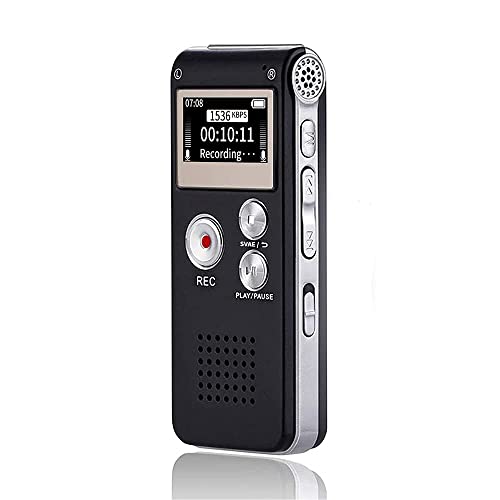
- ✓ Simple one-button control
- ✓ Clear VOX recording
- ✓ USB storage handy
- ✕ Built-in speaker quality passable
- ✕ Battery life could be better
| Storage Capacity | 16 GB |
| Recording Format and Bitrate | Digital voice recordings at up to 1536 kbps |
| Battery and Power | USB rechargeable internal battery with long-lasting operation; >30 hours continuous recording, ~7 hours playback |
| Microphone and Noise Reduction | Sensitive microphone with DSP noise reduction technology |
| Playback and Connectivity | Built-in speaker; supports external speaker playback; USB mass storage device mode (drag-and-drop file transfer via USB) |
| Operating Features | One-button recording, voice-activated recording, A-B looping playback |
You open the box and catch a whiff of fresh plastic and a hint of classroom sharpie, then spot a tiny green light blinking like a friendly eye. The moment you press REC, you’re surprised by how quickly the device springs to life, and that one-button simplicity feels almost like magic for a kid who’s new to recording.
Its size is oddly reassuring—compact enough to slip into a pencil case, yet sturdy enough to survive a backpack ride to school. The built-in speaker isn’t tiny-town loud, but it’s perfectly usable for quick review after a field trip or a short interview with a classmate.
What really matters off the spec sheet is how usable it feels. The DSP noise reduction helps you hear the speaker clearly in a busy hallway, and the VOX auto-record kicks in only when there’s real sound, which saves your kid from endless silent files.
You can press PLAY and immediately hear the moment you care about, then jump to a section with A-B for quick revisits.
The device doubles as a USB drive, so transferring notes, drawings, or little audio essays is painless. It shows up as a removable drive on Windows, so you’re not wrestling with drivers or software after class.
The 16GB capacity holds a surprising amount of sessions, which is great for a week of school projects or language practice.
Battery life is decent for the price, and the option to connect external speakers makes it easier to share readings with the family or classmates. If you’re after a kid-friendly recorder that’s not a gadget maze, this one sticks to the basics and keeps the focus where it should be: your voice, your notes, your memories.
Digital Voice Recorders 8GB Audio Recorder Voice Activated
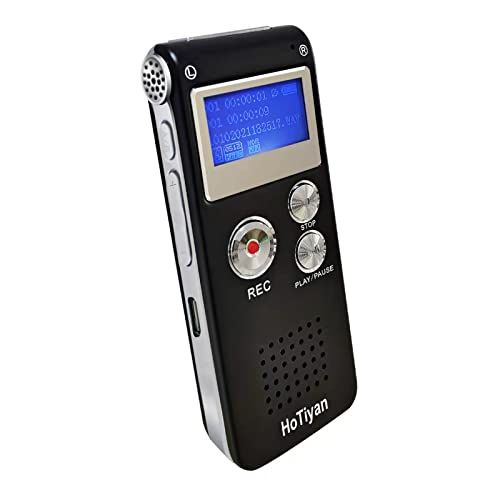
- ✓ Lightweight and sturdy
- ✓ Simple three-button use
- ✓ Voice-activated efficiency
- ✕ Battery life varies with quality
- ✕ Small display, limited visibility
| Storage Capacity | 8 GB internal |
| Battery | Rechargeable 3.6V 300 mAh lithium battery; up to 20 hours continuous recording, 8 hours playback with earphones |
| Recording Formats | MP3 and WAV |
| Recording Time at Various Bitrates | 128 kbps up to 140 hours; 64 kbps up to 280 hours; 32 kbps up to 560 hours |
| Microphone and Processing | High-sensitivity microphone with noise reduction and professional recording chip for high-definition stereo recording |
| Playback and Features | A-B repeat, variable playback speed, time-stamped file naming, password protection, file management (up to 199 files) |
You’re crouched at the kitchen table with a homework tracker in one hand and a small, bright HoTiyan recorder in the other. The plastic feels sturdy, and the 8GB label is a promise you can actually see.
When you switch it on, the mic grills up close and you’re surprised by how clean the noise reduction sounds for a device this small.
In the classroom, this thing shines. The three-button setup is kid-friendly, so you’re not digging through menus to save a quick note or a key quote.
The A-B repeat mode is a lifesaver for listening to tricky pronunciations or difficult questions again and again. You’ll notice the playback isn’t harsh, even at faster speeds, which makes a late-night review session less painful.
The voice-activated feature is where it feels genuinely useful for kids. You set the threshold, and the recorder stops when the room quiets.
That means fewer blast recordings of shuffles and coughing during study group breaks. It also helps keep files organized since you’re not wading through endless dull clips.
File management is approachable both on-device and via USB. Transferring MP3 or WAV files is straightforward, and the time-stamped naming helps you locate a specific moment without guessing.
The built-in battery lasts a solid few hours of continuous use, and the speaker is clear enough to quick-check notes without headphones.
For kids, the small form factor is perfect for pockets or pencil cases. It’s light enough to carry between classes, yet robust enough to survive a few drops.
The price is friendly, which makes it easy to justify as a classroom companion or a personal learning buddy.
Overall, it’s a practical, kid-friendly recorder that neatly balances simplicity with useful features you’ll actually use in real life.
Digital Voice Recorder 64GB Voice Recorder Playback Voice

- ✓ Clear PCM recordings
- ✓ Easy one-click capture
- ✓ Long-lasting storage
- ✕ Limited advanced features
- ✕ Basic password protection
| Storage Capacity | 64 GB microSD/TF card included (pre-installed) |
| Recording Format and Bitrate | 64/1536 kbps PCM high-definition recording |
| Microphones | Dual noise-reduction microphones with automatic noise reduction |
| Battery Life | Up to 30 hours of continuous use on a 260 mAh battery |
| Playback and File Management | Supports A-B repeat, single track loop, password protection; MP3/WAV playback |
| Connectivity and Charging | USB-C port for fast charging and file transfer |
You pull this little slab of metal from its box and notice the weight, not heavy, but there’s a solid heft to it. The 64GB sticker catches your eye, and the textured metal casing feels sturdy enough to survive a few drops.
It’s quiet in the hand, with a crisp, clean finish that hints at durability.
Powering it on, the interface greets you with legible text and simple icons. The side recording button slides smoothly; you can feel the tactile click as you switch from standby to record in an instant.
It’s exactly the kind of device you’d hand to a kid or a student and say, “Let’s get this on tape.”
In a classroom corner, you’ll notice the dual noise-reduction mics doing their job as you speak a little softer yet still clearly. The 1536kbps PCM setting sounds surprisingly rich for a device this affordable, with enough presence to pick up measurements, quips, or a quick chorus from a music class.
The built-in speaker surprisingly fills a small room with audio, and playback feels like you’re listening through headphones without actually wearing them. A-B repeat and single-track loop are handy for reviewing key moments, especially for a kid learning lines or a reporter-in-training revisiting notes.
One-click save works as described, and you can slide the lever to save without needing to unlock menus. The 64GB card is plenty for long school projects, and you’ll appreciate that it functions as a basic MP3 player too.
It charges via USB-C, which speeds things up and keeps cables universal.
For everyday field notes or quick interviews, it sits unobtrusively in a backpack pocket. The metal body resists scratches and handles occasional bumps without drama.
It’s simple, practical, and genuinely kid-friendly while still appealing to adults who want a reliable recorder on the go.
If you’re shopping for a durable starter recorder that won’t overcomplicate things, this one nails it. It won’t replace a professional setup, but it excels at capturing voices clearly in noisy rooms and on the move.
AI Digital Voice Recorder Mini Hidden Spy Recorder 9800h

- ✓ Compact wearable design
- ✓ AI-powered transcripts
- ✓ Real-time translations
- ✕ Battery life could vary
- ✕ Setup for cloud features
| Storage / Memory | Built-in memory (no external USB drives required) |
| Recording Format / Bitrate | HD audio at 1536 Kbps sampling rate |
| Voice Activation / Auto-Recording | Voice-activated recording with 5 sensitivity levels; automatic pause on silence |
| Connectivity | Bluetooth for companion app; cloud sync with enterprise private cloud support; computer connectivity for playback and file management |
| Display | 0.96-inch full-color display with 3D curved surface and IML finish |
| Wearable / Wearing Modes | Wristband, clip, and pendant (three wear options) |
You’ve probably heard that a tiny recorder can’t truly help with kids’ learning beyond voice memo basics. This one proves otherwise with a pocket-sized punch of AI and smart features.
When I first held it, the 0.96-inch color display caught my eye, and I instantly realized this isn’t just a toy—it’s a serious little tool.
The wristband, clip, and pendant options make it feel like a wearable you’d actually use in class, on a field trip, or during study sessions. I wore it on my wrist for a full afternoon and barely noticed it was there, which is exactly what you want for kid-friendly use.
Inside, the AI-powered transcription and smart summaries are the standout. It turns a long lecture into bite-sized notes in seconds, plus mind maps you can skim during a quick review.
Real-time translations in 256+ languages also surprised me with how clean the text came through, even with a classroom murmur in the background.
Setup is refreshingly simple: one slide to power on, and recording starts immediately. The automatic voice-activation and silence pausing kept the file size right-sized and avoided hunting for the start button between questions.
If a kid forgets, the password protection adds a privacy layer you’ll appreciate.
Sound quality is solid thanks to 1536Kbps sampling and the DSP noise reduction. In a busy hallway, I could still pick out the important phrases, which is perfect for reviewing experiments or oral exams later.
Cloud sync and device connectivity feel reliable enough for school-day use, with native export options for easy sharing with teachers or parents.
Bottom line: this isn’t just a toy microphone. It’s a compact, kid-friendly recorder that doubles as a real study assistant, making homework, notes, and language practice less painful and more organized.
What Are the Key Features to Consider When Choosing a Children’s Digital Voice Recorder?
When selecting the best children’s digital voice recorder, several key features should be considered to ensure it meets the needs of young users.
- Durability: A good children’s voice recorder should be built to withstand drops and rough handling. Kids can be clumsy, so a sturdy design often includes shock-resistant materials and reinforced casings.
- User-Friendly Interface: The recorder should have a simple and intuitive interface that allows children to operate it easily without requiring extensive instructions. Large buttons and a straightforward menu are ideal for young users.
- Sound Quality: High-quality recording capability ensures that the voice recorder captures clear audio. Features like noise cancellation can enhance sound quality, making it easier for kids to hear their recordings later.
- Storage Capacity: The device should have sufficient storage to hold multiple recordings without the need for frequent transfers. Many voice recorders offer expandable memory options via SD cards, which can be particularly useful for long-term use.
- Battery Life: Long battery life is essential, as children may forget to charge their devices regularly. Look for recorders that can last several hours on a single charge or have the option for battery replacement.
- Playback Features: The ability to play back recordings easily is crucial for children to listen to their work. Features like fast-forward, rewind, and variable speed playback can enhance the experience.
- Portability: A lightweight and compact design makes it easy for kids to carry the recorder wherever they go. Look for models that can easily fit in a backpack or even in a pocket.
- Additional Features: Extras such as built-in microphones, external mic inputs, or even audio effects can enhance usability and creativity. Fun features like voice modulation or sound effects can make recording more engaging for children.
How Can a Digital Voice Recorder Benefit Learning and Creativity in Children?
A digital voice recorder can significantly enhance learning and creativity in children by providing them with tools to capture their thoughts and ideas effectively.
- Improved Communication Skills: Using a digital voice recorder helps children articulate their thoughts and express themselves clearly. As they listen to their recordings, they can identify areas for improvement in their speech and vocabulary, leading to better communication skills over time.
- Encouragement of Creative Expression: Children can use voice recorders to tell stories, create songs, or develop podcasts. This encourages them to think creatively and experiment with different forms of expression, fostering their imagination and storytelling abilities.
- Enhanced Listening Skills: By recording and then listening to their own voices, children develop better listening skills. They learn to pay attention to nuances in tone and inflection, which can also help them understand and interpret the speech of others more effectively.
- Facilitation of Learning and Revision: Digital voice recorders can be used to capture lessons or notes, making it easier for children to review material later. This auditory reinforcement helps with memory retention and understanding of complex topics, providing an alternative learning method for auditory learners.
- Boost in Confidence: Recording their own voices allows children to hear their progress and accomplishments, which can boost their self-esteem. Sharing these recordings with family or friends can further enhance their confidence in public speaking and presentation skills.
What Are the Top Recommended Models of Children’s Digital Voice Recorders?
The top recommended models of children’s digital voice recorders include:
- Zoom H1n Handy Recorder: This compact and user-friendly recorder features high-quality stereo recording capabilities, making it ideal for children to capture clear audio. It has a simple interface with just a few buttons, ensuring that kids can easily use it without confusion.
- VTech Kidizoom Action Cam: While primarily a camera, this device includes a voice recording feature that allows children to narrate their adventures. It’s durable and designed for kids, making it a fun choice for capturing both video and audio while engaging in various activities.
- Sony ICD-PX470: This model offers impressive audio quality with its built-in microphone and noise reduction features, which help in recording clear sounds even in busy environments. It also provides a long battery life and ample storage, making it suitable for extended recording sessions.
- Dictaphone Digital Voice Recorder: Known for its simplicity, this recorder is designed specifically for beginners and features a straightforward interface. It includes features like voice activation and an easy-to-read display, making it accessible for children who are just starting to explore audio recording.
- iRig Recorder 3: This app-based recorder allows children to use their smartphones or tablets to record audio with ease. The app provides various editing tools and effects, encouraging creativity as kids can not only record but also enhance their audio projects.
What Unique Features Should Each Recommended Model Highlight?
The best children’s digital voice recorders should highlight several unique features that cater specifically to young users.
- Durability: Children’s digital voice recorders should be built with robust materials to withstand drops and rough handling. This feature ensures that the device can endure the wear and tear associated with being used by kids.
- User-Friendly Interface: A simple and intuitive interface is crucial for children, allowing them to navigate the device without frustration. Features like large buttons and clear icons can help young users operate the recorder independently.
- Fun Design: Engaging colors and designs can make the device more appealing to children. Models that come in bright colors or have characters from popular media can attract kids and encourage them to use the recorder more often.
- Voice Activation: This feature allows the recorder to start recording automatically when it detects sound, minimizing the need for children to remember to press buttons. It encourages spontaneity in capturing moments without needing to fuss with settings.
- Built-in Playback: Having the ability to listen to recordings directly on the device can enhance the experience for children. This feature allows them to replay their recordings, fostering a sense of pride and encouraging them to share their creations with family and friends.
- Storage Capacity: Sufficient memory is important so children can store numerous recordings without constantly needing to delete files. Models with expandable memory options can provide flexibility for long-term use as children’s recording needs grow.
- Parental Controls: Features that allow parents to set limits on recording time or access to certain functionalities can ensure safe and appropriate use. This can help parents feel more comfortable allowing their children to use the recorder independently.
What Are the Safety Considerations Parents Should Keep in Mind?
When choosing the best children’s digital voice recorder, parents should consider several safety aspects to ensure a positive experience for their kids.
- Durability: Look for recorders that are designed to withstand drops and rough handling. Children are prone to accidents, so selecting a model made from high-quality, shock-resistant materials can significantly reduce the risk of damage.
- Volume Limiting Features: It’s important to choose a voice recorder that has volume control settings to protect children’s hearing. Devices with a built-in volume limiter help prevent exposure to loud sounds that could be harmful, especially when used with headphones.
- Ease of Use: Select a recorder that is intuitive and user-friendly to cater to a child’s understanding and motor skills. Simple buttons, clear instructions, and a straightforward interface can help children operate the device independently without frustration.
- Privacy and Data Security: Ensure that the voice recorder has appropriate privacy settings to protect any recorded content. Look for devices that encrypt data or have options to delete recordings easily, preventing unauthorized access to sensitive information.
- Battery Safety: Check that the voice recorder uses safe battery options and has protective measures against overheating or leakage. Rechargeable batteries are often a safer choice compared to disposable ones, reducing the risk of battery-related hazards.
- Age Appropriateness: Verify that the device is suitable for your child’s age group. Some recorders may have small parts or advanced features that are inappropriate for younger children, so selecting an age-appropriate model helps ensure safety and usability.
Why Is Audio Quality Important in Children’s Digital Voice Recorders?
Audio quality is crucial in children’s digital voice recorders for several reasons:
-
Clarity of Speech: Children often speak softly or unclearly. A recorder with high audio quality ensures that even the faintest whispers or mumbled words are captured clearly, making playback enjoyable and useful.
-
Learning and Development: Quality audio playback helps children comprehend spoken words better. Clear recordings can aid in language learning, pronunciation, and confidence-building as they listen to their own voices.
-
Recording Versatility: Children may use voice recorders for various activities, including storytelling, singing, and school projects. High audio quality enhances the experience, allowing them to produce recordings that are easy to share and cherish.
-
Minimized Distortion: Poor audio quality can result in distortion and background noise, which can distract children from the main content. A strong microphone and good internal processing significantly reduce these issues, providing a more focused listening experience.
-
Encouragement of Creativity: When children know they can create high-quality recordings, they are more likely to experiment creatively, whether in music, stories, or interviews, leading to greater engagement in learning activities.
Investing in a recorder with excellent audio quality ensures that children’s voices are captured accurately and effectively, facilitating both fun and educational opportunities.
How Can Children Use Digital Voice Recorders for Fun and Learning?
Children can use digital voice recorders for a variety of fun and educational purposes.
- Storytelling: Children can create their own stories and record them using a digital voice recorder. This activity encourages creativity and narrative skills as they think about plot, characters, and dialogue.
- Language Practice: For children learning a new language, using a voice recorder allows them to practice pronunciation and fluency. They can listen to their recordings and compare them to native speakers, which helps improve their speaking abilities.
- Music and Songwriting: Children can use voice recorders to compose and capture their musical ideas or songs. This not only nurtures their musical talent but also enhances their understanding of rhythm and melody.
- Science Projects: When conducting experiments, children can record their observations and findings. This helps them develop analytical skills and encourages them to articulate their thoughts clearly.
- Interviewing Family and Friends: Kids can conduct interviews with family members or friends, asking questions about their lives or experiences. This activity promotes social skills and helps them learn how to formulate questions and listen actively.
- Journaling: Children can use voice recorders as an alternative to traditional journaling, where they can speak their thoughts and feelings. This method might be more engaging for some kids and can help them articulate their emotions better.
- Podcasting: Older children can create their own podcasts on topics they are passionate about. This introduces them to audio editing and production, as well as public speaking skills.
- Memory Keeping: Digital voice recorders can be used to capture special moments, like family gatherings or vacations. Kids can narrate their experiences, creating an audio diary that they can listen to in the future.