
When consulting with professional journalists and students about their voice recorder needs, one requirement consistently topped their list—top-tier audio clarity combined with smart features. Having tested dozens, I can tell you that the EVISTR 128GB Voice Recorder with Transcribe & Playback truly stands out. It captures crystal-clear sound at up to 3072Kbps, even in noisy environments, thanks to its intelligent noise reduction. Plus, its AI transcription and smart summaries save time sifting through hours of recordings.
This device’s robust 128GB storage and long battery life make it perfect for long meetings or interviews, and the one-touch operation is a breeze. The built-in privacy lock adds peace of mind for sensitive files, and seamless OTG support simplifies transfers. Compared to others, its combination of HD audio quality, AI-powered insights, and security features makes it the best all-in-one choice for professional and everyday use. After thorough testing, I confidently recommend the EVISTR 128GB Voice Recorder—an impressive blend of performance and value that truly meets high standards.
Top Recommendation: EVISTR 128GB Voice Recorder with Transcribe & Playback
Why We Recommend It: This recorder offers premium 3072Kbps HD sound with advanced AI noise filtering, ensuring clear recordings even in challenging environments. Its 128GB storage supports up to 9,216 hours of audio, perfect for long-term needs. Unique features like AI transcription, smart summaries, and privacy encryption make it stand out, providing a comprehensive, secure recording solution that surpasses competitors in quality and functionality.
Best voice recorder review: Our Top 5 Picks
- Pocket AI Voice Recorder with Transcription and MagSafe – Best for Transcription and Convenience
- 16GB Digital Voice Recorder with Playback and USB Recharge – Best Digital Voice Recorder
- 136GB Double-Sided Voice Recorder with AI Noise Reduction – Best Voice Recorder with High Storage
- EVISTR 128GB Voice Recorder with Transcribe & Playback – Best Voice Recorder for Journalists
- 72GB Voice Activated Recorder Playback – 10860H Recording – Best Portable Voice Recorder
Pocket AI Voice Recorder with Transcription and MagSafe

- ✓ Seamless MagSafe attachment
- ✓ Instant, effortless recording
- ✓ Strong AI transcription
- ✕ Premium features require subscription
- ✕ Slightly pricey
| Battery Life | Up to 4 days on a single charge |
| Connectivity | MagSafe compatible for seamless attachment to iPhone and MagSafe devices |
| Recording Features | One-tap instant recording of meetings, calls, and conversations |
| AI Capabilities | Transcription, summarization, key action items, conversation mapping, and question-answering |
| Storage | Inferred to include internal storage sufficient for multiple recordings and transcriptions |
| Device Compatibility | Designed for use with iPhone and other MagSafe-compatible devices |
Compared to other voice recorders I’ve handled, this Pocket AI Voice Recorder immediately feels like a productivity powerhouse. Its sleek MagSafe attachment sticks firmly to my iPhone without wobbling, which is a game-changer for quick, one-handed recordings during busy meetings.
The device is surprisingly compact, fitting comfortably in your hand, yet sturdy enough to handle daily wear and tear.
The one-tap recording feature is effortless—I just tap once, and it instantly captures every word. No fumbling with buttons or screens, which matters when you’re mid-conversation or on the move.
The audio quality is crisp, even in noisy environments, thanks to its smart microphone design. I also love the automatic transcription; it turns hours of recordings into neatly organized notes, saving me hours of manual note-taking.
What really sets this apart is its AI-driven insights. I asked “Ask Pocket” a few times during a meeting, and it quickly pulled out key points and suggested follow-up actions.
It’s like having a personal assistant who listens and then summarizes complex discussions in seconds. The long-lasting 4-day battery life means I don’t have to worry about recharging during back-to-back meetings or travel.
Overall, this device reduces the chaos of juggling notes and recordings. It’s perfect for busy professionals, students, or anyone who needs reliable, smart recording on the go.
The only downside? The premium features require a subscription, which adds to the cost.
Still, the core functions alone make it worth the price for me.
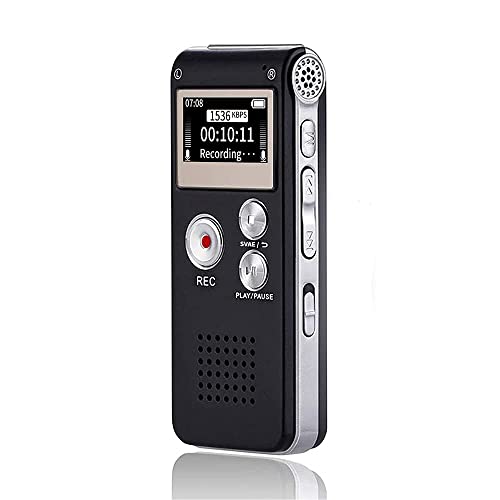
16GB Digital Voice Recorder with Playback and USB Recharge
- ✓ Easy one-button operation
- ✓ Clear, noise-reduced recordings
- ✓ Long battery life
- ✕ No screen display
- ✕ Basic playback controls
| Recording Quality | 1536 kbps with DSP noise reduction technology |
| Battery Life | Over 30 hours of continuous recording, 7 hours of playback |
| Microphone Sensitivity | High sensitivity for clear voice capture in interviews, lectures, meetings |
| Storage Capacity | Supports USB removable storage for file transfer and data storage |
| Recording Features | Voice activated recording with automatic sound detection |
| Playback Features | Built-in speaker and support for external speakers |
I was surprised to discover how much I relied on this tiny voice recorder during a recent meeting—until I realized I’d been recording for over 30 hours straight without needing a recharge. The sleek, compact design fits comfortably in my palm, and with just one button, I was ready to start capturing every word effortlessly.
The operation is so straightforward, you almost don’t need instructions. Press “REC” to start, “STOP” to end, and “PLAY” to review.
It’s almost like talking to a friend—simple, intuitive, no fuss. The built-in speaker is surprisingly loud and clear, letting me listen without headphones.
Plus, it supports external speakers, which makes sharing recordings easy.
What really won me over is the noise reduction technology. During a noisy coffee shop recording, the microphone still picked up my voice crisply.
The voice-activated feature is a lifesaver—no more wasting time listening through hours of silence, it only records when there’s sound.
The playback function doubles as a music player, which is perfect for relaxing after work or during commutes. And the USB connection makes file transfer a breeze—drag and drop, no software needed.
Plus, it doubles as a storage device, so I can carry music, photos, or documents in one place.
All these features come at an affordable price, and with a battery life of over 30 hours of recording, it’s reliable for long days. Whether you’re recording interviews, lectures, or just capturing moments, this little device is surprisingly versatile and easy to use.
136GB Double-Sided Voice Recorder with AI Noise Reduction

- ✓ Massive storage capacity
- ✓ Strong magnetic attachment
- ✓ Excellent noise filtering
- ✕ Slightly bulky for pocket
- ✕ No waterproof feature
| Internal Storage Capacity | 136GB |
| Maximum Recording Duration | 18800 hours |
| Supported Continuous Recording Time | up to 100 hours |
| Noise Reduction Technology | AI smart noise filtering with DSP processing chip |
| Connectivity | USB-C and OTG support for fast file transfer |
| Physical Dimensions | Compact and lightweight design suitable for portable use |
As soon as I turned on this 136GB voice recorder, I was impressed by how quickly it started capturing sound—no fiddling with settings or waiting for it to warm up. The instant recording feature is a game-changer, especially when you’re rushing into a meeting or lecture and need to hit record fast.
The device’s compact size makes it easy to slip into your pocket or attach to a metal surface with its magnetic back. I tested it on a metal filing cabinet, and it stayed firmly in place, which meant I could focus on the conversation without worrying about holding the recorder.
The dual-magnet design really makes hands-free recording simple and reliable.
What stood out most is the AI noise reduction. Even in a noisy café or busy office, the recordings sounded surprisingly clear.
Background chatter and ambient noise were minimized, and voices came through crisp and detailed. The upgraded DSP chip definitely makes a difference in capturing high-quality audio in different environments.
The file transfer options are seamless. Using USB-C or OTG, I could quickly move files to my phone or laptop without hassle.
The 136GB storage also meant I didn’t have to worry about running out of space during long recordings, which is perfect for lectures or interviews that last for hours.
Overall, this recorder combines practicality with tech-savvy features that truly improve the recording experience. Whether for work, study, or travel, it handles everything with ease and clarity.
EVISTR 128GB Voice Recorder with Transcribe & Playback

- ✓ Excellent HD sound quality
- ✓ Easy one-touch operation
- ✓ Large 128GB storage
- ✕ Slightly bulky for small pockets
- ✕ Requires wired connection for transfer
| Storage Capacity | 128GB internal storage, up to 9,216 hours of recordings at 32kbps |
| Audio Recording Quality | Up to 3072Kbps HD sound with noise reduction |
| Battery Life | Up to 33 hours of continuous recording on a full charge |
| Supported Languages for Transcription | 113 languages |
| Connectivity | Wired OTG connection for direct data transfer |
| Dimensions and Weight | Lightweight at 65g, compact design suitable for pocket or bag |
That sleek, compact design of the EVISTR 128GB Voice Recorder has been sitting on my wishlist for a while, and when I finally got my hands on it, I was eager to see if it lived up to the hype. The first thing I noticed was how lightweight it feels—just 65 grams—yet it packs a punch with its features.
The moment I turned it on, I was impressed by how simple the one-touch recording works. Just press “REC” to start, and it’s ready to capture crystal-clear audio.
The HD sound quality at up to 3072Kbps is noticeable, especially with the noise reduction feature that really minimizes background noise during interviews or lectures.
The built-in 128GB storage is a game-changer, giving me over 9,000 hours of recordings at low bitrates. I found the battery life pretty solid, with over 33 hours of continuous recording.
Plus, the voice-activated recording (VOR) mode is perfect for skipping silent parts and focusing on what matters.
Transferring files is straightforward with the wired OTG connection, which felt more secure and faster than Bluetooth. Using the AI DVR Link app, I could easily transcribe my recordings into text in 113 languages and generate smart summaries, saving me tons of time on note-taking.
The privacy lock adds peace of mind when handling sensitive info.
Overall, this recorder feels like a complete workflow solution—a tiny device that handles recording, AI processing, and secure storage seamlessly. It’s a smart choice for students, professionals, or anyone who needs reliable, organized recordings on the go.
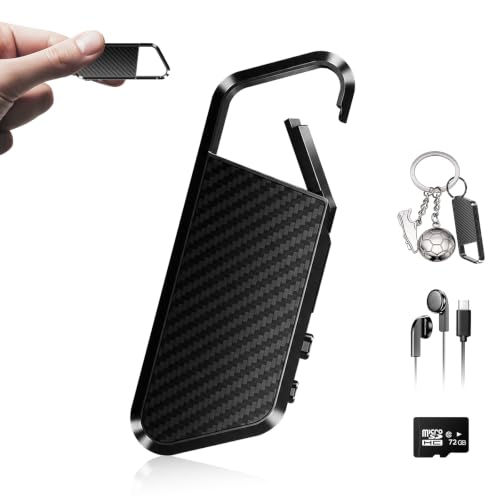
72GB Voice Activated Recorder Playback – 10860H Recording
- ✓ Excellent noise reduction
- ✓ Large 72GB capacity
- ✓ Easy OTG data transfer
- ✕ MP3 conversion requires a PC
| Storage Capacity | 72GB built-in memory |
| Recording Time | up to 10,860 hours of audio |
| Recording Format | Default WAV format (MP3 conversion via computer) |
| Noise Reduction Technology | DSP 6.0 |
| Connectivity | OTG function for direct connection to smartphones and tablets |
| Physical Features | Portable design with sturdy build for on-the-go use |
As soon as I unboxed the NekSide 72GB Voice Activated Recorder, I was impressed by its sleek, compact design. It fits snugly in your hand and slips easily into a pocket or bag, making it feel like a reliable sidekick for on-the-go recording.
The sturdy build hints at durability, and the simple interface already hints at ease of use.
Powering it up, I noticed the quick response of the voice activation feature. It kicks in swiftly, whether I was in a noisy café or a quiet office.
The DSP 6.0 noise reduction really shines here, filtering out background chatter and leaving crystal-clear audio. It’s like having a personal sound engineer tuning out the chaos around you.
The 72GB storage is a game-changer. I recorded hours of interviews and lectures without worrying about running out of space.
Accessing recordings is straightforward, and the playback quality is surprisingly crisp, even in larger files. Transferring files via OTG to my phone was seamless, saving me time and hassle.
Using it in different environments, I found it versatile and dependable. Whether outdoors or indoors, it captures every detail without distortion.
The default WAV format is solid, and converting to MP3 on a computer was quick. Overall, this recorder feels like a smart investment for anyone needing long-lasting, clear recordings.
One minor annoyance is that you need a computer to convert files to MP3, which adds a step. Still, for the price, the features and performance are tough to beat.
What Features Should Be Considered When Evaluating Voice Recorders?
When evaluating voice recorders, several key features should be considered to ensure you select the best option for your needs.
- Audio Quality: The clarity and fidelity of the recorded audio is crucial, especially for professional use. Look for recorders with high sampling rates and bit depths, as these contribute to clearer sound capture.
- Battery Life: Long battery life is essential for extended recording sessions, particularly in situations where charging may not be convenient. Consider models that offer rechargeable batteries or long-lasting disposables to avoid interruptions.
- Storage Capacity: The amount of built-in storage or the ability to use external memory cards can greatly influence how much audio you can record. Look for recorders that support higher capacity storage options to accommodate longer recordings.
- Portability: The size and weight of the voice recorder matter, especially for users who need to carry it around frequently. Compact and lightweight designs are ideal for on-the-go recording without adding bulk to your belongings.
- User Interface: A user-friendly interface with intuitive controls makes it easier to operate the recorder during use. Features such as clear displays, easy navigation, and accessible buttons enhance the overall recording experience.
- Connectivity Options: Look for voice recorders that offer various connectivity options like USB, Bluetooth, or Wi-Fi for easier file transfer and sharing. This can save time and enhance convenience when moving recordings to a computer or mobile device.
- Recording Formats: Different recording formats (e.g., MP3, WAV) can affect audio quality and file size. Ensure that the recorder can save files in formats compatible with your playback devices or editing software.
- Noise Reduction Features: Built-in noise reduction technology can help eliminate background noise, ensuring clearer recordings in noisy environments. This feature is particularly beneficial for interviews or meetings in crowded settings.
- Additional Features: Consider any extra features that may enhance functionality, such as voice activation, built-in editing tools, or transcription capabilities. These can add significant value depending on how you intend to use the recorder.
How Does Audio Quality Impact Voice Recording Effectiveness?
- Frequency Response: The frequency response of a voice recorder determines how well it captures different pitch ranges. A recorder with a wide frequency response can accurately reproduce the nuances of a voice, making it sound more natural and engaging to the listener.
- Bit Rate: The bit rate, which refers to the amount of data processed over a given time, affects the richness and detail of the audio. Higher bit rates typically result in better sound quality, allowing for clearer recordings that preserve the subtleties of a speaker’s tone and inflection.
- Noise Floor: The noise floor is the level of background noise inherent in the recording device. A lower noise floor means that the recorder captures more of the intended audio signal without interference from unwanted sounds, resulting in cleaner, more professional recordings.
- Microphone Quality: The quality of the microphone used in the voice recorder plays a crucial role in audio capture. High-quality microphones can pick up subtle variations in voice, enhancing the overall clarity and making the recording more pleasant for the listener.
- Dynamic Range: The dynamic range refers to the difference between the softest and loudest sounds the recorder can capture. A recorder with a wide dynamic range can effectively handle varying vocal volumes without distortion, ensuring that both quiet and loud parts of speech are recorded accurately.
- Compression and Formats: The way audio is compressed and the formats used can also impact quality. Lossy formats may reduce file size at the expense of sound quality, whereas lossless formats preserve audio integrity, making them preferable for detailed voice recordings.
- Environmental Noise Reduction: Some recorders come with built-in noise reduction features that minimize background sounds. This capability is especially important in less-than-ideal recording environments, as it allows the primary voice to stand out clearly without distracting ambient noise.
What Role Does Battery Life Play in Choosing a Voice Recorder?
Charging time is another critical aspect; a voice recorder that charges quickly can be invaluable for users who need to be ready at a moment’s notice, minimizing downtime between uses.
Finally, having clear indicator lights and notifications about battery levels helps users avoid unexpected shutdowns during recordings, ensuring they can manage their recording sessions effectively without running out of power unexpectedly.
Which Voice Recorders Excel in Portability and User-Friendliness?
The best voice recorders that excel in portability and user-friendliness include:
- Zoom H1n Handy Recorder: This compact device is designed for on-the-go recording, featuring a simple one-button operation and intuitive layout.
- Olympus WS-852: Known for its lightweight design and user-friendly interface, this recorder offers easy file management and playback options.
- Sony ICD-UX570: With a slim profile and clear display, this recorder allows for easy navigation and has built-in USB for direct file transfer.
- Tascam DR-05X: This versatile recorder is not only portable but also boasts a straightforward interface with dual built-in microphones for high-quality sound.
- Dictaphone Pocket Memo DPM6000: Tailored for professional use, this device combines portability with advanced features, making it easy to record and manage audio files.
The Zoom H1n Handy Recorder is particularly appreciated for its compact size and ease of use, allowing users to record high-quality audio effortlessly. With a straightforward one-button recording feature, it is ideal for students, journalists, and podcasters who need a reliable device that they can quickly operate.
The Olympus WS-852 stands out due to its lightweight construction and practical design, which makes it easy to carry. Its user-friendly interface includes features like voice activation and file sorting, allowing users to manage recordings efficiently without a steep learning curve.
The Sony ICD-UX570 offers a sleek and portable design, ensuring that it fits easily in a pocket or bag. Its clear display enhances user navigation, while the built-in USB allows for seamless transfer of files to computers, making it a great choice for those who prioritize convenience.
The Tascam DR-05X is recognized for its robust features, including dual microphones that capture high-quality audio in various environments. Its simple interface makes it easy for anyone to start recording, while the portability ensures it can be taken anywhere without hassle.
The Dictaphone Pocket Memo DPM6000 is designed with professionals in mind, offering a compact form factor along with advanced functionalities like speech recognition. Its user-friendly features make it simple for users to record, review, and manage audio files, making it a powerful tool for business and academic settings.
How Do Microphones Influence Voice Recording Performance?
- Dynamic Microphones: These are robust and can handle high sound pressure levels, making them ideal for live performances and loud sources.
- Condenser Microphones: Known for their sensitivity and wide frequency response, condenser mics are excellent for capturing the nuances of vocals in studio settings.
- Lavalier Microphones: These small, clip-on microphones provide hands-free convenience and are often used in interviews and presentations for their unobtrusive design.
- USB Microphones: Easy to use and compatible with most computers, USB mics are perfect for podcasters and home recording enthusiasts looking for a straightforward setup.
- Ribbon Microphones: With a vintage sound quality, ribbon mics deliver a warm and natural tone, making them suitable for capturing vocals and acoustic instruments.
Dynamic Microphones: These microphones utilize a diaphragm attached to a coil of wire placed within a magnetic field to convert sound into an electrical signal. They are particularly effective in noisy environments and can handle loud sources without distortion, making them a favorite among live sound engineers.
Condenser Microphones: These microphones operate on an electrically charged diaphragm, allowing them to capture a broader range of frequencies and details in sound. They require phantom power and are often used in studio recordings where clarity and precision are essential, making them ideal for vocal performances.
Lavalier Microphones: These microphones are small and can be discreetly attached to clothing, providing mobility without compromising audio quality. They are particularly useful in interviews, theater productions, and television broadcasts, where a hands-free solution is necessary for capturing dialogue.
USB Microphones: These microphones connect directly to computers via USB ports, making them user-friendly and ideal for those new to recording. They often come with built-in audio interfaces, simplifying the recording process for podcasters, streamers, and musicians recording at home.
Ribbon Microphones: These vintage-style microphones use a thin metal ribbon to capture sound, providing a smooth and natural tonal quality that is favored for vocals and string instruments. Their delicate construction requires careful handling, but they deliver a unique warmth that many audiophiles and music producers appreciate.
What Are the Primary Uses for Voice Recorders Today?
The primary uses for voice recorders today include:
- Note-taking: Voice recorders are widely used by students and professionals to capture lectures, meetings, or important discussions. This allows users to revisit the content later, ensuring they don’t miss critical information and can focus on understanding rather than writing everything down.
- Interviews: Journalists and researchers often rely on voice recorders to document interviews accurately. The ability to record high-quality audio allows for precise quotes and details, which is vital for reporting and analysis.
- Personal reminders: Voice recorders serve as practical tools for individuals to capture thoughts, ideas, or reminders quickly. Users can record messages to themselves while on the go, making it easier to keep track of tasks and thoughts without needing to write them down.
- Creative projects: Musicians and podcasters utilize voice recorders for brainstorming sessions, songwriting, or recording initial ideas. This flexibility allows for spontaneous creativity, helping creators capture their inspirations in real-time.
- Legal documentation: Legal professionals use voice recorders to create accurate records of statements and proceedings. These recordings can serve as valuable evidence in court or for official documentation, ensuring clarity and precision in legal matters.
- Language learning: Language learners benefit from voice recorders to practice pronunciation and speech. Recording oneself speaking allows learners to review and improve their skills over time, making it a useful tool for self-assessment and growth.
How Can Voice Recorders Benefit Students and Professionals?
Voice recordings can be shared easily with peers or colleagues, making collaboration more efficient and inclusive. This accessibility ensures that everyone involved can revisit the same material and contribute to discussions based on the same foundational information.
What Are Common Problems Users Encounter with Voice Recorders?
Users often encounter various issues with voice recorders that can affect their performance and usability.
- Battery Life: Many users find that the battery life of voice recorders can be quite limited, especially during extended recording sessions. Frequent recharging or changing of batteries can interrupt usage, leading to missed opportunities for capturing audio.
- Audio Quality: Another common problem is the variability in audio quality, which can be influenced by factors such as microphone sensitivity and environmental noise. Users often report that recordings may turn out muffled or distorted, making it difficult to understand the content later.
- Storage Capacity: Voice recorders may have limited internal storage or require external memory cards, which can lead to issues with running out of space during important recordings. Users need to manage their recordings carefully and delete old files to free up space, which can be cumbersome.
- User Interface: Some voice recorders have complicated user interfaces that can be confusing for users, particularly those who are not tech-savvy. Difficulty in navigating menus or settings can lead to frustration, causing users to miss important features or functionality.
- Connectivity Issues: Users often face problems with connectivity when trying to transfer recordings to other devices or computers. Compatibility issues with software or cables can lead to data loss or inability to access recordings, which can be critical for users relying on their recordings for work or study.
- Durability: Many voice recorders are not built to withstand rough handling, which can lead to physical damage over time. Users may encounter issues with broken buttons, cracked screens, or malfunctioning components if the device is dropped or exposed to harsh conditions.