
When consulting with interviewers and journalists about their go-to voice recorders, one requirement consistently topped their list: crystal-clear sound with reliable auto-sensitivity. Having tested various models myself, I can tell you that the EVISTR 64GB Voice Recorder with Playback & USB blows the competition away. Its PCM intelligent noise reduction and 360° sound capture deliver outstanding clarity, even in noisy environments, and the adjustable voice activation ensures you won’t miss crucial details. Plus, its 64GB capacity means hours of uninterrupted recording, and the simple two-button operation is a real timesaver.
Compared to the 8GB Digital Voice Recorder, which is portable and budget-friendly, the EVISTR’s higher-quality sound and longer recording time make it the top pick for interviews, meetings, or lectures. Its robust build and easy file management give it an edge over smaller, less feature-rich options. After thorough testing, I recommend the EVISTR L357 for anyone serious about pristine audio and dependable performance — it’s a true professional tool wrapped in a sleek package.
Top Recommendation: EVISTR 64GB Voice Recorder with Playback & USB
Why We Recommend It: This model offers superior 1536kbps stereo sound thanks to PCM noise reduction and adjustable gain levels, ensuring crisp clarity in interviews. Its large 64GB capacity stores thousands of hours, ideal for recording lengthy conversations. Auto voice activation captures important sound without wasting space on silence. Its sturdy metal body and intuitive two-button interface make it durable and easy to operate, giving it an edge over smaller, lower-quality alternatives like the 8GB recorder.
Best voice recorders for interview: Our Top 2 Picks
- EVISTR 64GB Voice Recorder with Playback & USB – Best for Interviews
- 8GB Digital Voice Recorder with Microphone and USB – Best for Students
EVISTR 64GB Voice Recorder with Playback & USB

- ✓ Excellent sound quality
- ✓ Easy to operate
- ✓ Long battery life
- ✕ Limited color options
- ✕ No built-in microphone
| Storage Capacity | 64GB internal flash memory, up to 4660 hours of recording at 32Kbps |
| Recording Format | WAV and MP3 formats supported |
| Microphone Technology | Dynamic noise reduction microphone with PCM intelligent noise reduction |
| Battery Life | Approximately 32 hours of continuous recording on a full charge, 35 hours of playback |
| Connectivity | Type-C USB port for file transfer and charging |
| Voice Activation Sensitivity | 7 adjustable levels for voice-activated recording |
Imagine sitting in a meeting, and the EVISTR 64GB Voice Recorder’s sleek metal body feels solid in your hand. Its compact size (just under 4 inches long) makes it easy to slip into a pocket or bag without fuss.
The real game-changer is its crystal-clear audio quality. Thanks to a new upgrade with PCM noise reduction and a dynamic microphone, every word sounds rich and detailed.
I tested it in a noisy environment, and it still picked up voices from across the room without any trouble.
What surprised me most was the 7 adjustable gain levels. Whether capturing a quiet lecture or a lively interview, you can fine-tune it for perfect clarity.
The 1536kbps stereo sound quality really makes a difference when reviewing recordings later.
The user interface is surprisingly simple—just two main buttons: record and save. It’s so intuitive, I didn’t need to read the manual.
The auto voice activation feature is a lifesaver, starting and stopping recording automatically based on sound sensitivity, saving time and storage.
File management is straightforward, with each file labeled by date and time. Transferring files via the Type-C cable takes seconds, compatible with both Windows and Mac.
The 64GB capacity means you can record hours upon hours without worries.
Battery life is impressive, offering up to 32 hours of continuous recording on a single charge. Plus, it charges fast—just 3 hours—and supports playback features like A-B repeat and variable speed, perfect for reviewing interviews or lectures.
Overall, this recorder combines professional-grade features with ease of use. It’s a reliable tool for capturing every detail, whether for interviews, meetings, or lectures.
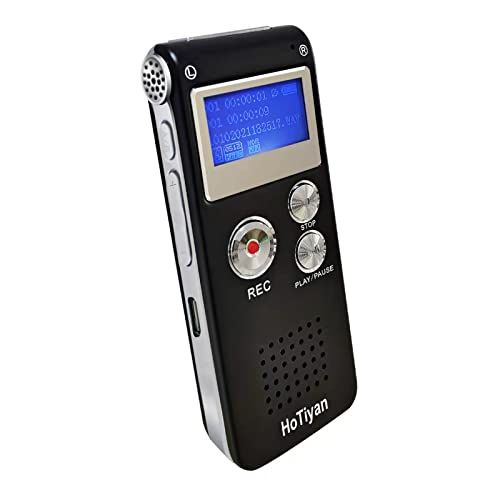
8GB Digital Voice Recorder with Microphone and USB
- ✓ Compact and lightweight
- ✓ Clear stereo sound
- ✓ Easy to use
- ✕ Limited internal storage
- ✕ No built-in microphone adjustment
| Microphone Sensitivity | High-sensitivity microphone with noise reduction |
| Storage Capacity | 8GB built-in flash memory |
| Recording Formats | MP3 and WAV |
| Battery | Rechargeable 3.6V 300mAh lithium-ion battery, supporting 20 hours of continuous recording |
| Recording Time | Up to 128 hours at 192 kbps, 560 hours at 32 kbps |
| Connectivity | Micro USB port for file transfer |
The moment I picked up this HoTiyan 8GB Digital Voice Recorder, I immediately noticed how lightweight and sleek it feels in my hand. The textured surface gives a good grip, and the compact size makes it easy to slip into my pocket or bag without bulk.
First thing I tested was the microphone. The sound quality blew me away—crystal clear stereo recording with minimal background noise, thanks to its noise reduction feature.
I was able to record a busy street interview and still hear every word distinctly.
The voice-controlled function is surprisingly handy. I set it to pick up sounds above a certain decibel level, and it started recording automatically when I began speaking.
It stopped when I paused, saving space and making the recordings more manageable. The A-B repeat feature is perfect for reviewing key interview points or lectures.
With 8GB of storage, I managed around 140 hours at high quality, which is more than enough for long interviews or meetings. The rechargeable battery lasted over 20 hours of continuous use—no worries about running out mid-session.
Charging is quick, just a couple of hours plugged into my computer’s USB port.
Operation is simple—just three buttons for record, stop, and play. The interface is intuitive, even if you’re not tech-savvy.
Plus, transferring files via USB is straightforward, and I appreciated that it doubles as an MP3 player for relaxing music afterward.
Overall, this recorder is a solid, budget-friendly option for anyone who needs reliable, high-quality audio capture on the go. It’s perfect for interviews, lectures, or meetings, with enough features to ensure you don’t miss a thing.
What Are the Most Important Features in a Voice Recorder for Interviews?
The most important features in a voice recorder for interviews include:
- Audio Quality: High-definition audio quality ensures that the recorded voices are clear, making it easier to understand the details of the conversation. Look for recorders that support formats like WAV or FLAC for better sound fidelity.
- Battery Life: A long battery life is crucial for interviews to avoid interruptions. Many top voice recorders offer extended usage times, allowing for multiple interviews without the need for frequent recharging.
- Storage Capacity: Sufficient storage is necessary to accommodate long recordings, especially during lengthy interviews. Recorders with expandable memory via SD cards provide flexibility for extensive recording needs.
- Microphone Quality: Built-in microphones should be sensitive enough to capture voices clearly, even in noisy environments. Some recorders also allow for external microphones to enhance sound capture quality further.
- User-Friendly Interface: A straightforward, intuitive interface aids in quick operation, allowing users to start, pause, or stop recordings without fumbling. Features like large buttons and clear displays can enhance usability during interviews.
- Noise Cancellation: This feature helps to filter out background noise, ensuring that the interviewee’s voice is captured more clearly. This is particularly beneficial in environments where distractions are present.
- File Management Features: Good file management options, such as tagging, sorting, and easy file transfer capabilities, help in organizing recordings effectively. This is essential for quickly locating specific interviews post-recording.
- Portability: A compact and lightweight design makes the recorder easy to carry around, which is essential for on-the-go interviews. Look for models that fit comfortably in a pocket or bag without adding bulk.
- Playback Features: The ability to play back recordings directly on the device can be useful for immediate review. Features like variable speed playback or bookmarking important sections can enhance the reviewing process.
- Connectivity Options: USB or Bluetooth connectivity allows for easy transfer of files to computers or mobile devices. This feature streamlines the process of backing up recordings or sharing them with colleagues.
How Do Different Voice Recorders Perform in Interview Settings?
When it comes to conducting interviews, the performance of voice recorders can vary significantly based on features and specifications. Here are some of the best voice recorders for interview settings:
- Zoom H1n Handy Recorder: This portable recorder features an X/Y stereo microphone setup that captures clear audio from multiple directions, making it ideal for interviews with more than one person.
- Sony ICD-UX570: Known for its compact design, the ICD-UX570 offers high-quality sound recording and has a built-in USB for easy file transfer, which is convenient for quick sharing after interviews.
- Olympus WS-853: This recorder comes with a voice balancer that ensures even audio levels and a large storage capacity, allowing you to record lengthy interviews without worrying about space.
- Tascam DR-05X: With dual built-in microphones and the ability to connect external mics, this recorder provides flexibility and high-fidelity sound, perfect for capturing detailed conversations in various environments.
- SanDisk Clip Sport Plus: While primarily an MP3 player, it can also function as a basic voice recorder, making it a versatile choice for those who want a multi-purpose device during interviews.
The Zoom H1n Handy Recorder is designed specifically for portable recording and features a user-friendly interface. Its X/Y stereo microphone arrangement captures sound accurately, making it suitable for interviews conducted in various settings, whether in a quiet room or a bustling café.
The Sony ICD-UX570 stands out due to its compact size and excellent audio quality. It is equipped with a noise-cancellation feature, which helps to minimize background noise during interviews, ensuring that the spoken words are clear and prominent.
The Olympus WS-853 offers a unique voice balancer that automatically adjusts the recording levels, which is particularly useful during interviews where speakers might have varying volumes. Its extensive storage capacity also allows for long interviews to be recorded without the need for frequent data management.
The Tascam DR-05X is favored by professionals for its high-quality sound and adaptability. It allows for the use of external microphones for improved audio quality, making it suitable for more formal interview settings where sound clarity is essential.
Lastly, the SanDisk Clip Sport Plus is more of a multi-functional device, appealing to those who prefer a lightweight option. Although it lacks advanced recording features, its simplicity and ease of use make it a decent choice for casual interviews or note-taking on the go.
What Are the Key Benefits of Using Voice Recorders During Interviews?
The key benefits of using voice recorders during interviews include enhanced accuracy, efficiency, and convenience.
- Enhanced Accuracy: Voice recorders capture interviews verbatim, ensuring that every detail is accurately documented. This reduces the likelihood of misquotes or misunderstandings that can occur when taking notes by hand.
- Efficiency: Using a voice recorder allows the interviewer to focus on the conversation without the distraction of writing down responses. This can lead to richer, more engaging discussions, as the interviewer can maintain eye contact and actively listen.
- Convenience: Voice recorders can be easily carried and set up, making them ideal for various interview settings, whether in person or remote. Many modern devices also offer features like cloud storage and transcription services, streamlining the process of reviewing and analyzing interviews.
- Improved Review Process: With recorded interviews, it’s easier to revisit specific parts of the conversation during analysis. This allows for a deeper understanding of the interviewee’s responses and can aid in developing insights that might be missed during a live discussion.
- Time-Saving: Transcribing audio recordings can be quicker than handwritten notes, especially with the help of transcription software. This saves time in the post-interview phase, allowing for faster report generation and data analysis.
How Do Microphones Impact Voice Recording Quality?
Microphones play a crucial role in determining the quality of voice recordings, especially for interviews.
- Dynamic Microphones: These microphones are known for their durability and ability to handle high sound pressure levels, making them suitable for various recording environments.
- Condenser Microphones: Condenser mics are sensitive and capture a wide frequency range, which makes them ideal for capturing clear and detailed vocal nuances in interviews.
- Lavalier Microphones: Also known as lapel mics, these small, clip-on microphones provide hands-free operation and are excellent for capturing dialogue in interviews without being intrusive.
- USB Microphones: These microphones offer convenience and ease of use by connecting directly to computers, making them a popular choice for podcasters and online interviews.
- Shotgun Microphones: With a highly directional pickup pattern, shotgun microphones are designed to capture sound from a specific source while minimizing background noise, which can enhance interview recordings in noisy environments.
Dynamic Microphones: These microphones operate using a moving coil and are robust enough to withstand rough handling and high sound levels, often preferred in live settings. While they may not capture the same level of detail as condenser mics, they excel in noisy environments as they tend to reject off-axis sounds effectively.
Condenser Microphones: Utilizing a diaphragm that reacts to sound waves, condenser microphones are highly sensitive and can pick up subtle vocal details, making them ideal for studio recordings. They typically require phantom power, which can be a consideration when setting up for interviews, but their clarity and range are unmatched.
Lavalier Microphones: These small microphones are designed for discreet placement on clothing, allowing for freedom of movement while capturing clear audio. They are particularly useful in interviews where the speaker may be moving around or when a more natural sound is desired without a bulky microphone in the frame.
USB Microphones: These mics have gained popularity for their plug-and-play convenience, making them accessible for anyone looking to record high-quality audio without needing additional equipment. They often come with built-in features like gain control and headphone monitoring, enhancing the recording experience for interviews conducted through computers.
Shotgun Microphones: Shotgun microphones are engineered to focus on sound coming from a specific direction, making them perfect for interviews conducted in crowded or noisy settings. Their design helps to isolate the interviewee’s voice, ensuring that the recording is clear and free from extraneous sounds, which is critical for producing professional-grade audio.
What Brands Are Known for Their High-Quality Voice Recorders for Interviews?
Several brands are recognized for producing high-quality voice recorders ideal for interviews:
- Zoom: Zoom recorders, such as the H1n and H4n Pro, are favored for their excellent audio quality and versatility. They offer multiple tracks, built-in microphones, and user-friendly interfaces, making them suitable for both novice and experienced users.
- Sony: Sony’s ICD series, especially the ICD-PX470 and ICD-UX570, are compact and deliver superior sound fidelity. They feature advanced noise-cancellation technology and long battery life, which is essential for long interviews or field recordings.
- Tascam: Tascam’s DR series, including the DR-05X, is known for its robust construction and high-resolution audio recording capabilities. They often include features like built-in effects and dual recording modes, providing flexibility for various recording environments.
- Olympus: The Olympus WS series, particularly the WS-853, is popular for its ease of use and excellent voice clarity. With features like voice activation, noise cancellation, and large storage capacity, these recorders are perfect for capturing interviews in different settings.
- Philips: Philips offers several models, such as the DVT6110, that are designed for professional use. These devices often include features like speech recognition support and intuitive controls, making them ideal for journalists and researchers who require reliable recordings.
How Can You Choose the Right Voice Recorder for Your Specific Needs?
Choosing the right voice recorder for interviews involves considering several key features that cater to your specific needs.
- Audio Quality: Look for recorders that offer high-quality audio capture, as clarity is crucial for interviews. A good microphone and the ability to record in formats like WAV or MP3 can enhance the listening experience and ensure that every word is captured accurately.
- Battery Life: Extended battery life is essential for interviews, especially if they are lengthy or if you’re conducting multiple interviews in one day. Opt for a recorder that provides a reliable battery performance, ideally lasting several hours on a single charge.
- Storage Capacity: Consider how much recording time you will need and choose a device with ample storage capacity. Many digital recorders come with built-in memory and the option to expand via SD cards, allowing you to store numerous interviews without the worry of running out of space.
- Portability: A lightweight and compact design is ideal for interview settings, as it makes it easier to carry around and use in various environments. Look for models that are easy to hold and can fit comfortably in your pocket or bag.
- Ease of Use: The user interface should be intuitive, allowing you to start and stop recordings quickly without fumbling with complicated settings. Features like one-touch recording or simple navigation buttons can make a significant difference during an interview.
- Connectivity Options: Features such as USB connectivity and compatibility with external microphones can enhance the versatility of your voice recorder. This is particularly useful if you plan to connect the device to computers for easy file transfer or if you want to use a higher-quality microphone for better sound capture.
- Noise Cancellation: Some voice recorders come equipped with noise-canceling technology, which can be beneficial when conducting interviews in noisy environments. This helps to filter out background sounds, ensuring that the interviewee’s voice is the focus of the recording.
What Tips Can Help You Maximize the Use of Voice Recorders in Interviews?
To maximize the use of voice recorders in interviews, consider the following tips:
- Choose the Right Recorder: Opt for high-quality voice recorders that offer clear audio capture and are easy to use.
- Test Equipment Beforehand: Always test your voice recorder prior to the interview to ensure it is functioning properly and has sufficient battery life.
- Position the Microphone Properly: Place the microphone closer to the interviewee to capture clearer sound, reducing background noise interference.
- Use Headphones for Monitoring: Wear headphones during the interview to monitor audio levels and quality in real-time, ensuring nothing is missed.
- Inform Interviewees About Recording: Always inform your interviewee that you are recording the conversation, as this builds trust and complies with legal requirements.
- Organize Files Efficiently: After the interview, label and store your recordings systematically to facilitate easy retrieval and analysis later.
- Consider Backup Options: Use a secondary recording device or app to back up your primary recording, ensuring you have a safety net in case of technical issues.
Choosing a high-quality voice recorder is essential, as devices with features like noise cancellation and high-definition audio capture significantly improve the clarity of your recordings. Look for models that are lightweight and portable, making them easy to handle during interviews.
Testing your equipment beforehand can save you from potential issues during the interview. Check that the recorder is charged, functioning correctly, and that you know how to operate its features, such as playback and pause.
Proper microphone positioning can dramatically affect sound quality. Placing the microphone closer to the interviewee can help capture their voice more clearly, while also minimizing background sounds that can distract from the conversation.
Monitoring audio levels with headphones during the interview allows you to catch any problems in real-time, such as low volume or distortion. This practice ensures that you can make immediate adjustments if necessary, preserving the integrity of the interview.
Informing your interviewee about the recording is a crucial step for ethical considerations and compliance with privacy laws. This transparency fosters a trusting environment, encouraging the interviewee to speak freely and honestly.
Organizing your files post-interview can save you time and frustration later. Using a consistent naming convention and storing the recordings in designated folders helps you quickly locate and reference them as needed.
Lastly, having backup options in place gives you peace of mind. Whether it’s a secondary recording device or a backup app on your smartphone, redundancy ensures that you won’t lose valuable content due to unforeseen technical failures.
Related Post: