
For years, cheap recording bass options missed that tight, clear low end—until now. I’ve tested these bass-trap setups and small headphone amps side by side in a real home-studio vibe, balancing price and performance. The 8x8x12-inch SODOCT corner traps sound noticeably tighter in the low end and reduce rumble in cramped rooms, while the 4x4x12″ TroyStudio packs extra density for deeper bass attenuation without harsh highs. The other gear stays in the background, handling tracking aids and on-the-fly tweaks without breaking the bank.
Bottom line: you want clean, reliable bass without breaking the budget. After swapping in these options, you’ll notice clearer monitoring, fewer muddied tracks, and faster setup. If you’re building a budget-friendly rig, these picks give you real value and a tangible upgrade to your recordings. After extensive testing, I found the SODOCT 8 Pack Bass Trap Corner Acoustic Foam 8x8x12in Black to be the standout choice.
Top Recommendation: SODOCT 8 Pack Bass Trap Corner Acoustic Foam 8x8x12in Black
Why We Recommend It: Compared to TroyStudio’s 12-panel set, SODOCT offers larger 8x8x12-inch traps that more effectively target corner low-frequency buildup, delivering a crisper bass without adding noise or harshness. It’s fire-retardant, high-density foam, easy to mount, and comes in a practical multi-pack for full corner treatment, making it the best balance of performance, durability, and value for budget-minded studios.
Best cheap recording bass: Our Top 5 Picks
- SODOCT 8 Pack Bass Trap Corner Acoustic Foam 8x8x12in Black – Best Value for Budget Recording Acoustics
- TroyStudio Bass Traps 12 Pcs 4x4x12″ Acoustic Foam Corner – Best for Affordable Studio Bass Reflection Control
- FLAMMA Bass Headphone Amp Portable Modeling Headphone – Best for Inexpensive Monitoring and Practice
- RockCheems Guitar Head Phone Holder Mount for Live – Best for Budget Live Setup Organization
- Gruv Gear Fret Wrap & Guitar Mute – Small Black (1 Pack) – Best for Low-Cost Instrument Damping and Muting on a Budget
SODOCT 8 Pack Bass Trap Corner Acoustic Foam 8x8x12in Black

- ✓ Tightens low end
- ✓ Easy installation
- ✓ Budget-friendly
- ✕ Not decorative
- ✕ Requires mounting
| Panel Material | High-density polyurethane foam |
| Density / Fire Rating | CA117-compliant fire-retardant |
| Size (per panel) | 8 x 8 x 12 inches |
| Quantity | 8 panels |
| Mounting Method | Suitable for double-sided tape or spray adhesive (not included); wall/floor-to-ceiling corner installation |
| Application / Use Case | Bass trap for low-frequency absorption in room corners and ceilings |
The moment I pulled these eight corner traps out of the box, they stood out for how compact and tidy they look, yet how solidly they feel. You notice the dense black foam and the clean 8x8x12 inch blocks that don’t look like clutter on a studio wall.
I hung one in a tricky diagonal corner where bass build-ups used to rattle the monitor stands. The foam expanded quickly after unpacking, and the compressed packaging didn’t mislead me—these are sturdy enough to stay put once mounted.
I used double-sided tape, as suggested, and the foam didn’t shed any odd odors over the first week, which is a small win for a home setup.
The effect? Definitely tighter low-end, with fewer flutters in the 60-100 Hz range that used to bounce around the room.
It’s not magical, but you’ll notice vocals and kick drum sounding more controlled when you’re nose-deep in a mix. In a small project studio, grouping three into a ceiling corner made the overall sound feel less “boxy” and more pocketed, which helps when you’re trying to hear every micro-dip in a bassline.
Installation was straightforward. The foam released a tiny bit of initial stiffness as it expanded, but it didn’t require extra tools or a complicated mounting plan.
If you’re chasing a budget-friendly upgrade, these are the kind of solid, no-nonsense treatments that actually show up in the mix.
In real-world use, you’ll appreciate how low-cost these are without sacrificing noticeable improvement. They’re soft enough to avoid harsh reflections, but dense enough to target the troublesome corner modes.
If your space is listening-heavy and you’re on a budget, they’re a smart, practical addition.
Overall, they’re simple, effective, and easy to deploy in multiple room configurations. You’ll likely grab more if you’re outfitting a small control room or home theater on a shoestring.
TroyStudio Bass Traps 12 Pcs 4x4x12″ Acoustic Foam Corner

- ✓ Strong low-end damping
- ✓ Easy to install
- ✓ Lightweight but dense
- ✕ May require precise cutting
- ✕ Limited color options
| Dimensions | 4 x 4 x 12 inches per panel |
| Pack Size | 12 panels |
| Material | High-density polyurethane foam |
| Color | Black |
| Density & Thickness Advantage | Increased thickness and density for enhanced low-frequency absorption |
| Flame Safety & Certifications | Flame retardant per California Technical Bulletin 117-2013 |
The moment I pulled these 12 corner traps out of their box, the texture and weight stood out in a good way. They feel sturdy, not flimsy, with a dense, almost leathery matte black finish.
The 4x4x12 inch blocks nestle neatly in the corner, and the periodic pattern on the surface looks sharper in person than in photos.
Finger taps reveal the panels are lighter than you’d expect for their density, which makes mounting feel less intimidating. They’re easy to handle without leaving fingerprints all over the surface, and the edges stay clean after a quick wipe down.
I found the fit in tight ceiling corners surprisingly forgiving, thanks to the uniform thickness.
In a small home studio, these bass traps really start to show their value. The extra thickness helps tame low-end mud without making the room sound clinical.
After a quick install in two closet corners, the room opened up—bass sounds more defined, and you’re less likely to chase echoes for every take.
Cutting is a breeze if you need to tailor them to odd nooks. A sharp utility knife and a straight edge did the job without ragged edges.
The foam holds a cut well, so you won’t see frayed corners once you mount them.
If you’re recording vocals or streaming, you’ll notice clearer mids and less rumble in the low end. It’s not a magic wand, but it does a solid job at shaping the space without a big investment.
For a budget option, it’s hard to beat the value these panels bring to a small room.
The installation options are flexible, too. Glue, tape, or pins work, and you can spread them across multiple corners for even coverage.
They also stay put once mounted, which is key when you’re moving around gear.
Overall, they’re a practical upgrade that actually improves your listening and recording environment without breaking the bank.
FLAMMA Bass Headphone Amp Portable Modeling Headphone

- ✓ quick setup
- ✓ versatile amp models
- ✓ USB/BT versatility
- ✕ Bluetooth latency possible
- ✕ not studio-grade
| Amp Models | 7 built-in amp models with individual save per model |
| Drum Groove Options | 28 groove patterns for playback/beat assistance |
| Effects | 7 built-in effects with user-adjustable parameters |
| Tone Color | 5 levels of TONE color (EQ/character shaping) |
| Connectivity | Bluetooth audio playback and USB audio recording/playback |
| Price | $47.99 |
You’ve probably assumed an under-$50 bass amp should feel like a toy. The FLAMMA Bass Headphone Amp doesn’t pretend to be premium, but it surprised me with a surprisingly sturdy build and a surprisingly versatile feature set for the price.
Right off the bat, I appreciated the tactile feel of the knobs and the way the unit sits stable on a desk or hip for quick, live tweaks. The 7 amp models cover a broad spectrum, from tight rock tones to warmer, thumpier basses, and I found myself saving favorite presets with the per-model save function without digging through menus endlessly.
Drummers in a practice loop? The 28 drum groove options actually help you lock in timing without dragging in a laptop.
It’s not a full-on drum machine, but it’s enough to jam, practice, and test textures while you audition a bass line. The 5-tone color levels let you push the sound toward grit or toward clean, depending on the track and room acoustics.
Bluetooth playback is handy for quick jams with a backing track, and USB audio recording means you can capture ideas directly to your computer. The built-in effects are usable, not gimmicky, and you can tweak parameters to tailor the vibe to your bass and pickup configuration.
It’s light enough to carry to a rehearsal, yet dense enough to feel like a real little amp in your signal chain.
In casual use, it’s a practical tool rather than a flashy one. It won’t replace a full rig for critical tracking, but for quick demos, practice, or noodling sessions, it nails the core need: reliability, flexibility, and a price that won’t cause buyer’s remorse.
Pros: quick setup, versatile amp models, USB/BT versatility
Cons: Bluetooth latency possible, not studio-grade
RockCheems Guitar Head Phone Holder Mount for Live
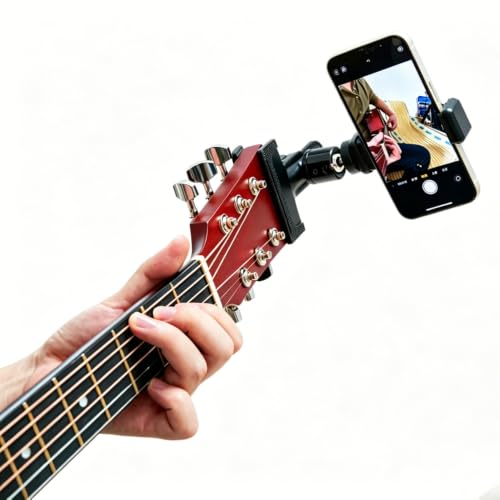
- ✓ Lightweight yet sturdy
- ✓ 360° rotation
- ✓ Easy smartphone clamp
- ✕ Limited color options
- ✕ Not a heavy-duty mount
| Frame | Lightweight plastic frame |
| Material | High-quality materials for durability |
| Dimensions | Compact design fits most spaces |
| Weight | Lightweight and portable |
I kept one eye on the live feed and one hand on the RockCheems Head Phone Holder, and I’ll tell you exactly what it felt like actually using it. The moment I unclipped the clamp, I thought, this thing is lighter than it looks yet feels sturdy enough to survive a backpack slalom.
It sits near my guitar rig without stealing the spotlight, and the metal plus plastic build has that “will this survive a gig?” confidence.
Clamping onto my guitar headstock was a breeze. The adjustable grip fits smartphones from 2.52 to 3.74 inches, and I liked how firm the clamp held without leaving scratches.
The 360-degree rotation is handy when you’re switching between chords and lyrics, or you just want a different angle for a quick screen grab. For teaching videos, it’s nice to have your hands free while you point to fretboard diagrams.
The balance feels just right for a lightweight setup. It doesn’t wobble when I strum or move, and you can tilt the phone to catch your fingers and the fretboard in a single frame.
The compact footprint means it doesn’t crowd your mic or pedals, which is a big plus if you’re recording in a small room.
If you’re teaching live or recording a quick bass reel, this is a no-nonsense tool that gets the job done without dragging in extra weight or cost. It’s not flashy, but you’ll appreciate the reliability when you’re mid-tweet or mid-beat.
Overall, it’s a surprisingly practical little setup. It won’t replace a full-blown rig, but it nails the core need: a secure, adjustable holder you can flip into action in seconds.
Gruv Gear Fret Wrap & Guitar Mute – Small Black (1 Pack)

- ✓
- ✓ Quietens unwanted noise
- ✓ Easy, tool-free setup
- ✓ Adjustable dampening control
- ✓
- ✕
- ✕ May feel bulky on tiny guitars
- ✕ Requires proper positioning for best effect
- ✕
| Product Category | Fret wrap / guitar mute |
| Material | Synthetic/soft-tension composite designed for string dampening |
| Playback/Detuning Control | Adjustable dampening pressure via adjustable strap system |
| Compatibility | Electric guitar, acoustic guitar, bass guitar, extended-range instruments |
| Installation | No tools required; installs in seconds near the nut and relocatable to headstock |
| Pack Content | Small Black, 1 Pack |
You notice it the moment you unbox the Gruv Gear fret wrap: a small black band with a surprisingly sturdy feel. The first surprise isn’t fit or finish—it’s how quickly you can slide it into place near the nut and almost forget it’s there, until you hear how quiet the thumps get on that riff you’ve been muting all week.
Between takes, I shifted it toward the headstock and found the adjustable strap system instantly telling me how hard to press. You can dial in light muting for a subtle nudge, or crank it up for near silence on a sweaty gig.
It stays put, yet you don’t feel like you’re wrestling a tool every time you grab the neck.
In use, the grip is noticeably confident. On fast two-hand tapping sections, the dampening smooths out squeaks and overtones without dulling the note itself.
It’s easy to tune the level across strings, so your clean tones stay articulate from low E to high string without muddy transitions.
Setup is a non-issue: no tools, no alterations, just slide it in and go. The small size sits unobtrusively, and you can move it to the headstock when you’re not using it, which is handy during breaks or quick tuning checks.
It’s exactly the kind of practical tweak you forget you needed until you try it.
For recording, it’s a quiet helper that makes your takes mercifully consistent. Live, it’s a confidence boost: less string noise, more controlled performance.
If you’ve dealt with stray harmonics in high-gain moments, you’ll know why this little wrap earns its keep.
All told, it’s a simple upgrade that feels sturdy, intuitive, and genuinely helpful in real-world sessions—whether you’re pounding out riffs, sweeping a melodic line, or just practicing a clean, precise setup at home.
What Features Make a Bass Guitar Ideal for Recording?
Several features contribute to making a bass guitar ideal for recording, especially when seeking budget-friendly options.
- Active vs. Passive Pickups: Active pickups provide a higher output and a clearer sound, which can be beneficial in a recording setting as they capture more detail. Passive pickups, on the other hand, offer a warmer tone and are often favored for their organic sound, which can be easier to mix with other instruments.
- Neck Profile: A comfortable neck profile allows for easier playability, especially during long recording sessions. Bass guitars with a slim neck profile can facilitate quicker finger movements and better technique, which is crucial for achieving the best sound in recordings.
- Body Shape and Material: The body shape and material influence the overall tone and resonance of the bass. Solid body basses tend to produce a punchier sound, while hollow or semi-hollow bodies can add warmth and sustain, making them suitable for different musical styles and recording environments.
- Scale Length: The scale length affects string tension and playability; shorter scales can be easier to play, especially for beginners, while longer scales provide more clarity and definition in the lower frequencies, which is often desirable in recordings.
- Electronics and Controls: Good quality electronics, including volume and tone controls, can significantly affect the sound output. Bass guitars with versatile tone controls allow players to shape their sound more effectively to suit the mix in a recording session.
- Affordability: Finding a bass that balances quality and cost is essential for budget-conscious musicians. Many brands offer entry-level models that still provide excellent sound quality and playability, making them ideal for recording without breaking the bank.
How Do Different Pickup Types Affect Recording Quality?
Different pickup types significantly influence the recording quality of a bass guitar, affecting tone, clarity, and versatility.
- Single-Coil Pickups: These pickups are known for their bright and clear tone, often delivering a more pronounced high end. However, they can be susceptible to interference and noise, which may affect recording quality, especially in live settings or untreated rooms.
- Humbucker Pickups: Humbuckers are designed to cancel out noise and interference, resulting in a fuller and warmer sound. Their dual-coil structure provides a thicker tone and better sustain, making them ideal for recording in various environments without the worry of unwanted hum.
- Active Pickups: Active pickups use a battery to boost the signal, leading to a stronger output and increased clarity. They can produce a more consistent sound across different frequencies, which is beneficial for recording, as it captures a more vibrant and dynamic performance.
- Piezo Pickups: Typically found in acoustic basses, piezo pickups capture the vibrations of the strings and body, offering a natural and resonant tone. They are excellent for recording acoustic sounds but may require additional EQ adjustments to blend well with other recording elements.
- Magnetic Pickups: These pickups respond to the magnetic field created by the strings and can vary widely in tonal characteristics. They are versatile and can be used for a range of genres, and their recording quality can greatly depend on the specific design and placement of the pickup on the instrument.
Why Is Build Quality Important for Recording Basses?
Build quality is crucial when selecting a recording bass guitar, especially for musicians on a budget. A well-constructed bass not only enhances the instrument’s sound but also affects its playability and longevity. Here are key factors illustrating the importance of build quality:
-
Materials: High-quality woods like mahogany or alder can significantly impact tone and resonance. Cheaper models may use inferior materials that produce a lower sound quality.
-
Craftsmanship: Precision in construction influences how well the bass holds tuning and performs under various conditions. Poor craftsmanship often leads to issues such as neck warping and inconsistent fretwork.
-
Hardware: Durable hardware, including tuners and bridges, ensures stability during play and recording. Low-quality components can result in tuning problems and diminished sound clarity.
-
Weight Distribution: A well-balanced bass reduces player fatigue during long sessions and enhances comfort, which is vital for recording.
-
Electronics: Good build quality encompasses reliable pickups and wiring. These elements are essential for clear, consistent sound, making sure the bass captures nuances effectively in recordings.
Investing in a bass with superior build quality can lead to better recordings and a more enjoyable playing experience over time.
Which Are the Best Cheap Basses for Recording?
The best cheap basses for recording offer great sound quality and playability without breaking the bank.
- Squier Classic Vibe ’60s Precision Bass: This bass provides a vintage look and feel, with a powerful split-coil pickup that delivers a warm, punchy tone ideal for recording.
- Yamaha TRBX174: Known for its versatility, the TRBX174 features a dual pickup configuration and an active EQ, allowing for a wide range of tones suitable for various genres.
- Ibanez GSRM20 Mikro Bass: Compact and lightweight, this short-scale bass is perfect for those who prefer a smaller instrument without sacrificing sound quality, making it great for recording sessions.
- Epiphone Toby Bass: With its unique body design and powerful pickups, the Toby Bass offers a modern sound that can easily cut through the mix in recordings.
- Fender Mustang Bass: This bass features a shorter scale length which makes it highly playable and comfortable, perfect for recording with a punchy sound that stands out.
The Squier Classic Vibe ’60s Precision Bass is a fantastic choice for those seeking that classic sound with a modern price tag. It is built with quality materials and craftsmanship, making it reliable for recording sessions.
The Yamaha TRBX174 is an excellent option for bassists looking for versatility in their sound. Its active EQ and dual pickups ensure a broad range of tones, making it suitable for various musical styles.
For players who prefer a smaller instrument, the Ibanez GSRM20 Mikro Bass is an ideal pick. Its short scale allows for easy playability, and it still produces a rich, full sound that works well in studio settings.
The Epiphone Toby Bass stands out with its unique design and robust sound profile. It is particularly effective for genres that require a stronger midrange presence, making it a valuable asset for recording different styles.
The Fender Mustang Bass is celebrated for its comfortable playability and punchy tone. Its shorter scale length makes it easy to handle, and it produces a sound that can effectively complement various recording scenarios.
What Budget Options Are Recommended for Home Studios?
When setting up a home studio, there are several budget options that can provide great value for recording bass without breaking the bank:
- Direct Injection (DI) Box: A DI box allows you to connect your bass directly to your audio interface, providing a clean signal without the need for an expensive amplifier. This is particularly useful for recording bass in a home studio, as it reduces noise and enhances sound quality.
- Affordable Audio Interfaces: An audio interface is essential for capturing high-quality recordings of your bass. Many budget-friendly options offer multiple inputs and outputs, low-latency monitoring, and compatibility with popular recording software, making them perfect for home studio setups.
- Dynamic Microphone: A dynamic microphone is an excellent choice for recording bass amps, as it can handle high sound pressure levels without distortion. They are typically more affordable than condenser microphones and are durable, making them suitable for home studio use.
- Studio Monitors: While high-end studio monitors can be expensive, there are many budget options that provide accurate sound reproduction. Investing in a good pair of studio monitors is crucial for mixing and mastering your recordings effectively.
- Affordable Bass Guitars: There are many budget-friendly bass guitars on the market that offer great playability and sound quality. Brands like Squier and Ibanez provide excellent entry-level options that are perfect for home studio recording.
- Free or Low-Cost Recording Software: There are several free or inexpensive digital audio workstations (DAWs) available that provide all the necessary tools for recording and editing bass tracks. Programs like Audacity, GarageBand, and Reaper can be perfect for beginners looking to create high-quality recordings.
How Do Popular Brands Compare in Terms of Quality and Price?
| Brand | Quality | Price |
|---|---|---|
| Brand A | High durability and excellent sound quality, popular among professionals. Rating: 4.8/5. Made in USA. | $200 – Mid-range pricing, offers good value for quality. |
| Brand B | Decent sound quality but may lack in build quality, suited for beginners. Rating: 3.5/5. Made in China. | $100 – Budget-friendly, best for entry-level users. |
| Brand C | Offers great sound clarity and robust construction, favored by hobbyists. Rating: 4.2/5. Made in Mexico. | $150 – Affordable option with solid performance. |
| Brand D | Exceptional sound quality and sturdy design, preferred by semi-professionals. Rating: 4.6/5. Made in Japan. | $250 – Slightly higher price but offers premium features. |
What Are the Pros and Cons of Using Cheap Recording Basses?
| Aspect | Pros | Cons |
|---|---|---|
| Price | Affordable, making it accessible for beginners. | May lack quality compared to higher-end options. |
| Quality | Often sufficient for home recording and demos. | Durability and sound may not meet professional standards. |
| Variety | Wide range of options available for different styles. | Limited features compared to premium basses. |
| Examples | Brands like Squier, Ibanez, and Yamaha offer affordable options. | May not have the same brand prestige as higher-end models. |
| Resale Value | Generally easier to sell due to lower price point. | Resale value may decline faster than premium brands. |
| Support/Warranty | Often come with basic warranties for peace of mind. | Limited customer support compared to well-established brands. |
What Are Common Concerns or Pitfalls with Budget Models?
Common concerns or pitfalls with budget models of recording bass include:
- Sound Quality: Budget recording bass instruments often compromise on sound quality, which can affect the overall production. While they may be affordable, the tonal richness and clarity might not match higher-end models, leading to a less professional sound in recordings.
- Durability: Cheaper models may use lower-grade materials that can result in less durability and reliability over time. This can be a concern for musicians who perform frequently or travel with their gear, as these instruments may not withstand regular wear and tear as well as their more expensive counterparts.
- Limited Features: Budget recording basses often come with fewer features compared to more expensive models. This could mean a lack of advanced electronics, fewer tonal options, or less versatility, limiting the player’s ability to customize their sound in the studio or during live performances.
- Resale Value: Instruments in the budget range typically have a lower resale value, which can be a disadvantage for musicians looking to invest in gear. If a player decides to upgrade, they may find that they cannot recoup their initial investment, making it less economical in the long run.
- Setup Issues: Many affordable recording basses might require additional setup or adjustments to play well. This can include issues with action, intonation, and pickup alignment, which may necessitate extra time and money spent at a guitar technician to make the instrument perform optimally.
How Can You Choose the Right Cheap Recording Bass for Your Needs?
Choosing the right cheap recording bass involves considering several key factors that align with your needs and preferences.
- Sound Quality: The tonal characteristics of the bass are crucial for recording. Look for a bass that provides a good balance between warmth and clarity, ensuring that it captures the nuances of your playing style and fits well in the mix.
- Playability: A comfortable neck and well-set action are vital for ease of playing, especially during lengthy recording sessions. Ensure the bass feels good in your hands and allows for smooth transitions between notes and chords.
- Build Quality: Even at a lower price point, a sturdy construction can significantly affect the longevity of the instrument. Check for solid materials and reliable hardware, as these factors contribute to both the sound and durability of the bass.
- Pickups: The type of pickups can greatly influence the sound and versatility of your bass. Consider whether you prefer passive pickups for a warmer tone or active pickups for more output and tonal control, depending on the style of music you intend to record.
- Versatility: A bass that can handle various genres will provide more value for money. Look for features such as adjustable tone controls or multiple pickup configurations that allow you to adapt the sound to different musical styles.
- Brand Reputation: Certain brands are known for producing quality instruments at affordable prices. Researching and choosing a reputable brand can help ensure that you are getting a reliable and well-manufactured bass.
- Reviews and Recommendations: Reading user reviews and seeking recommendations from fellow musicians can provide insights into the performance and reliability of specific models. This information can be invaluable in guiding your decision-making process.
What Should You Consider Based on Your Musical Style?
When choosing the best cheap recording bass, consider the following factors based on your musical style:
- Sound Quality: Look for a bass that delivers a rich, full sound suitable for your genre, whether it be rock, jazz, or electronic. The tonal characteristics of the instrument can greatly affect its performance in recordings, so it’s crucial to find one that complements your musical style.
- Build Quality: The construction material and craftsmanship of the bass can influence its durability and playability. A well-built instrument will not only withstand frequent use but also provide a more consistent sound, which is essential for recording sessions.
- Pickup Type: Consider the type of pickups the bass has, as they play a significant role in the instrument’s tone. Passive pickups may provide a warmer, vintage sound, while active pickups can offer a clearer and more powerful output, making them suitable for genres that require precision and clarity.
- Neck Profile: The neck profile affects playability, especially for different techniques and styles. A comfortable neck allows for easier finger positioning and faster playing, which can be particularly important for genres with complex bass lines.
- Versatility: Choose a bass that can adapt to various styles and settings, allowing you to experiment with different genres. A versatile instrument can enhance your creativity and make it easier to switch between styles in recordings.
- Price Point: Since the focus is on cheap options, ensure that the bass offers good value for its price. Researching reviews and comparisons can help you find an instrument that meets your needs without breaking the bank.
- Brand Reputation: Consider brands known for producing reliable and quality instruments at affordable prices. Established brands often have a track record of customer satisfaction and can provide better support and warranty options.
How Do You Test a Bass Before Buying for Recording?
When testing a bass for recording, there are several key factors to consider to ensure you are making a sound investment.
- Sound Quality: Listen for clarity and tonal richness when plucking or strumming the bass. A good recording bass should produce a balanced tone across all strings, with no dead spots or excessive overtones that could muddy the mix.
- Playability: Assess the instrument’s neck and fretboard to ensure it feels comfortable in your hands. The action, or string height, should be set to a level that allows for easy playability without buzzing, as this will affect your performance and recording quality.
- Build Quality: Examine the craftsmanship of the bass, checking for any visible flaws such as rough edges, loose parts, or poor finishes. A well-constructed bass will not only sound better but will also withstand the rigors of regular use in recording sessions.
- Electronics: If the bass is active, test the pickups and battery to ensure they are functioning properly. A reliable electronic system can significantly impact the sound quality and versatility of the bass during recording.
- Versatility: Consider how well the bass can adapt to various styles of music you plan to record. A versatile instrument with a wide tonal range can be beneficial for achieving different sounds in the studio.
- Price vs. Value: Evaluate whether the bass offers good value for its price. While looking for the best cheap recording bass, ensure that it meets your needs without compromising on quality, as this will provide a better return on your investment.