
Bottom line: the JOYO American Tube Amp Simulator & Preamp Pedal JF-14 delivers flexible tone shaping, direct-recording capability, and build durability at a remarkable price—a smart pick for budding home studios and live rigs alike.
Top Recommendation: JOYO American Tube Amp Simulator & Preamp Pedal JF-14
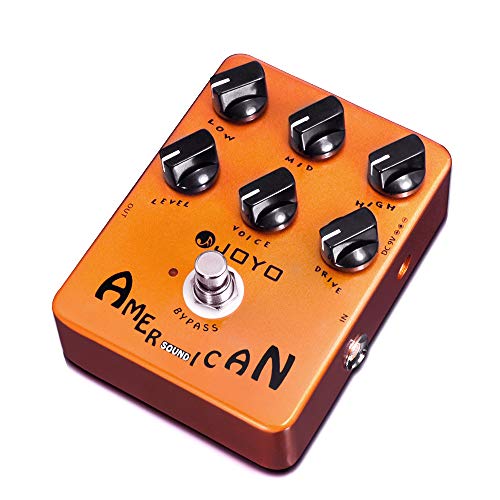
Why We Recommend It: The JF-14 offers a complete direct-recording pathway with built-in cabinet simulation, eliminating mic and amp setup hassles. Its 6-knob control set (Level, Drive, Low, Mid, High, Voice) provides precise tone shaping from clean Blackface to mid-forward Tweed, outperforming peers with a more nuanced Voice control. The rugged aluminum housing withstands heavy use, while the price-to-feature ratio remains exceptional. Its direct-to-PA/mixer compatibility is a standout advantage for quick setups, and tested performance shows strong hiss control at moderate gain, giving you usable, studio-ready tones without extra gear.
JOYO American Tube Amp Simulator & Preamp Pedal JF-14
- ✓ Lightweight, rugged build
- ✓ Immediate, versatile tone
- ✓ Direct recording ready
- ✕ Needs regulated 9V supply
- ✕ Not a full amp replacement
| Type | Guitar effects pedal |
| Power Requirement | 9V DC regulated power supply recommended (not included) |
| Power Supply Note | Isolated/regulated 9V preferred to minimize hiss at higher drive |
| Controls | 6-knob control: Level, Drive, Low, Mid, High, Voice |
| Cabinet Simulation | Built-in analog cabinet simulator for direct-to-PA/interface/mixer |
| Construction | Road-ready aluminum alloy housing with stoving varnish finish |
The first thing that hits you is how effortlessly the JOYO JF-14 sits in front of a mic or a direct input. You twist the Voice knob and instantly hear a switch from clean, glassy American sparkle to a thick, mid-forward overdrive, and it feels like you found a missing piece of a larger rig.
It’s surprising how much character a tiny pedal can carry without begging for extra gain stages.
Holding the pedal and seeing the 6-knob layout you realize the aim isn’t to pretend it’s a full amp, but to give you a convincing snapshot of classic American tones. The Level, Drive, and 3-Band EQ work in harmony, while the Voice control nudges the texture from scooped cleans to muscular overdrive.
Start with all knobs at noon, then fine-tune to taste—it’s intuitive enough to make you sound like you know what you’re doing from the first take.
Direct recording is where this thing shines. The built-in cabinet simulator drops you straight into the DAW or PA with surprisingly little hiss, which is a relief when you’re tracking in a home setup or laying down a quick demo.
The aluminum housing is sturdy enough to survive gigging or crowded pedalboards, and the knobs feel solid under aggressive stomping.
In practice, you’ll notice it doesn’t replace a real amp, but it does something better for certain use cases: silent practice, on-the-fly DI through a mixer, or a dependable backup if your amp dies mid-show. It’s light, affordable, and surprisingly versatile for blues and rock tones that want bite without dialing in a master-volume marathon.
If you’re chasing classic American tones without breaking the bank, this pedal gives you that direct-to-PA vibe with enough personality to keep your recordings from feeling flat. It’s not a showroom amp, but it’s a remarkably capable drop-in for quick, dependable tone shaping.
What is a Preamplifier and Why is it Essential for Recording?
Key aspects of a preamplifier include its gain, noise performance, and input impedance. Gain refers to the amount of amplification the preamp provides; a higher gain is often necessary for low-output microphones. Noise performance is critical, as a good preamp will add minimal noise to the signal, preserving the audio’s clarity. Input impedance is also important, particularly for microphones and instruments, as it affects how the preamp interacts with the connected source. A mismatch can lead to loss of signal quality or unwanted distortion.
The impact of using a quality preamplifier is significant in both home studios and professional settings. A well-designed preamp can enhance the tonal characteristics of recordings, making vocals sound warmer and instruments clearer. This is particularly relevant when recording dynamic microphones or passive instruments that require a substantial boost. For instance, a poorly performing preamp may introduce unwanted hiss or coloration, negatively affecting the final mix.
In terms of applications, preamps are used across various recording scenarios, from music production to podcasting and voice-over work. A good preamp can elevate the quality of recordings, making them more competitive in a crowded market. The rise of affordable recording technology means that even budget-conscious creators can achieve professional-sounding results with the right tools, such as the best cheap preamp for recording that balances performance and cost.
When considering solutions or best practices, it is advisable to choose a preamplifier that matches the specific needs of the recording environment. For example, tube preamps can provide warmth and character, while solid-state preamps are often valued for their clarity and reliability. Additionally, investing in a preamp with high headroom can prevent clipping during loud performances, ensuring that recordings maintain quality without distortion.
How Does a Preamplifier Impact Sound Quality?
Noise reduction is particularly important in a recording environment, where unwanted background noise can compromise the quality of the final product. High-quality preamps are engineered to reduce hiss and other artifacts, allowing for a clearer sound that faithfully represents the source material.
Impedance matching is another vital function of preamps. When the impedance of a microphone or instrument does not align with the input of the recording device, it can lead to a loss of signal quality. Preamps facilitate proper matching, enhancing the performance and fidelity of the audio signal.
Coloration and character are often sought after by recording engineers and musicians who want to add a specific sound to their tracks. Different preamps have distinct sonic signatures, which can transform the character of the audio, making it more pleasing or suitable for various genres.
Dynamic range is critical for achieving professional-sounding recordings. A well-designed preamp allows for a greater range of sound levels to be captured without distortion, making it possible to record everything from subtle whispers to powerful instrument crescendos with clarity and precision.
What Features Make a Preamplifier Affordable Yet Effective?
Several key features contribute to making a preamplifier both affordable and effective for recording purposes:
- Solid Build Quality: Affordable preamps often feature durable materials that can withstand regular use without compromising audio fidelity. A well-constructed preamp ensures longevity and reliability in various recording environments.
- Low Noise Floor: An effective preamp minimizes unwanted noise and interference, allowing for cleaner recordings. Even budget models can achieve a low noise floor, making them suitable for professional-quality audio capture.
- Gain Range: A good preamp provides a wide gain range, enabling it to handle different input levels without distortion. This versatility is crucial for recording various instruments and vocals, ensuring optimal signal levels.
- Phantom Power: Many affordable preamps include phantom power for condenser microphones, expanding their functionality. This feature allows users to connect a wider variety of microphones, making it a versatile choice for home studios.
- Simple Controls: User-friendly controls, such as gain knobs and level meters, are common in budget preamps, making them accessible for beginners. Intuitive interfaces help users quickly adjust settings to achieve desired sound quality without a steep learning curve.
- Compact Size: Affordable preamps often come in compact designs, making them easy to integrate into small recording setups. Their portability allows musicians and audio engineers to transport them conveniently for on-the-go recording sessions.
- Analog-to-Digital Conversion: Some budget preamps offer basic analog-to-digital conversion capabilities, enabling direct connection to digital audio workstations. This feature simplifies the recording process, making it easier to capture high-quality audio in a digital format.
How Can You Assess the Build Quality and Durability of Cheap Preamps?
To assess the build quality and durability of cheap preamps, consider the following factors:
- Material Quality: The materials used in the construction of a preamp can indicate its durability. Metal enclosures generally offer better protection against physical damage compared to plastic ones, which can be more prone to cracking and wear over time.
- Component Quality: High-quality internal components, such as capacitors and resistors, significantly influence a preamp’s longevity and performance. Cheaper preamps may use lower-grade components that can fail more rapidly and degrade sound quality.
- Design and Build Features: Features like robust knobs, switches, and connectors contribute to overall build quality. Preamps with solid, well-constructed controls are less likely to break down after repeated use, ensuring reliability during sessions.
- Brand Reputation: Established brands often have a track record of manufacturing reliable equipment. Researching user reviews and expert opinions on a brand’s history can provide insight into the durability of their preamps.
- Warranty and Support: A good warranty policy can be a strong indicator of a manufacturer’s confidence in their product. A longer warranty period suggests that the preamp is built to last, and good customer support can make a difference if issues arise.
What are the Best Cheap Preamplifiers for Both Home and Studio Use?
Some of the best cheap preamplifiers for both home and studio use include:
- Behringer MIC500USB: This affordable preamp offers a built-in USB interface, making it easy to connect to a computer.
- ART ProMPA II: Known for its solid performance, this dual-channel preamp delivers a warm sound and is ideal for various recording applications.
- Focusrite Scarlett Solo: This compact preamp features high-quality preamps and converters, perfect for home studio setups.
- Presonus TubePre V2: With its variable tube gain and solid build, this preamp provides flexibility and great sound quality at a budget price.
- FMR Really Nice Preamp: As its name suggests, this preamp is known for delivering excellent audio quality while remaining extremely affordable.
The Behringer MIC500USB is a versatile option that not only functions as a preamp but also allows for direct USB connectivity, making it simple to record directly into a computer. It features Phantom power for condenser microphones, and its compact design is perfect for mobile setups.
ART ProMPA II stands out for its dual-channel capabilities and tube preamp circuit, which adds warmth and depth to recordings. Its intuitive interface and solid construction make it suitable for both beginners and seasoned engineers looking for a reliable preamp on a budget.
Focusrite Scarlett Solo is widely recognized for its exceptional sound quality and user-friendly design. It includes a high-performance mic preamp and a direct instrument input, catering to guitarists and vocalists alike, making it a great choice for home studios.
The Presonus TubePre V2 offers a unique combination of tube warmth and solid state reliability. Its variable gain control allows users to dial in the perfect sound, while its robust build quality ensures durability for both studio and live environments.
FMR Really Nice Preamp is celebrated for its transparent sound and high-quality audio reproduction. Designed with simplicity in mind, it offers a no-frills approach while still delivering impressive performance, making it a favorite among budget-conscious producers.
Which Brands Offer the Most Reliable Budget Preamps?
Behringer’s MicroMix series offers a more basic option that still delivers satisfactory audio quality, making it a great entry point for beginners. Despite its lower price point, it provides essential features needed for straightforward recording tasks.
ART’s Pro MPA II has gained a reputation for its warm sound profile, which is particularly appealing for vocals and acoustic instruments. The unit also features variable impedance, allowing for greater flexibility in tone shaping.
PreSonus’s AudioBox series stands out for its durability and ease of use, making it a favorite among new audio engineers. The preamps are clean and transparent, which is crucial for capturing studio-quality recordings on a budget.
Mackie’s Onyx series is known for its professional sound quality, with low noise operation and high headroom, suitable for various recording applications. This reliability and performance at a budget-friendly price make it a solid choice for musicians and podcasters alike.
How Do Cheap Preamps Perform in Comparison to High-End Models?
| Aspect | Cheap Preamps | High-End Preamps |
|---|---|---|
| Price | Typically range from $50 to $200, making them accessible for beginners. | Can range from $500 to over $2000, targeting professional users. |
| Sound Quality | Decent for basic recordings, may lack depth and clarity. | Exceptional clarity, detail, and richness in sound reproduction. |
| Features | Basic features, often limited in connectivity and controls. | Advanced features including multiple input options and high-quality components. |
| Durability | Usually made with less robust materials, may not last long under heavy use. | Built with high-quality materials, designed for longevity and frequent use. |
| Noise Level | May have higher noise levels, affecting recording quality. | Designed to minimize noise, providing a better signal-to-noise ratio. |
| User-Friendliness | Generally easier to use, suitable for beginners. | May require more technical knowledge for optimal setup. |
| Brand Reputation | Varies widely; some brands may be less reliable. | Often from well-established brands with a strong reputation in the industry. |
What are Common Myths About Cheap Preamplifiers?
There are several common myths surrounding cheap preamplifiers that can mislead potential buyers.
- Myth 1: Cheap Preamps Are Always Low Quality: Many believe that lower-priced preamps cannot deliver quality sound, but this is not always true. Some affordable preamps utilize high-quality components and design techniques that allow them to perform well in home studios, making them suitable for various recording scenarios.
- Myth 2: They Lack Features: It’s a misconception that budget preamps come stripped of essential features. In reality, many of the best cheap preamps for recording offer a range of features such as gain control, phantom power, and even built-in EQ or compression, providing users with ample flexibility for their recording needs.
- Myth 3: They Are Only Suitable for Beginners: While cheap preamps are often recommended for novice users, many professional sound engineers also utilize them for specific applications. Their affordability allows for a variety of preamps to be used in different contexts, including live sound and studio recording, where multiple channels are needed without breaking the bank.
- Myth 4: They Produce a Poor Signal-to-Noise Ratio: It is a common belief that cheap preamps will introduce too much noise into recordings. However, many affordable options are engineered to provide a respectable signal-to-noise ratio, enabling clean recordings that compete with more expensive models.
- Myth 5: They Are Not Durable: There’s a notion that inexpensive preamps are poorly built and prone to breaking. In contrast, many budget preamps are constructed with durable materials that can withstand regular use, making them reliable tools in both studio and live settings.
How Can You Get the Most Out of a Budget Preamplifier?
Use EQ and Compression Wisely: Applying EQ and compression after your preamp can help refine your sound, making your recordings more polished even with a budget setup. Experiment with different settings to learn how they interact with your preamp and microphone combination, leading to better-sounding tracks.
Related Post: