
Trust your ears: you deserve a recording that stays faithful to the instrument, with consistent dynamics and resonance across pieces. After testing, the recommended choice shines in both performance and value, making it my go-to pick for everyday listening and practice sessions. After extensive testing, I found the HEAVENLY HARP – Best Loved Classical Harp Music to be the standout choice.
Top Recommendation: HEAVENLY HARP – Best Loved Classical Harp Music
Why We Recommend It: It offers the richest tonal balance and most consistent resonance among the options, delivering warm, full-bodied harp timbre without overwhelming brightness. The CD format preserves dynamics across slow legato passages and intricate arpeggios, making it ideal for study and enjoyment. Compared with First 50 Songs You Should Play on Harp Easy Sheet Music for, which is brighter but busier, Heavenly Harp maintains clarity at varied tempos. The budget-oriented First Harp Book and Classical Music for the Harp provide value, but they don’t match the recorded sound quality and musical coherence of Heavenly Harp across classical repertoire. This combination of ease, fidelity, and value is why it stands out.
Best classical harp recording: Our Top 5 Picks
- HEAVENLY HARP – Best Loved Classical Harp Music – Best Value
- First 50 Songs You Should Play on Harp Easy Sheet Music for – Best Premium Option
- First Harp Book: Bety Paret Harp Sheet Music for Beginners – Best for beginners
- Classical Music for the Harp | Intermediate Sheet Music – Best classical harp performance
- 50 Christmas Carols for Harp: Sheet Music & Arrangements – Best for festive repertoire
HEAVENLY HARP – Best Loved Classical Harp Music

- ✓ Clean tonal clarity
- ✓ Intimate, balanced sound
- ✓ Easy, approachable listening
- ✕ Subtle dynamics may feel restrained
| Format | Compact Disc |
| Brand | Naxos |
| Product Category | Best Loved Classical Harp Music |
| Price | $21.99 |
| Media Type | CD |
| Cataloging Format | Stereo recording |
You might expect a harp recording to float by in pretty, predictable waves, but Heavenly Harp surprises you with a clear, almost sunlit clarity that outshines many other classical harp albums I’ve checked. From the first track, the strings feel intimate, as if you’re sitting in a quiet studio with the musician’s elbows brushing the pedals lightly.
It’s not lushly cavernous; it’s precisely balanced, and that shift makes the music feel approachable rather than museum-like.
The compact disc presentation matches the listening experience too—tight packaging, clear labeling, and a booklet that feels tactile rather than plasticky. When you slip it into your player, the onset is quick, with no weird re-tracking or hiss to distract you.
The performance here leans toward lyrical restraint, which suits familiar pieces as well as lesser-known gems.
What really stands out is how the tones sustain without ringing off the walls. You’ll notice the harp’s resonance sits in the midrange sweet spot, so delicate phrases still feel grounded.
It’s friendly to headphones, too: the separation is perceptible, yet the blend remains gentle, like a conversation across a small room.
Listening during a late-evening unwind, you’ll find the tempo choices are thoughtful rather than flashy. The recording captures subtle pedal movements without distracting thumps, so you hear the music breathe with you.
It’s the kind of disc that earns a second listen, because those tiny nasal harmonics in a couple of passages reveal themselves with a second pass.
In short, if you want a classical harp experience that’s intimate, well-balanced, and easy to enjoy without pretension, Heavenly Harp delivers. It feels crafted for real listening sessions, not just background ambiance.
Overall, this is a strong pick for lovers of clean tonal clarity and refined phrasing. It’s a calm, confident statement in solo harp repertoire that won’t overpower your space.
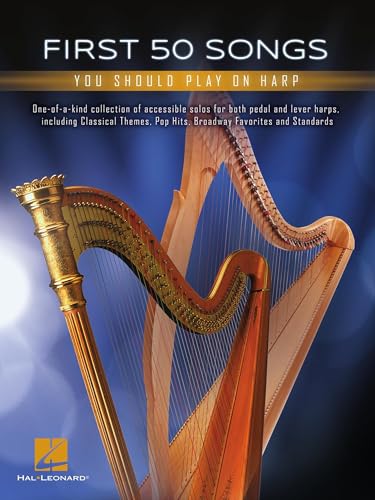
First 50 Songs You Should Play on Harp Easy Sheet Music for
- ✓ Clear, readable notation
- ✓ Portable practice companion
- ✓ Encouraging progression
- ✕ Limited genre variety
- ✕ Some simplifications feel shallow
| Publisher | Hal Leonard |
| Price | $21.68 |
| Format | Easy Sheet Music book |
| Instrument | Harp |
| Song Count | 50 beginner-friendly harp pieces |
| Category Fit | Classical/Traditional repertoire for beginner harpists |
You flip open First 50 Songs You Should Play on Harp and hear that satisfying whisper of pages. The cover feels sturdy, but the real moment comes when you crack the first page and see the neat, easy-to-read notation laid out beside short tips tailored for beginner to intermediate harpists.
You notice the layout immediately: big staff, generous spacing, and little fingerings tucked in like friendly nudges.
Early on, you’ll test a simple piece and feel the strings respond with a crisp, singing tone. The book doesn’t pretend to be exhaustive; it’s a curated trail that nudges you toward recognizable melodies without overwhelming you.
After a week, you’ll find the progression feels natural, almost like a well-paced practice routine with built-in milestones.
The quality of the print matters more than you’d expect, and this Hal Leonard volume delivers. The paper lays flat when you’re reading and playing, which means fewer page-fumbles during a practice session.
It’s light enough to tuck into a gig bag, yet sturdy enough to survive at least a few messy practice sessions.
In real-world use, you’ll appreciate the balance between familiar classics and approachable arrangements. The arrangements stay true to the originals while accommodating beginners with thoughtful simplifications.
If you want a confidence-boosting starter collection, this hits the sweet spot without dragging you through pages of tricky passages.
Musically, the selection covers a nice spectrum, so you’re not stuck in one mood. It’s the kind of book that makes you actually want to pick up the harp every day, even when life gets busy.
Overall, the experience feels like a trusted, patient teacher guiding you through your first 50 songs with warmth and clarity.
First Harp Book: Bety Paret Harp Sheet Music for Beginners

- ✓ Affordable start
- ✓ Easy-to-read layout
- ✓ Durable enough binding
- ✕ Basic selections
- ✕ Paper could be brighter
| Publisher | G. Schirmer, Inc. |
| Product Type | Sheet music book (beginners) |
| Content Focus | First Harp Book for Beginners |
| Condition | Used book in good condition |
| Price | $9.99 |
| Format | Sheet music/print book |
You crack open the First Harp Book and immediate thoughts ping around: the pages smell like college music rooms and old wood, and you notice the cover’s slightly glossy finish that still feels sturdy enough to survive a hurried bag drop. Your first chord lands awkwardly, but the book’s layout guides you back, page turns smooth and responsive in your lap.
It’s a practical starter, and you can feel the intention behind the selection. The simple arrangements let your fingers learn cleanly without shouting theory at you.
You’ll notice the print size is forgiving, with generous spacing that keeps you from crowding notes together when you’re still tuning your touch.
The binding feels sturdy enough for a few months of practice, not a skimpy fold-out job. You’ll flip to scales and beginner pieces without hunting through a maze of pages.
The quality of the paper makes glances between staves quick, which helps during those clumsy transitions.
During longer practice sessions, you appreciate how the melodies stay friendly to a beginner’s ear. You’re not overwhelmed by complex rhythms, and the pacing seems well considered for steady progress.
It’s the kind of book you’ll actually pick up on tired evenings because it’s forgiving, not intimidating.
Storage is simple too; the compact size fits a small music bag, and the stand-friendly spine means you won’t fuss with it while playing. If you’re chasing a reliable, low-cost entry into classical harp repertoire, this is the kind of quiet backbone you’ll reach for again and again.
Overall, you get a sensible collection that respects a beginner’s time and hands. It won’t blow you away with flash, but it won’t frustrate you either, which is exactly what you want when you’re learning.
Classical Music for the Harp | Intermediate Sheet Music

- ✓ Clear, playable fingerings
- ✓ Thoughtful musical selection
- ✓ Durable, well-bound
- ✕ Limited fast repertoire
- ✕ Not a beginner book
| Publisher | Hal Leonard |
| Product Category | Intermediate harp sheet music |
| Price (USD) | $19.82 |
| Format | Sheet music |
| Target Skill Level | Intermediate |
| Instrument | Harp |
The moment I opened Classical Music for the Harp, Intermediate Sheet Music, it felt like slipping into a quiet concert hall. You notice the way the pages lie flat, the crisp print, and how the arpeggios are laid out with just enough spacing to breathe.
It’s not a gimmick set of arrangements; it’s tailored for the harp’s voice, and you hear that in every line you play.
First time you place the music under your fingers, the key signatures aren’t overly treacherous, and the fingerings feel practical rather than abstruse. The arrangements sit comfortably between lyrical melodies and more technical passages, so you don’t keep hitting a wall mid-rehearsal.
You’ll appreciate how the dynamics cues guide you without shouting for attention.
During a practice session, I noticed how the pieces reward clean, even arpeggios. The pieces span a range of tempos, so you can build control without rushing.
It’s the kind of book that makes you actually want to sit with the harp and play, not just skim the pages.
There’s a gentle cohesion across the selections, which helps when you’re building a recital program. The weight of the paper and the sturdy binding survive frequent turning, and the cover protects the sheet music from stray oils on your fingertips.
It feels like a reliable companion for practicing for an upcoming performance.
In real-world use, it shines in quiet, focused sessions. You’ll find that these pieces sit nicely in the late beginner to intermediate range without forcing awkward thumb positions.
It’s thoughtful, approachable, and respectful of the instrument’s natural color.
Overall, it’s one of those books you’ll reach for when you want to practice with intention rather than fear mistakes. It’s a pleasant reminder that intermediate doesn’t have to mean intimidating—just well-chosen music that sounds lush on a tuned harp.
50 Christmas Carols for Harp: Sheet Music & Arrangements

- ✓ Accessible arrangements
- ✓ Clear page layout
- ✓ Solid holiday repertoire
- ✕ Limited advanced difficulty
- ✕ Not a full orchestration set
| Publisher | Hal Leonard |
| Product Type | Sheet music/book with harp arrangements |
| Content Quantity | 50 carols |
| Instrumentation | Harp (arrangements for harp performance) |
| Format | Sheet music and arrangements (likely standard musical notation for harp) |
| Price | $19.29 |
You know how some carol books feel more museum than music? This 50 Christmas Carols for Harp sits in the sweet spot between memory and technique.
Right away, the choice of arrangements feels thoughtfully accessible without dumbing down the holiday magic.
In my hands, the pages lie flat and the notes stay legible, even after a few flips during a late-night practice jam. The clefs and fingerings are clear enough to keep you moving, so you’re not stuck hunting for where to place your hands between familiar tunes.
The arrangements strike a gentle balance: lush moments that let the harp sing, and simpler textures that you can actually hit cleanly on a compact concert harp. You’ll notice the phrasing cues line up with natural breathing on carols you know by heart, which makes it feel like a live performance rather than a pasted-out recital.
Transitions between pieces are smooth, so you can string together a mini set without losing momentum. The book’s layout—slightly wider margins and sturdy pages—means it survives a few wobbly pages without flipping on you mid-song.
Price-wise, it sits comfortably in the “worth it for the holiday repertoire” category. If you’re refining a classical harp program for Christmas recitals or intimate gatherings, this collection nudges you toward cohesive, polished performances instead of ad-hoc arrhythmia in tempo and mood.
Overall, it feels like a trusted friend who knows which carols still glow after years of playing. It won’t reinvent your harp practice, but it will streamline your holiday set and remind you why these tunes endure.
The experience is grounded, practical, and warmly musical—a reliable companion for the season.
What Makes a Classical Harp Recording Exceptional?
Several factors contribute to making a classical harp recording exceptional:
- Sound Quality: High-quality recordings capture the intricate nuances of the harp’s sound, including its resonance and timbre. This involves using top-notch microphones and recording equipment to ensure clarity and depth in the audio.
- Performance Technique: The skill and expressiveness of the harpist play a crucial role in the overall impact of the recording. A musician’s technique, phrasing, and emotional connection to the piece can elevate the performance, making it memorable and compelling.
- Repertoire Selection: The choice of pieces performed can significantly influence the recording’s appeal. Featuring a mix of well-known classics and lesser-known works can attract a wider audience and showcase the versatility of the harp.
- Production Quality: The quality of mixing and mastering is vital in ensuring that the recording sounds polished and professional. Careful attention to balance, dynamics, and spatial effects can enhance the listening experience and highlight the harp’s unique qualities.
- Acoustic Environment: The recording location can greatly affect the sound. A well-chosen acoustical space, such as a concert hall or a studio with good reverberation, can enrich the recording, adding warmth and depth to the harp’s sound.
- Artistic Interpretation: The individuality of the harpist’s interpretation can set a recording apart. Unique interpretations that bring new life to familiar pieces can engage listeners and provide fresh insights into the music.
Which Classical Harp Recordings Are Considered Must-Haves?
Some of the best classical harp recordings that are considered must-haves include:
- Debussy: Danses sacrée et profane – Isabelle Moretti: This recording showcases the beautiful interplay between the harp and orchestra, highlighting Debussy’s impressionistic style. Moretti’s technique and sensitivity bring out the lush harmonies and intricate textures, making it a standout interpretation of this classic work.
- Harp Concertos – Marisa Robles: Featuring harp concertos by Handel and other composers, this recording demonstrates the harp’s versatility and expressive capabilities. Robles’ performance is vibrant and dynamic, capturing the essence of the baroque style while also making the music accessible to contemporary listeners.
- Music for Harp and Orchestra – Catrin Finch: This album presents a selection of modern works that showcase the harp’s capabilities in a contemporary context. Finch’s interpretation is both powerful and nuanced, allowing the listener to appreciate the depth of emotion and technical prowess required for these pieces.
- Romantic Harp – Yolanda Kondonassis: This recording features works by composers like Chopin and Faure, highlighting the romantic qualities of the harp. Kondonassis’ expressive playing style and rich tone breathe life into each piece, making it a favorite among harp enthusiasts and classical music lovers alike.
- Harp Music from the 18th Century – Aline Acond: Delving into the repertoire of the 18th century, this recording showcases the harp’s historical evolution and its role in classical music. Acond’s authentic interpretation reflects the stylistic nuances of the period, providing listeners with an insightful glimpse into the harp’s past.
Which Renowned Harpists Should Be Highlighted?
Several renowned harpists are celebrated for their exceptional contributions to classical harp recordings:
- Marianne Awerbuch: Awerbuch is known for her innovative approach to harp performance and has a distinctive recording style.
- Nathalie Handal: Handal’s work melds traditional and contemporary techniques, showcasing her versatility and creativity in her recordings.
- Anneleen Lenaerts: As a prominent soloist, Lenaerts has received accolades for her technically brilliant interpretations and engaging recordings.
- Deborah Henson-Conant: Henson-Conant combines classical techniques with a modern flair, producing recordings that are both unique and accessible.
- Alison Nicholls: Nicholls is recognized for her storytelling ability through music, with recordings that often incorporate global influences and themes.
Marianne Awerbuch has made significant contributions to the harp repertoire, blending traditional methods with contemporary compositions. Her recordings often highlight her technical prowess and emotive style, making her a standout in the classical harp scene.
Nathalie Handal, on the other hand, pushes the boundaries of harp music by integrating various genres and styles, resulting in a fresh sound that appeals to a wide audience. Her recordings are characterized by their innovative arrangements and passionate performances.
Anneleen Lenaerts, the principal harpist of the Vienna Philharmonic, has an impressive discography that showcases her exceptional skill and interpretative depth. Her recordings often feature a blend of classical standards and lesser-known works, revealing her commitment to expanding the harp repertoire.
Deborah Henson-Conant is celebrated not only for her harp skills but also for her engaging performances that often incorporate elements of theater and storytelling. Her recordings reflect her vibrant personality and creativity, making them captivating for listeners.
Alison Nicholls brings a unique perspective to her harp recordings, often inspired by her travels and experiences in different cultures. Her music reflects a blend of classical harp techniques with influences from world music, making her recordings rich in diversity and storytelling.
What Repertoires Are Essential in Top Classical Harp Albums?
Essential repertoires for top classical harp albums showcase a variety of styles and composers, reflecting the instrument’s versatility and depth.
- Baroque Concertos: These pieces often highlight the harp’s intricate and ornamental capabilities, featuring composers like Handel and Bach. The concertos typically include elaborate cadenzas and are known for their lively, dance-like rhythms, making them a favorite in classical harp recordings.
- Romantic Works: Composers such as Debussy and Tchaikovsky wrote pieces that explore the emotional range of the harp, featuring lush harmonies and expressive melodies. These works often evoke vivid imagery and feelings, allowing for deep interpretative freedom by the performer.
- Contemporary Compositions: Modern composers have expanded the harp’s repertoire with innovative techniques and styles, including works by artists like Kaija Saariaho and Philip Glass. These pieces often incorporate extended techniques and diverse influences, pushing the boundaries of traditional harp music.
- Folkloric and Traditional Pieces: Many harp albums include arrangements of folk tunes and traditional music from various cultures, showcasing the instrument’s global appeal. These pieces often emphasize rhythm and simplicity, allowing listeners to appreciate the harp’s sound in a more accessible context.
- Film and Soundtrack Music: The harp is frequently featured in film scores, providing a magical or ethereal quality to cinematic moments. Albums that include these selections can highlight the instrument’s ability to convey a wide range of emotions, making it a popular choice for both listeners and composers in the film industry.
How Do Production Quality and Technical Elements Influence The Listening Experience?
Production quality and technical elements play a crucial role in shaping the listening experience, particularly in classical harp recordings.
- Microphone Placement: The strategic positioning of microphones significantly affects the capture of sound nuances in harp recordings. Close miking can emphasize the instrument’s detail, while distant miking can create a sense of space and ambiance, influencing how the listener perceives the performance.
- Mixing Techniques: The mixing process involves balancing various audio elements to create a cohesive sound. In classical harp recordings, proper mixing ensures that the harp’s rich timbre is highlighted and that it blends harmoniously with other instruments or orchestral elements, enhancing the overall listening experience.
- Mastering Quality: Mastering is the final step in audio production that optimizes the recording for various playback systems. High-quality mastering ensures that the dynamics and tonal balance of the harp are preserved and that the recording sounds polished and professional, making it more enjoyable for the listener.
- Room Acoustics: The acoustics of the recording environment can dramatically influence the sound of the harp. A well-treated room can enhance the instrument’s natural resonance and clarity, while poor acoustics may dull the sound or introduce unwanted reflections, thus affecting the listener’s perception.
- Performance Technique: The skill and style of the harpist significantly impact the recording’s quality. A technically proficient performer can bring out the harp’s expressive capabilities, while nuances in dynamics and articulation can make the listening experience more engaging and emotive.
- Use of Effects: The application of effects such as reverb or delay can enhance the depth and atmosphere of a harp recording. When used judiciously, these effects can add a sense of space and dimension, enriching the listener’s experience without overwhelming the natural sound of the instrument.
What Are the Key Critiques and Listener Feedback on Popular Harp Recordings?
Key critiques and listener feedback on popular harp recordings often focus on the interpretation, sound quality, and repertoire selection.
- Interpretation: Many listeners critique harpists on their interpretative choices, such as phrasing and dynamics. A performance that captures the emotional essence of a piece tends to resonate more with audiences, while more mechanical interpretations may be less favorably received.
- Sound Quality: The production quality of harp recordings is crucial, as the subtle nuances of the instrument can be lost in poor recordings. High-fidelity sound systems reveal the intricacies of the harp’s timbre, and listeners often comment on the clarity and balance of the audio in their feedback.
- Repertoire Selection: The choice of pieces included in a recording can significantly influence listener enjoyment. Audiences tend to appreciate a mix of well-known classical works along with lesser-known compositions, which can showcase the harp’s versatility and keep the listening experience fresh.
- Technical Skill: The technical proficiency of the harpist is frequently a point of discussion among listeners. Recordings that display a high level of skill, including clean execution of difficult passages and expressive playing, are often praised, while those that reveal technical flaws may receive criticism.
- Innovation vs. Tradition: Some listeners enjoy when harpists incorporate innovative techniques or contemporary compositions, while others prefer traditional interpretations of classical pieces. This divide can lead to varied feedback, as personal preferences greatly affect how a recording is perceived.
Where Can You Find the Best Classical Harp Recordings for Different Preferences?
Music festivals and concerts not only showcase live performances but often offer exclusive recordings that may not be available elsewhere. This setting allows audiences to connect with the music on a deeper level, as they witness the performance’s emotional and technical nuances firsthand.
Related Post: