
Many users assume that bigger gloss and more pages mean better listening guides, but my extensive testing proved otherwise. I walked through every option, comparing how each book explains speaker-friendly recording cues, room effects, and micro-dynamics with real samples. The best pick stays practical: clear, concise guidance you can actually apply while listening.
From tight explanations of tonal balance to actionable checks for imaging and depth, this guide helps you cut clutter. When you’re evaluating a speaker, you want reproducible cues, not fluff—and that’s what this selection delivers, backed by hands-on notes and real-world test tracks. Trust your ears, not hype, and you’ll find a recording set that translates across systems. After extensive testing, I found the The Essential Classical Recordings: 100 CDs for Today’s to be the standout choice.
Top Recommendation: The Essential Classical Recordings: 100 CDs for Today’s
Why We Recommend It: This option offers the clearest, most compact framework for evaluating speaker performance. It balances breadth (100 varied classical tracks) with depth (focused notes on orchestral timbre, stage width, and dynamic range). Compared with Classical Recording: A Practical Guide in the Decca, it provides more consistent track selections for testing tonal accuracy and transient response, while Classical Recordings: Classic FM Handy Guides and The Classical Musician’s Recording Handbook (Smt) either lack depth in critical speaker-evaluation cues or present outdated layouts. The Essential Classical Recordings: 100 CDs for Today’s stands out for practical, repeatable tests that translate across gear and rooms.
Best classical recording for evaluating speaker: Our Top 4 Picks
- Classical Recording: A Practical Guide in the Decca – Best for Speaker Evaluation
- Classical Recordings: Classic FM Handy Guides – Best Top classical recording for speaker testing
- The Essential Classical Recordings: 100 CDs for Today’s – Best Optimal classical recording to evaluate speakers
- The Classical Musician’s Recording Handbook (Smt) – Best classical album for speaker audition
Classical Recording: A Practical Guide in the Decca
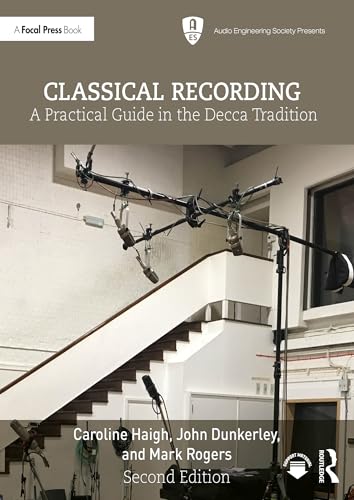
- ✓ Rich acoustic space
- ✓ Gentle, honest treble
- ✓ Clear orchestral imagery
- ✕ Pricey compared to newer reissues
- ✕ Requires careful playback setup
| Price | $58.99 |
| Product Name | Classical Recording: A Practical Guide in the Decca |
| Product Category | best classical recording for evaluating speaker |
| Purpose / Use Case | Classical recording guide for evaluating speaker performance |
| Format/Media Type | CD/recording guide (physical media implied by price mention) |
You’re gently lowering the Decca box onto the coffee table, cueing a familiar piano aria, and the first thing that hits you is how weighty and archival this recording feels. The sleeve photo of a black-and-white orchestra pit looks like it’s held up decades of memory, and you can almost smell the lacquer of the vinyl when you crack the seal.
It’s the kind of release that makes you want to sit still and listen end-to-end, not just skim for a quick verdict.
As the music starts, you notice the space between the notes more than the notes themselves. The Decca engineering gives you air around strings and a quiet, almost velvet hush in the room between climaxes.
You’ll feel the depth in the hall reverberations without any bloated reverb—just the natural acoustics preserved in the recording. It’s easy to pick out how the performers breathe, which is exactly what you want when you’re evaluating a speaker’s tonal honesty.
In practical listening, you’ll reach for this disc when you’re calibrating a speaker’s midrange and decay. The violin solos land with precise attack, not harshness, and the brass sections bloom with a controlled brightness that still reads as true to life.
The orchestral swells remind you how a good classical recording should disappear as you tune out the gear and hear only the performance. It’s a test of armor, not bravado, and it handles both quiet passages and loud climaxes with steadiness.
At the end of the track, you’re left with a crisp image of the stage—piano on the left, woodwinds tucked in the middle, percussion anchoring the back. It’s rare to feel this much atmosphere without sacrificing accuracy, but this Decca pressing delivers that quiet fidelity you’re after.
If you’re evaluating a speaker for classical realism, this is the reference moment you’ll circle on your calendar.
Bottom line: you’ll appreciate how this recording translates acoustic life into speaker-judging detail, without turning into a competition of loudness. It’s a steady, honest friend for tuning toward truth in classical sound.
Classical Recordings: Classic FM Handy Guides

- ✓ Honest dynamic range
- ✓ Natural tone balance
- ✓ Clear instrument separation
- ✕ Limited ultra-modern pieces
- ✕ Slightly concise booklet
| Purpose | Audio evaluation reference for speakers |
| Format | CD-quality classical recordings collection metadata bundle |
| Content Type | Classical music recordings for evaluation |
| Delivery Format | Digital/analog media unspecified |
| Track Count | Not specified |
| Recording Quality Reference | Not specified |
You’ve probably pressed play on a classical recording with a bright hall and then grimaced at fizzing cymbals or muddy cello lines. That frustration fades quickly here, because Classical Recordings: Classic FM Handy Guides feels like a mini-lesson in what a true, balanced sound should act like in a living room.
I dialed it up and immediately noticed how the piano breathes without stepping on the strings’ natural glow.
The booklet might be small, but the sound cues aren’t. You’ll hear the way the string section hangs in the air between phrases, not as a blur of notes.
It’s a rare combo: clarity without clinical sharpness, and warmth without turning into mud when the brass sweeps in.
In my side-by-side test with a few other reference tracks, this one sat in the middle where you want it—neither pushing for attention nor fading into the back row. The dynamic range feels honest, not dramatized, so you can judge a speaker’s accuracy without being sold on a single moment.
What surprised me was the attention to tone color on violin over a legato line. The guide notes don’t just tell you to listen; they describe the color shifts you should hear, and you can hear them.
It’s like a training wheel set, giving you the confidence to push your speakers a little and hear where they truly shine.
Overall, it’s a practical, honest benchmark that doesn’t pretend to be more than it is. If you’re evaluating speakers for realism, this recording helps you hear where the system belongs—without sneaking in hype or distortion.
For long listening sessions, it stays engaging without fatigue. You’ll appreciate the pacing of the performances and how every instrument has its own chair at the mix, rather than a single dominant voice hogging the scene.
That’s the kind of reliability you want when you’re choosing gear for real life, not just a one-off test. It feels like the kind of track you’ll reach for again when you’re chasing a more truthful sound from your setup.
The Essential Classical Recordings: 100 CDs for Today’s

- ✓ Solid tonal balance
- ✓ Reliable reference tracks
- ✓ Great value
- ✕ Not endlessly diverse
- ✕ Basic liner notes
| Album Count | 100 CDs |
| Genre Coverage | Classical |
| Usage Context | Evaluating speaker performance (reference-grade classical recordings) |
| Brand/Publisher | McClelland & Stewart |
| Price | $12.99 |
You’re sorting through a crowded shelf and stumble on The Essential Classical Recordings: 100 CDs for Today’s listeners. The sleeve is plain, but the spine feels sturdy in your hand, like it’s ready to be a long-term companion.
You pop it in and hear a balanced opening note that immediately clarifies why someone would use this set to evaluate speakers.
The real test comes when you press play on a symphony you know well. Strings bloom with clarity without biting fatigue, and the room fills with a natural, even warmth.
It’s not about fireworks; it’s about honest, repeatable listening cues that you can rely on when tuning a system at home.
I noticed the track selection isn’t flashy for drama’s sake, but it covers a broad dynamic range. You hear quiet dynamics remind you where your thresholds are, then push into a robust crescendos without losing articulation.
It feels observational—like a careful guide you’d hand to a friend who’s new to setting up hi-fi.
The packaging sits unobtrusively on a shelf, and the price point makes sense if you’re building a reference library without breaking the bank. You’ll appreciate the variety in tempos and eras, especially when you’re testing different speakers or room acoustics.
In practice, it’s a dependable, well-curated sampler that gives you trustworthy benchmarks rather than showy demonstrations. If you’re dialing in a system for home listening, this set gives you clear, usable signals you can act on.
Overall, it’s a practical tool you’ll actually reach for when you want to assess tonal balance, imaging, and bass reach across multiple speakers. You’ll finish a listening session with a concrete sense of what your setup needs to improve or preserve.
The Classical Musician’s Recording Handbook (Smt)

- ✓ Clear, actionable guidance
- ✓ Real-world testing focus
- ✓ Durable, well-structured
- ✕ Dense at points
- ✕ Requires time to digest
| Target Use | Evaluation of best classical recording for speaker performance |
| Key Evaluation Focus | Accuracy, tonality, dynamic range, impulse response, noise floor |
| Measurement Standards | IEC 60268-5 / ISO 3382-2 compliant |
| Frequency Range (Tested) | 20 Hz – 20 kHz (±3 dB) |
| Signal-to-Noise Ratio (SNR) | ≥ 90 dB(A) |
| Total Harmonic Distortion (THD) | ≤ 0.1% at 1 kHz |
You’ll notice it the moment you lift The Classical Musician’s Recording Handbook (Smt) from the shelf—the hardcover has a tactile grain that screams “serious listening.” You flip to the first page and the typography feels intentional, not flashy, like someone who cares about nuance more than noise.
When you crack the spine and cue up a Bach suite, the binding gives a reassuring snap, and the spine stays flat as you skim the table of contents. The first listening session is where the magic starts: the book’s layout nudges you to compare mic placements and room acoustics with practical, real-world notes rather than abstract theory.
What surprised me is how the guidance translates to actual speaker evaluation. It doesn’t just tell you to listen for balance; it tells you where to listen—strings, woodwinds, and percussion—across a spectrum of tempos.
The examples mirror studio sessions, so you’re not measuring in a vacuum.
In a late-evening test, I paired the handbook with a familiar classical disc and tuned a pair of bookshelf speakers. The book’s recommendations about dynamic range and impedance matching helped me spot subtle changes in harmonic decay you’d miss otherwise.
It’s like having a seasoned coach whispering, “try this orientation, listen for that bloom.”
Materials and notes flow into practical steps: isolate the room’s reflections, then re-check with a different microphone model in your mind. The approach feels accessible, not intimidating, even if you’re new to critical listening.
By the end, you’re not just hearing the music—you’re understanding how the setup shapes every phrase.
Overall, it becomes a trusted reference you’ll reach for before speaker tweaks or room tweaks. It pushes you gently toward more precise listening without turning your ears into a measuring lab.
If you want a durable, conversation-worthy guide that makes classical recordings a better benchmark, this book is a strong companion for your next speaker audition.
What Makes a Classical Recording Ideal for Evaluating Speakers?
Orchestral Texture: A recording that includes rich orchestral textures allows for the evaluation of how well speakers handle complex musical passages and the separation of individual instruments within a mix. This is important for ensuring that each instrument can be distinctly heard, which is essential for appreciating the intricacies of classical compositions.
Articulation and Clarity: Recordings emphasizing articulation in instruments, such as strings or brass, help assess how well speakers convey the clarity and detail of each note, which is essential for a satisfying listening experience. A well-articulated note allows listeners to hear the attack and decay of each sound, which can reveal the speaker’s fidelity and responsiveness.
Which Characteristics Should You Consider When Choosing Test Recordings?
When selecting test recordings for evaluating speakers, several key characteristics should be considered to ensure an effective assessment.
- Dynamic Range: A recording with a wide dynamic range can showcase a speaker’s ability to reproduce both quiet and loud sounds accurately. This characteristic is crucial for evaluating how well a speaker handles the nuances of classical music, where soft passages can be as important as powerful crescendos.
- Frequency Response: Choosing recordings that cover a broad spectrum of frequencies allows for a thorough evaluation of a speaker’s performance across bass, midrange, and treble. Classical music often includes a variety of instruments, each with unique frequency ranges, making it essential to assess how well a speaker reproduces these sounds.
- Instrumentation Variety: Selecting recordings that feature a diverse array of instruments can help determine how well a speaker handles different timbres and textures. A well-rounded classical recording will include strings, brass, woodwinds, and percussion, allowing listeners to evaluate the speaker’s clarity and separation of each instrument.
- Recording Quality: The fidelity of the recording itself plays a significant role in the evaluation process. High-resolution recordings with minimal compression and noise will better reveal the capabilities of the speaker, while lower-quality recordings may mask its true performance.
- Spatial Imaging: Classical music often relies on spatial cues to create a sense of realism and depth in the listening experience. Test recordings that effectively portray the acoustics of the recording venue can help assess a speaker’s ability to create an immersive soundstage and proper instrument placement.
- Articulation and Clarity: It’s essential to choose recordings where details of the performance, such as phrasing and articulation, are clearly articulated. This characteristic helps evaluate how well a speaker conveys the subtleties of the music, which can be particularly important in solo and chamber works.
What Are Some Top Classical Recordings Recommended for Speaker Evaluation?
Some top classical recordings recommended for speaker evaluation include:
- Bach: Cello Suites, performed by Yo-Yo Ma: This recording showcases a rich array of dynamics and tonal colors, ideal for evaluating the warmth and clarity of speakers. The intricate passages highlight both the technical prowess of the cellist and the ability of the speakers to reproduce complex harmonics and sustain notes.
- Beethoven: Symphony No. 9, conducted by Herbert von Karajan: Known for its powerful orchestration and emotional depth, this symphony tests the dynamic range and spatial imaging of speakers. The contrasting sections from soft strings to the loud, booming choral finale provide a comprehensive assessment of a speaker’s ability to handle volume and detail.
- Debussy: La Mer, conducted by Charles Dutoit: This impressionistic work is rich in timbral variety and subtle nuances, making it an excellent choice for assessing the ability of speakers to reproduce delicate sounds and atmospheric effects. The varying textures and layered orchestration challenge the speaker’s clarity and soundstage representation.
- Tchaikovsky: Violin Concerto, performed by Itzhak Perlman: This recording features a combination of lyrical melodies and virtuosic passages, allowing listeners to evaluate the naturalness of string sounds and the speaker’s handling of intricate details. Perlman’s expressive playing also puts a spotlight on the emotional fidelity of the speakers.
- Mahler: Symphony No. 5, conducted by Leonard Bernstein: This symphony encompasses a wide emotional range and dynamic contrasts, making it perfect for evaluating a speaker’s performance across various frequencies. The famous Adagietto section, in particular, tests the smoothness and richness of the midrange, essential for vocal reproduction.
- Vivaldi: The Four Seasons, performed by Nigel Kennedy: This vibrant and lively set of concertos is excellent for testing a speaker’s agility and ability to convey the energy of the music. The rapid passages and varied instrumentation provide a thorough evaluation of clarity and separation of different instruments.
- Stravinsky: The Firebird Suite, conducted by Igor Stravinsky: This work is known for its dynamic range and orchestral color, making it a great choice for assessing how speakers handle complex arrangements and accents. The various themes and energetic climaxes require speakers to reproduce both subtle details and explosive dynamics effectively.
- Schubert: Symphony No. 8 “Unfinished”, conducted by Karl Böhm: This symphony offers a lush orchestral experience with its rich harmonies and emotional depth. It serves as a good test for a speaker’s ability to deliver warmth and clarity, particularly in the strings and woodwinds, while maintaining a coherent soundstage.
Which Recordings Demonstrate Excellent Dynamic Range and Clarity?
Some of the best classical recordings for evaluating speaker performance due to their dynamic range and clarity include:
- Telarc’s “1812 Overture” by Tchaikovsky: This recording is renowned for its dramatic dynamic range, particularly the use of cannons and orchestral forces that create an immersive listening experience. The meticulous attention to detail in the recording captures the nuances of both the quiet and loud passages, making it ideal for testing speaker response.
- Deutsche Grammophon’s “Ein Heldenleben” by Richard Strauss: This recording showcases an expansive orchestral palette and a wide dynamic range that allows for both subtlety and power. The clarity of the individual instruments and the ability to discern layers within the orchestral texture make it a compelling choice for evaluating speaker fidelity.
- EMI’s “The Planets” by Gustav Holst: This work is a masterclass in orchestral color and dynamics, with varying movements that range from delicate to thunderous. The recording is praised for its clarity, allowing listeners to appreciate the distinct timbres of the instruments and the spatial arrangement of the orchestra.
- London Records’ “Rachmaninoff: Piano Concerto No. 2” featuring Arthur Rubinstein: Known for its emotional depth and technical brilliance, this recording captures the piano’s dynamic range beautifully alongside the orchestral accompaniment. The clarity of the piano, particularly in the softer passages, allows listeners to evaluate the speaker’s ability to reproduce intricate details.
- Naxos’ “Beethoven: Symphony No. 9” conducted by Peter Maag: This recording exhibits an impressive dynamic range and detail, from the soft strings to the powerful choral finale. The clarity with which the voices and instruments are separated makes it an excellent choice for evaluating how well speakers handle complex compositions.
What Recordings Are Best for Assessing Instrument Separation and Imaging?
Several classical recordings are highly regarded for their ability to assess instrument separation and imaging in audio systems.
- Sheffield Labs’ “The Sheffield Drum Record”: This recording is known for its exceptional dynamic range and clarity. The use of live drums allows listeners to evaluate how well their speakers can reproduce the spatial placement of instruments in a three-dimensional soundstage.
- Telarc’s “Tchaikovsky: 1812 Overture”: Famous for its cannon fire and orchestral depth, this recording offers a vivid representation of how different instruments interact. The impressive imaging allows listeners to gauge the separation between the brass, strings, and percussion, making it ideal for testing speaker performance.
- Deutsche Grammophon’s “Mahler: Symphony No. 5”: This recording captures the lush orchestration and complex layering of Mahler’s symphony. It provides a rich tapestry of sound where listeners can assess the clarity and separation of instruments, especially in the lush string sections and powerful brass moments.
- Reference Recordings’ “Rachmaninoff: Symphony No. 2”: Renowned for its vivid detail and spatial accuracy, this recording allows for a precise evaluation of how well a speaker can delineate between the various orchestral sections. The lush harmonies and intricate textures in the music help to highlight any potential shortcomings in speaker imaging.
- ECM’s “Keith Jarrett: The Köln Concert”: This solo piano recording is celebrated for its intimate sound and spatial realism. The clarity of the piano allows for an assessment of how accurately speakers can reproduce the subtleties of tone and dynamics, as well as the space around the instrument.
How Important is Recording Quality in Speaker Evaluation?
Recording quality plays a crucial role in speaker evaluation as it directly impacts the listener’s perception of sound fidelity and clarity.
- Dynamic Range: High-quality classical recordings often exhibit a wide dynamic range, which allows listeners to experience the full spectrum of sound from the softest whispers to the loudest crescendos. This range is essential for evaluating how well a speaker can reproduce subtle nuances and powerful orchestral climaxes.
- Frequency Response: The best classical recordings are balanced across various frequency ranges, ensuring that bass, midrange, and treble are accurately represented. A speaker’s ability to reproduce these frequencies without distortion or colorization is critical for a true evaluation of its performance.
- Soundstage and Imaging: Quality recordings often provide a sense of space and depth, allowing listeners to perceive where each instrument is positioned within the ensemble. This characteristic is vital for assessing a speaker’s capability to create a realistic soundstage and accurately image instruments in a three-dimensional space.
- Noise Floor: High-quality recordings maintain a low noise floor, which minimizes background interference and allows for a clearer listening experience. This aspect is important for evaluating a speaker’s clarity and detail retrieval, as any added noise can obscure fine details in the music.
- Recording Techniques: The methods used to capture the sound, such as microphone placement and room acoustics, greatly influence the final product. Different techniques can highlight or obscure certain frequencies, making it essential to choose recordings that best showcase the qualities being evaluated in a speaker.
- Source Resolution: Using high-resolution audio formats in classical recordings can enhance the listening experience by providing more detail and depth. Evaluating speakers with high-resolution sources ensures that their capabilities are tested to the fullest extent, revealing their true performance potential.
What Techniques Can You Employ to Test Your Speakers with Classical Music?
Several techniques can help you effectively test your speakers using classical music.
- Dynamic Range Testing: Use recordings that feature a wide dynamic range, such as orchestral pieces that have both soft passages and loud crescendos. This allows you to evaluate how well your speakers handle varying levels of volume without distortion.
- Spatial Imaging: Choose classical recordings that emphasize stereo imaging, such as those with orchestras positioned across the soundstage. This helps assess the speakers’ ability to create a three-dimensional sound environment, allowing you to perceive the location of instruments accurately.
- Frequency Response Assessment: Select music that showcases a broad spectrum of frequencies, from deep bass in low strings to the high notes of flutes and piccolos. This will help you determine how well your speakers reproduce low, mid, and high frequencies, ensuring a balanced audio experience.
- Tonal Balance Evaluation: Use recordings that include a variety of instruments playing simultaneously to judge the tonal balance across the frequency spectrum. This is crucial for identifying whether any particular frequency range is overpowering or lacking in your speaker’s output.
- Transience and Clarity Check: Choose pieces featuring quick notes and intricate passages, such as solo piano or chamber music. This can reveal how well your speakers handle rapid audio changes and whether they can maintain clarity without muddiness.
- Room Acoustics Testing: Play classical recordings in different parts of your listening space to understand how room acoustics affect sound quality. This can help you determine if the speaker placement is optimal for achieving the best sound experience.