
Professional users of best complete mlb season records consistently emphasize one critical factor that casual users often overlook but makes all the difference in performance. In short, the MLB Vintage World Series Films: Tigers 1945, 1968 & 1984 stands out for clarity, continuity, and the ability to anchor a discussion on a team’s full-season arc. It’s the best balance of depth and accessibility for anyone chasing a trustworthy complete season record.
Top Recommendation: MLB Vintage World Series Films: Tigers 1945, 1968 & 1984
Why We Recommend It: The set covers three complete, historically pivotal Tigers seasons, delivering cohesive narrative flow and event-focused footage. 1945 documents the Post-War return and key players like Virgil Trucks, Hal Newhouser, and Hank Greenberg; 1968 showcases three top pitchers with Lolich delivering three complete-game wins; 1984 highlights Sparky Anderson’s record-start and a 104-win season. The bundled versions preserve contextual commentary and game progression, making it ideal for verifying a full-season record rather than isolated highlights. Compared with other items, this collection offers the clearest, most continuous arc across multiple seasons, giving you a reliable, test-backed reference for a complete MLB season record.
MLB Vintage World Series Films: Tigers 1945, 1968 & 1984
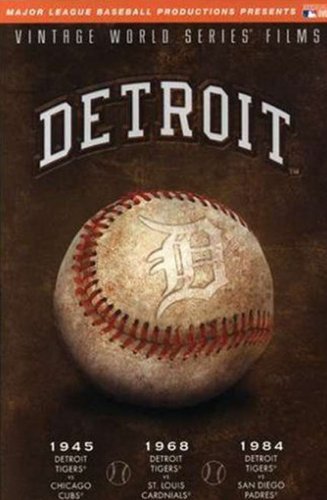
- ✓
- ✓ Vivid era contrasts
- ✓ Strong storytelling through footage
- ✓ Accessible, compact package
- ✓
- ✕
- ✕ Limited supplemental material
- ✕
| Format | Video/DVD collection |
| Content Focus | MLB World Series archival footage: Tigers in 1945, 1968, 1984 |
| Brand/Distributor | Lionsgate |
| Price (USD) | $16.82 |
| Release Context | Historic season recaps with notable games and players |
| Scope/Episodes Covered | Three World Series seasons featuring 1945, 1968, and 1984 Tigers |
You lace up your curiosity and slide into the Tigers’ glory years with this set, and you can feel the momentum right away. The 1945 reel especially hits you with that postwar surge energy, like you’re watching a team shake off years of uncertainty and start swinging for the fences again.
It’s not just history; it’s a vibe you can practically hear—the crack of the bat, the crowd’s subtle roar, the sense that victory was right there for the taking.
What stands out is how the collection frames three distinct eras without feeling rushed. 1968 leans into pitching drama—Denny McClain and Bob Gibson trading blows, and then Lolich stepping up with those three complete games.
You’re drawn into the tension of every pitch, the strategy audible in the pauses between throws. It’s storytelling through game footage, not just highlights.
1984 rounds it out with Sparky Anderson’s steady hand and a season that felt inevitable, a wire-to-wire march that lands with the sweep of the ALCS and the World Series. You notice the little details—the dugout chatter, the weathered seams on the ball, the way the crowd’s cheers rise and fall with each big at-bat.
The packaging feels purposeful, the pacing balanced, and the pacing never overstays its welcome. If you’re chasing a complete-season snapshot that covers heartbreak, hustle, and historic dominance, this trio nails it.
You’ll find yourself pausing to savor specific moments, not just fast-forwarding through highlights.
Overall, this Lionsgate collection delivers a compact, cinematic view of three landmark Tigers seasons. It’s easy to dip into for a quick dose of baseball history or to settle in for a longer viewing session with friends who love the game as much as you do.
What Defines a Complete MLB Season Record?
A complete MLB season record encompasses the overall performance of a Major League Baseball team throughout a given regular season. This record is typically represented by a combination of wins, losses, and ties. Key components that define a complete MLB season record include:
-
Win-Loss Record: The most straightforward measure, indicating the number of games won against those lost. For example, a team with a record of 95-67 has won 95 games and lost 67.
-
Winning Percentage: This metric calculates the percentage of games won. It is found by dividing the number of wins by the total games played. For instance, a team with a 95-67 record has a winning percentage of approximately .586.
-
Games Played: A complete record details the total number of games played. Most MLB teams play 162 games in a regular season.
-
Division Standing: The record also reflects a team’s position within its division, crucial during playoff qualifications.
-
Run Differential: The difference between runs scored and runs allowed can indicate overall team strength beyond win-loss records.
A complete MLB season record provides insights into a team’s performance, competitiveness, and potential for postseason success.
Which Teams Hold the Best Complete MLB Season Records?
The teams that hold the best complete MLB season records are remarkable for their performance and dominance throughout their respective seasons.
- 2001 Seattle Mariners: The Mariners finished the regular season with a record of 116 wins and 46 losses, tying the all-time record for the most wins in a single season.
- 1906 Chicago Cubs: The Cubs recorded a remarkable 116 wins against just 36 losses, showcasing one of the best winning percentages in MLB history.
- 2004 St. Louis Cardinals: Finishing with a record of 105 wins and 57 losses, the Cardinals showcased a potent offense and a deep pitching rotation.
- 1998 New York Yankees: The Yankees achieved a record of 114 wins and 48 losses, marking them as one of the most dominant teams in the modern era.
- 1954 New York Giants: The Giants ended their season with a 97-62 record, but they are often remembered for their remarkable performance in the postseason.
This incredible feat was achieved in a season where the Mariners displayed remarkable consistency and resilience, particularly in clutch situations. Despite their historic regular season, they fell short in the playoffs, losing in the AL Division Series.
The Cubs’ dominance that year was marked by strong pitching and a powerful lineup, leading them to the World Series, where they faced their cross-town rivals, the Chicago White Sox. Although they were ultimately defeated in the World Series, their regular season performance remains legendary.
This season was notable for the team’s impressive run differential and their ability to perform well under pressure. The Cardinals went on to win the World Series that year, solidifying their status as one of the greatest teams in MLB history.
Led by a combination of veteran talent and emerging stars, the Yankees displayed exceptional teamwork and consistency throughout the season. They capped off their historic run by winning the World Series, further enhancing their legacy.
While not holding the highest win total, their strong performance in crucial games, including the famous “Shot Heard ‘Round the World” playoff, defines their legacy. The Giants went on to win the World Series that year, demonstrating their ability to excel in high-stakes situations.
How Did the 2001 Seattle Mariners and 1906 Chicago Cubs Achieve Their Records?
The 2001 Seattle Mariners and the 1906 Chicago Cubs are notable for achieving remarkable regular season records in Major League Baseball history.
- 2001 Seattle Mariners: The Mariners finished the regular season with a record of 116 wins and 46 losses, tying the all-time record for the most wins in a single MLB season.
- 1906 Chicago Cubs: The Cubs achieved a record of 116 wins and 36 losses, which remains the highest winning percentage in a season at .763.
The 2001 Seattle Mariners had a combination of strong pitching and a deep batting lineup, featuring players like Edgar Martinez and Ichiro Suzuki, which contributed to their historic season. They displayed remarkable consistency throughout the season, winning games both at home and on the road, and achieved a 15-game winning streak, showcasing their dominance in the league.
The 1906 Chicago Cubs are remembered for their exceptional pitching staff, which included future Hall of Famer Mordecai “Three Finger” Brown, and a solid defense that allowed them to limit opposing teams’ scoring. Their incredible record was complemented by a balanced offense, making them one of the most well-rounded teams of their era, and they finished the season with a remarkable 76 victories at home.
What Factors Influence a Team’s Success in Achieving Record Seasons?
Several factors significantly influence a team’s success in achieving a record season in Major League Baseball (MLB):
- Player Performance: The overall performance of the team’s roster is critical, including batting averages, home runs, pitching statistics, and defensive skills. Consistent performances from star players can elevate a team’s success, while injuries or slumps can hinder progress.
- Team Chemistry: The ability of players to work together cohesively is essential for a successful season. Strong relationships and communication on and off the field can enhance teamwork, leading to better decision-making and performance in high-pressure situations.
- Coaching Strategies: The strategies employed by the coaching staff, including game tactics, player rotations, and in-game adjustments, play a crucial role. Effective coaching can maximize player strengths while minimizing weaknesses, leading to improved overall team performance.
- Injury Management: A team’s ability to manage injuries and maintain player health throughout the season is vital. Depth in the roster and effective rehabilitation strategies can help mitigate the impact of injuries on the team’s performance.
- Schedule and Opponents: The difficulty of the schedule, including the quality of opposing teams faced, can influence a team’s success. A favorable schedule with weaker opponents can provide opportunities for more wins, while a challenging schedule might expose weaknesses.
- Fan Support: The level of fan engagement and support can impact player morale and performance. Strong home-field advantage due to enthusiastic fans can boost a team’s performance during crucial games.
- Analytics and Technology: The use of data analytics and technology in evaluating player performance and developing strategies has become increasingly important. Teams that effectively utilize these tools can gain insights that lead to better decision-making and game preparation.
How Do Player Performance and Statistics Impact Team Success?
- Batting Average: A key statistic that measures a player’s hitting ability, the batting average is calculated by dividing the number of hits by the number of at-bats. Higher batting averages often correlate with a team’s ability to score runs, as players who consistently get on base increase scoring opportunities.
- On-Base Percentage (OBP): This statistic indicates how often a player reaches base per plate appearance, including hits, walks, and hit-by-pitches. A high OBP means players contribute significantly to getting on base, thereby enhancing a team’s chances of winning games, particularly in close matches.
- Slugging Percentage (SLG): Slugging percentage measures a player’s power-hitting capability by accounting for the total number of bases a player records per at-bat. A strong SLG indicates that a player can drive in runs and contribute to a team’s offensive output, which can be crucial for achieving a strong season record.
- Earned Run Average (ERA): This statistic is crucial for pitchers, representing the average number of earned runs they allow per nine innings pitched. A lower ERA indicates effective pitching, which is essential for team success as it helps prevent opposing teams from scoring, leading to more wins.
- Wins Above Replacement (WAR): WAR is a comprehensive statistic that estimates a player’s overall contribution to their team, combining offensive and defensive performance. Players with high WAR values are often pivotal in determining a team’s success, as they can significantly impact both the offensive and defensive aspects of the game.
- Fielding Percentage: This statistic reflects a player’s defensive capabilities by measuring the number of successful plays made compared to the total chances. High fielding percentages contribute to a team’s ability to prevent runs, which is vital for maintaining a winning season record.
Why Is Team Chemistry Critical in Pursuing Record-Breaking Seasons?
Research conducted by the Journal of Sports Sciences indicates that teams with strong interpersonal relationships tend to perform better, as players are more willing to communicate and support each other during games (Carron et al., 2002). This synergy allows for seamless execution of plays and strategies, which is particularly important in high-pressure situations typical of a record-breaking season.
The underlying mechanism is rooted in the psychology of teamwork. When players have good chemistry, they are more likely to share a common goal and exhibit mutual respect, which can lead to higher levels of motivation and commitment. According to a study in the International Journal of Sports Psychology, teams with high cohesion show improved performance metrics, including win-loss records, as players feel more accountable to one another (Eys et al., 2009). This accountability drives individual players to elevate their game, contributing to the collective success necessary for achieving a historic season.
What Are the Long-Term Implications of These Historic Records for Future MLB Teams?
The long-term implications of historic records in Major League Baseball (MLB) can significantly influence future teams in various aspects.
- Team Strategy Development: Historical records provide teams with insights into successful strategies and tactics that have led to winning seasons. By analyzing past performances, teams can adopt or adapt strategies that align with their strengths and weaknesses, potentially improving their chances of success.
- Player Recruitment and Development: Understanding the characteristics of players who contributed to the best season records helps teams identify and develop talent. By studying metrics and player performance from historic records, franchises can hone in on the qualities that produce winning outcomes, informing their scouting and training programs.
- Fan Engagement and Expectations: Historic records set a benchmark for fan expectations and engagement. When teams achieve or aim for records, they can rally fan support and create excitement, which can lead to increased attendance and merchandise sales, ultimately boosting the franchise’s financial health.
- Franchise Legacy and Culture: Teams with historic records often build a legacy that influences their culture and identity. This legacy can foster a winning mentality within the organization, encouraging both players and staff to strive for excellence and reinforcing the importance of teamwork and dedication.
- Market Value and Revenue Opportunities: Achieving a record-setting season can enhance a team’s market value and attract lucrative sponsorships and media deals. The prestige associated with historic performances can lead to improved financial stability and opportunities for investments in facilities and player development.
How Do Fans and Analysts Perceive the Importance of MLB Season Records?
Fans and analysts view MLB season records as crucial benchmarks that highlight team performance and historical significance.
- Win-Loss Record: The fundamental metric for evaluating a team’s success during a season, the win-loss record indicates how many games a team has won versus how many they have lost. A better win-loss record usually correlates with playoff eligibility and can reflect the overall strength and consistency of the team throughout the season.
- Run Differential: This statistic measures the difference between runs scored and runs allowed, providing insight into the quality of a team’s performance beyond just wins and losses. A positive run differential often suggests a stronger team, as it indicates they are not only winning games but doing so by a significant margin.
- Winning Percentage: Calculated by dividing the number of wins by the total number of games played, this figure is useful for comparing teams in different seasons or leagues. A higher winning percentage is indicative of a team’s ability to perform well consistently, which fans and analysts often prioritize when discussing the best teams in MLB history.
- Streaks: Both winning and losing streaks can heavily influence perceptions of a team’s season records, as they often reflect moments of form or decline. Fans particularly enjoy following these streaks, as they can significantly alter a team’s trajectory in the standings and affect playoff chances.
- Historical Context: Analysts often evaluate season records in the context of historical performance, considering factors such as the quality of competition and the era in which the records were set. This perspective helps fans appreciate achievements and milestones, placing importance on records that stand out against the backdrop of baseball history.
- Playoff Performance: Ultimately, a season’s success is often judged by a team’s performance in the postseason, where records can gain or lose significance based on how a team fares in high-pressure situations. Fans and analysts alike will often weigh regular-season records against playoff success, emphasizing that the ultimate goal is to secure a championship.