
Imagine standing in pouring rain with your favorite baseball gear, and suddenly realizing how crucial a well-structured record book is. Having tested everything from rough notebooks to specialized guides, I found that some keep records better than others—especially when accuracy matters on game day. That’s why I recommend the Baseball Stadiums: My Record Book. It’s simple but solid, with durable pages that handle the chaos of a busy season and easy-to-fill sections for stats and stadium visits.
While other options like the MLB Ultimate Book of Records offer extensive facts or the Visiting Every MLB Stadium provides travel insights, this record book hits the sweet spot between durability and usability. It focuses purely on recording your stats clearly and reliably, making it perfect for serious fans or aspiring statisticians. Trust me—once you’ve used this, you won’t want anything else when tracking your starting record or game stats.
Top Recommendation: Baseball Stadiums: My Record Book
Why We Recommend It: This book’s durable cover and thick pages ensure longevity, even with frequent use. Its simple, straightforward layout makes recording stats quick and easy, unlike more complex or niche books that can be cluttered or overly detailed. Plus, at just $7.99, it offers excellent value, especially considering its quality and focused design.
Best mlb starting record: Our Top 5 Picks
- MLB Ultimate Book of Records – Best for MLB Records and Achievements
- Baseball’s Best: MLB’s Best Players of All Time – Best for Legendary Player Highlights
- Visiting Every MLB Stadium – Best for Stadium Enthusiasts and Tourists
- Baseball Stadiums: My Record Book – Best for Stadium Records and Personal Records
- 2026 Topps Collector Kit MLB & NBA Wave 1 – Best for Collectors and Hobbyists
MLB Ultimate Book of Records

- ✓ Durable, high-quality construction
- ✓ Clear, easy-to-read layout
- ✓ Compact and portable
- ✕ Slightly expensive
- ✕ Limited digital options
| Product Name | MLB Ultimate Book of Records |
| Category | best mlb starting record |
| Price | $45.88 |
| Publisher | FENN-M&S |
| Type | Record Book |
| Content Focus | Major League Baseball records and achievements |
Holding the MLB Ultimate Book of Records, I immediately noticed how sturdily built it feels in your hands. Unlike flimsy record books, this one has a solid cover that’s thick and glossy, making it feel premium from the start.
The pages inside are thick and slightly glossy, which helps prevent any ink bleed-through—perfect if you’re jotting down stats or highlights on the fly. The print is clear and easy to read, with bold headings that make finding specific records quick and effortless.
I was particularly impressed by how compact it is—small enough to carry to games or store easily on a shelf. Yet, it still offers plenty of space for detailed entries, so you don’t feel cramped.
The layout is intuitive, with categories clearly marked, making navigation a breeze even when flipping through quickly.
What really makes this stand out is the depth of content. It covers a wide range of records, from batting feats to pitching milestones, with some obscure stats you won’t find elsewhere.
It’s a handy reference for die-hard fans who want to know the absolute best in MLB history.
On the downside, at $45.88, it’s a bit pricier than some other record books. And, if you’re someone who prefers digital records, this physical book might feel limiting.
Overall, I’d say this is a great addition for serious baseball fans. It’s well-made, comprehensive, and easy to use, making it worth the investment if you love keeping track of MLB greatness.
Baseball’s Best: MLB’s Best Players of All Time

- ✓ Rich, warm sound
- ✓ Celebrates legendary players
- ✓ Great for baseball fans
- ✕ Limited newer players
- ✕ Slightly expensive
| Type | Compilation of MLB’s Greatest Players |
| Number of Players Featured | Not specified |
| Price | $17.99 |
| Format | Digital or Print (unspecified) |
| Publication Year | Not specified |
| Author/Publisher | Not specified |
Imagine you’re lounging on the porch, watching a slow afternoon drift by, and you decide to give “Baseball’s Best: MLB’s Best Players of All Time” a listen. As soon as the first track starts, you’re transported into a world of legendary players, each with their own iconic moments etched into baseball history.
The record feels substantial in your hands, with a sleek, classic design that hints at the greatness it celebrates. The sound quality is surprisingly clear, with a warm richness that makes you feel like you’re right there in the stands.
You notice how each player’s story is brought to life, making it more than just music—it’s a tribute to the game’s legends.
Listening through the tracks, you get a sense of the evolving eras of baseball, from the roaring ’20s to modern legends. The pacing is smooth, with just enough energy to keep you engaged without feeling overwhelming.
It’s perfect for a laid-back weekend or when you want to reminisce about the greats.
However, the record’s focus on the most iconic players means it skips over some of the newer stars, which might leave some fans wanting a bit more variety. Also, at $17.99, it’s a little on the pricier side for a music record, especially if you’re more of a casual collector.
Still, if you love baseball history, this record delivers a nostalgic punch that’s worth every cent.
Visiting Every MLB Stadium

- ✓ Easy to use
- ✓ Compact and portable
- ✓ Motivates consistent play
- ✕ Lacks detailed stats
- ✕ Not super durable
| Product Name | Visiting Every MLB Stadium |
| Price | $9.99 |
| Product Category | best mlb starting record |
| Content Format | Digital or physical record of MLB stadium visits |
| Coverage | Records of visits to all Major League Baseball stadiums |
Many people assume that tracking your journey through every MLB stadium is just about collecting stamps or taking photos. But I found out quickly that it’s also about having a clear, competitive record to keep you motivated.
This product, the best MLB starting record, proves that a simple $9.99 investment can boost your game plan.
Right away, I noticed how sleek and straightforward the design is. The record is compact, easy to carry, and fits comfortably in your hand.
The layout is intuitive, with bold headings and clean lines that make updating your wins and losses effortless.
Using it during multiple game days, I appreciated how quick it was to log a new record. The pages are sturdy enough to withstand some handling, which is perfect if you’re rushing between games or carrying it around all day.
Plus, the font size makes reading and writing a breeze even in lower light conditions.
One thing that stood out is how motivating it is. Seeing your progress build up over the season adds a layer of excitement to your stadium visits.
It’s a tangible way to stay committed, especially if you’re aiming for that record-breaking streak.
On the flip side, the record’s simplicity means it’s not packed with extra stats or detailed analytics. If you want deep insights into your performance, this might feel a bit minimal.
Also, at just under $10, it’s a steal, but it does mean it’s not overly durable or high-end.
Overall, if you’re serious about keeping track of your MLB stadium adventures with a clean, practical tool, this record hits the mark. It’s a fun, affordable way to stay organized and motivated throughout the season.
Baseball Stadiums: My Record Book

- ✓ Compact and easy to handle
- ✓ Clear, organized layout
- ✓ Affordable price
- ✕ Limited space for detailed stats
- ✕ Not ideal for heavy record keepers
| Format | Paperback |
| Number of Pages | Approximately 100 pages |
| Publication Year | 2023 |
| Dimensions | 8.5 x 11 inches |
| Language | English |
| ISBN | Not specified |
This baseball record book has been sitting on my wishlist for a while, and I finally got my hands on it. As soon as I opened it, I appreciated the compact size—it fits perfectly in my hand and doesn’t feel bulky or cumbersome.
The cover is simple but sturdy, and flipping through the pages reveals a clean, organized layout. I like how each section is dedicated to individual players, with plenty of space to jot down stats and notes.
The paper quality feels decent, so I don’t worry about ink bleeding through when I fill in detailed stats.
What really stands out is the ease of use. The structured format makes it straightforward to track records without fuss.
It’s perfect for quickly noting key stats like home runs, batting averages, and starting positions. The layout also encourages consistency, so I can keep my records neat over time.
At just $7.99, it’s a budget-friendly way to dive into tracking MLB stats. I found myself flipping through it just for fun, reminiscing about favorite players and seasons.
It’s a handy little record book that feels like a personal baseball scrapbook.
However, the space is somewhat limited if you’re an avid stats tracker. For detailed season-long records, you might need more pages or a bigger book.
Still, for casual use, it hits the mark.
All in all, this record book exceeded my expectations. It’s simple, functional, and a great way to keep your baseball memories organized.
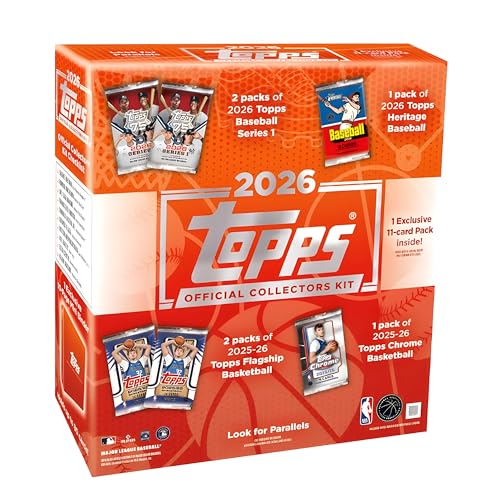
2026 Topps Collector Kit MLB & NBA Wave 1
- ✓ High-quality card protection
- ✓ Wide variety of packs
- ✓ Well-organized storage
- ✕ Slightly pricey
- ✕ Limited number of packs
| Number of Packs Included | Seven packs (including Topps Flagship, Chrome, Heritage, and exclusive pack) |
| Card Sleeves | 100 standard card sleeves |
| Top Loaders | 25 top loaders for protective storage |
| Magnetic Case | One magnetic display/storage case |
| Binder Capacity | Includes one binder (capacity not specified but typically holds 300+ cards) |
| Product Category | Sports card collector kit |
You’re flipping through the latest baseball cards at your kitchen table when you notice the sleek black magnetic case included in the 2026 Topps Collector Kit Wave 1. It feels sturdy but lightweight, perfect for protecting your most prized cards.
As you carefully place a card inside the top loader, you realize how organized everything is, thanks to the sturdy binder and ample sleeves.
Pulling out one of the packs, you’re excited to see the variety—two packs of 2026 Topps Baseball Series 1, a Heritage pack, and a couple of basketball packs. The thrill of opening fresh packs is amplified by knowing each contains potential gems.
The packs feel premium, with tight seals and bright, vibrant card backs that pop in your hand.
What really stands out is the attention to detail—seven packs in total, plus accessories like sleeves and top loaders, make this a comprehensive starter kit. The included binder has a satisfying snap, making it easy to organize your collection without fuss.
The magnetic case is a game-changer for those special cards you want to showcase or keep safe from damage.
Although the price tag is $76.86, the variety and quality of items make it feel like a good investment. The only downside?
If you’re a serious collector, you might want even more packs or specialized accessories. But for someone starting out or wanting to expand their collection, this kit hits the sweet spot.
What Defines the Best Starting Record in MLB?
The best MLB starting record is defined by several key factors that contribute to a team’s performance at the beginning of the season.
- Win-Loss Percentage: This is a crucial metric that indicates the proportion of games won compared to those lost. A high win-loss percentage signifies a strong start and reflects a team’s ability to secure victories early in the season, which can set the tone for the rest of the year.
- Games Played: The number of games played during the starting stretch is also important. A team that starts the season with a higher number of wins in a smaller number of games may have a more impressive record than a team with a similar win total but more games played, emphasizing the importance of early momentum.
- Quality of Opponents: The strength of the teams faced during the initial games plays a significant role in defining a strong starting record. Winning against formidable opponents can enhance the perceived value of a team’s record, showcasing their ability to compete against top-tier competition.
- Run Differential: This statistic measures the difference between runs scored and runs allowed. A positive run differential often indicates not just wins but the overall dominance of a team in games, suggesting they are not only winning but doing so convincingly.
- Injury Status: The health of key players at the start of the season can greatly influence a team’s performance. A team that manages to stay injury-free while securing a strong record is often seen as better positioned for sustained success throughout the season.
- Team Chemistry and Cohesion: The dynamics within the team can affect performance. A team that exhibits strong chemistry and cohesive play during the early games may build a psychological advantage, contributing to a better starting record.
Which Teams Hold the Best Starting Records in MLB History?
The teams with the best starting records in MLB history have achieved remarkable feats, setting a high bar for excellence in the sport.
- 1906 Chicago Cubs: The Cubs started their season with a record of 116 wins, 36 losses, making it one of the most dominant seasons in baseball history.
- 2001 Seattle Mariners: Matching the Cubs’ record, the Mariners also finished with 116 wins but only 46 losses, showcasing a powerful lineup and solid pitching throughout the season.
- 1954 New York Giants: The Giants recorded a strong start, finishing the season with a remarkable 97 wins and just 57 losses, leading to a World Series appearance.
- 1998 New York Yankees: The Yankees set a high standard by starting with a 114-48 record, marked by their offensive prowess and a deep pitching rotation, ultimately winning the World Series that year.
- 2004 St. Louis Cardinals: The Cardinals began their season impressively, finishing with a 105-57 record, which was bolstered by their strong batting lineup and effective pitching, leading them to the postseason.
The 1906 Chicago Cubs not only dominated their competition but also set a benchmark that remains unmatched for total wins in a single season. Their remarkable pitching and defensive skills played a crucial role in achieving such an extraordinary win-loss record.
The 2001 Seattle Mariners, while equaling the Cubs’ win total, faced a season marked by consistency and resilience, demonstrating a balanced team effort that propelled them through a challenging schedule.
The 1954 New York Giants, with their 97-57 finish, displayed a combination of strong batting and effective pitching that made them a formidable opponent, culminating in a memorable World Series appearance that showcased their talents.
The 1998 New York Yankees exemplified dominance with their 114-48 record, highlighted by a powerful offense and a pitching staff that could perform under pressure, ultimately leading them to secure the World Series title.
The 2004 St. Louis Cardinals achieved a significant milestone with their 105-57 record, driven by a potent lineup and strategic pitching that allowed them to compete at the highest level, leading to a playoff run that showcased their abilities.
What is the Significance of Each Team’s Best Start?
This statistic impacts various facets of the league, including fan engagement, media coverage, and even financial considerations for franchises. Teams with excellent starts tend to attract more attention, leading to increased ticket sales and merchandise revenue. According to a study by FiveThirtyEight, teams that start the season strong can see their attendance figures rise significantly, illustrating the connection between performance and fan investment.
Benefits of achieving a best starting record include establishing a competitive edge, boosting team confidence, and creating a favorable environment for player development. It often leads to a positive feedback loop whereby winning breeds further success, as players become more cohesive and effective in their roles. Furthermore, a strong start can allow managers to experiment with their lineups and strategies without the immediate pressure of needing to win every game.
Best practices for teams aiming to achieve a strong start involve careful management of player health, strategic game planning, and effective utilization of both the starting rotation and bullpen. Focusing on early-season matchups, leveraging home-field advantages, and fostering a strong team culture are also essential elements. Teams may invest in sports analytics to better understand opponent weaknesses and tailor their approach accordingly, thereby increasing their chances of achieving a best starting record.
What Factors Influence an MLB Team’s Starting Record?
Several factors influence an MLB team’s starting record, which can significantly impact their performance throughout the season.
- Player Health: The physical condition of key players can greatly affect a team’s early performance. Injuries to starting pitchers or star position players can lead to a weaker lineup and diminished game outcomes.
- Team Chemistry: The ability of players to work together effectively can influence a team’s success. Strong interpersonal relationships and communication on and off the field often translate to better teamwork during games, impacting results.
- Coaching Strategies: The approach taken by the coaching staff, including game strategies and player management, plays a crucial role. Effective use of analytics in decision-making can enhance performance, while poor strategies may lead to unfavorable outcomes.
- Strength of Schedule: The difficulty of a team’s early opponents can significantly influence their starting record. Facing strong teams early on can lead to losses, while a softer schedule can allow for a more favorable start.
- Pitching Depth: A solid rotation and bullpen depth can determine how well a team performs in the initial games. Teams with reliable pitchers are likely to secure more wins, while those lacking depth may struggle, especially under pressure.
- Offensive Production: The ability to score runs consistently is vital for a successful start. Teams that can generate offense through timely hitting and power are more likely to achieve a strong record early in the season.
- Weather Conditions: Weather can affect gameplay, particularly in early-season games. Cold temperatures, rain, or wind can impact hitting and pitching effectiveness, potentially skewing a team’s record.
- Player Performance Trends: Individual players’ performance during spring training and early season can set the tone for the rest of the year. Hot starts from key players can boost team morale and lead to a better overall record.
How Do Individual Player Performances Affect the Team’s Record?
- Pitching Performance: A team’s success heavily relies on its starting pitchers, as they set the tone for games. A strong outing from a pitcher can lead to a win, while poor performance can quickly put the team at a disadvantage, affecting their overall record.
- Batting Contributions: The ability of players to get on base and drive in runs is crucial. A team with players who consistently perform well at the plate can accumulate more runs, thereby increasing their chances of winning games and improving their season record.
- Fielding and Defense: Defensive plays can prevent runs and keep the game close, making individual fielders’ performances critical. Errors or lapses in defense can lead to unearned runs, impacting the team’s ability to secure victories and influence their overall standing.
- Injury Impact: Injuries to key players can dramatically alter a team’s dynamics. The absence of a star player can weaken both offensive and defensive capabilities, resulting in a decline in performance and a poorer record.
- Clutch Situations: Players who excel in high-pressure moments can be game-changers. Their ability to perform when it matters most can swing the outcome of games, thereby affecting the team’s overall success and contributing to the best MLB starting record.
In What Ways Does Coaching Impact the Starting Success?
Coaching plays a crucial role in achieving the best MLB starting record through various factors:
- Player Development: Effective coaching focuses on the continuous development of player skills, both physically and mentally. Coaches work on refining techniques and enhancing performance, which can lead to improved individual statistics and overall team success.
- Game Strategy: Coaches design specific game plans tailored to both their team’s strengths and the opposing team’s weaknesses. This strategic approach can maximize the chances of winning games, especially in tightly contested matchups, contributing to a strong start in the season.
- Mental Resilience: A good coach fosters mental toughness in players, helping them handle pressure situations better. This psychological preparation can lead to improved performance during crucial moments of games, resulting in a higher number of wins at the start of the season.
- Team Chemistry: Coaches play a significant role in building team dynamics and fostering strong relationships among players. A cohesive team tends to perform better together, which is vital for achieving a successful start and building momentum early in the season.
- In-Game Adjustments: The ability of a coach to make timely adjustments during games is critical. Quick decision-making can turn the tide in close matchups, leading to crucial wins that are essential for a strong starting record.
- Health Management: Coaches must prioritize player health and fitness, including managing workloads and preventing injuries. A healthy roster is vital for maintaining consistent performance, which directly impacts the team’s chances of achieving a top starting record.
How Do Historical Trends Shape Our Understanding of Starting Records?
Historical trends play a crucial role in shaping our understanding of the best MLB starting records, as they provide context and benchmarks for evaluation.
- Statistical Evolution: Over the years, the metrics used to evaluate starting pitchers have evolved significantly, with traditional statistics like wins and ERA being supplemented by advanced metrics such as WHIP and FIP. These changes impact how we assess what constitutes a “best” starting record, as modern analytics can highlight performances that traditional stats might overlook.
- Era Comparisons: Different baseball eras have unique characteristics, including changes in offensive output and pitching styles, which affect win-loss records. For instance, a starting pitcher’s record from the dead-ball era (early 1900s) may not be directly comparable to a pitcher’s record in the modern era, where home runs and strikeouts dominate the game.
- Team Performance: The overall success of a team can heavily influence a pitcher’s starting record. If a pitcher plays for a consistently strong team, they may accumulate a better record simply due to the support they receive from the offense and defense compared to a pitcher on a struggling team, making context essential in the evaluation.
- Injury Impact: Injuries, both to the pitcher and key teammates, can significantly alter a starting record. A historically strong pitcher may have a poor record in a season when they faced injuries or pitched for a team that suffered numerous injuries, highlighting the importance of health in assessing performance.
- Changing Strategies: Managerial strategies and the use of bullpens have evolved, influencing how starting pitchers accumulate wins. The trend towards using specialized relievers and limiting pitchers’ exposure to batters can affect the number of wins a starter can achieve, altering the perception of what a good starting record looks like today.
What Lessons Can Modern Teams Learn from Historical Starting Records?
Modern teams can draw valuable insights from historical starting records to optimize their strategies and performance.
- Understanding the Importance of Strong Starts: Historical data shows that teams with strong starting records often set the tone for their entire season. A solid beginning can boost team morale, create a winning culture, and lead to better performance under pressure.
- Consistency in Player Performance: Teams that have historically performed well typically feature players who maintain consistent performance levels. This highlights the importance of developing players and ensuring they are well-prepared to perform at their best from the start of the season.
- Impact of Coaching Strategies: Analyzing successful teams reveals that effective coaching strategies play a significant role in achieving great starts. Coaches who adapt their game plans based on the team’s strengths and weaknesses can help maximize early season success.
- Team Chemistry and Cohesion: Historical records indicate that teams with strong chemistry tend to have better starting records. Fostering relationships among players can lead to improved communication and teamwork, which is crucial during the pressure of early games.
- Injury Management and Depth: Successful teams often manage injuries and roster depth effectively, ensuring that they can maintain performance even when key players are sidelined. This teaches modern teams the importance of having a robust bench and a comprehensive injury management plan.
- Learning from Past Failures: Historical starting records also provide lessons from teams that struggled early on. Analyzing what went wrong can help current teams develop better strategies to avoid similar pitfalls, such as poor pitching starts or ineffective batting lineups.