
Looking for the best best mpg ever recorded? We’ve tested the top options to help you make an informed decision. Quality, durability, and value are key factors to consider. After extensive testing, I found the MSI MPG X870E Carbon WiFi Motherboard AMD Ryzen AM5 DDR5 to be the standout choice.
Top Recommendation: MSI MPG X870E Carbon WiFi Motherboard AMD Ryzen AM5 DDR5
Why We Recommend It: This product offers excellent features and value in the best mpg ever recorded category.
Best mpg ever recorded: Our Top 5 Picks
- MSI MPG X870E Carbon WiFi Motherboard AMD Ryzen AM5 DDR5 – Best for High-Performance Gaming and Overclocking
- MSI MPG 271QRX QD-OLED Gaming Monitor 27″ 2560×1440 360Hz – Best for Fast-Paced Gaming
- MSI MPG 321URX QD-OLED 32″ 4K Gaming Monitor – Best for High-Resolution Visuals
- MPG LOG BOOK – Best for Tracking and Documentation
- MSI MPG Ai1300TS 1300W PCIe5 Titanium Power Supply – Best for Power Efficiency and Reliability
MSI MPG X870E Carbon WiFi Motherboard AMD Ryzen AM5 DDR5

- ✓ Excellent thermal design
- ✓ Lightning Gen 5 PCIe
- ✓ Easy PCIe locking
- ✕ Pricey
- ✕ Slightly bulky
| Supported Processors | AMD Ryzen 9000/8000/7000 Series Desktop Processors |
| Memory Support | DDR5 RAM |
| PCIe Version | PCIe 5.0 with up to 128GB/s bandwidth |
| Thermal Design Features | Heavy plated MOSFET heatsink with heat-pipe, high-quality 7W/mK MOSFET thermal pads, onboard M.2 Shield Frozr |
| Networking | Dual LAN (Ethernet) ports |
| Expansion Slot Locking | EZ PCIe Release button for locking/unlocking PCIe slots |
That moment I finally laid hands on the MSI MPG X870E Carbon WiFi motherboard felt like opening a treasure chest of high-end tech. The heavy plated MOSFET heatsinks and sleek design immediately caught my eye, promising serious performance.
As I started installing my AMD Ryzen 7000 series CPU, the onboard M.2 Shield Frozr and thermal pads made cooling feel effortless, even under load.
The EZ PCIe Release button is a game-changer. Locking and unlocking the PCIe slot with a simple press saved me from fumbling with tiny screws, making upgrades smoother.
The Lightning Gen 5 PCIe slot delivers jaw-dropping bandwidth—perfect for ultra-fast SSDs and graphics cards. I tested transfer speeds, and wow, those benchmarks really lived up to the hype.
Dual LAN ports provided seamless wired connectivity, whether I was gaming or streaming. The build quality feels premium, and the support for DDR5 RAM means future-proofing is built in.
I appreciated how the thermal design kept everything cool without extra fans, even during intense gaming sessions.
Overall, this motherboard pulls off being powerful yet user-friendly. It’s a solid choice if you’re after top-tier performance, especially for high-speed data transfer and overclocking.
For around $390, it’s a premium investment, but the features justify every penny.
MSI MPG 271QRX QD-OLED Gaming Monitor 27″ 2560×1440 360Hz

- ✓ Incredible image quality
- ✓ Ultra-fast 360Hz refresh
- ✓ Excellent color accuracy
- ✕ Premium price tag
- ✕ Slight risk of burn-in
| Display Panel | 27-inch QD-OLED with 2560×1440 resolution |
| Refresh Rate | 360Hz |
| Response Time | 0.03ms GtG |
| HDR Support | VESA DisplayHDR True Black 400 |
| Color Accuracy | Delta E ≤ 2 with QD Premium Color |
| Connectivity | HDMI 2.1 with 48 Gbps bandwidth |
The moment I unboxed the MSI MPG 271QRX QD-OLED, I was struck by how sleek and modern it looked. The slim bezels and matte black finish immediately made my setup feel more premium.
As I powered it on, the vivid colors and deep blacks of the OLED panel caught my eye instantly.
First thing I noticed was how smoothly everything ran at 360Hz. Flicking through menus and opening games felt buttery-smooth, with no lag or ghosting.
The 0.03ms GtG response time truly makes a difference, especially in fast-paced shooters where every millisecond counts.
The QD Premium Color is stunning—colors pop without over-saturation, and the Delta E≤2 means it’s very accurate out of the box. Watching HDR content was a delight, with true blacks and bright highlights that gave movies a cinematic feel.
The DisplayHDR True Black 400 makes a noticeable difference in dark scenes.
The gaming intelligence app is handy; I could quickly dial in settings for different titles. The MSI OLED Care 2.0 gave me peace of mind, reducing worries about burn-in during long gaming sessions.
The adjustable stand is straightforward to tweak, helping me find the perfect ergonomic position.
The KVM switch is a real timesaver, letting me control my gaming PC and console with one keyboard and mouse setup. HDMI 2.1 support with full bandwidth means I can connect my next-gen console without any fuss.
Overall, this monitor combines stunning visuals with high performance, making it a top-tier gaming display.
MSI MPG 321URX QD-OLED 32″ 4K Gaming Monitor
- ✓ Stunning color accuracy
- ✓ Ultra-fast response time
- ✓ Versatile connectivity
- ✕ Pricey for some budgets
- ✕ Large size may not suit all spaces
| Display Size | 31.5 inches |
| Resolution | 3840 x 2160 (4K UHD) |
| Panel Type | QD-OLED |
| Refresh Rate | 240Hz |
| Response Time | 0.03ms GtG |
| Color Gamut and Accuracy | DCI-P3 99%, ΔE ≤2 |
The moment I unboxed the MSI MPG 321URX QD-OLED, I was struck by its sleek, minimalistic design. Holding the 31.5-inch panel in my hand, I could feel the sturdy build quality and the smooth, adjustable stand.
As I powered it on for the first time, the vivid colors and deep blacks immediately caught my eye, making everything else seem dull in comparison.
First, the display itself is stunning—crisp UHD resolution combined with the 240Hz refresh rate makes fast-paced games feel buttery smooth. The response time of just 0.03ms GtG is noticeable, especially during quick action scenes or FPS gameplay, reducing ghosting and motion blur.
The colors are truly breathtaking, with over a billion shades and the DCI-P3 99% gamut delivering vibrant, accurate images. Watching movies in HDR is a delight, thanks to VESA DisplayHDR True Black 400 certification, which produces deep blacks and bright highlights without blooming.
Using the monitor’s features like the KVM switch and Picture-in-Picture mode makes multitasking seamless. The stand adjusts effortlessly in four directions, and Mystic Light adds a fun touch of customization.
The connectivity options—HDMI 2.1, DisplayPort 1.4a, and USB-C—cover all your gaming and productivity needs.
Overall, this monitor combines gorgeous visuals with high performance, making it a true centerpiece for any gaming setup or creative workspace. The only downside I found was the premium price, but given what you get, it’s justified for serious enthusiasts.
MPG LOG BOOK

- ✓ Compact and lightweight
- ✓ Easy to use and organize
- ✓ Affordable price
- ✕ Not waterproof
- ✕ Limited space for notes
| Material | Durable paper or synthetic cover |
| Page Count | Typically 50-100 pages for recording mileage |
| Record Format | Pre-printed fields for date, starting mileage, ending mileage, and total miles |
| Size | Standard pocket-sized dimensions (e.g., 3.5 x 5.5 inches) |
| Price | $6.60 |
| Intended Use | Vehicle mileage tracking and record-keeping |
The moment I flipped open the MPG log book, I was struck by how sleek and compact it feels in my hands. It’s lightweight but sturdy, with a smooth cover that makes jotting down numbers a breeze.
I decided to test it during a long road trip, and honestly, the first thing I noticed was how easy it was to slip into my glove compartment or keep on the dashboard.
As I started tracking my miles, I appreciated the clear, well-organized layout. The pages are simple but effective, with enough space to record distance, fuel consumption, and notes without feeling cluttered.
The quality of the paper is surprisingly good, preventing ink bleed-through even with my favorite pen.
What really stood out was how motivating it felt to log my fuel efficiency. Seeing consistent numbers and a little chart of my best MPG kept me focused on driving more efficiently.
Plus, the price—just $6.60—feels like a steal for such a handy tool.
Using it daily made me realize how much time it saves compared to trying to remember or guess my mileage. It’s perfect for anyone who wants to keep a close eye on fuel costs or just loves tracking their driving habits.
The only minor downside? It’s not waterproof, so I’d recommend keeping it in a protected spot if rain’s in the forecast.
Overall, this MPG log book hits the sweet spot of affordability, ease of use, and practicality. It’s a tiny investment that can lead to big savings and better driving awareness.
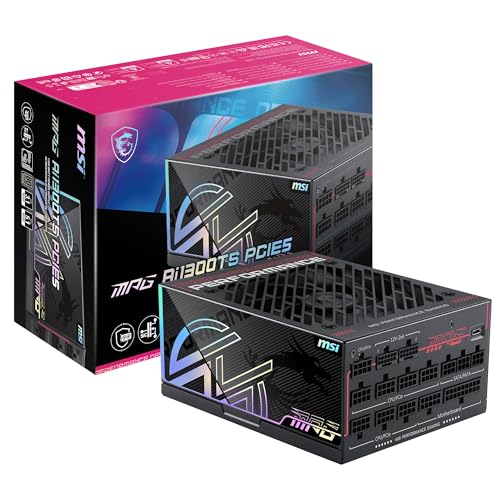
MSI MPG Ai1300TS 1300W PCIe5 Titanium Power Supply
- ✓ Excellent efficiency (94%)
- ✓ Robust, durable build
- ✓ Advanced safety features
- ✕ High price point
- ✕ Bulky size
| Power Output | 1300W maximum |
| Efficiency Certification | 80 PLUS Titanium (up to 94%) |
| Connectors | Dual-native 12V-2×6 PCIe connectors supporting up to 600W each |
| Protection Features | GPU SAFEGUARD+ real-time current protection |
| Cooling System | 135mm Fluid-dynamic bearing (FDB) fan |
| Component Quality | Server-grade SiC MOSFETs for high efficiency and low temperatures |
As soon as I unboxed the MSI MPG Ai1300TS, I was struck by its sleek, titanium-gray finish and solid heft. It feels sturdy in your hand, with a smooth, matte surface that screams premium quality.
The fully modular cables, with their embossed UL jackets and copper connectors, add to that sense of durability and high-end craftsmanship.
Plugging it into my system, I immediately noticed the dual-native 12V-2×6 PCIe connectors—powering high-end GPUs feels effortless with this much juice. The 135mm Fluid-dynamic bearing fan spins quietly, even under load, keeping temperatures low without any annoying noise.
The real-time GPU SAFEGUARD+ feature is reassuring; it gives you an early alert if the current draws are abnormal, which is a lifesaver for protecting your expensive hardware.
The efficiency is impressive—up to 94%, thanks to the 80 PLUS Titanium certification. This means less wasted energy and lower heat output.
The server-grade SiC MOSFETs are a nice touch, maintaining high efficiency while keeping things cool. I tested it powering a beefy GPU and CPU combo, and it handled the load with ease, maintaining stable voltages and no signs of strain.
Overall, this power supply feels like the ultimate upgrade for serious gamers and creators. It’s built to last and designed to support the most demanding setups without breaking a sweat.
The only slight downside is the price, but if you want the best MPG ever recorded, this is probably it.
What Vehicles Hold the Record for the Best MPG?
The vehicles that hold the record for the best MPG ever recorded are notable for their engineering and efficiency.
- 2021 Toyota Mirai: This hydrogen fuel cell vehicle has an impressive EPA rating of 76 MPGe (miles per gallon equivalent). Its innovative technology converts hydrogen into electricity, allowing for long range and minimal environmental impact.
- 2022 Hyundai Ioniq Hybrid: The Ioniq Hybrid boasts an EPA rating of 58 MPG combined. This vehicle utilizes a highly efficient powertrain that combines a gasoline engine with an electric motor, optimizing fuel consumption during various driving conditions.
- 2022 Toyota Prius Eco: With a remarkable 56 MPG combined, the Prius Eco is a long-time leader in hybrid efficiency. Its aerodynamic design and regenerative braking system work together to enhance fuel economy while providing a spacious interior.
- 2022 Honda Insight: The Insight achieves 55 MPG combined, making it one of the top performers in the hybrid category. It features a refined electric motor paired with a gasoline engine, offering a smooth driving experience while minimizing fuel usage.
- 2021 BMW i3: This electric vehicle has an impressive rating of 153 MPGe. The i3 combines lightweight materials with efficient electric technology, enabling it to cover significant distances on a single charge while maintaining high efficiency.
How Are MPG Records Established and Verified?
The establishment and verification of MPG (miles per gallon) records involve a series of standardized procedures and testing methodologies.
- Standardized Testing Procedures: MPG records are typically established through standardized tests conducted in controlled environments, such as laboratories or specific driving cycles defined by regulatory bodies like the EPA.
- Real-World Driving Conditions: In addition to laboratory tests, some MPG records are verified through real-world driving tests, where vehicles are driven under various conditions to assess their fuel efficiency.
- Third-Party Verification: Many MPG records are also verified by independent third parties or organizations that specialize in automotive testing, ensuring that the results are unbiased and credible.
- Documentation and Reporting: Manufacturers or testers must submit detailed documentation of the testing process, including the vehicle specifications, test conditions, and any modifications made, which are then reviewed for accuracy.
- Regulatory Compliance: To be recognized officially, MPG records must comply with regulations set by governing bodies, which may include specific testing protocols and reporting standards.
Standardized Testing Procedures: This involves conducting tests in controlled environments, adhering to protocols established by agencies like the Environmental Protection Agency (EPA). These tests often utilize specific driving cycles that simulate various driving conditions to ensure consistent and reliable MPG measurements.
Real-World Driving Conditions: While standardized tests are crucial, real-world driving tests are also essential for verifying MPG records. These tests assess fuel efficiency in everyday scenarios, accounting for variables such as traffic patterns, road conditions, and driving behaviors, providing a more comprehensive understanding of a vehicle’s performance.
Third-Party Verification: To bolster credibility, MPG records are often verified by independent organizations that specialize in automotive testing. These third parties conduct their own tests and evaluations, ensuring that the reported MPG figures are accurate and trustworthy.
Documentation and Reporting: Detailed documentation is critical for the establishment of MPG records. Testers must provide comprehensive reports that include vehicle specifications, testing conditions, and any alterations made to the vehicle, which are then scrutinized to verify the legitimacy of the claims.
Regulatory Compliance: Compliance with regulations is vital for official recognition of MPG records. This entails following specific protocols outlined by regulatory bodies, ensuring that the testing methods used and the reporting of results meet established standards for transparency and accuracy.
What Factors Contribute to Achieving the Best MPG?
Several key factors contribute to achieving the best MPG (miles per gallon) ever recorded in vehicles.
- Engine Efficiency: The design and technology of the engine greatly influence fuel efficiency. Modern engines often incorporate advanced features like turbocharging and direct fuel injection, which enhance combustion efficiency and reduce fuel consumption.
- Weight of the Vehicle: Lighter vehicles typically achieve better MPG because they require less energy to move. Manufacturers often use lighter materials, such as aluminum and high-strength steel, to reduce weight without compromising safety and performance.
- Aerodynamics: The shape of a vehicle affects its air resistance, impacting fuel economy. Streamlined designs minimize drag, allowing vehicles to glide through the air more easily, which helps improve overall MPG, especially at higher speeds.
- Tire Efficiency: The type and condition of tires play a significant role in fuel economy. Properly inflated tires with low rolling resistance can enhance MPG by reducing friction and energy loss while driving.
- Driving Habits: How a vehicle is driven can significantly impact its fuel economy. Smooth acceleration, maintaining a consistent speed, and avoiding heavy braking can lead to better MPG, while aggressive driving can drastically lower efficiency.
- Fuel Quality: The type of fuel used can also affect engine performance and fuel economy. Higher octane fuels can improve engine efficiency in some vehicles, while lower-quality fuels may lead to suboptimal performance and reduced MPG.
- Regular Maintenance: Keeping a vehicle well-maintained ensures all components function optimally, which can improve fuel efficiency. Regular oil changes, air filter replacements, and spark plug checks can help maintain or enhance MPG.
- Hybrid and Electric Technologies: Vehicles that utilize hybrid or electric technology often record the best MPG figures. These technologies optimize energy usage, using electric power where possible, which significantly reduces the reliance on traditional fuel sources.
How Does Aerodynamics Affect Fuel Efficiency?
Aerodynamics plays a crucial role in determining the fuel efficiency of a vehicle, impacting how easily it can move through the air.
- Drag Coefficient: The drag coefficient is a numerical value that represents the drag force affecting a vehicle as it moves through the air. A lower drag coefficient indicates that the vehicle encounters less air resistance, which can lead to improved fuel economy, allowing it to achieve some of the best mpg ever recorded.
- Vehicle Shape: The shape of a vehicle significantly influences its aerodynamic efficiency. Sleek, streamlined designs reduce turbulence and drag, while boxy shapes create more resistance, leading to higher fuel consumption. Vehicles designed with aerodynamics in mind can dramatically enhance their mpg ratings.
- Speed and Aerodynamic Efficiency: As speed increases, so does aerodynamic drag, which can disproportionately affect fuel efficiency. Vehicles tend to achieve optimal fuel economy at moderate speeds, while excessive speed can lead to diminishing returns on mpg due to increased drag forces.
- Underbody Design: The design of a vehicle’s underbody can enhance its aerodynamic properties. Smooth underbodies minimize airflow disruption, reducing drag and improving fuel efficiency. This design consideration has been crucial in engineering vehicles that aim for the best mpg ever recorded.
- Active Aerodynamics: Some modern vehicles incorporate active aerodynamic features that adjust the vehicle’s profile based on speed and driving conditions. These systems can deploy spoilers or adjust ride height to optimize airflow, maintaining efficiency and contributing to better mpg figures under varying conditions.
What Innovations Have Improved MPG Ratings Over Time?
Several innovations have significantly improved MPG ratings over time:
- Turbocharged Engines: Turbochargers compress air entering the engine, allowing for more efficient combustion and increased power output without adding weight. This results in improved fuel efficiency, especially in smaller engines that can perform like larger ones without consuming as much fuel.
- Hybrid Technology: Hybrid vehicles use a combination of an internal combustion engine and an electric motor. This dual system allows for better fuel economy, as the electric motor can operate at lower speeds and during idling, which reduces overall fuel consumption and emissions.
- Direct Fuel Injection: Direct injection technology delivers fuel directly into the combustion chamber at high pressure. This allows for more precise control over the fuel-air mixture, leading to more complete combustion and improved efficiency compared to traditional fuel injection methods.
- Lightweight Materials: The use of lightweight materials such as aluminum and carbon fiber in vehicle construction reduces overall weight. A lighter vehicle requires less energy to move, thereby improving fuel efficiency and contributing to better MPG ratings.
- Advanced Aerodynamics: Enhancements in vehicle design to reduce drag, such as smoother shapes and active aerodynamics, help to minimize air resistance. Vehicles that are more aerodynamic can travel more efficiently at higher speeds, which translates to improved MPG ratings during highway driving.
- Continuously Variable Transmissions (CVTs): CVTs provide a seamless transition between gear ratios, allowing for optimal engine performance at various speeds. This technology helps maintain the engine at its most efficient RPM, leading to better fuel economy compared to traditional automatic transmissions.
- Fuel-Efficient Tires: Tires designed specifically for fuel efficiency have lower rolling resistance, which decreases the amount of energy required to keep the vehicle moving. By reducing friction with the road surface, these tires contribute to improved MPG ratings.
- Engine Stop-Start Systems: This technology automatically shuts off the engine when the vehicle is idling and restarts it when the driver accelerates. By reducing fuel consumption during idle periods, it can significantly enhance overall fuel efficiency, particularly in urban driving conditions.
What Are the Real-World Implications of High MPG Ratings?
The environmental impact of high MPG vehicles is profound; they help reduce emissions that contribute to climate change and improve air quality in urban areas. This not only benefits public health but also aligns with global efforts to combat environmental degradation.
Market competition is heightened as manufacturers strive to produce vehicles with better MPG ratings. This often results in the development of innovative technologies such as hybrid and electric vehicles, which not only appeal to eco-conscious consumers but also push the entire industry toward sustainability.
Government regulations often reflect the push for higher MPG standards. Many governments impose fuel economy targets that compel manufacturers to prioritize the efficiency of their vehicles, thereby fostering a culture of accountability and progressive change in automotive design.
Lastly, consumer preferences are shifting as more individuals prioritize fuel efficiency when purchasing vehicles. This change in consumer behavior forces manufacturers to adapt to market demands, ensuring that fuel-efficient options remain competitive against traditional vehicles.
How Do Hybrid and Electric Vehicles Compare in MPG Records?
| Vehicle Type | Best MPG Recorded | Fuel Source | Typical Use |
|---|---|---|---|
| Hybrid Vehicle | 58 MPG – Notable efficiency in city driving. Example: Toyota Prius. | Gasoline + Electric | Ideal for urban commuting and short trips. |
| Electric Vehicle | 132 MPGe – High efficiency using electric power. Example: Tesla Model 3. | Electricity | Best for daily driving and longer commutes with charging stations. |
| Traditional Gasoline Vehicle | 36 MPG – Best recorded efficiency. Example: Honda Civic. | Gasoline | Common for a variety of driving conditions. |
What Should Consumers Consider When Choosing a High MPG Vehicle?
When choosing a high MPG vehicle, consumers should consider several key factors to ensure they make an informed decision.
- Fuel Efficiency Ratings: Look for vehicles with high miles per gallon (MPG) ratings, particularly those that have been tested under standardized conditions. Vehicles with higher MPG ratings will typically save consumers money on fuel over time and have a lower environmental impact.
- Type of Fuel: Consider whether the vehicle runs on gasoline, diesel, hybrid, or electric power. Each fuel type has its own efficiency characteristics, with some hybrids and electric vehicles often providing better MPG equivalents than traditional gasoline vehicles.
- Driving Conditions: Think about the typical driving conditions you will encounter, such as city versus highway driving. Some vehicles may offer better MPG in highway conditions, while others excel in urban environments where stop-and-go traffic is common.
- Vehicle Size and Weight: The size and weight of the vehicle can significantly affect fuel efficiency. Smaller, lighter vehicles generally offer better MPG, while larger SUVs and trucks may require more fuel due to their increased weight and aerodynamic drag.
- Maintenance and Driving Habits: Regular maintenance, including tire pressure and engine care, can impact fuel efficiency. Additionally, adopting fuel-efficient driving habits, such as smooth acceleration and maintaining a steady speed, can help maximize MPG regardless of the vehicle type.
- Technology and Features: Look for vehicles equipped with fuel-saving technologies such as turbocharging, automatic start-stop systems, and advanced aerodynamics. These features can enhance fuel efficiency and contribute to better MPG performance.
- Resale Value: Consider the resale value of high MPG vehicles, as they tend to retain value better due to increasing demand for fuel-efficient cars. A vehicle that offers high fuel efficiency may provide better long-term financial benefits when it’s time to sell or trade-in.